

A series of seminars to evaluate the effectiveness of the pilot operation of three key community-based tourism projects has just been held in coastal localities including Vinh Hai, Xuan Hai, Ninh Hai, and Ninh Phuoc communes. This is a strategic shift aimed at awakening the potential of "raw" tourism into distinctive experiential products with strong appeal.
After the milestone of expanding administrative boundaries, the southern coastal region of the province converges abundant ecotourism and cultural heritage resources. To synchronously implement the tourism development strategy for the period 2026 - 2030, the Vietnam Institute of Culture, Arts, Sports and Tourism, in coordination with management agencies and local authorities, has built and piloted three typical community-based tourism models. The recent series of evaluation seminars in Vinh Hai, Xuan Hai, Ninh Hai, and Ninh Phuoc communes is not only a scientific forum but also a step to enhance the self-reliance capacity of local residents.
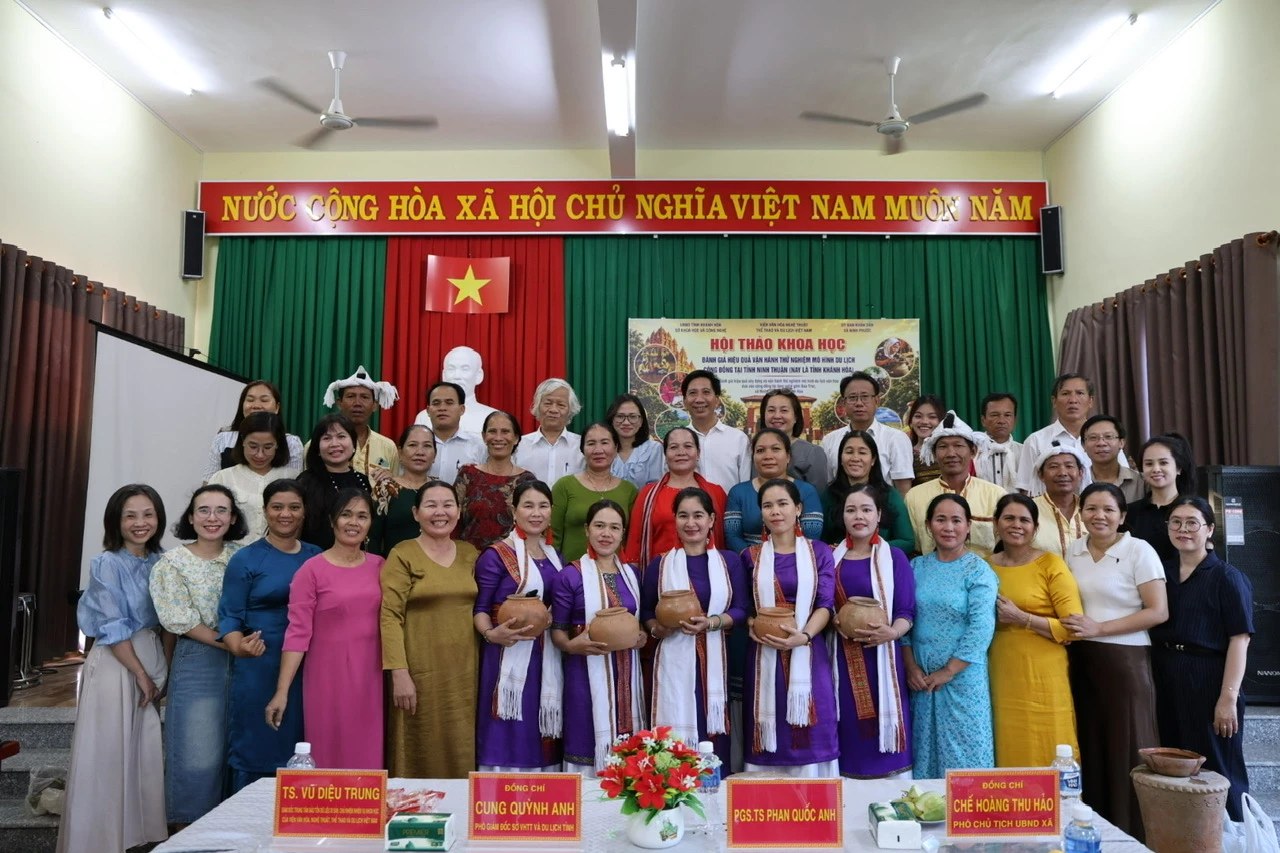 |
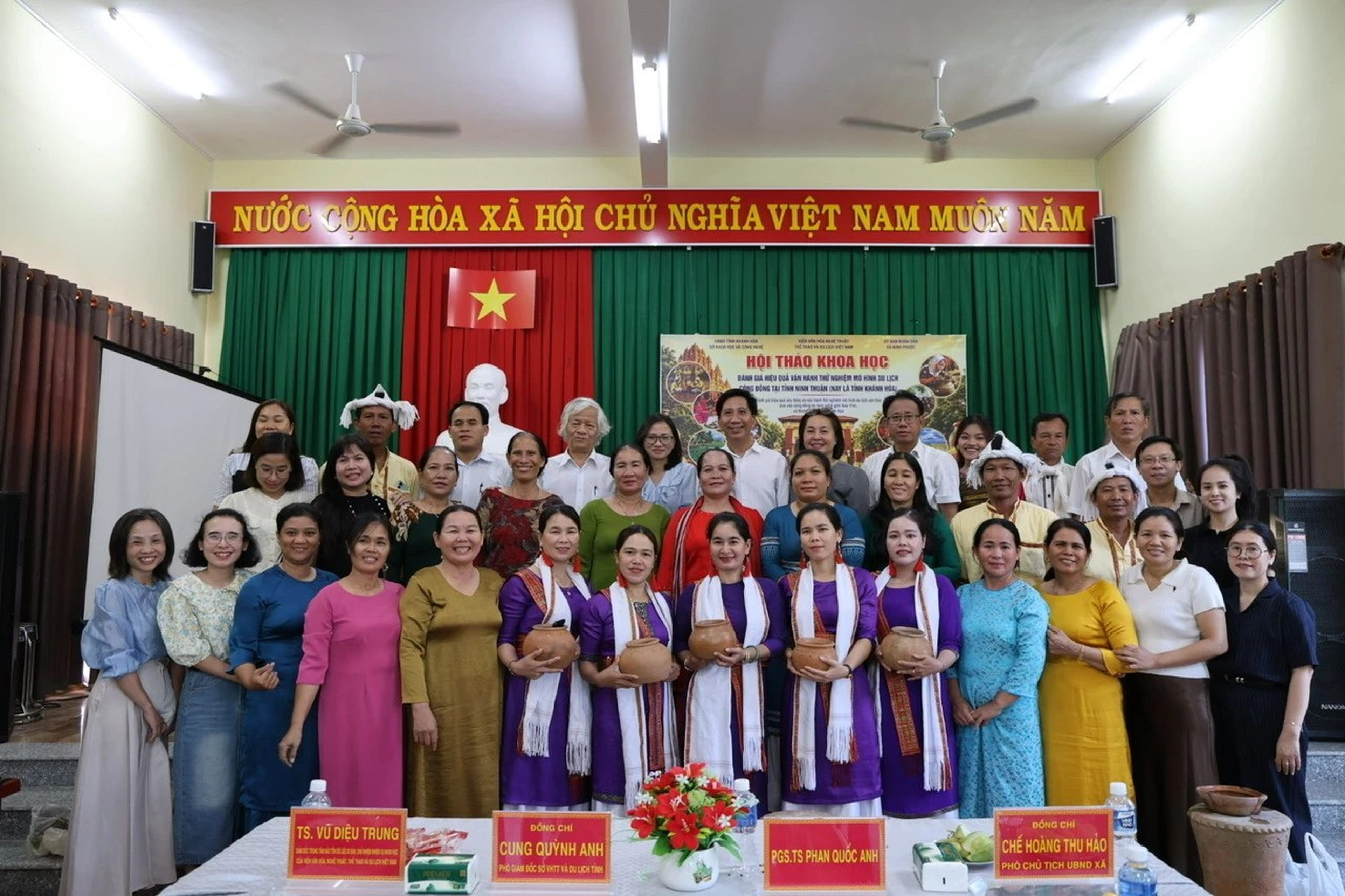
| Delegates take a souvenir photo at the seminar "Evaluating the effectiveness of building and piloting a community-based cultural tourism model at Bau Truc pottery village". |
Vinh Hai commune possesses the national scenic spot of Vinh Hy Bay - one of the most beautiful bays in Vietnam, along with the unique "African dry forest" ecosystem in Nui Chua National Park (a World Biosphere Reserve). The pilot of a community-based ecotourism model in Vinh Hy hamlet and Cau Gay - Da Hang hamlet has initially brought a fresh breeze in diversifying livelihoods for the Kinh and Raglai communities. At the seminar, delegates and experts frankly acknowledged that ecotourism in Vinh Hai is still highly seasonal, and the connection between sea experience tours and trekking to explore forests and mountains is not yet seamless. To solve this problem, representatives of the community, travel businesses, and local authorities officially signed a Community Covenant drafted by the project team from the Vietnam Institute of Culture, Arts, Sports and Tourism. The document clearly stipulates commitments to protect the marine environment, manage plastic waste, preserve the area of primary forests, and respect indigenous Raglai knowledge, ensuring long-term and responsible ecotourism development.
Stretching along the coastal land of the three communes Vinh Hai, Xuan Hai, and Ninh Hai is a unique combination of distinctive agricultural farming and natural landscapes, from lush and sweet grape and apple orchards in Thai An (Vinh Hai commune), Thanh Son grapes; the bustling An Hoa sheep fields (Xuan Hai commune) to the sparkling white salt fields in Phuong Cuu, Dam Vua and the Dam Nai landscape (Ninh Hai commune). The linkage of the three communes creates a continuous experiential tourism journey with the message: "Grape fragrance - Salt flavor - Sunshine colors of the sea". This model directly enhances the value of local agricultural products through on-site harvesting, processing, and consumption of OCOP products. However, the biggest bottleneck currently is the lack of synchronized reception infrastructure and tourism products that remain at the level of mere photo-taking and check-ins, lacking in-depth experiential scripts. The adoption of the inter-communal Community Covenant has established common standards for service quality, public price listing, and built a fair benefit-sharing mechanism among salt farmers, grape growers, sheep farm owners, and travel agencies.
A special focus of the program is the community-based cultural tourism model in Bau Truc hamlet, Ninh Phuoc commune. The pottery-making art of the Cham people in Bau Truc was inscribed by UNESCO as an Intangible Cultural Heritage in Need of Urgent Safeguarding in 2022. The year 2026 marks an important milestone when Vietnam submits a progress report to UNESCO, aiming to transfer the heritage to the Representative List of Humanity for the period 2028 - 2030. At the seminar in Ninh Phuoc commune, scientists, managers, and villagers agreed on the viewpoint: Tourism development in Bau Truc must strictly adhere to the principle of "original preservation", preserving traditional handicraft techniques (no wheel, no glazing, no painting, open-air firing) rather than industrial commercialization. Tourism is positioned as a tool to "sell cultural experiences", turning Bau Truc village into a true "living museum". Visitors here not only buy pottery products but also immerse themselves in the life of artisans, create products with their own hands, stay in homestays following the traditional Cham house model, enjoy local cuisine (ginger cake, sakaya, lamb curry) and Cham folk arts. Scientists urgently propose building a brand identity for Bau Truc pottery village, beautifying village roads and alleys, and researching the sustainable preservation of clay and sand extraction resources along the Quao River.
Also within the program framework, the decision to establish and launch the Club for Practicing Cham Pottery Heritage in Bau Truc hamlet was officially announced. This is a substantive step to gather artisans, pass on skills to the younger generation, and proactively perform for tourists. The Community Covenant signed in Bau Truc clearly stipulates the obligation to allocate funds for conservation, maintain hygiene in the craft village space, and build a civilized tourism etiquette culture.
The series of seminars evaluating the pilot of three community-based tourism projects affirms the correct orientation: Taking the community as the center, and heritage and natural resources as the core. The synchronous implementation of solutions from spatial planning, tourism skills training for locals, building brand identity, to signing Community Covenants has created a solid legal and social foundation. With the creation from the government, the companionship of businesses, and especially the consensus and proactiveness of local residents, Khanh Hoa's community-based tourism promises to develop strongly, contributing to improving local socio-economic life and spreading heritage values to the world.
PHAN QUOC ANH