



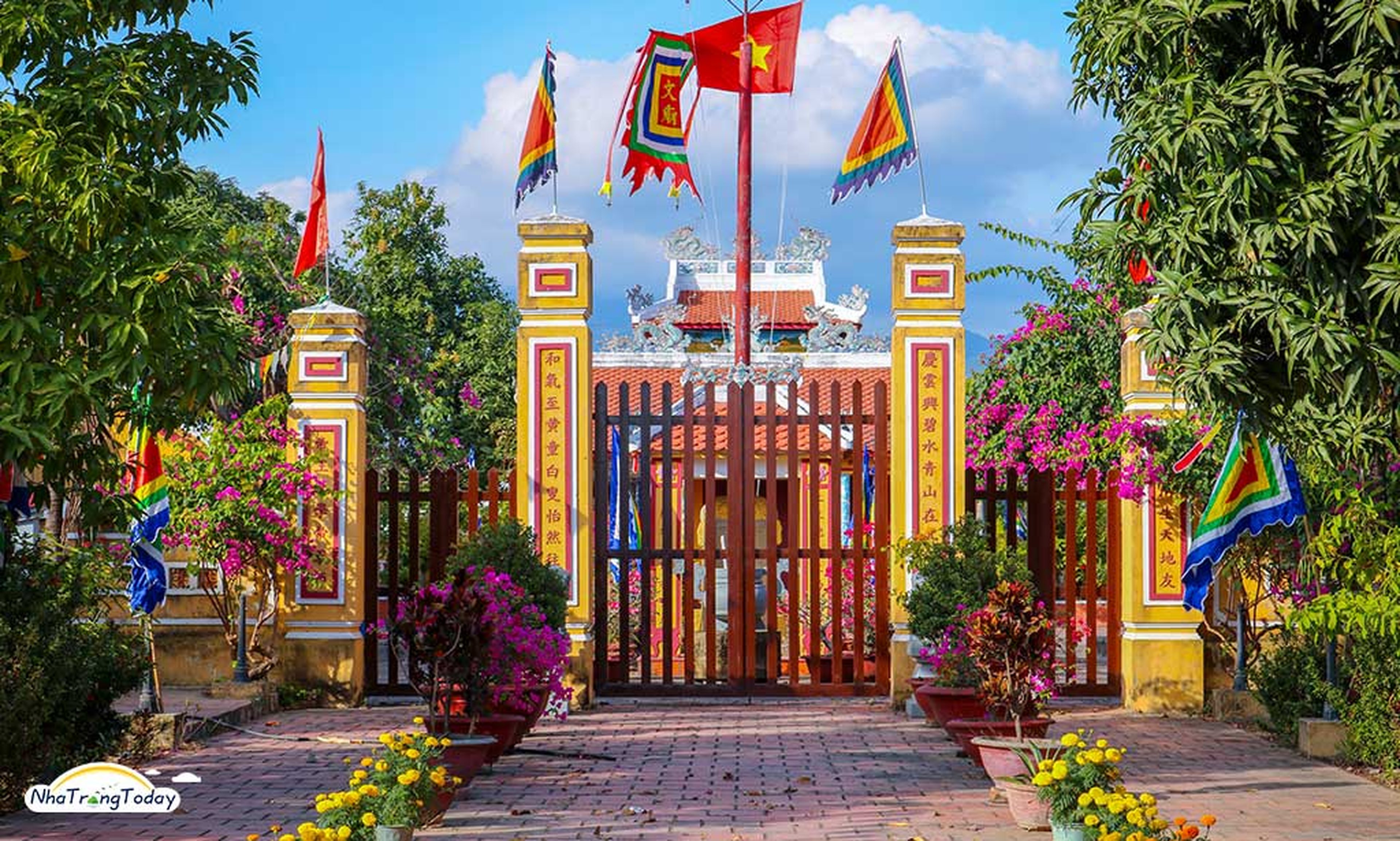
For those seeking an absolutely tranquil space to learn about the academic traditions and Confucian foundations of the South Central Coast region, the Dien Khanh Temple of Literature is the perfect answer. Located not far from the historical site of the ancient citadel, this temple is a place of worship for Confucius and a tribute to the sages and scholars who brought honor to the land of Khanh Hoa in the past. It is the oldest remaining temple of literature in the Central region and a vital witness to the development of academic spirit in the 'land of agarwood' over many centuries.
Commissioned in 1853 during the reign of Emperor Tu Duc, the Dien Khanh Temple of Literature has undergone numerous restorations and repairs due to the upheavals of war. As you step through the antique three-entrance gate, the first thing that envelops you is an uncannily quiet and solemn atmosphere. The space is shaded by century-old trees, and the sound of leaves rustling in the breeze, mingled with the faint scent of incense, creates an absolute stillness that helps one shed the fatigue and noise of modern life outside.
The mark of traditional Confucian architecture by the Cai River
The architectural structure of the Dien Khanh Temple of Literature strictly adheres to the principles of feng shui and the traditional symmetrical layout of Confucian worship sites. From the outside in, the site includes major components such as: the Lotus Pond, the Ceremonial Hall, the Main Sanctuary, and the symmetrical 'Ta Vu' and 'Huu Vu' wings flanking the large brick courtyard. The most valuable architectural highlights of the temple are the sturdy wooden columns, the gracefully curved roof eaves, and the meticulously carved dragon and cloud motifs on the wooden components.
One of the most historically significant areas at the Dien Khanh Temple of Literature is where stone stelae honoring local scholars are preserved. The Chinese characters, worn by time on the stone surface, are not merely historical names; they are living testaments telling of the years spent diligently studying and traveling to take exams by the children of the old Dien Khanh land—people who used their knowledge to contribute to their hometown and the country. Standing before those mossy stone stelae, the traveler will feel a deep sense of pride in the tradition of scholarship and moral integrity of this land.
Important notes when visiting the Dien Khanh Temple of Literature:
-
Choose modest, polite clothing (shirts with sleeves, pants or skirts reaching below the knees).
-
Do not climb on stone pedestals or touch the ancient doctoral stelae.
-
Keep conversation volume at a moderate level; do not laugh or talk loudly in the Main Sanctuary area.
A peaceful silence for slow-traveling souls
The Dien Khanh Temple of Literature is not a mass-market tourist destination for quick 'check-in' photos. This place requires a slow pace and a focused heart to truly feel it. You can spend a peaceful morning strolling leisurely along the mossy brick paths, sitting and resting under the shade of an ancient tree, and reading a favorite book.
The best time to visit the temple is between 8:00 AM and 10:00 AM, when the morning sun shines through the leaves, creating shimmering streaks of light on the ancient brick courtyard. If you go with a guide or a local who understands the history, the stories about the journey to preserve the temple through the fierce years of war will certainly make your trip much more enriching and meaningful. Visit the Dien Khanh Temple of Literature to realize that the beauty of a land is not only created by grand natural landscapes but is also persistently nurtured by a source of knowledge, scholarship, and traditional moral values that have been kept intact through the generations.