


There are rituals that only truly touch the observer when viewed from a sufficient distance. Not so far as to become an indifferent outsider, yet not so close as to intrude upon the spiritual rhythm of an entire community. The Fish Worship Festival at Truong Dong Communal House, located in Vinh Truong Ward, in the south of Nha Trang city, is an experience that brings about exactly such a feeling.
The Fish Worship Festival has long been linked to the belief in worshipping Ong Nam Hai (the Whale) in the spiritual life of fishermen in the South Central Coast. At Truong Dong Communal House, the festival usually takes place over several days in the middle of the second lunar month. This is an occasion for all the fishermen in the village, from the grey-haired elders to the children who have just learned to run, to gather and look out to the distant sea. For a travel content creator, one thing must be emphasized first: this is not a performance staged specifically for tourists. This is a stream of sacred spiritual life, where people come because of visceral belief, because of memories of a seafaring life full of rough waves, and because of an age-old wish: favorable weather, boats returning full of fish and shrimp, and people coming home safely. If you decide to visit, please adopt the mindset of a conscious and respectful observer.
A ritual born from days spent drifting on the water
For coastal residents, the ocean is both a mother that sustains generations and a place that hides unpredictable challenges. A fishing trip is not simply a story of making a living, but a high-stakes dialogue with the weather, fish shoals, seasonal winds, and the balance between risk and luck. In the context of thousands of years facing the vast sea, the belief in worshipping the Whale has become their most enduring spiritual anchor.
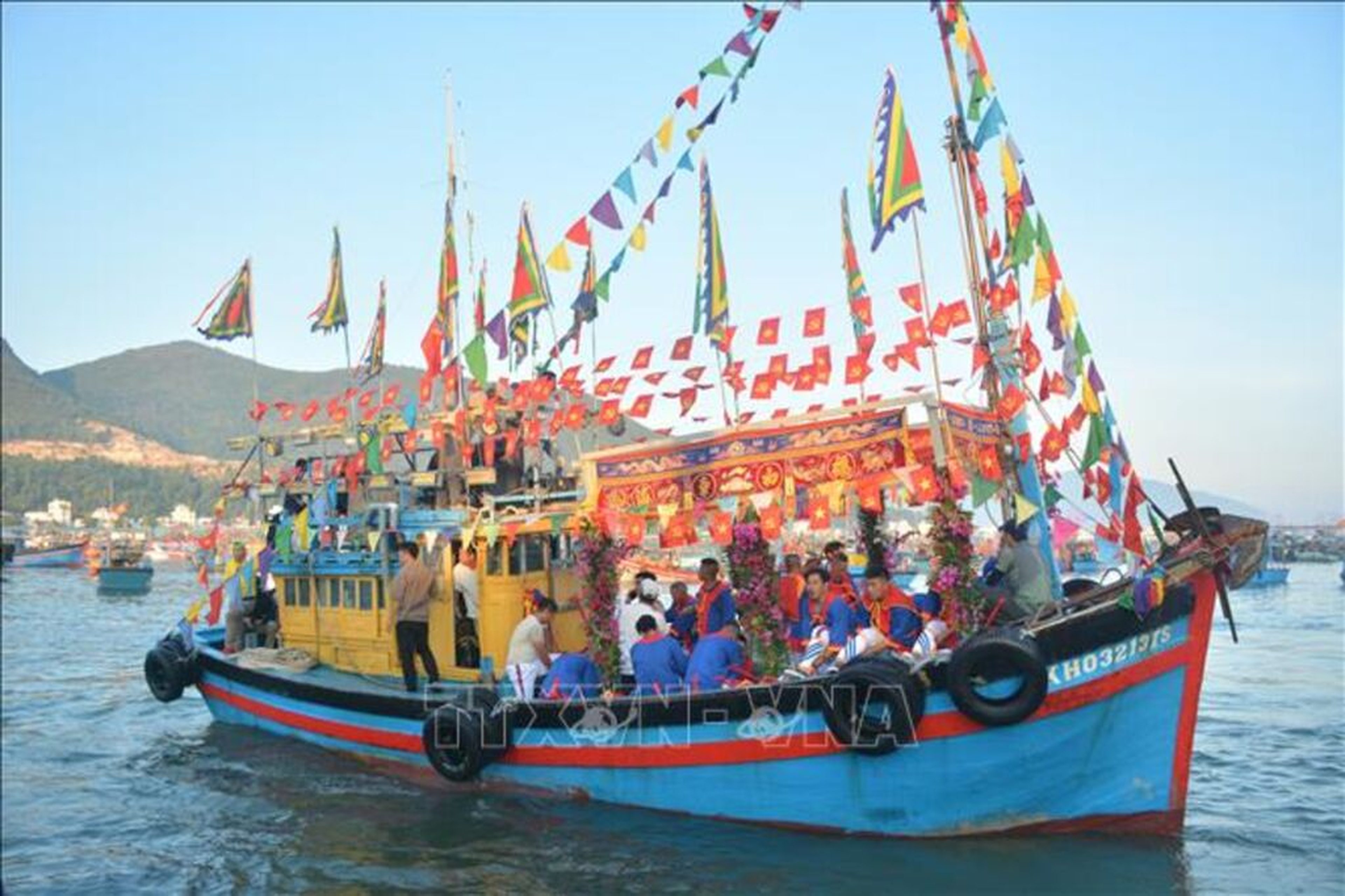
At Truong Dong Communal House, the structure of the Fish Worship Festival usually consists of two distinct parts: the ritual and the celebration. The most important rituals include bringing Ong Nam Hai from the sea to the communal house, traditional sacrificial offerings, the 'ba trao' chanting, and subsequent community cultural activities. When the procession begins to move from the pier towards the communal house courtyard, the most notable thing is not the colorful flags or the lively sound of drums. Look at the faces. It is the solemnity on the faces of men weathered by the sea all year round, the way the women adjust their traditional ao dai, or the eager but reverent gaze of the children following their grandparents. A seaside village festival always has many layers overlapping: the solemn ritual part, the memories of those who have been lost to the sea, and the current life continuing under the mossy roof of the communal house.
An observation schedule for slow travelers
To fully experience this atmosphere, you need to take the time to research the festival schedule carefully in advance. The main rituals are always calculated according to the lunar calendar, and sometimes the start time may shift slightly depending on the tides or the preparations of the local ritual committee. Practical experience shows that you should not rely entirely on old posts on social media from previous years. Take the initiative to check information close to the date through local newspapers or by asking people living around the Vinh Truong fishing port area.
On the day of the procession, visitors should arrive about 30 to 45 minutes before the ceremony begins. Arriving early not only helps you find a convenient and airy spot to observe but, more importantly, helps you stay settled without having to jostle or accidentally cut across the path of the ritual procession. Regarding attire, due to the solemn nature of the communal house space and the sacrificial rites, you need to choose neat, modest, and polite clothing. It is recommended to wear sneakers or flat shoes that are easy to walk in, as you will have to stand for quite a while on the paved courtyard or walk along the coastal road with the procession.
Remember to keep a distance so as not to disturb the seaside village
The Fish Worship Festival possesses many moments that are rich in imagery and emotion, but not every moment is suitable for you to raise your camera for a close-up shot. When the palanquin procession passes by, the minimum rule of etiquette is to stand well to one side of the road. Do not cross the lines of the procession, do not hold phones or cameras too close to the faces of those performing the rituals, and do not block the path of the elders in the ritual committee.
When stepping into the area inside the communal house grounds, take the initiative to walk softly and speak quietly. Do not touch any worship artifacts, palanquins, or offering trays without guidance. If you feel confused about which area visitors are allowed to stand in and which area is reserved for the ritual participants, the best way is to observe the behavior of the local people around you or politely ask someone in charge. There will be moments, for example, when the eulogy is read in the quiet space, when you should put your camera down, stand still, and listen. There are cultural experiences that deserve to be recorded with the understanding of the eyes and heart before being saved on a camera memory card.
Suggestions for a complete itinerary for the day
If you visit during the festival, you can spend an entire half-day in the Vinh Truong - Cua Be area. In the early morning, focus on observing the festival rhythm at Truong Dong Communal House. After the morning rituals have subsided, you can stroll into a small local coffee shop nearby, order a cup of strong Central-style iced black coffee, and sit watching the fishing port daily life happening on the sidelines of the festival.
-
Morning: Attend and observe the Fish Worship Festival at Truong Dong Communal House.
-
Noon: Enjoy fish noodle soup or 'banh can' seafood at the Vinh Truong market area.
-
Afternoon: If you want to extend your exploration of Nha Trang's marine culture, you can visit
The Ong Mausoleum in Hon Ro on the other side of the Quan Truong river, or learn more about the art of 'ba trao' chanting through the stories of the indigenous people.
Do not try to pack too many other entertainment check-in spots into this day. Traditional festivals have their own breathing rhythm, sometimes lasting longer or changing timelines based on emergent ritual procedures. Hurried travelers who like to dash between spots will often only see the noisy surface level. Conversely, those who accept a slower pace will realize that the Fish Worship Festival is the way a seaside village in the heart of Nha Trang chooses to preserve its cultural identity against the dizzying pace of change in a tourist city.
As the sound of the festival drums fades and the crowd disperses, and the Vinh Truong fishing port returns to its daily grind, you will understand why this ritual is so enduring. It is not a heritage piece locked in a glass cabinet to be preserved on paper. It is a living practice, where the men who go to sea entrust their sincere thanks, their prayers for peace, and their ever-present anxieties about the vast ocean to every beat of the communal house drum.