

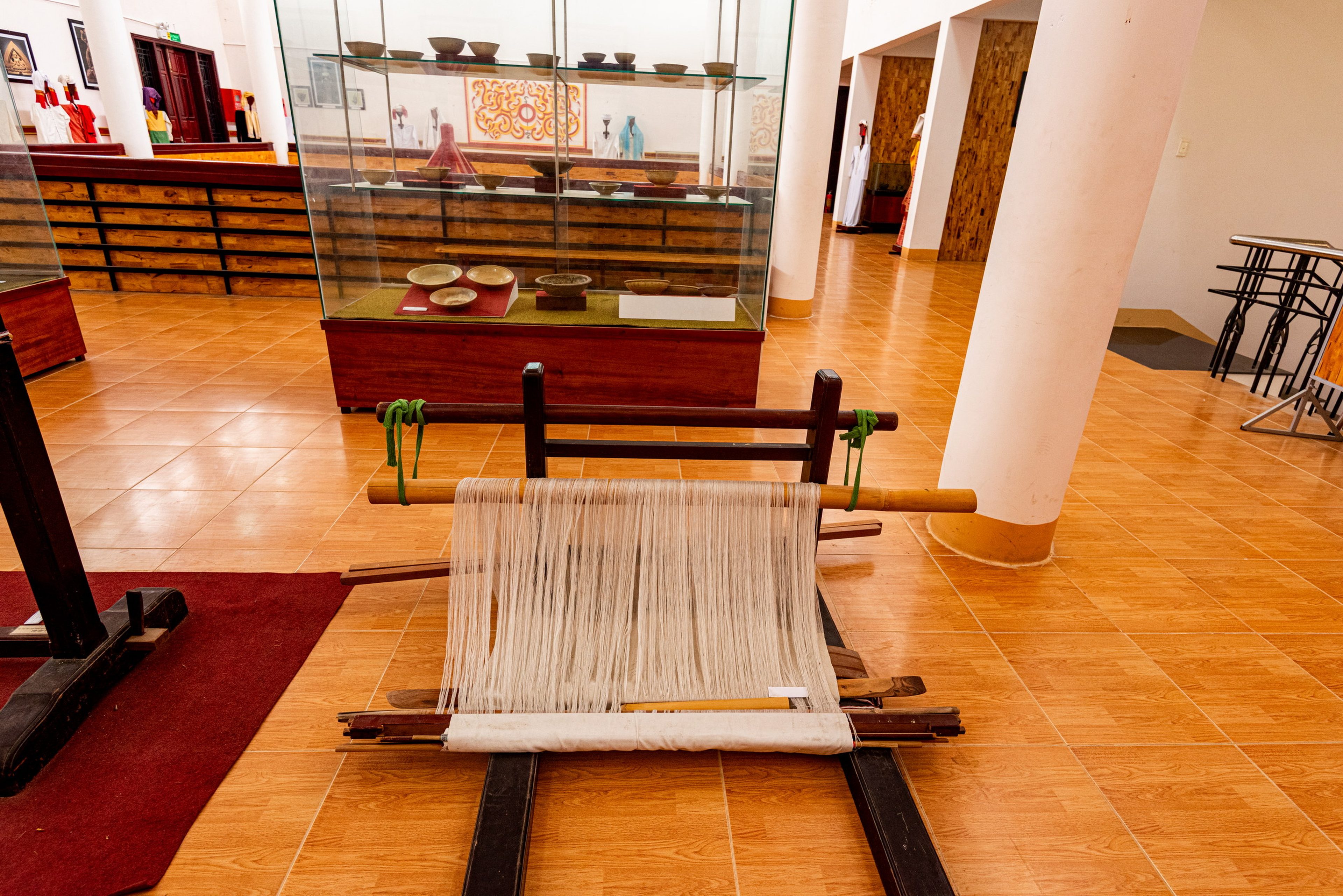
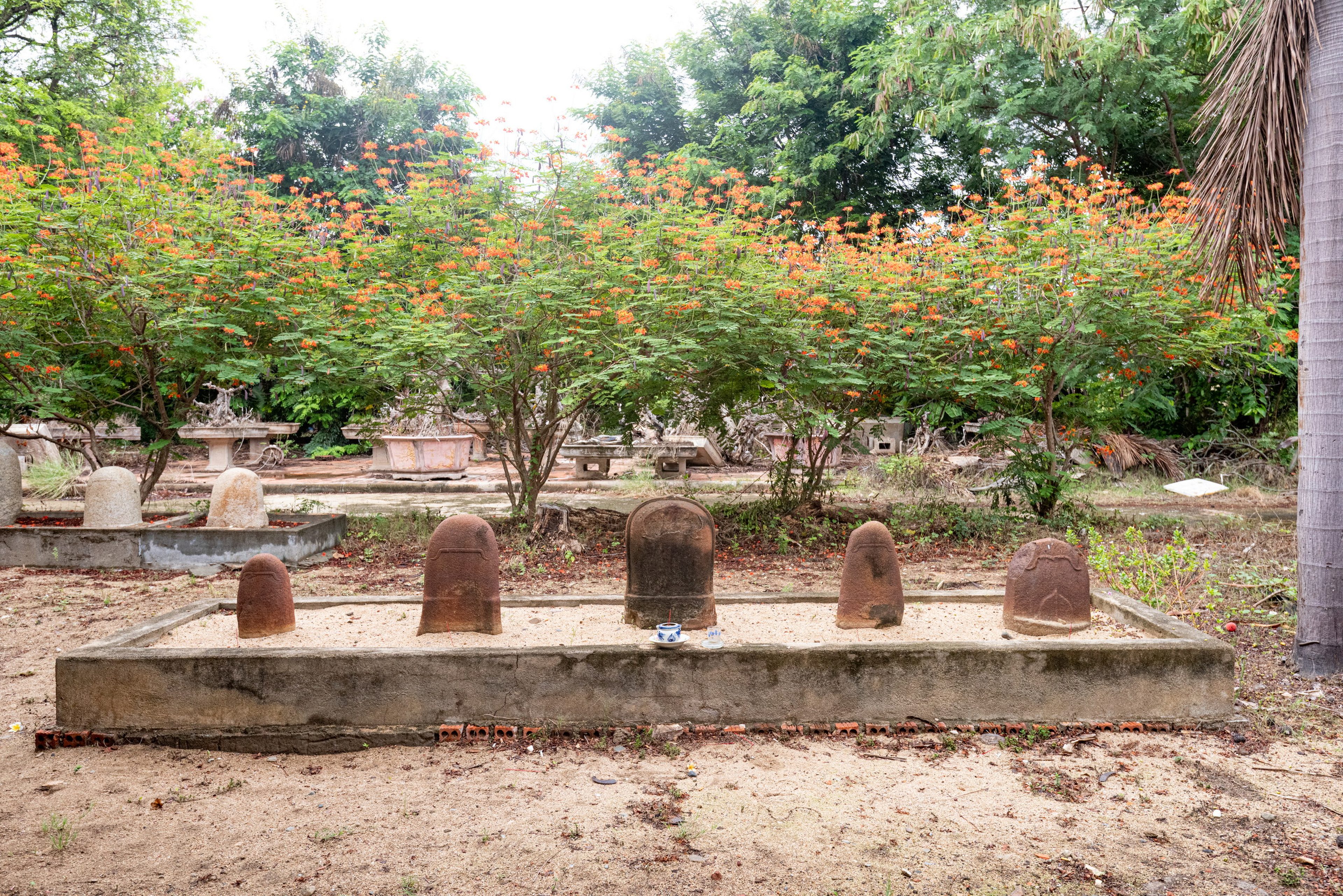
Thematic Exhibition: Cham Culture
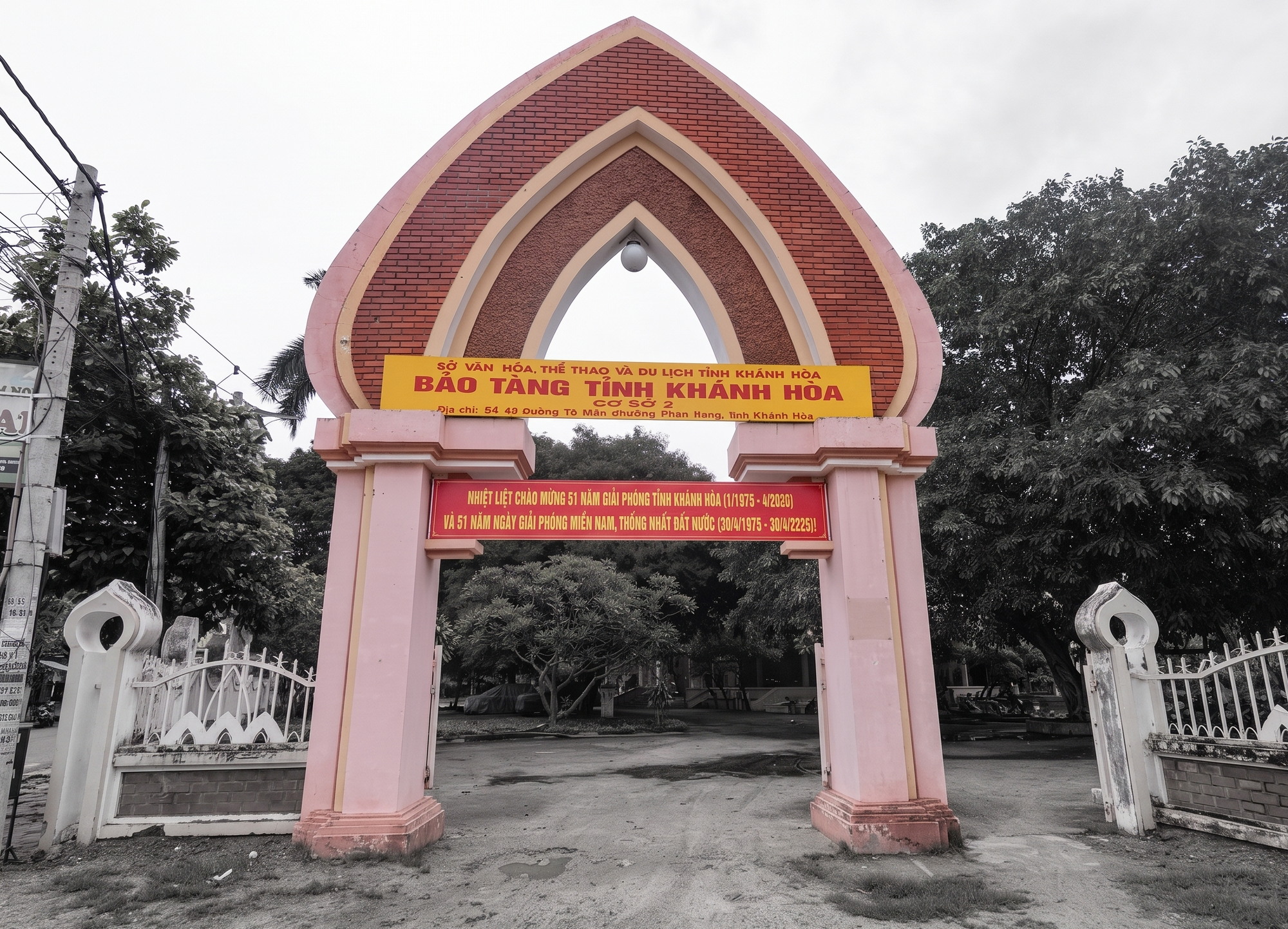
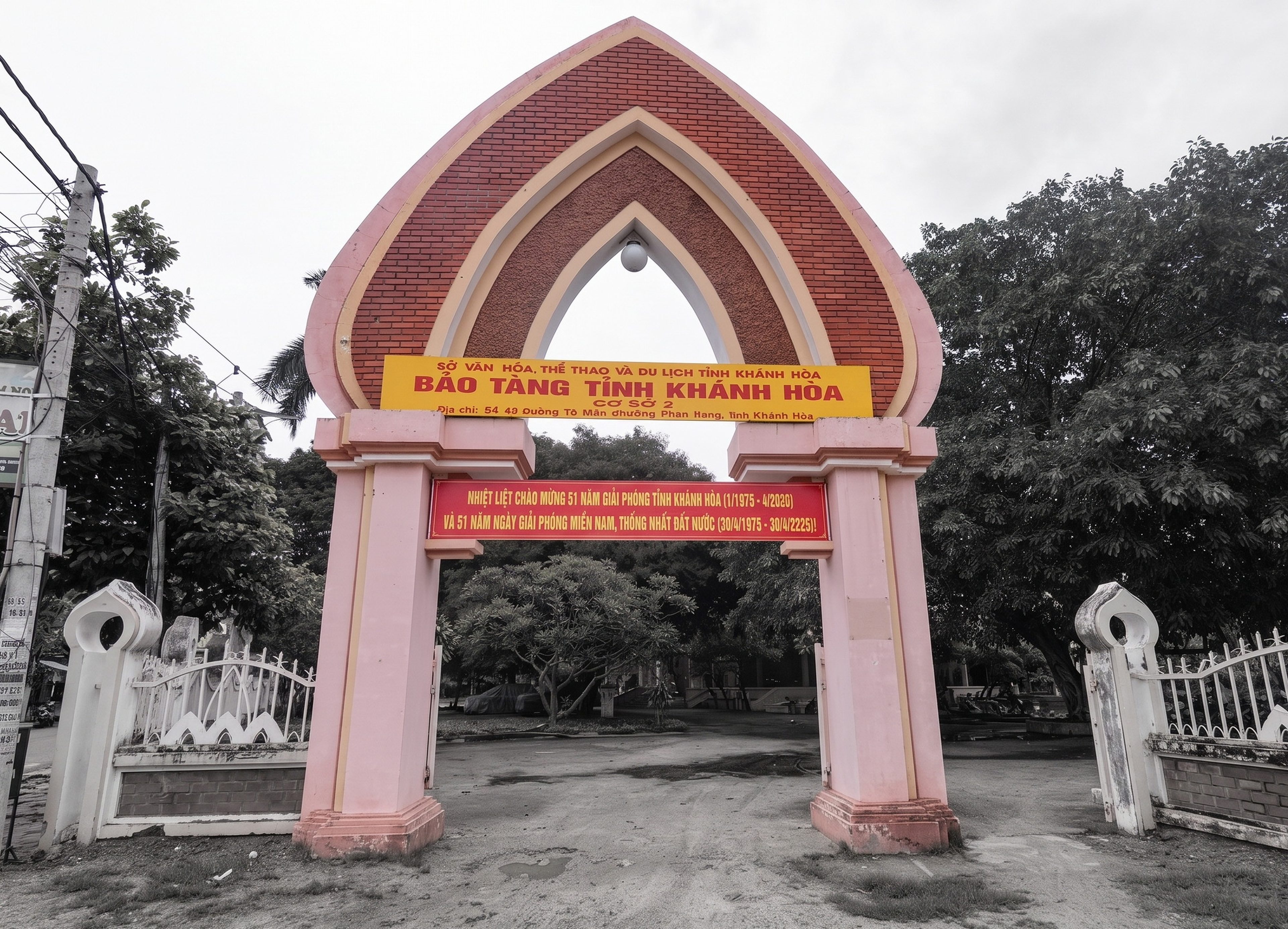
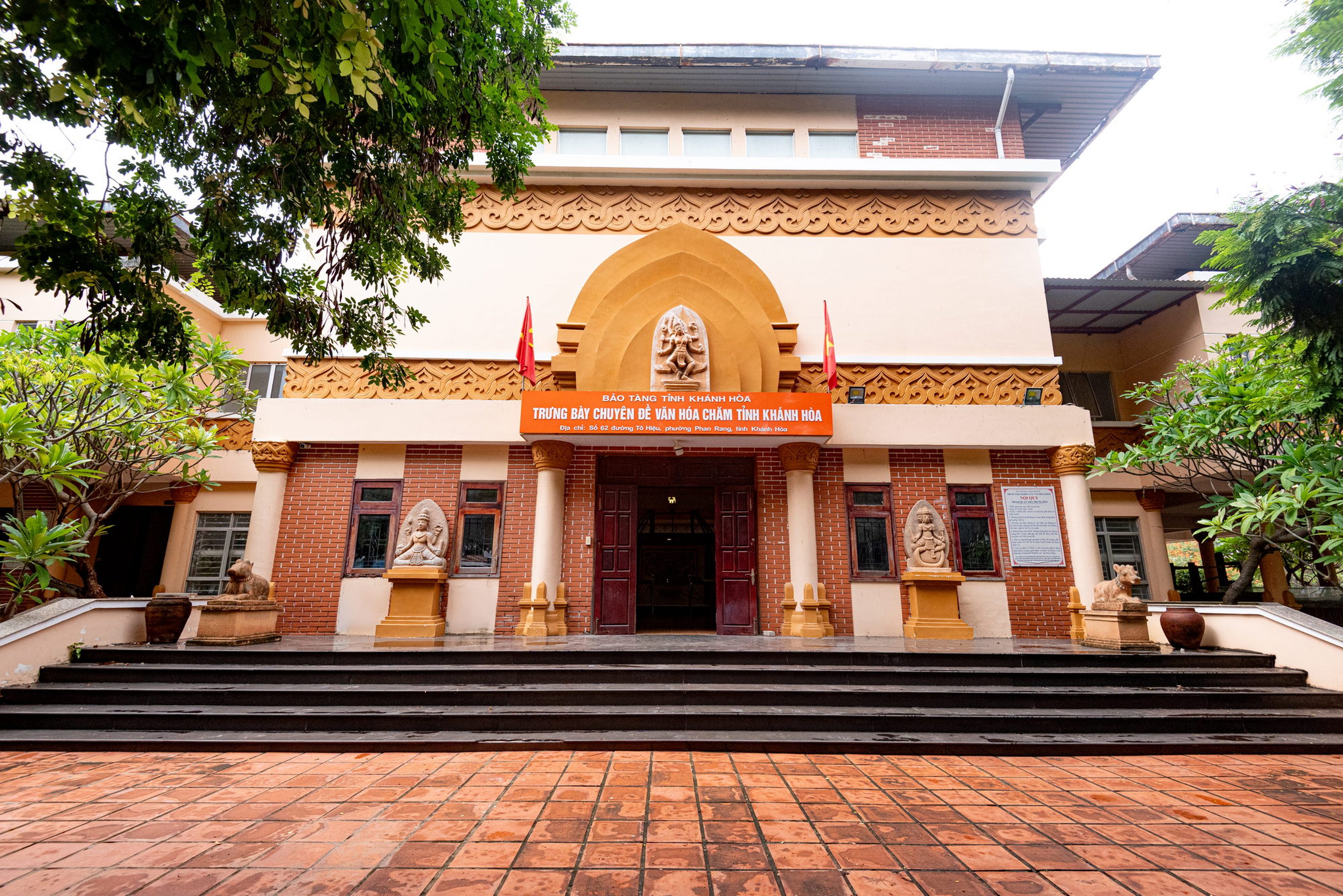
Khanh Hoa Museum, Branch 2 (16/4 Street, Phan Rang Ward, Khanh Hoa Province)
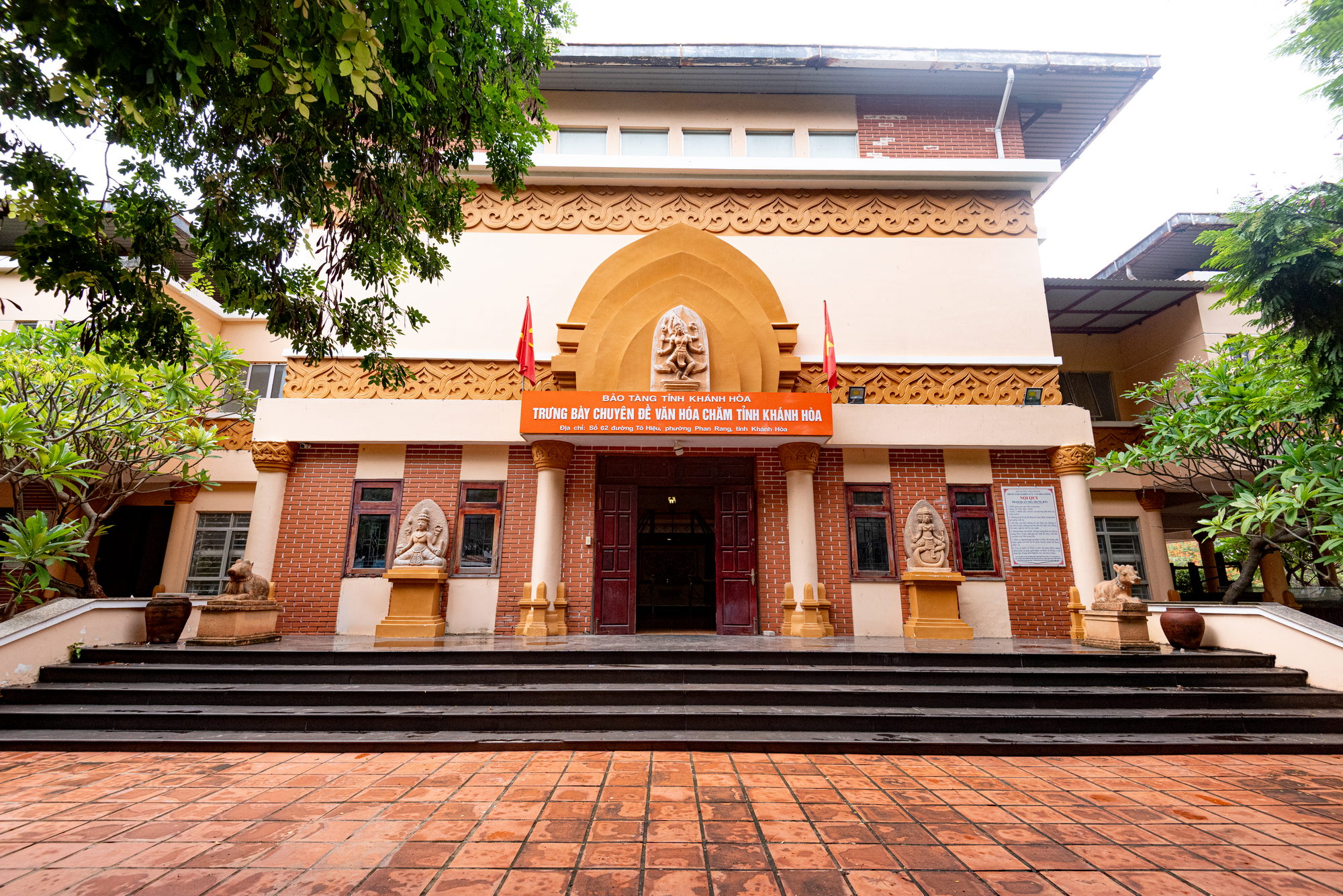
Located on a spacious plot of land at 62 To Hieu Street, Phan Rang Ward, Khanh Hoa Province, the Center for Cham Culture Research is a familiar address well-known to the vast Cham community for its in-depth research and the extensive collection of artifacts on display regarding Cham culture.
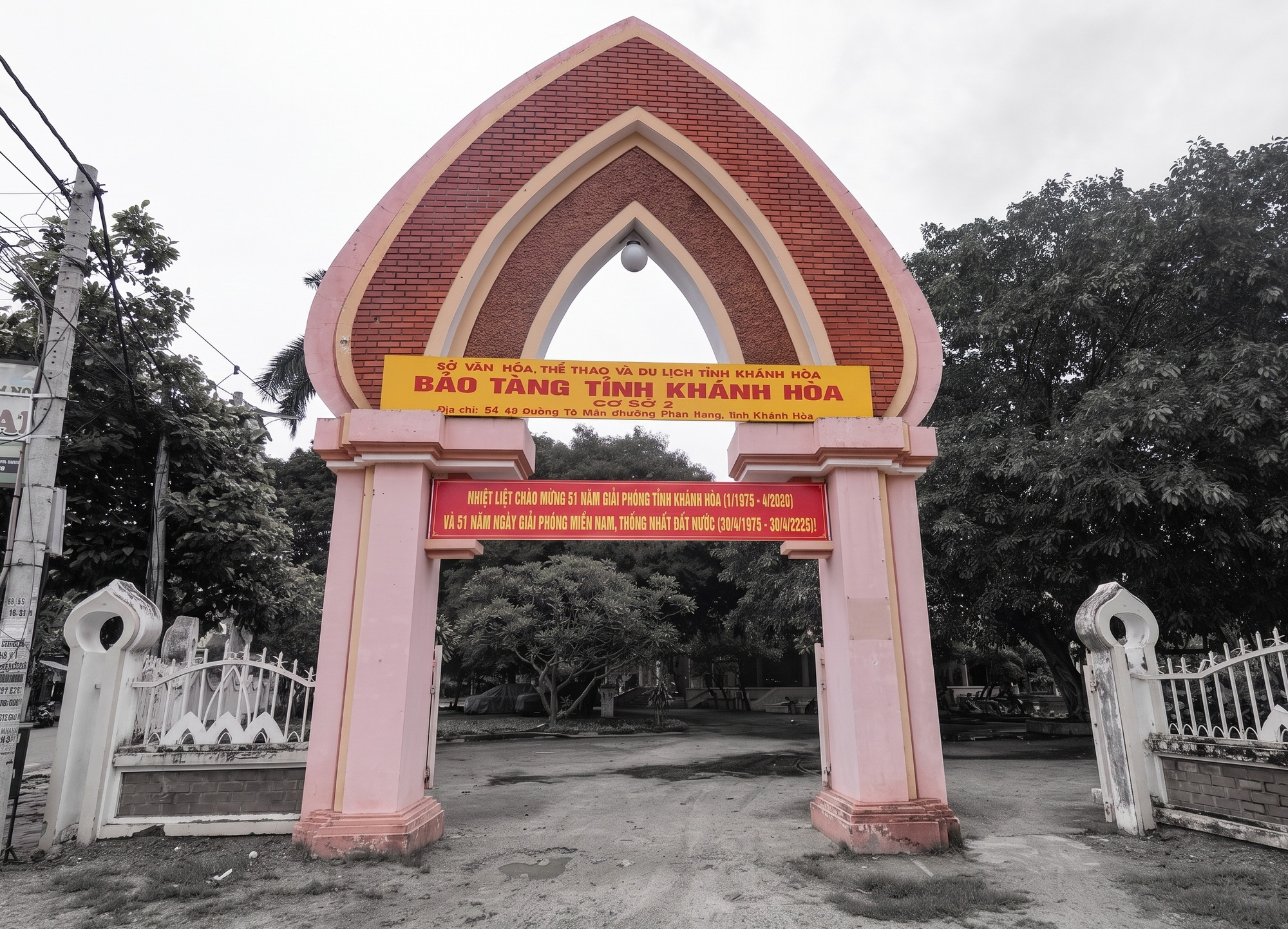
Established in 1993, under the former Ninh Thuan Department of Culture, Sports and Tourism (now part of Khanh Hoa Province), the Center's function is to research, preserve, and promote the value of Cham cultural heritage within the diverse and unified culture of Vietnam. The Center has now been renamed as the Thematic Exhibition: “Cham Culture of Khanh Hoa Province” under the Khanh Hoa Museum – Branch 2.
Cham Culture of Khanh Hoa Province
A journey through life, beliefs, art, and living heritage
Khanh Hoa is home to a large Cham population of approximately 95,463 people. It is a region with a long historical development process and a rich, diverse, and unique culture. Today, the Cham people still preserve many traditional cultural values such as: their script, folk songs and dance, traditional attire and brocade weaving, architectural and sculptural art, and Cham folk religious rituals that still take place annually, such as agricultural rituals, life-cycle rituals, the Kate festival (Mbeng Kate), and dance rituals (Rija)…
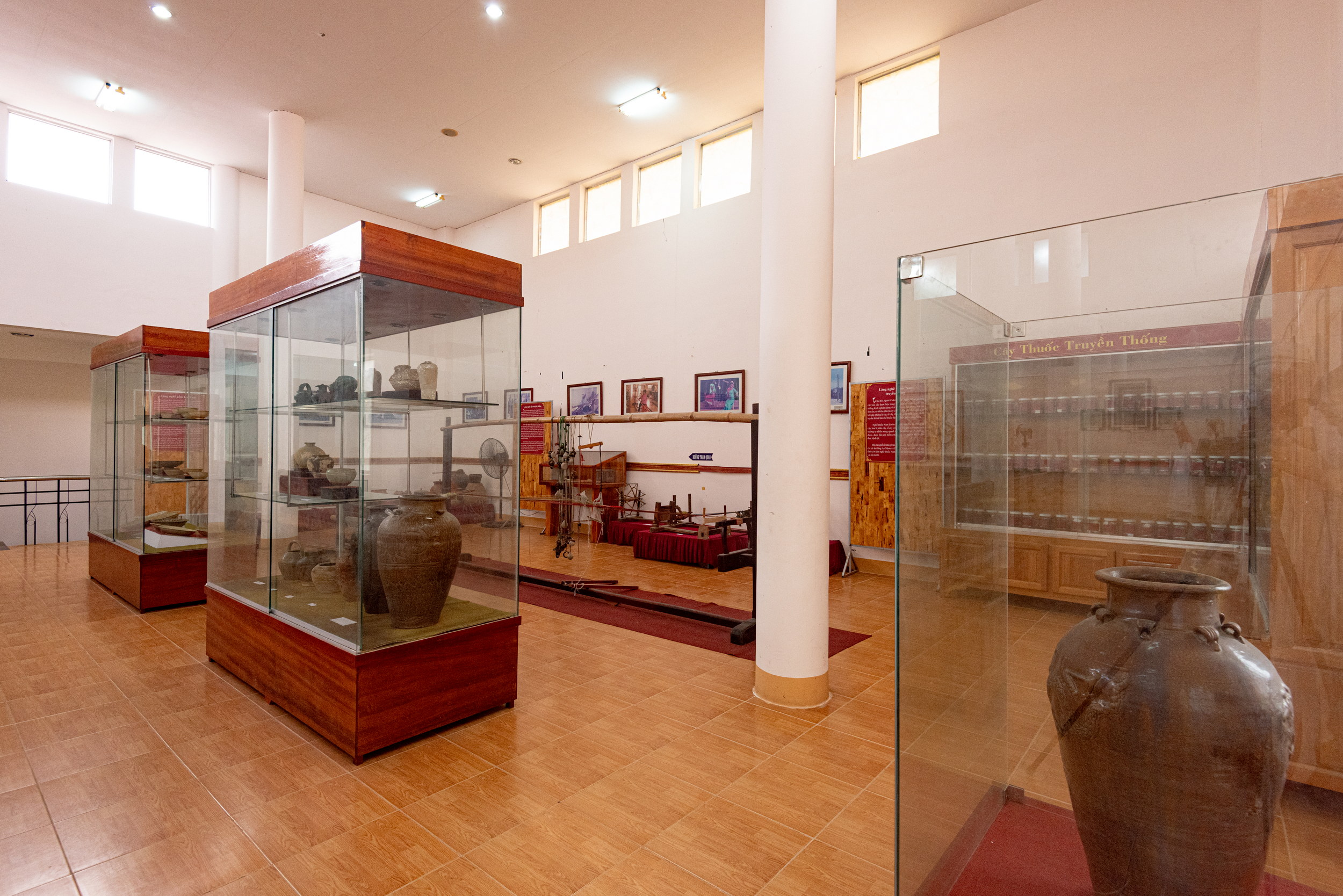
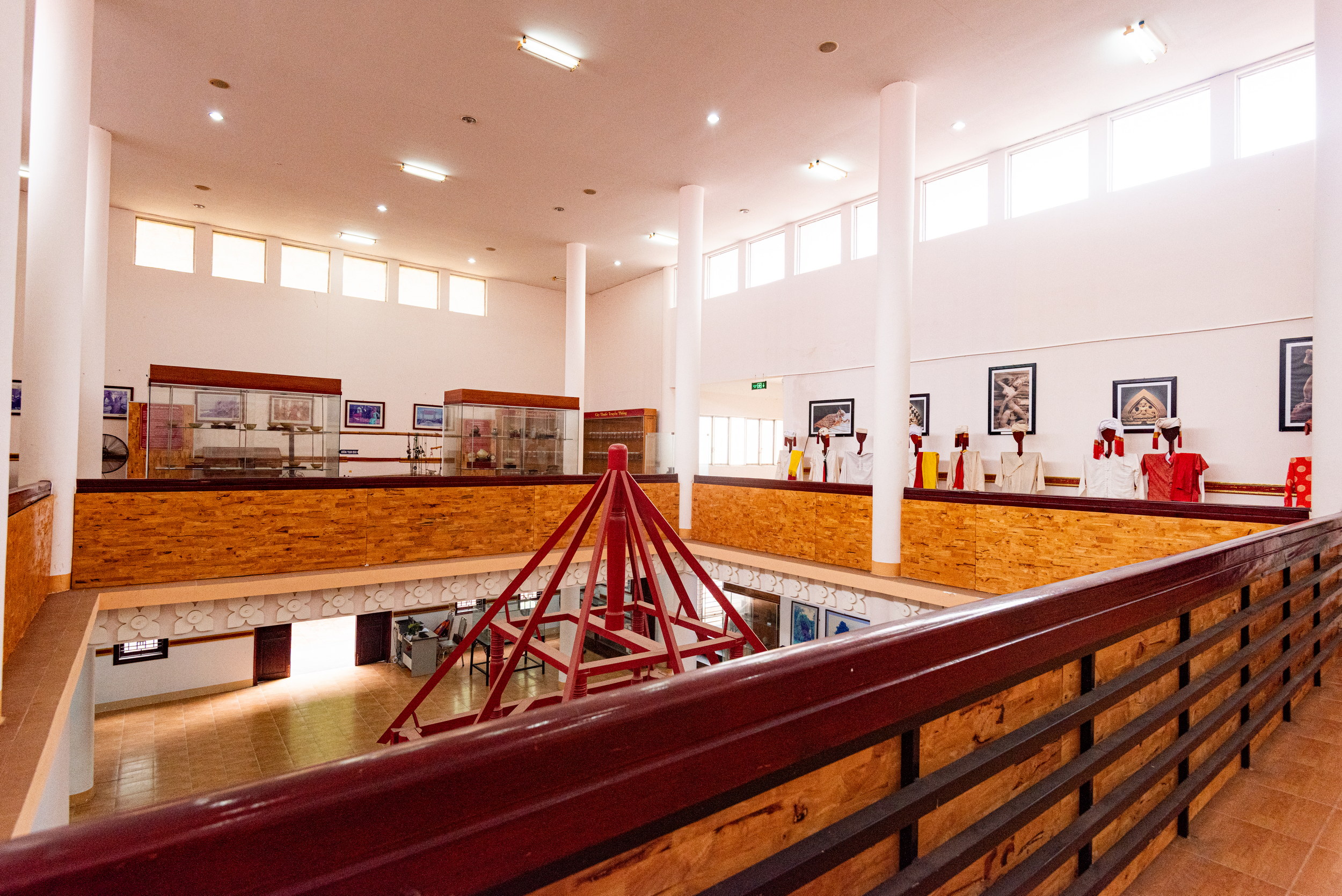
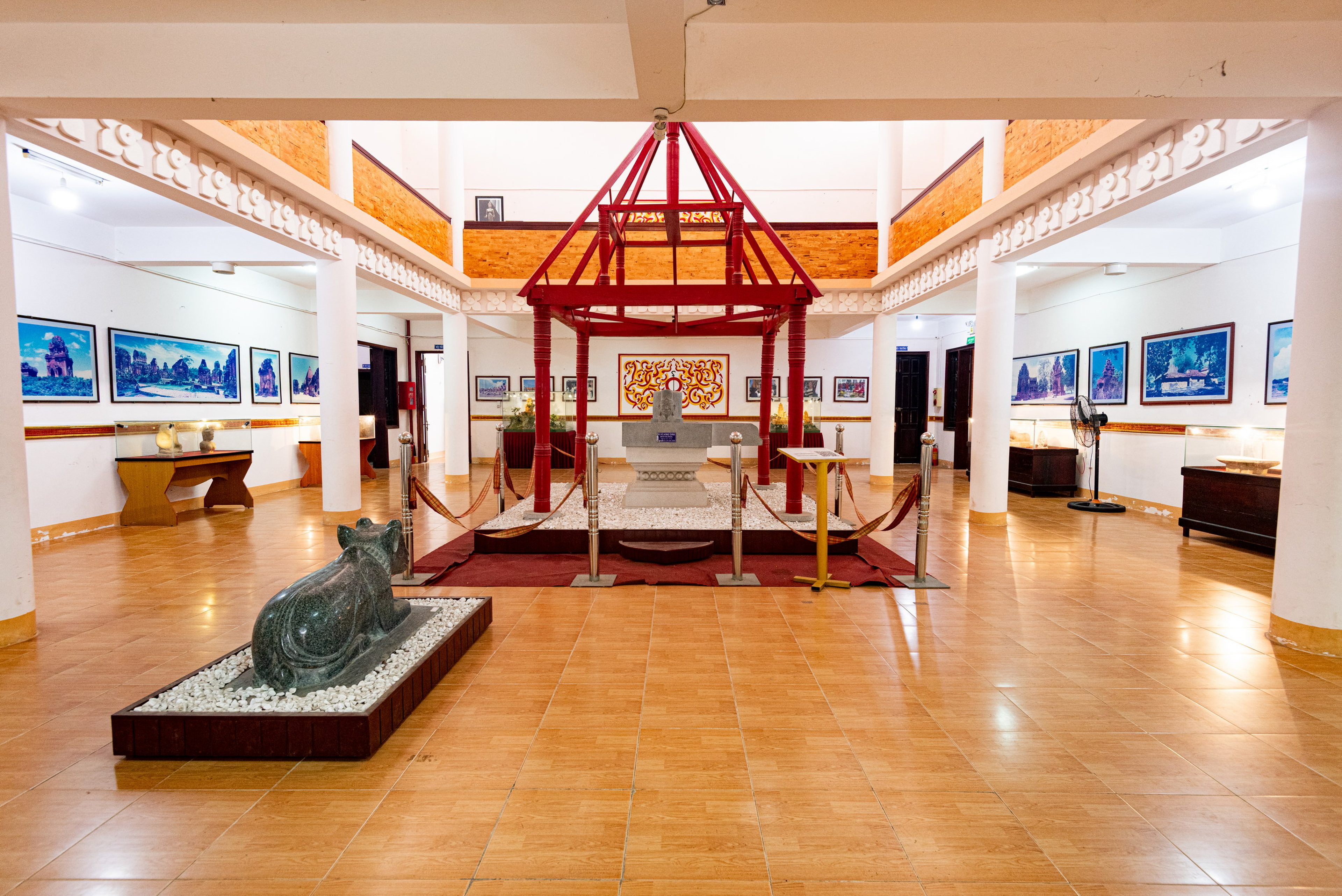
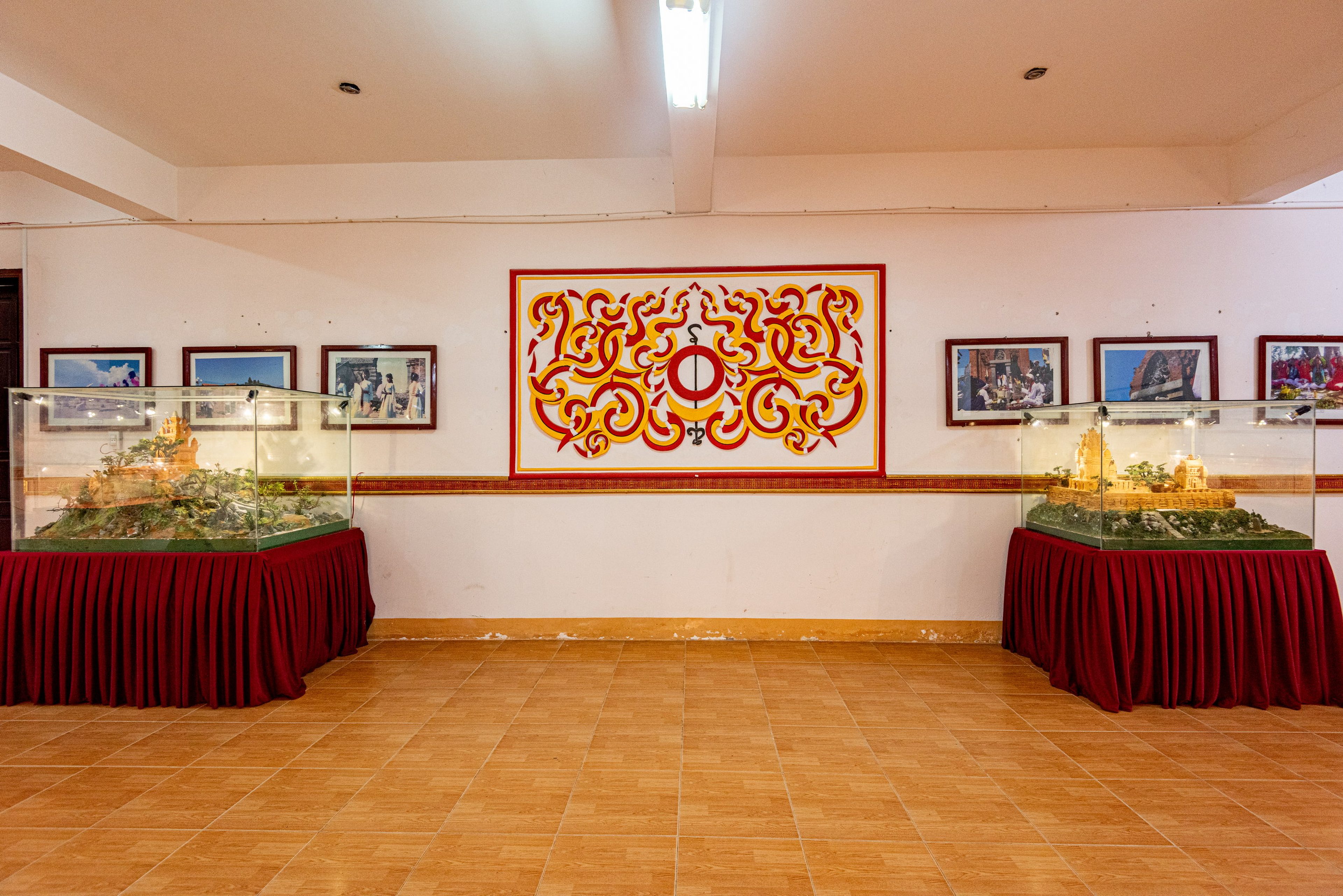
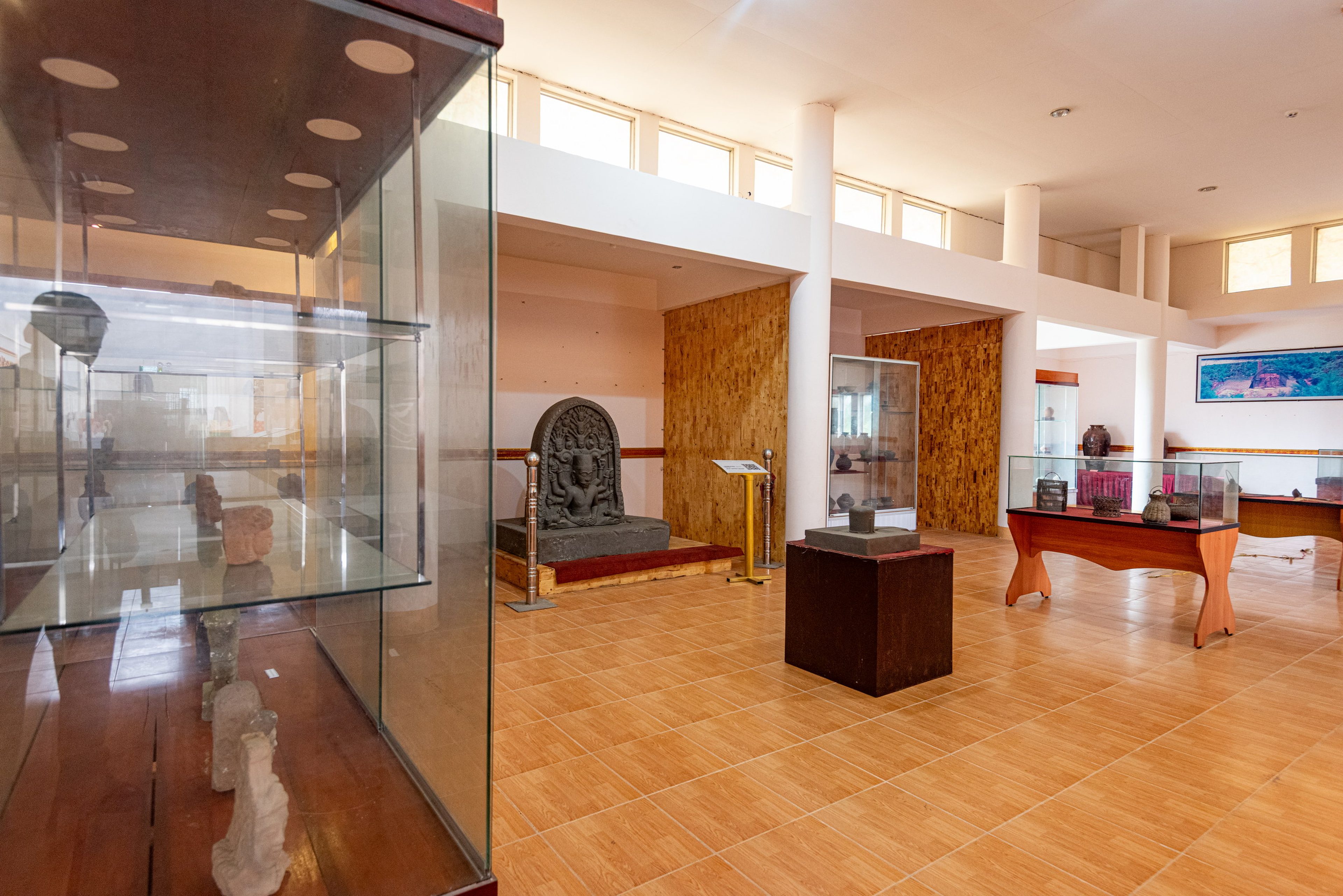
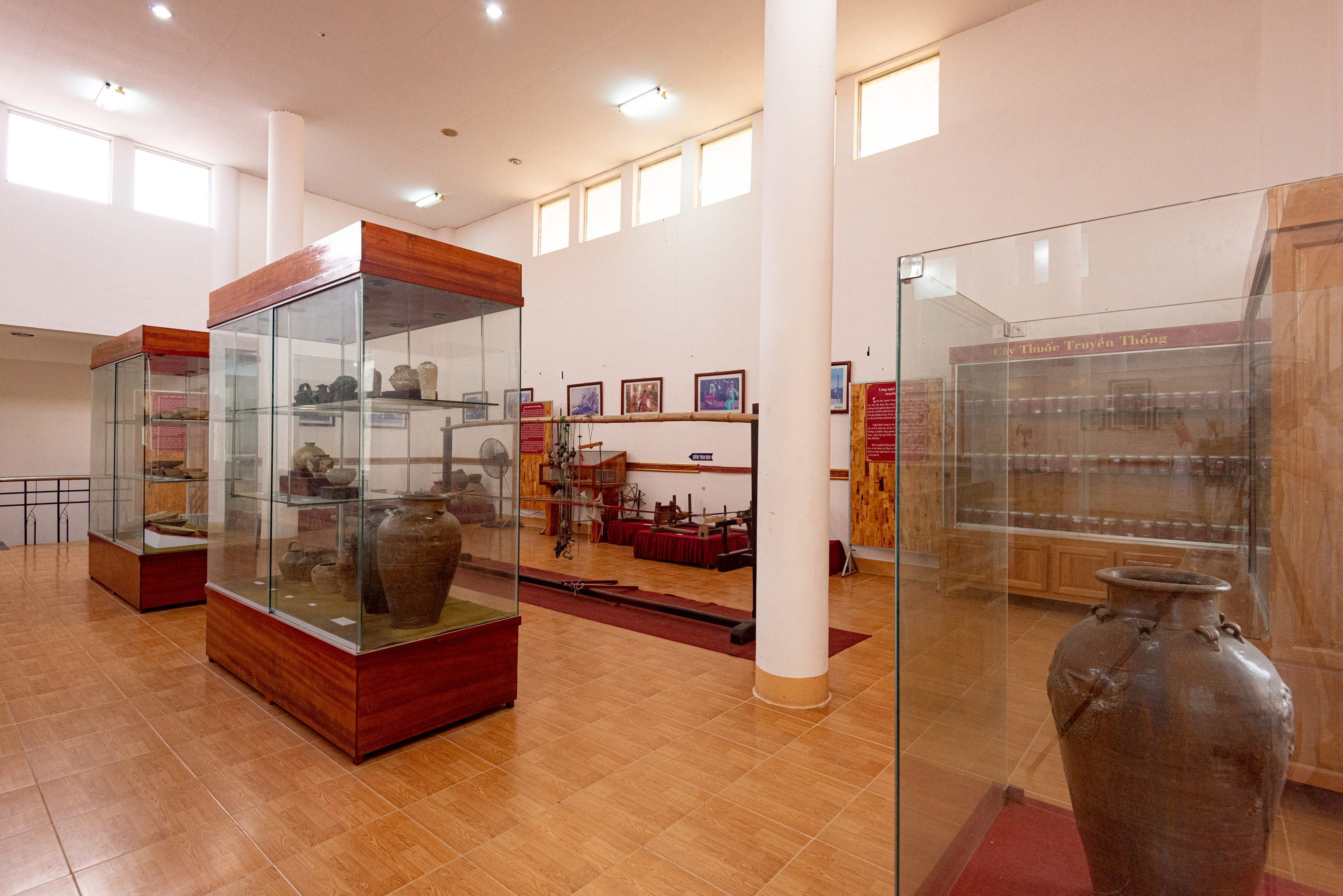
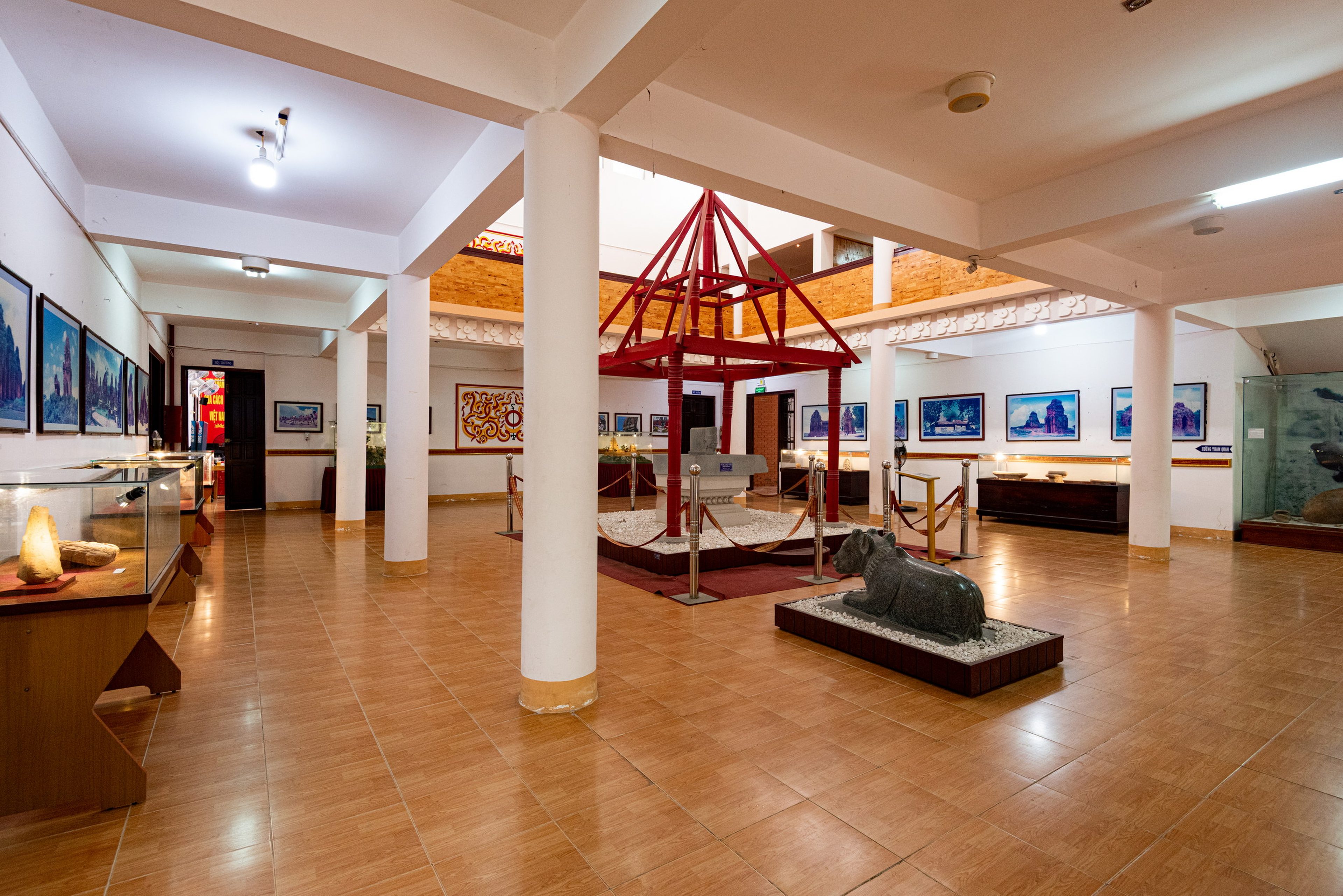
The entire space of the Cham cultural thematic exhibition is divided into small sections. Through artifacts and images, it partly reflects the daily life, labor, production, religious and cultural life, traditional craftsmanship, and artistic architecture of the Cham community living in Southern Khanh Hoa.
Cham Villages and the Matrilineal Community Structure
From the palei and Talei paga to the living quarters of each clan
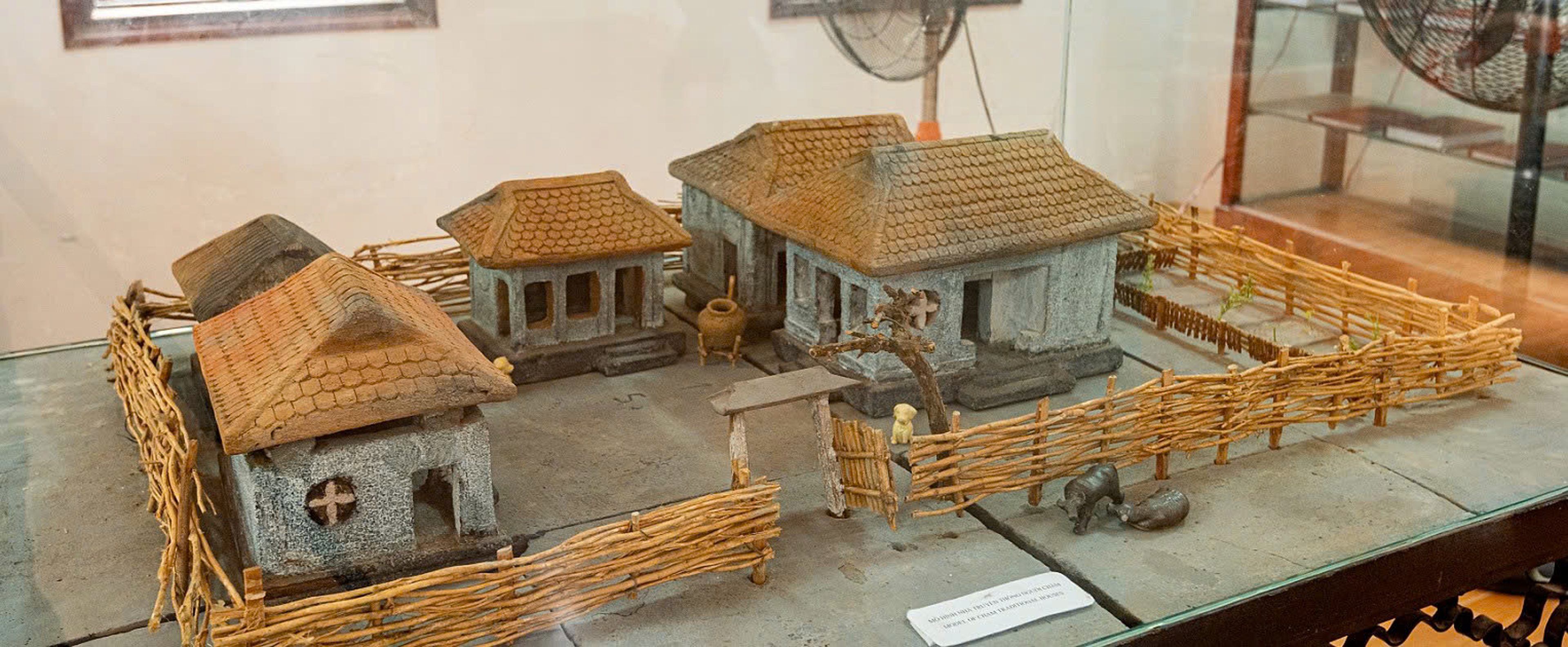
The Cham people live in communal villages called palei. Each village consists of several clans (following the mother's lineage) living side-by-side in rows of houses called “Talei paga.” Each clan has a matrilineal extended family (which can include two or three generations living together) residing within a compound, enclosed by a fence with a gate usually facing south, and a water well (often in the Northeast corner). This compound includes several separate houses with different functions.
This space helps visitors understand that Cham culture does not begin with temples and towers, but with daily life: the way of living, the organization of the family, the role of the maternal line, and the bond between generations.
Traditional Cham Housing Structure
Unique Architecture
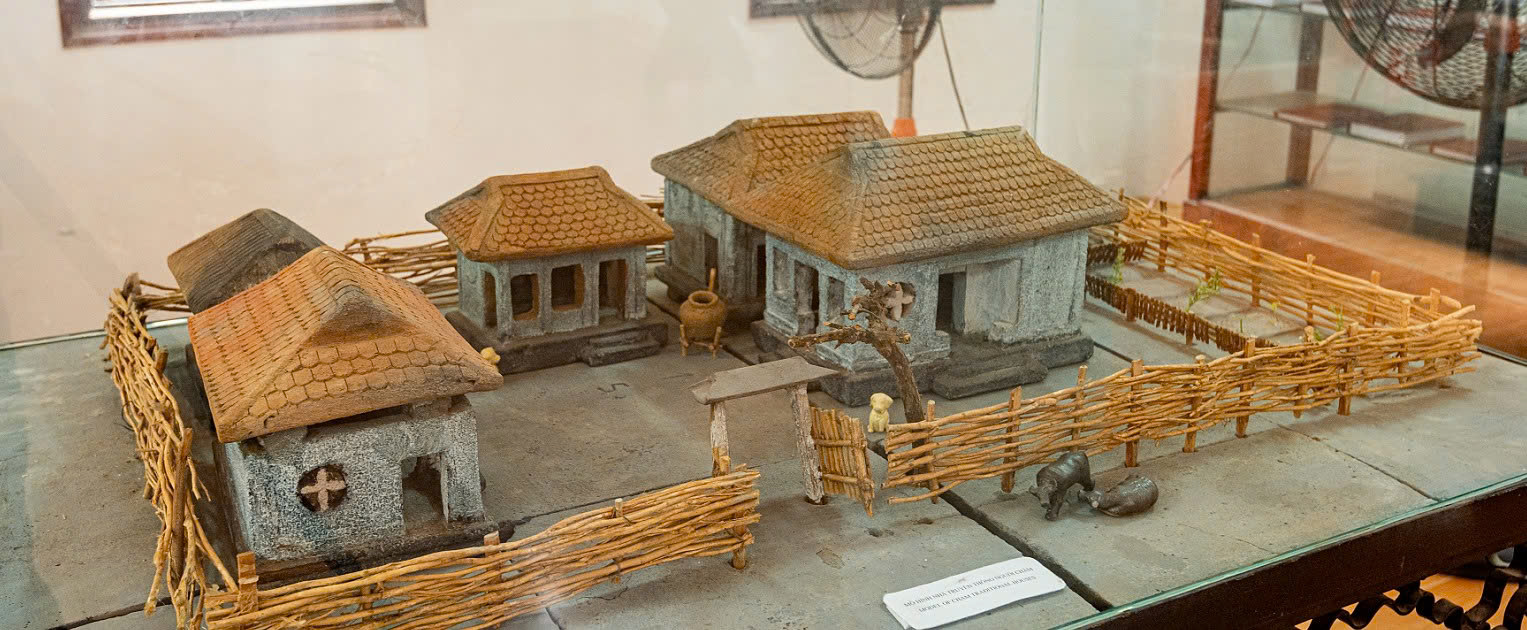
First is the Main House (Sang Ye):
Built in the Northeast (Adih Esan) of the traditional residential compound, extending along the East-West axis (Pur Pai), with the base of the ridgepole pointing West (Adih Pai) and the tip of the ridgepole pointing East (Adih Pur). The main entrance (door) opens to the West, and the front faces West, with an exit to the South leading into the Sang Mayau.
The Secondary House (Sang Mayau):
When a family has several daughters, and an elder sister gets married and brings her husband home, the family builds a house (Sang Mayau) next to the Sang Ye for her. This type of house is built opposite and parallel to the Sang Ye in the South (Adih Dak) of the traditional residential compound and is connected by a gutter. The house is built along the East-West axis.
Guest House (Sang Tong):
Within the Cham residential compound, the guest house (Sang Tong) is built near the entrance, about 1.5m - 2m to the Southwest (Nailiti) from the kitchen, along the North-South axis (Ut Dak), with the tip of the ridgepole pointing North and the base of the ridgepole pointing South.
Kitchen (Sang Ging):
This is where the family's meals are prepared. It is located at a distance and separate from the Sang Ye and Sang Tong, hidden by the Sang Gan. It is built in the Northwest corner (Bayep) of the traditional residential compound, along the North-South axis, with the front facing East. It has two main roofs and two secondary roofs; the house has two rooms: the southern room is the cooking area, and the northern room is the storage area for the family's rice supply.
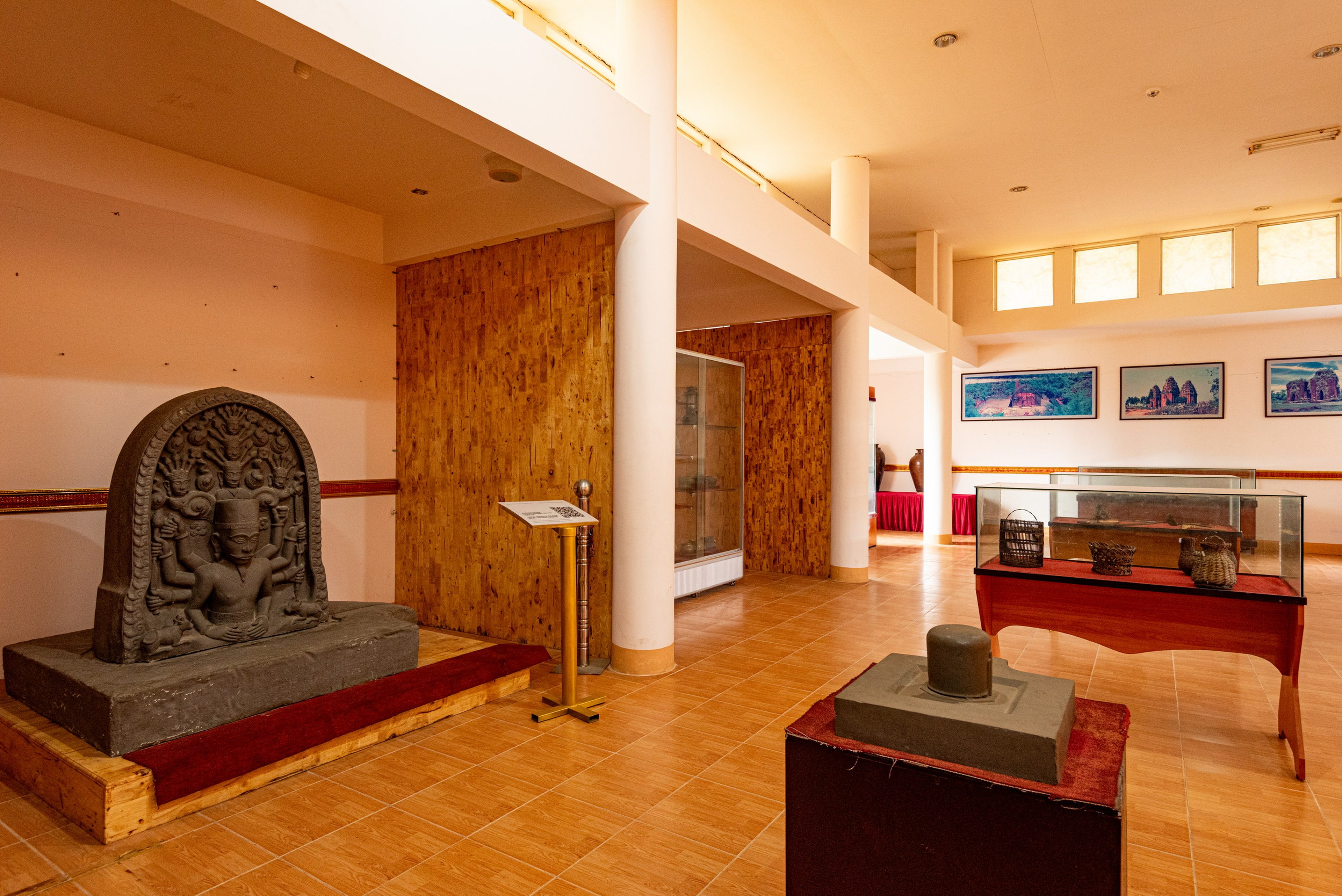
Statue of King Po Klong Garai
Mukhalinga, Nandin, and the synthesis of theocracy, monarchy, and indigenous beliefs
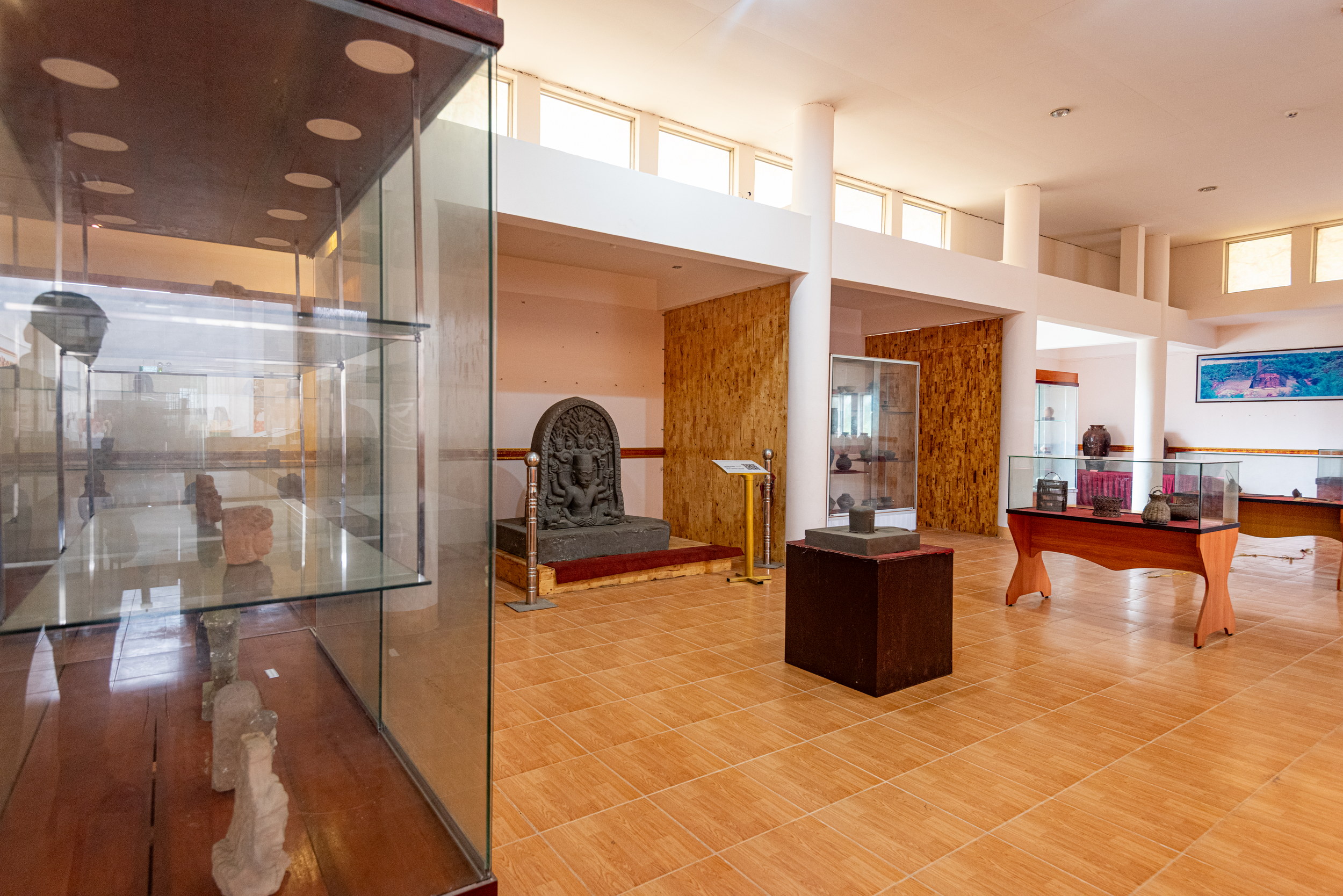
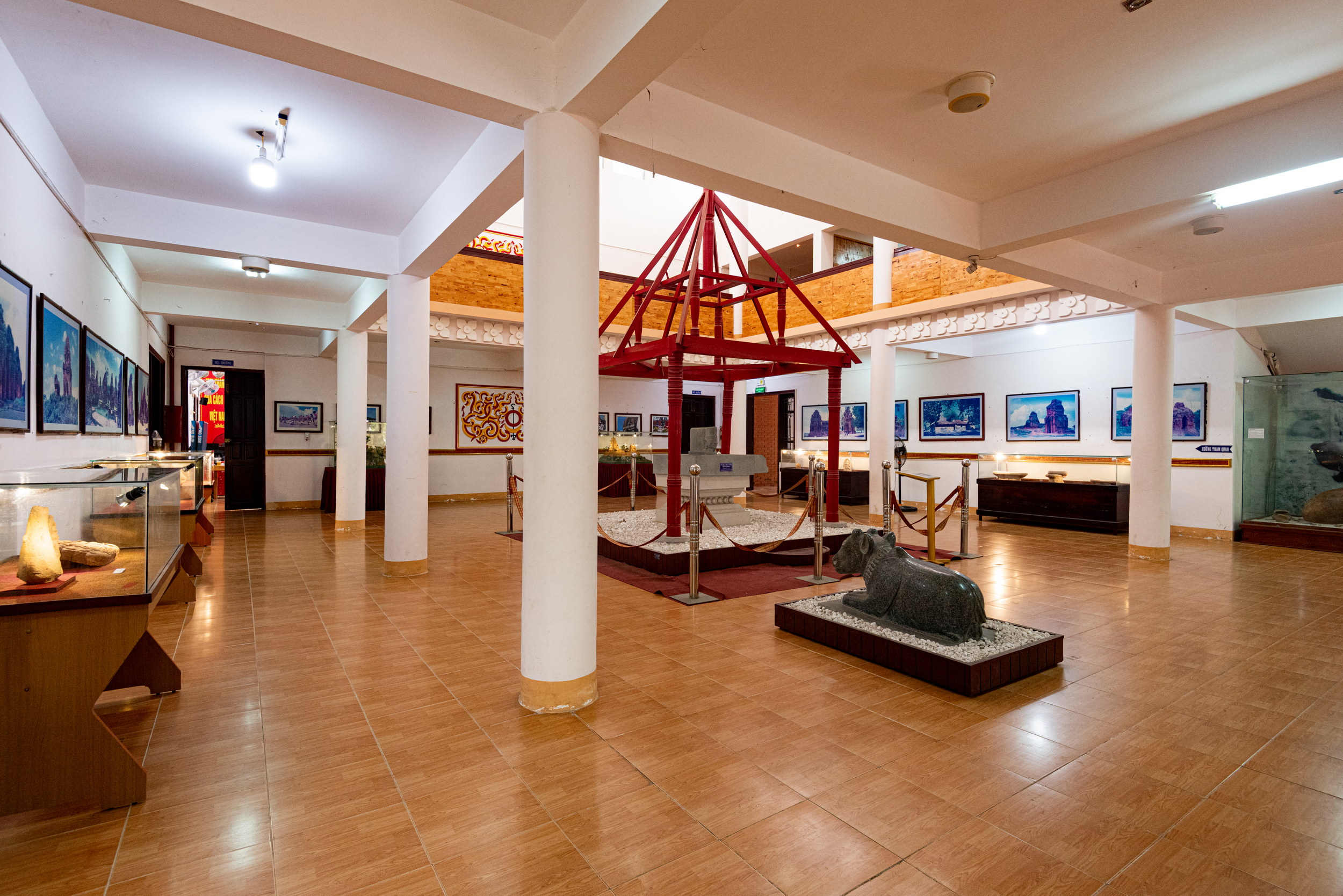
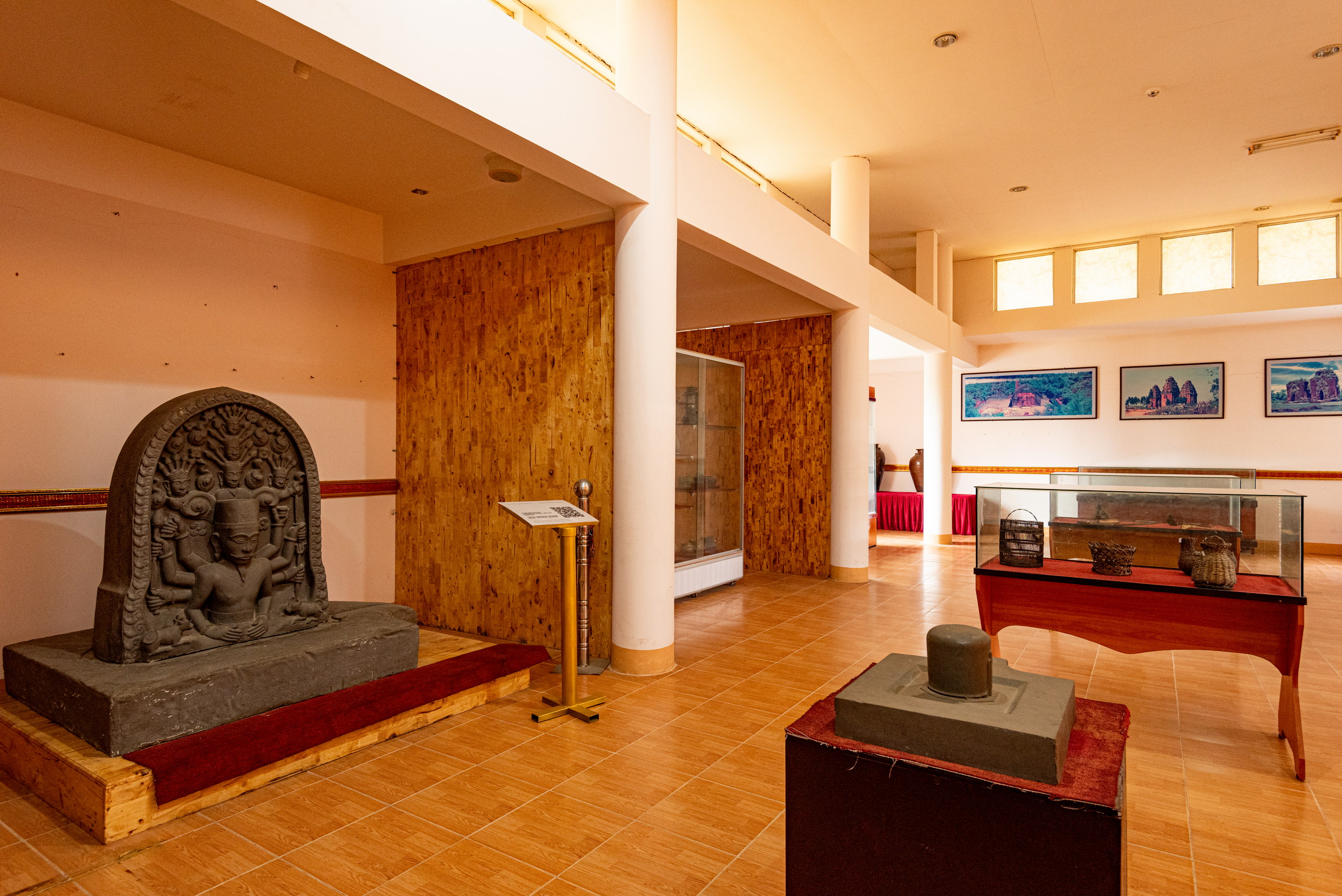
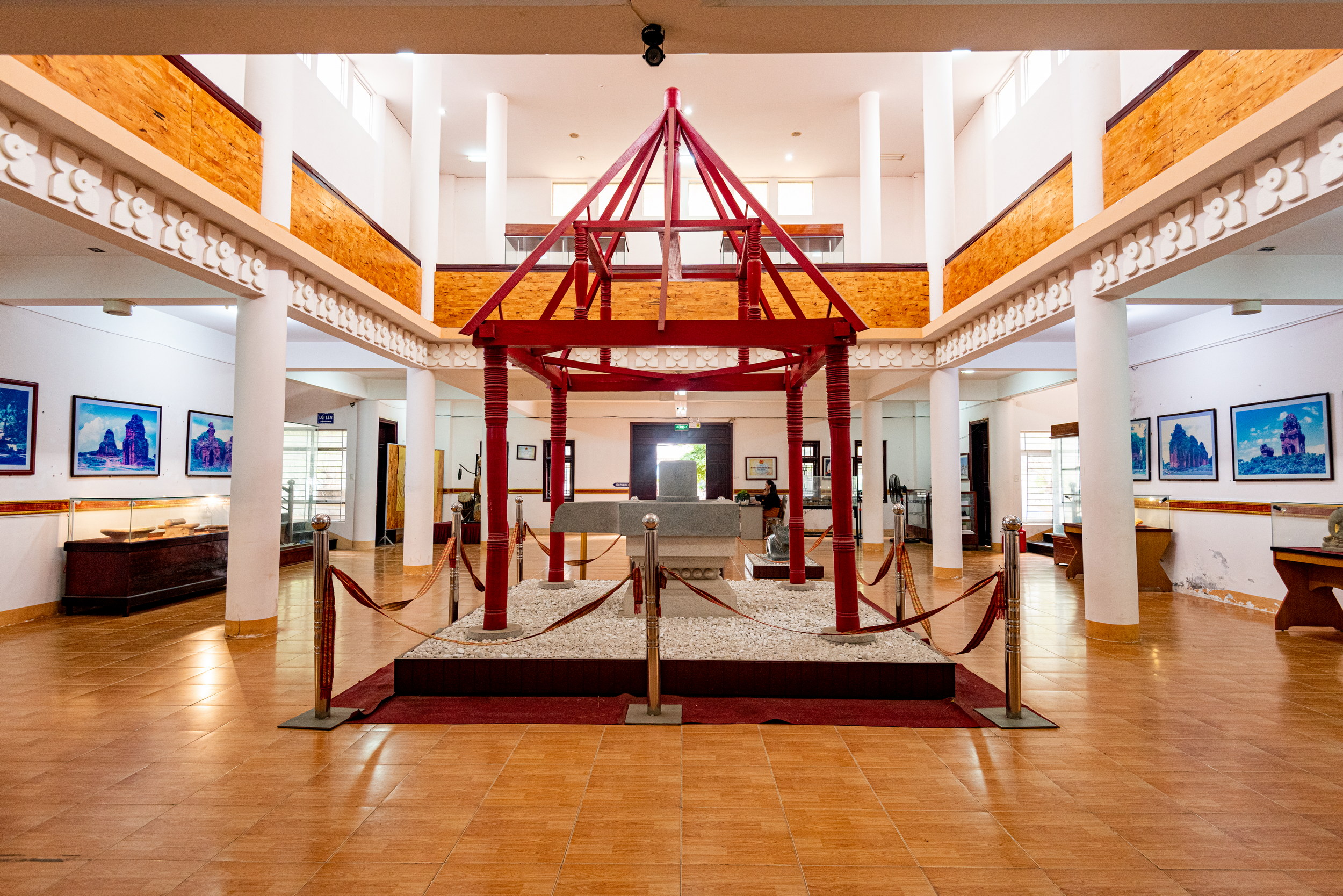
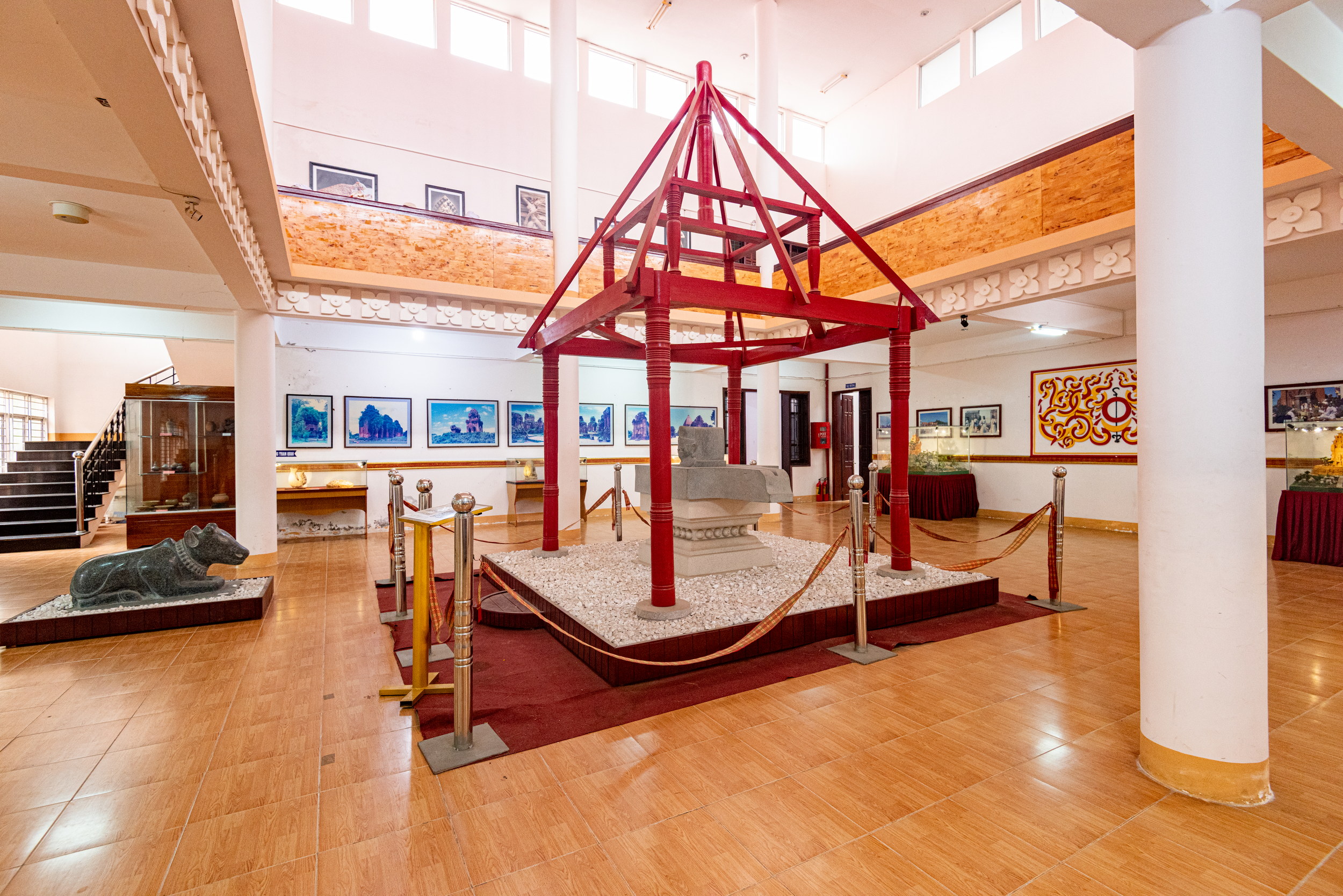
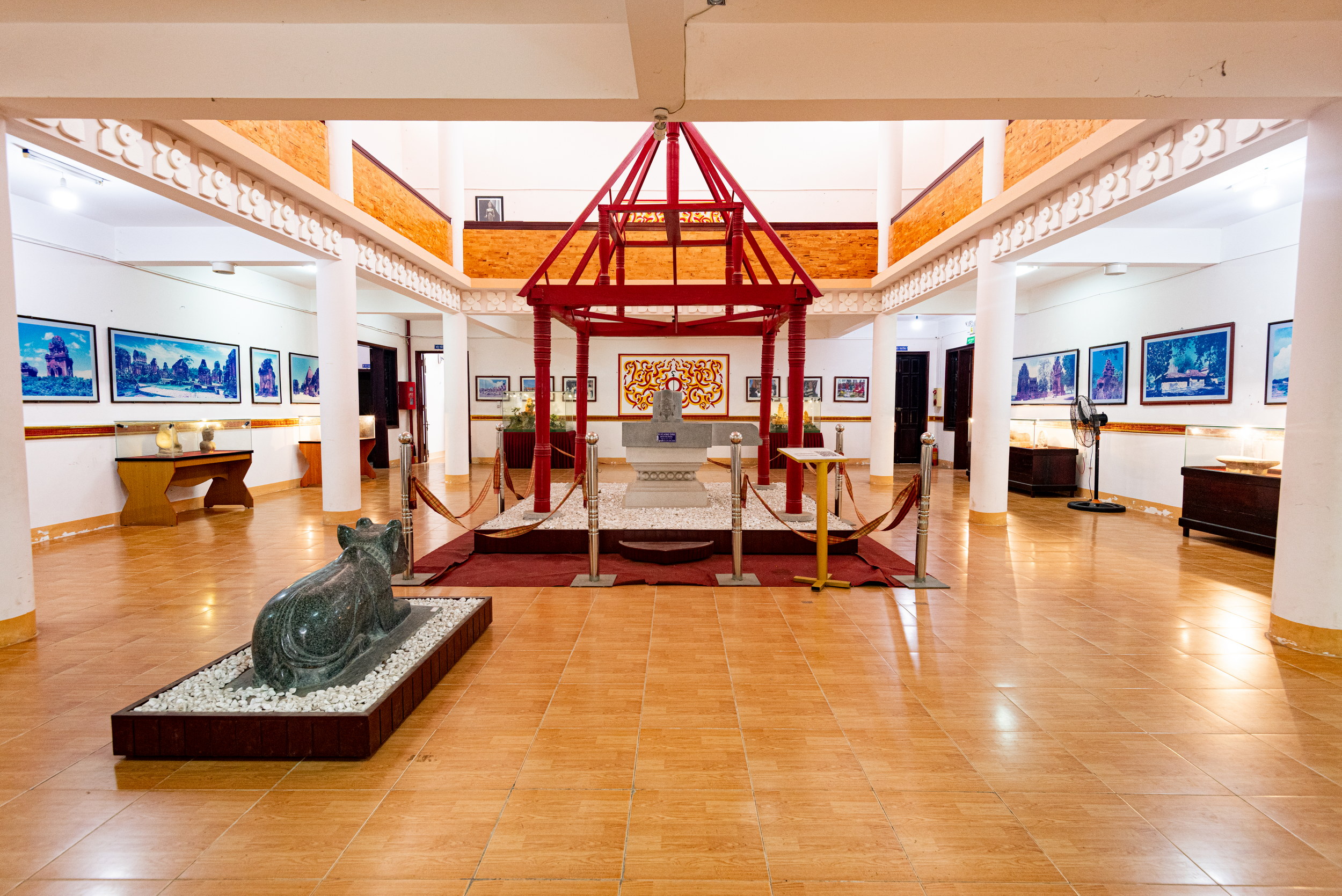
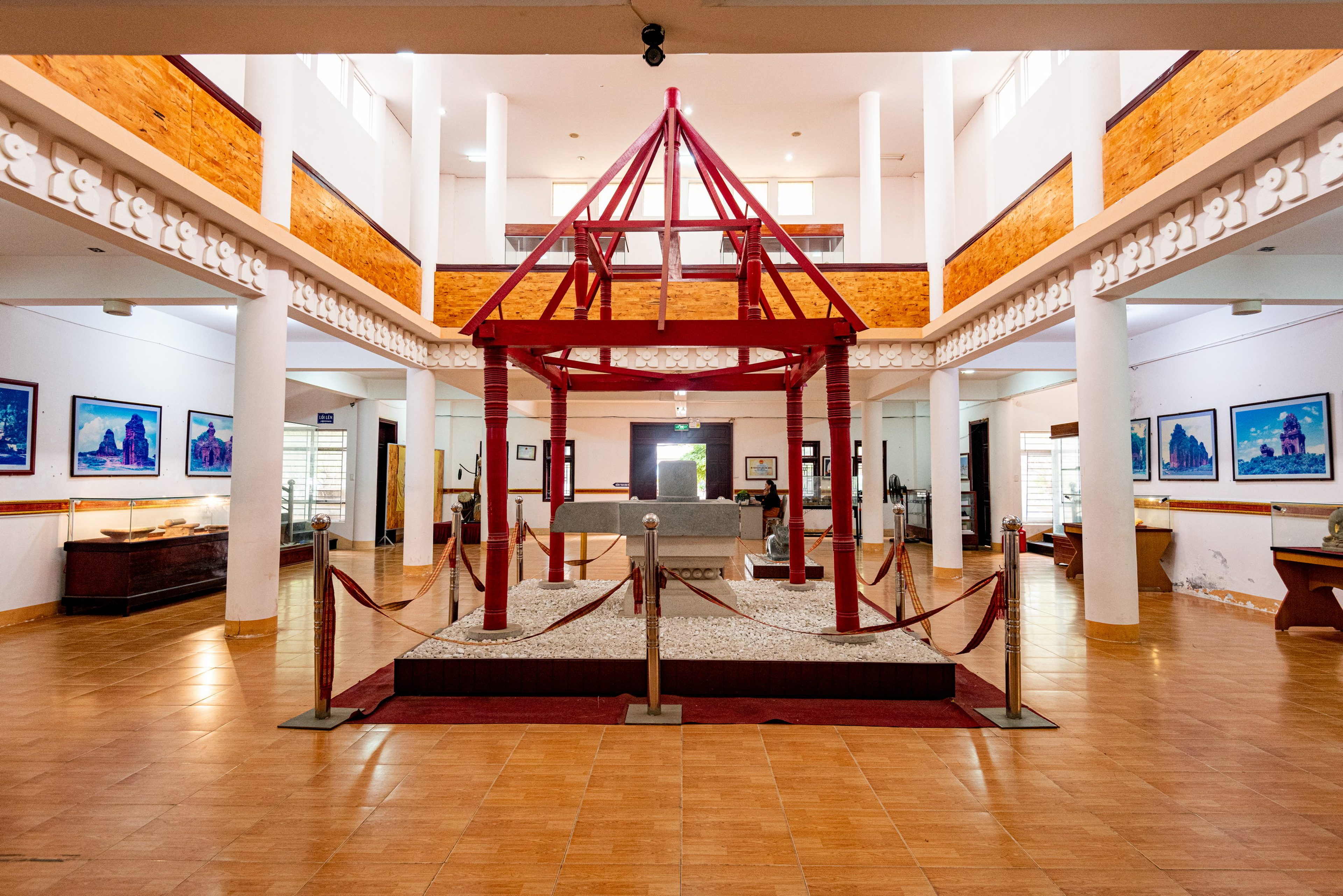
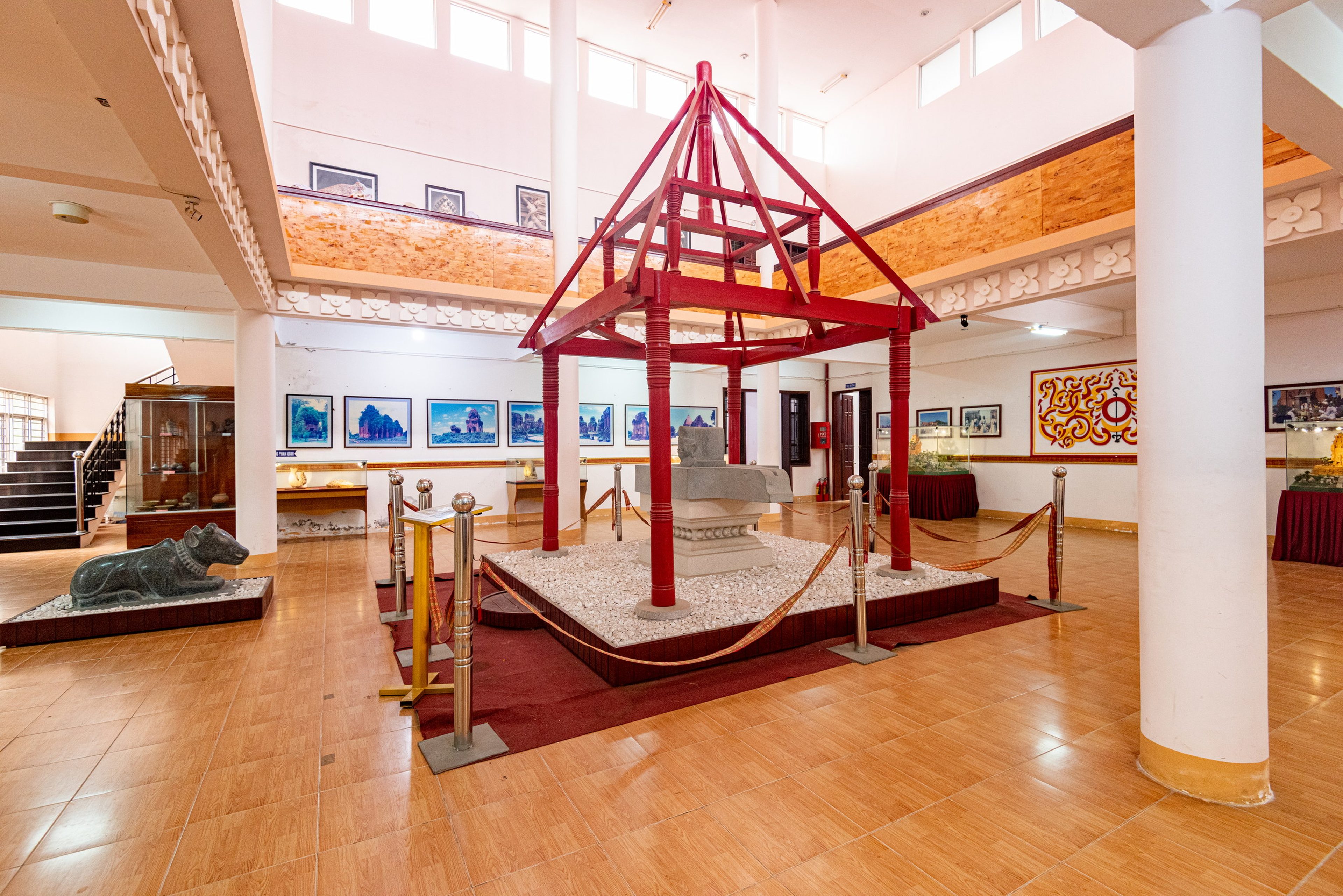
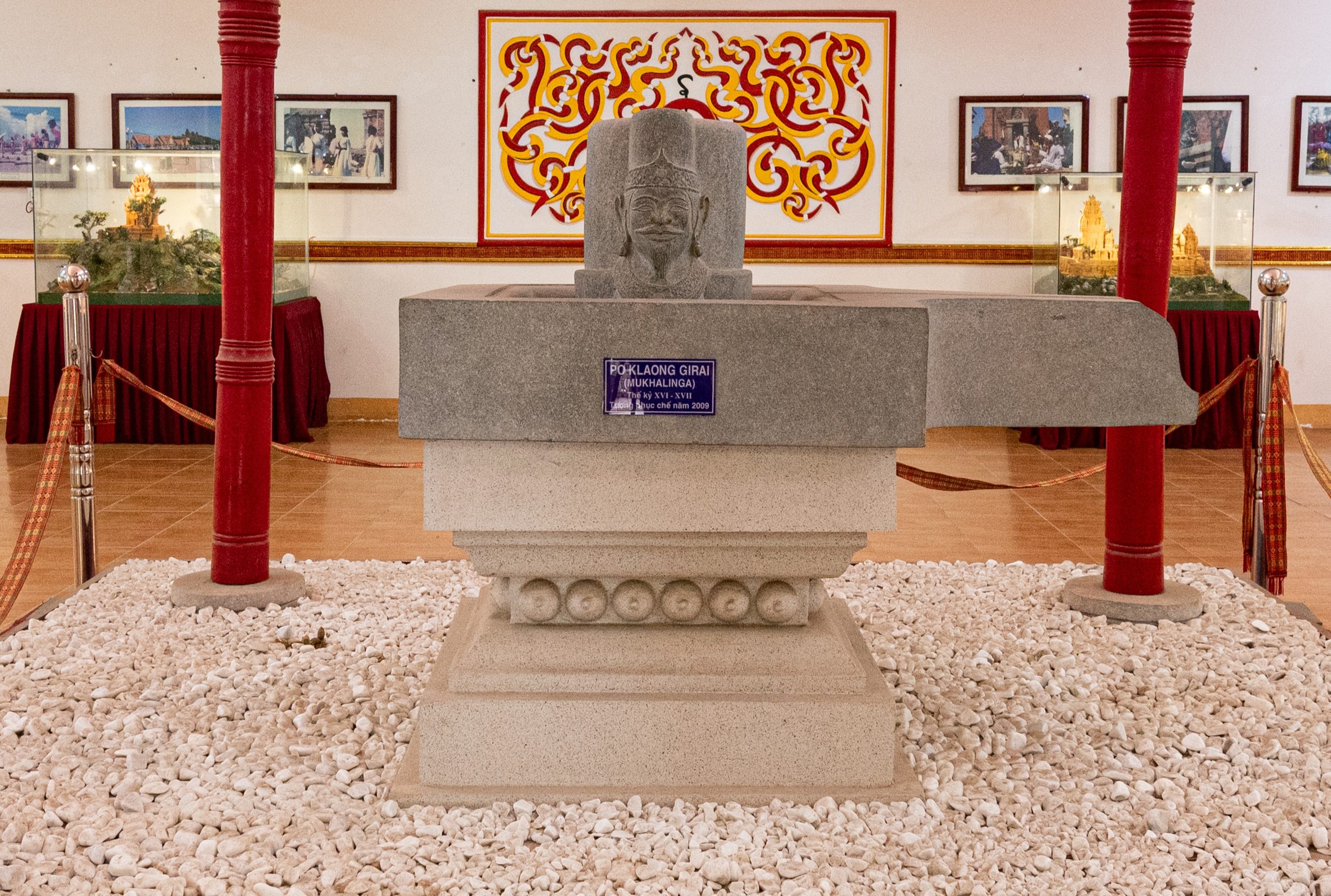
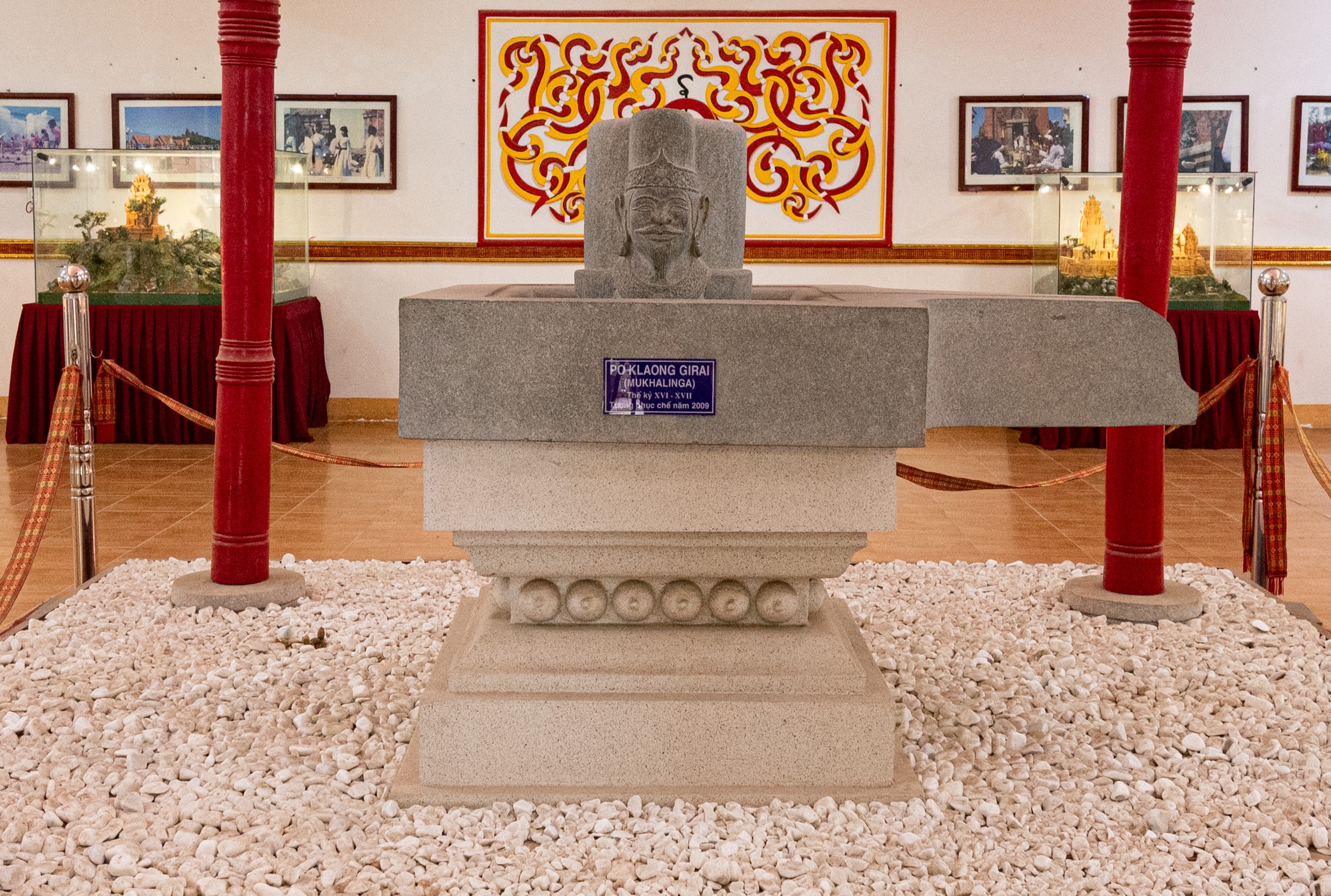
The statue of King Po Klong Garai (Po Klong Garai, Po Klaong Girai) is an important highlight in the exhibition space. The image of the king is depicted on a Linga, creating a special type of Mukhalinga that combines the spirit of Indian religion with the indigenous Cham belief system. The statue of Po Klong Garai dates back to the 16th – 17th centuries and is currently worshipped at the Po Klong Garai tower in Do Vinh Ward, Khanh Hoa Province. It is a rare, ancient sculpture representing the God-King figure in ancient art. Crafted as a semi-circular relief rising from a circular stone pillar, it is a unique Mukhalinga piece that does not feature the head of Shiva, but instead replaces it with the statue of the king attached to the Linga—an abstract image of a supreme deity, Shiva, representing destruction, mystery, authority, and immortality, alongside the majestic and creative image of a king dedicated to ruling the country and caring for the happiness of his people.
Next to it is the statue of the sacred bull Nandin, the mount of Shiva, which is also associated with the Kapil symbol in Cham belief. This collection of artifacts helps visitors recognize the spiritual depth of Cham figurative art.
Cham Sculptural Art
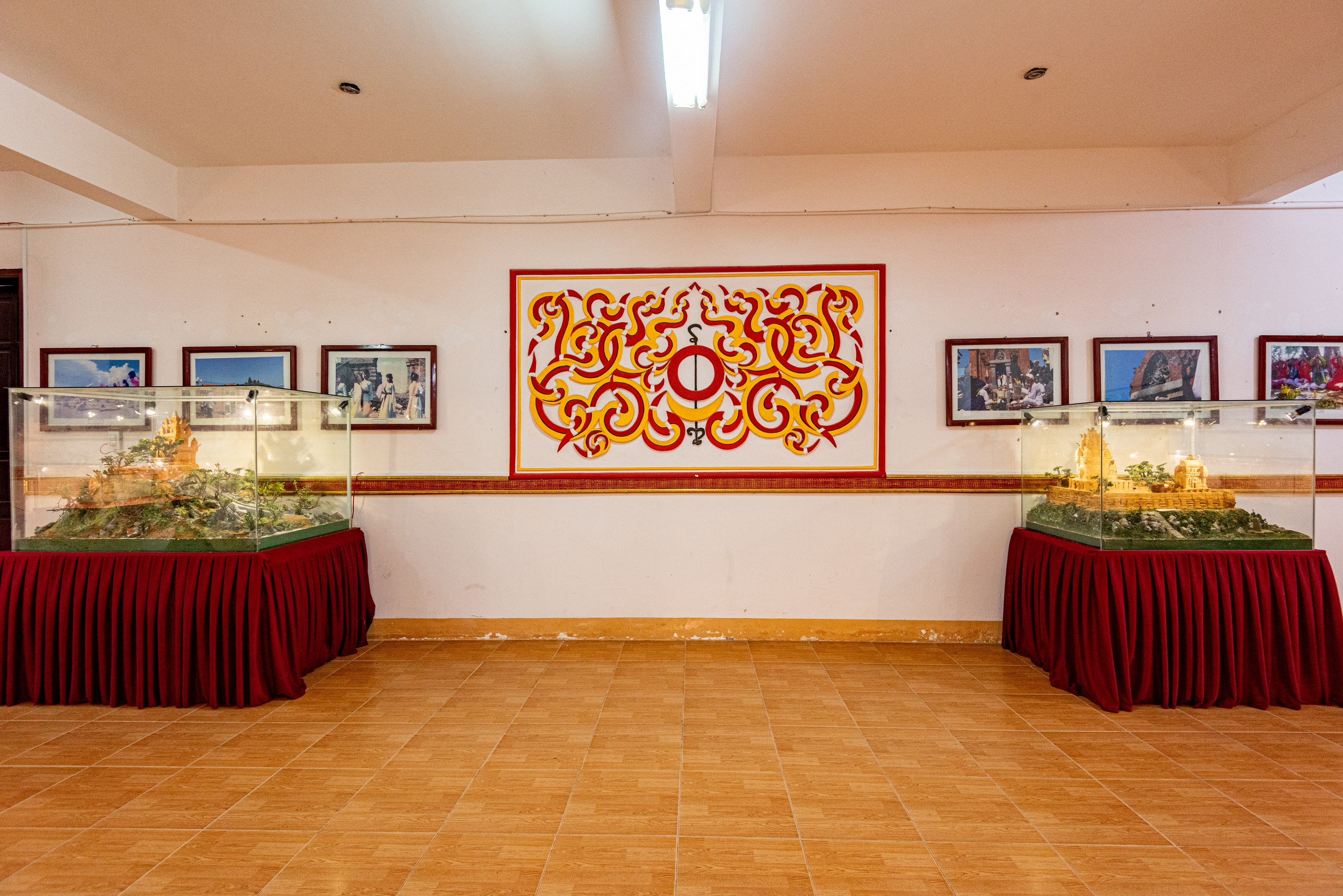
From Hoa Lai tower to Po Klong Garai and Po Rome towers – a journey of form and worship statues
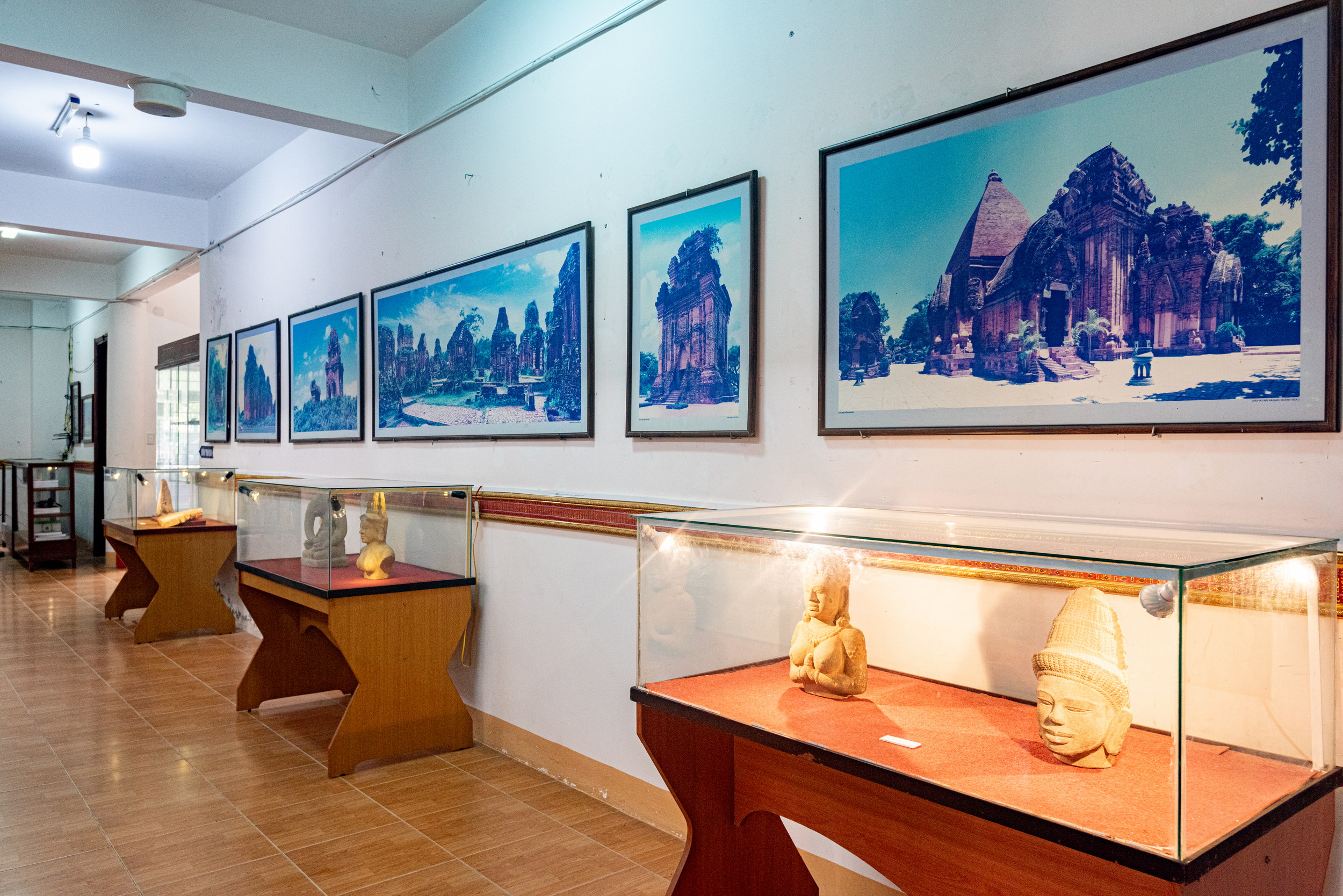
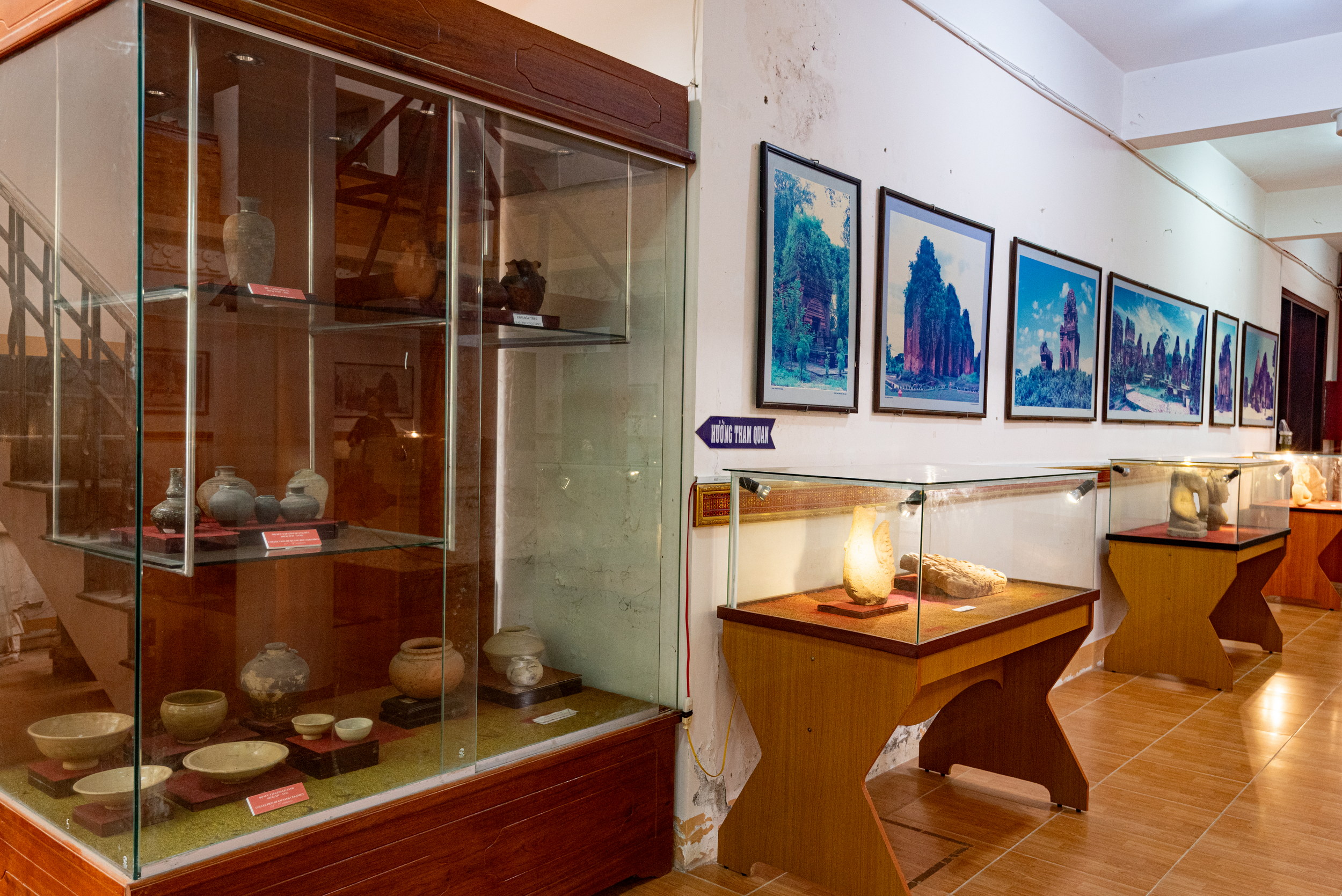
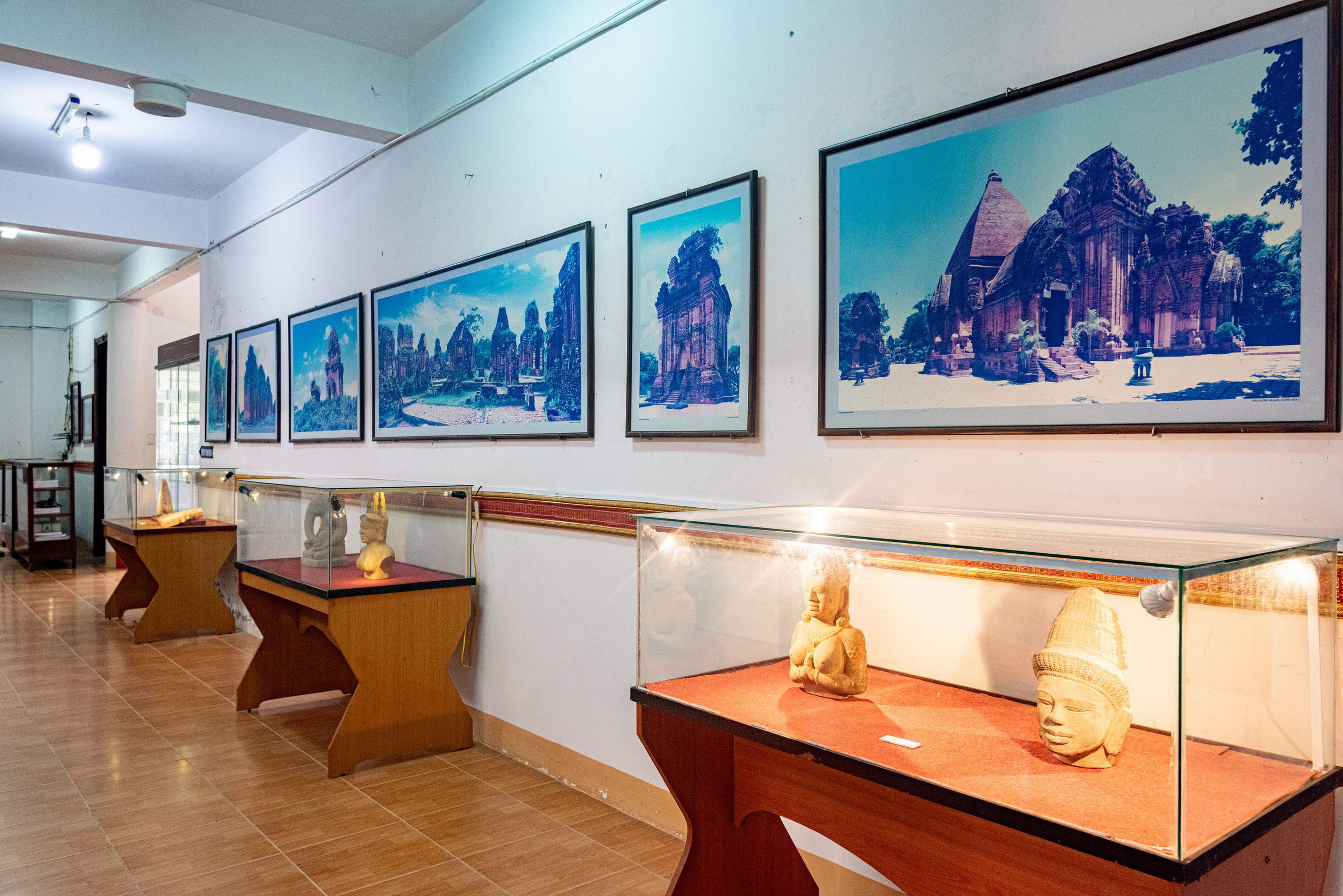
The Cham people are an ancient ethnic group living along the coast of Central Vietnam. Throughout their history of formation and development, they have created a diverse and unique culture. Today, in the realm of plastic arts, the Cham have left behind a massive architectural heritage of temples and towers, along with sculptures of high artistic value. The collections of rare artifacts include masterpieces representing each development stage of Cham sculpture from the late 8th century to the 17th century.
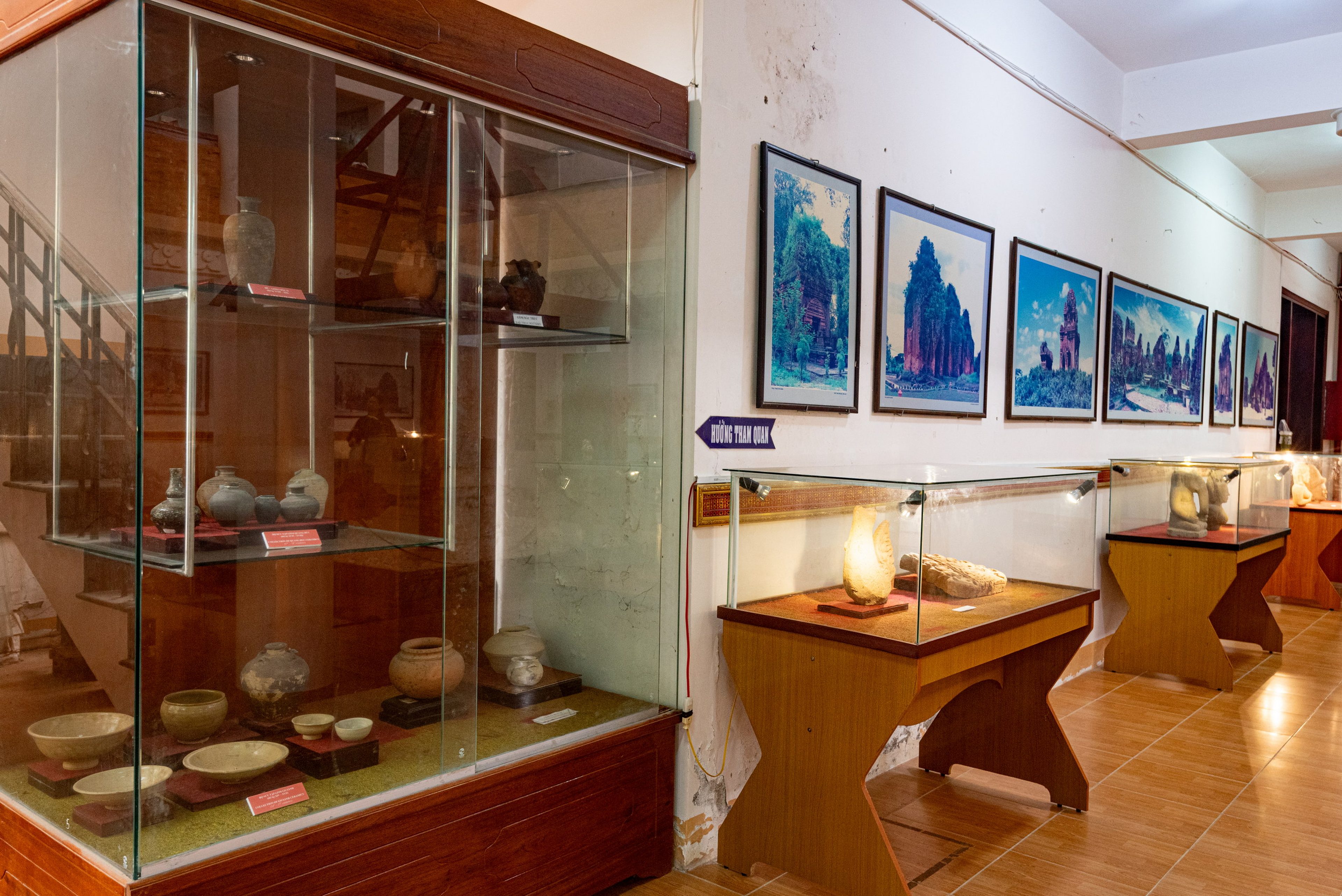
Most of these are original sculptures originating from Khanh Hoa Province, transferred to the museum at different times, primarily made of sandstone. These works belong to various artistic styles, such as the Hoa Lai style, the Po Klong Garai tower style, and the Po Rome tower style.
Po Klong Garai Tower
A Cham tower complex associated with the sacred king, irrigation, festivals, and community memory
The Po Klong Garai tower was built in the late 13th – early 14th century, initially associated with the worship of Shiva, and later localized to worship King Po Klong Garai. The complex currently consists of three main structures: the Gate Tower, the Fire Tower, and the Main Tower.
In Cham memory, Po Klong Garai was a talented king who cared for the lives of the people, specifically associated with the legend of bringing water to the fields. Every year, many rituals take place at the tower, such as the Rain-Praying Ceremony, Kate, the ceremony to commemorate the Mother of the Land, and the Tower Opening Ceremony.
Po Rome Tower
A late stage of Cham architecture and the sacred symbol connecting Awal and Ahier
The Po Rome tower is an important landmark of the late period in Champa history. King Po Rome (Po Rome, Po Ramé) is worshipped by the Cham people for his merit in harmonizing the Awal and Ahier Cham communities, contributing to economic, political, diplomatic, and cultural development.
In Cham memory, Po Klong Garai was a talented king who cared for the lives of the people, specifically associated with the legend of bringing water to the fields. Every year, many rituals take place at the tower, such as the Rain-Praying Ceremony, Kate, the ceremony to commemorate the Mother of the Land, and the Tower Opening Ceremony.
Jar Burials and Traces of Ancient Inhabitants
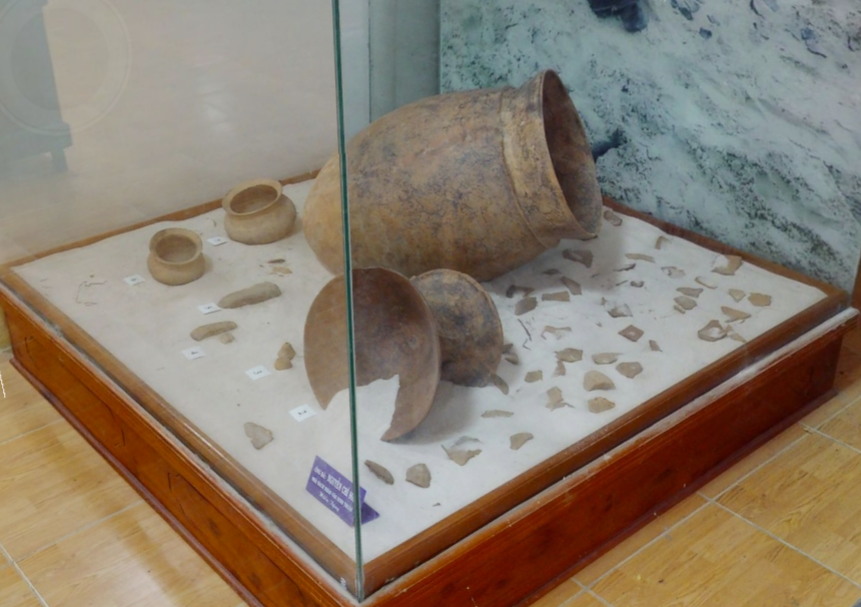
The pre-proto-historic memory layer expands the cultural depth of Southern Khanh Hoa
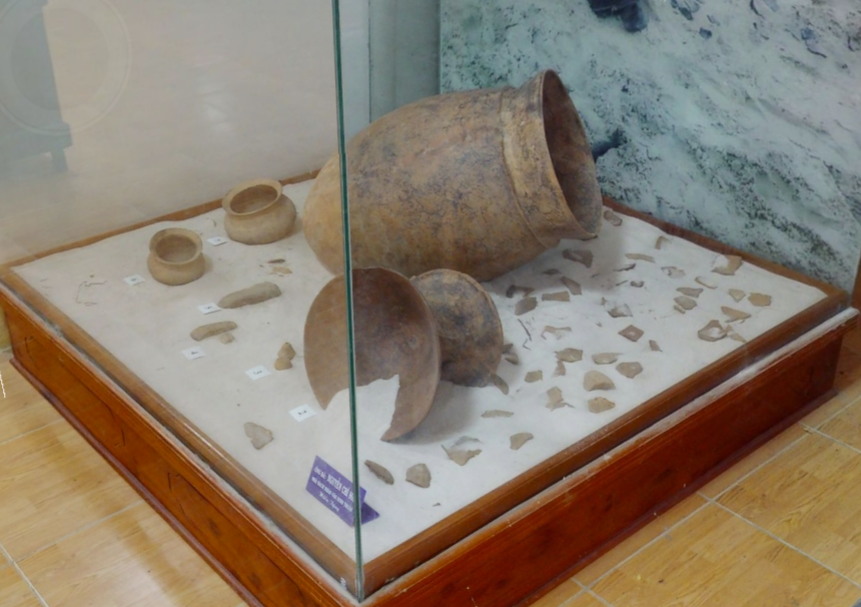
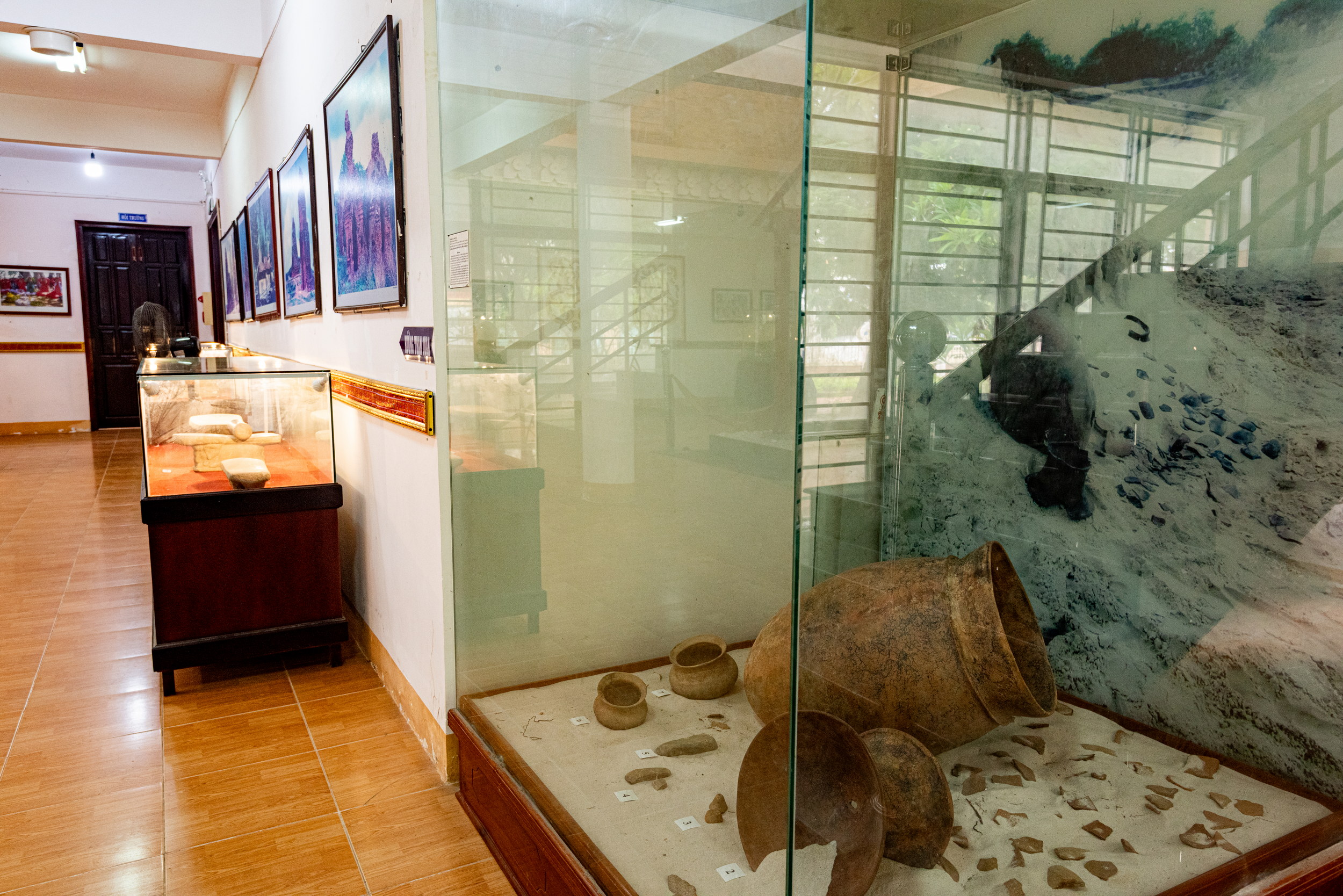
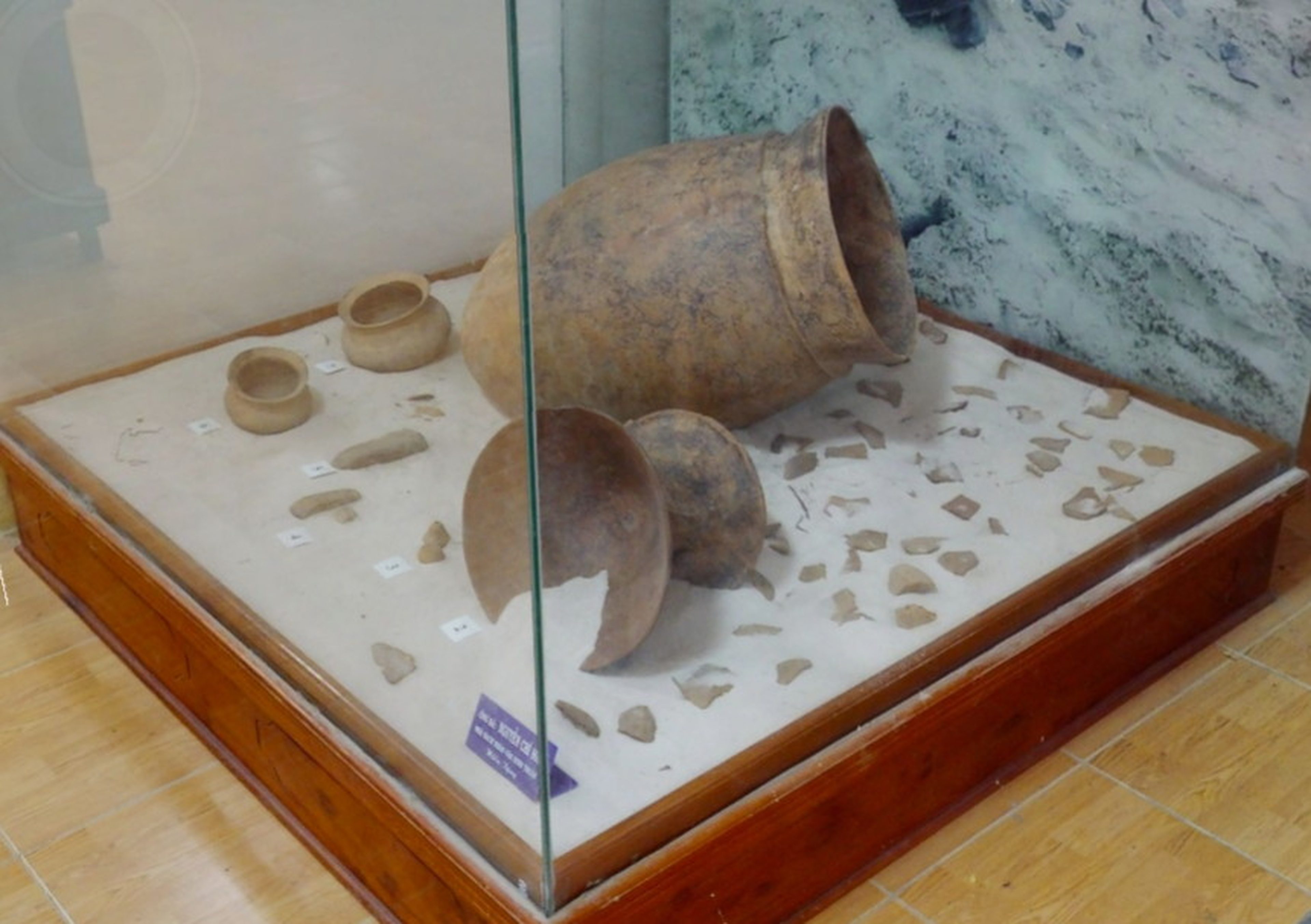
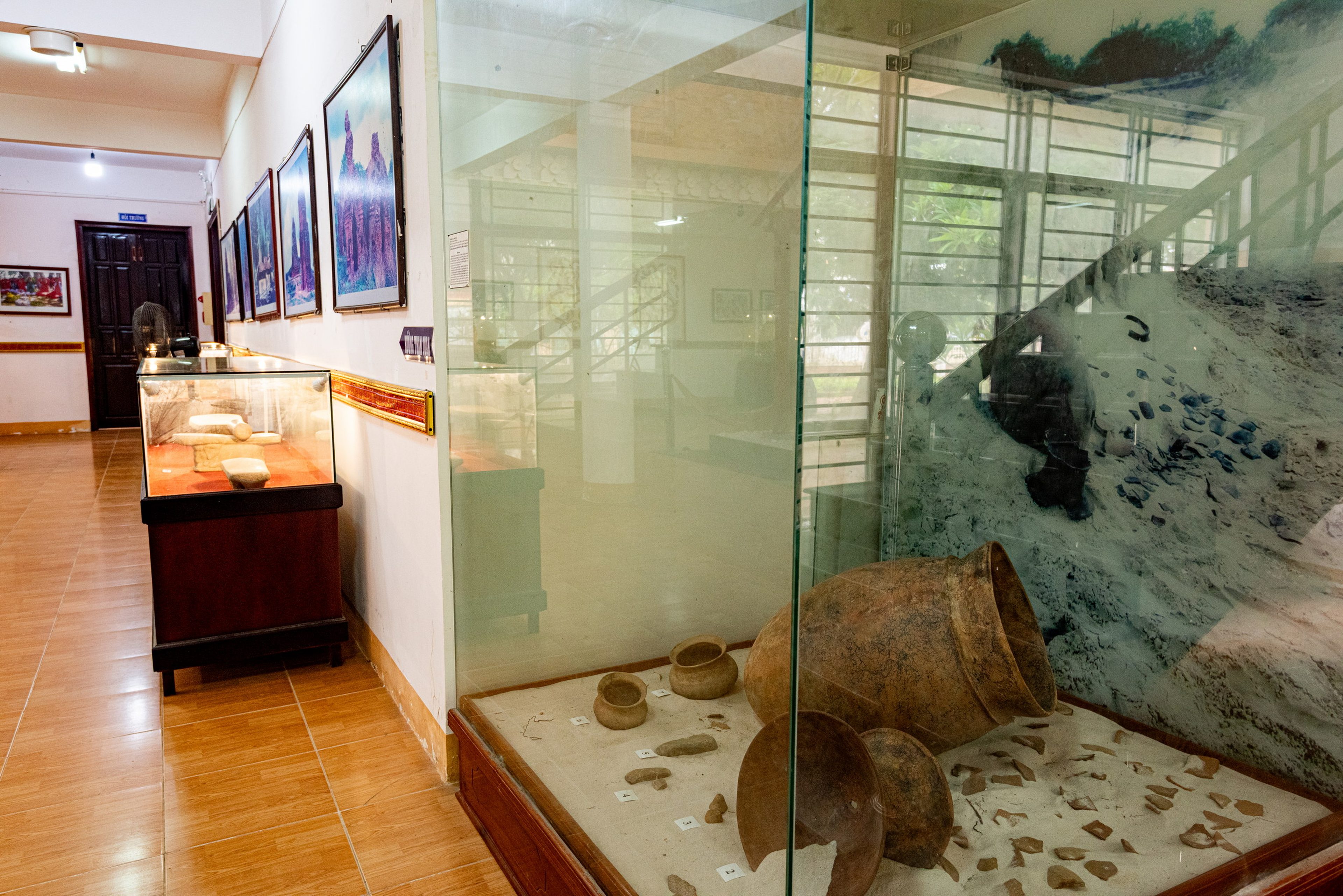
The archaeological space introduces traces of the Sa Huynh culture, highlighted by the practice of burying the deceased in large jars, along with many funerary goods such as labor tools, weapons, daily utensils, and jewelry made of stone, pottery, iron, gemstones, and glass.
Traces found at Hon Do in Southern Khanh Hoa reveal important layers of habitation and burial, helping visitors visualize that this land had an ancient population very early on, long before the Cham cultural layers developed strongly.
Traditional Cham Music
Saranai trumpet, Ginang drum, Baranang, and the sound of the Kanhi string instrument in festival life
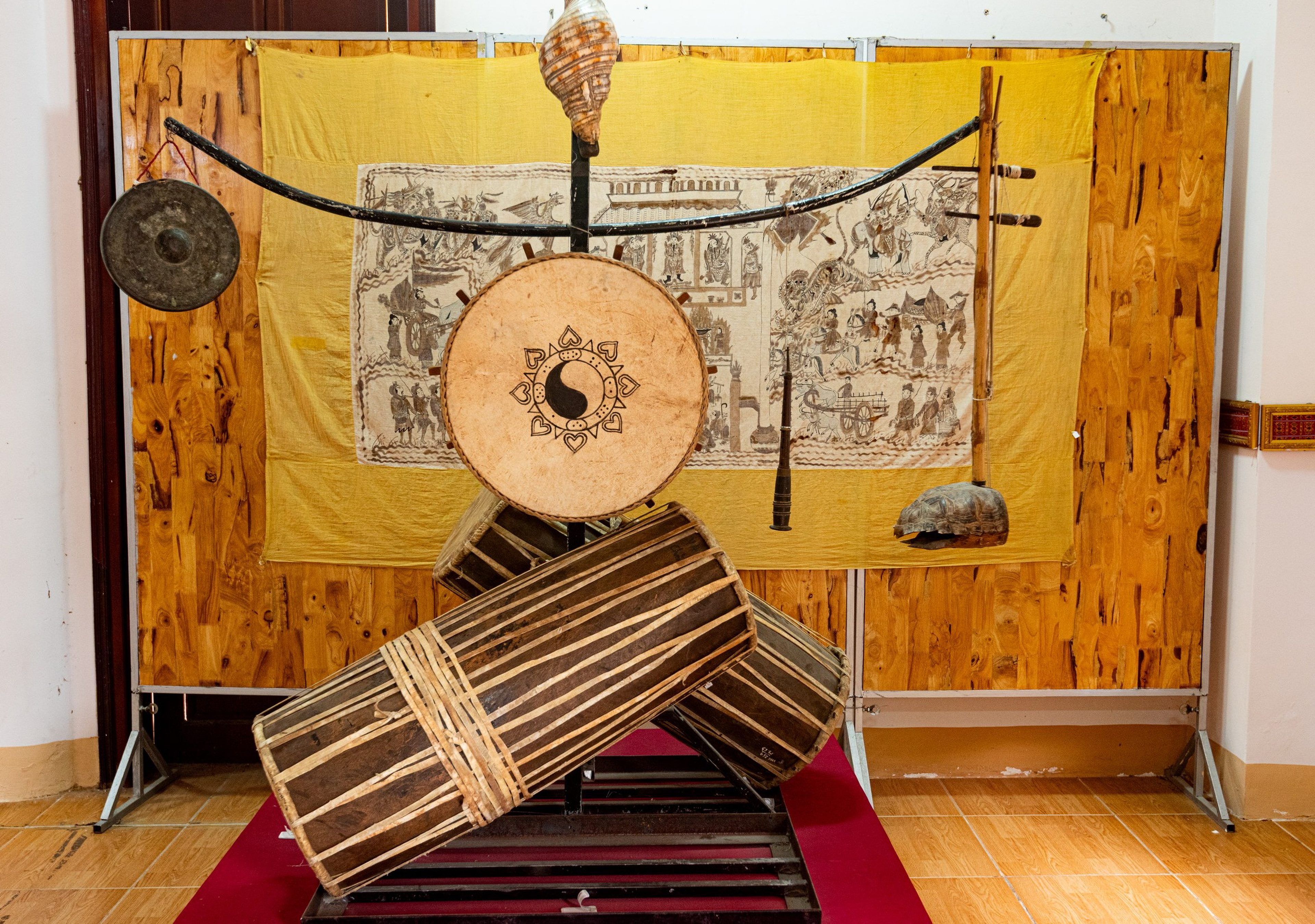
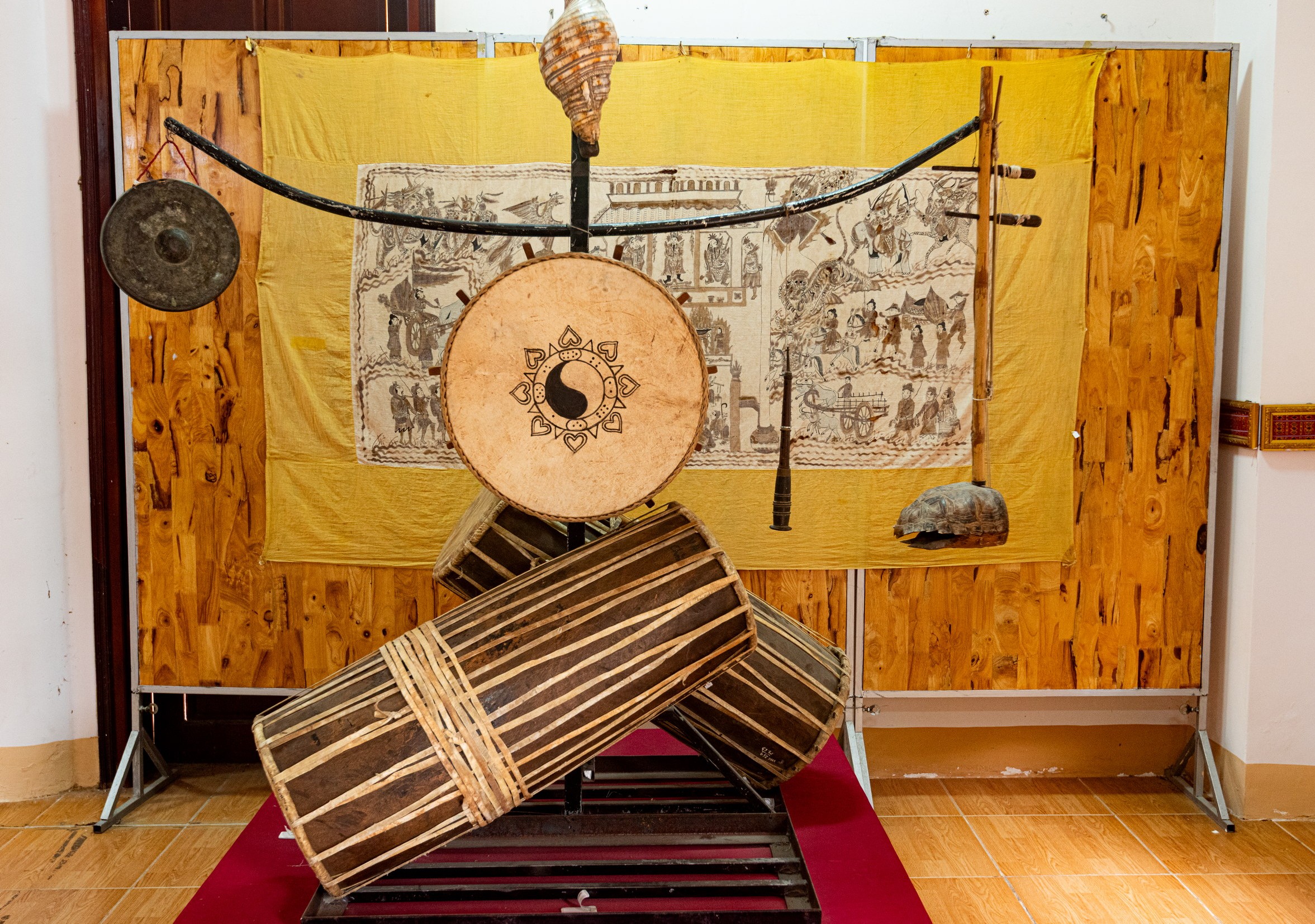
Traditional Cham music is present in ritual songs, folk songs, lullabies, ARIYA chants, Rija dance rituals, and the Kate festival. The sound of strings and drums does not only create a festival atmosphere but is also deeply embedded in the spiritual life of the Cham people from childhood.
Musical instruments such as the Saranai trumpet, Baranang drum, Ginang drum, Kanhi, gongs, and the Aseng conch shell are widely used in religious life and community rituals.
Bau Truc Cham Pottery
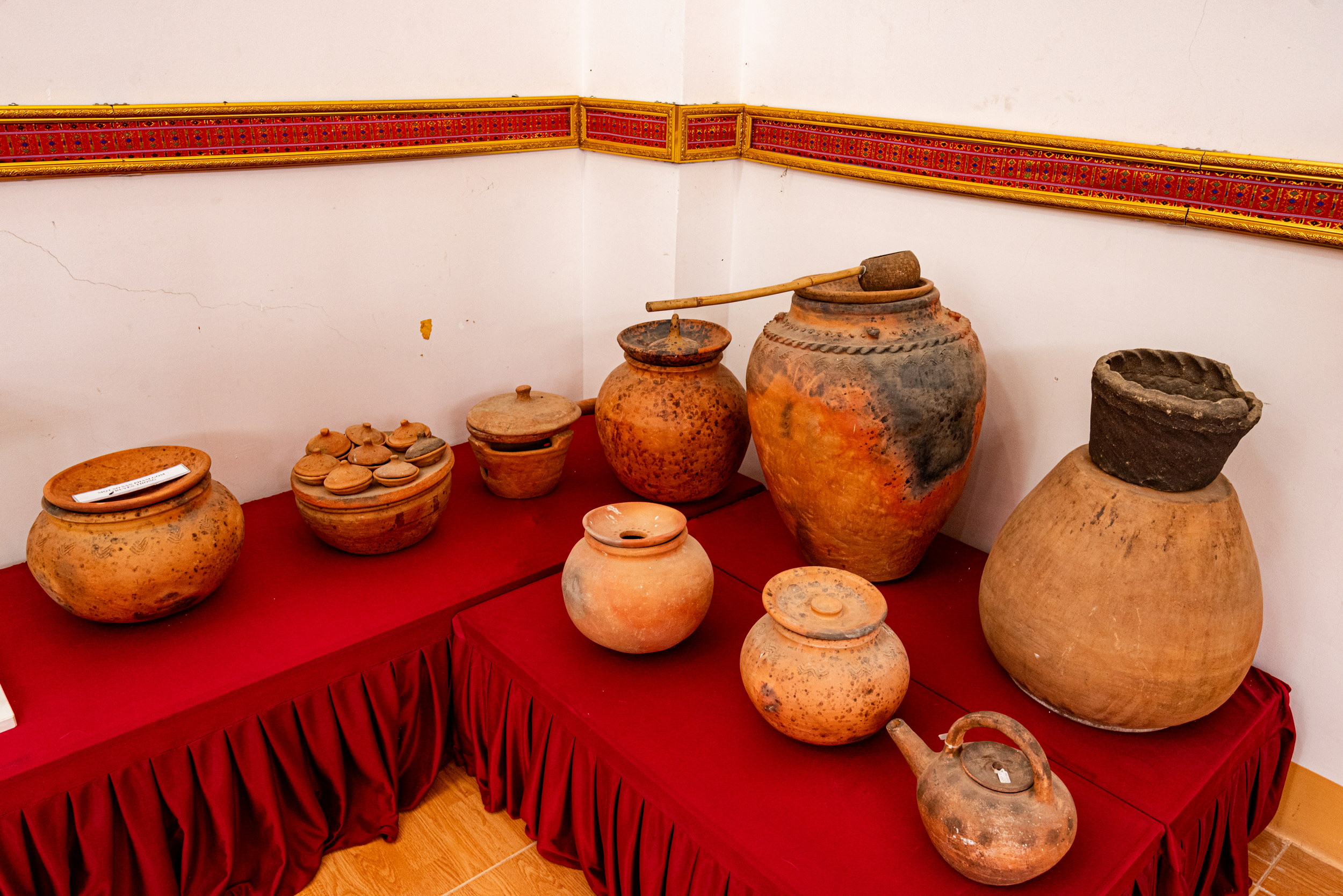
Artisan hands create rustic unique pieces from clay, fire, and emotion
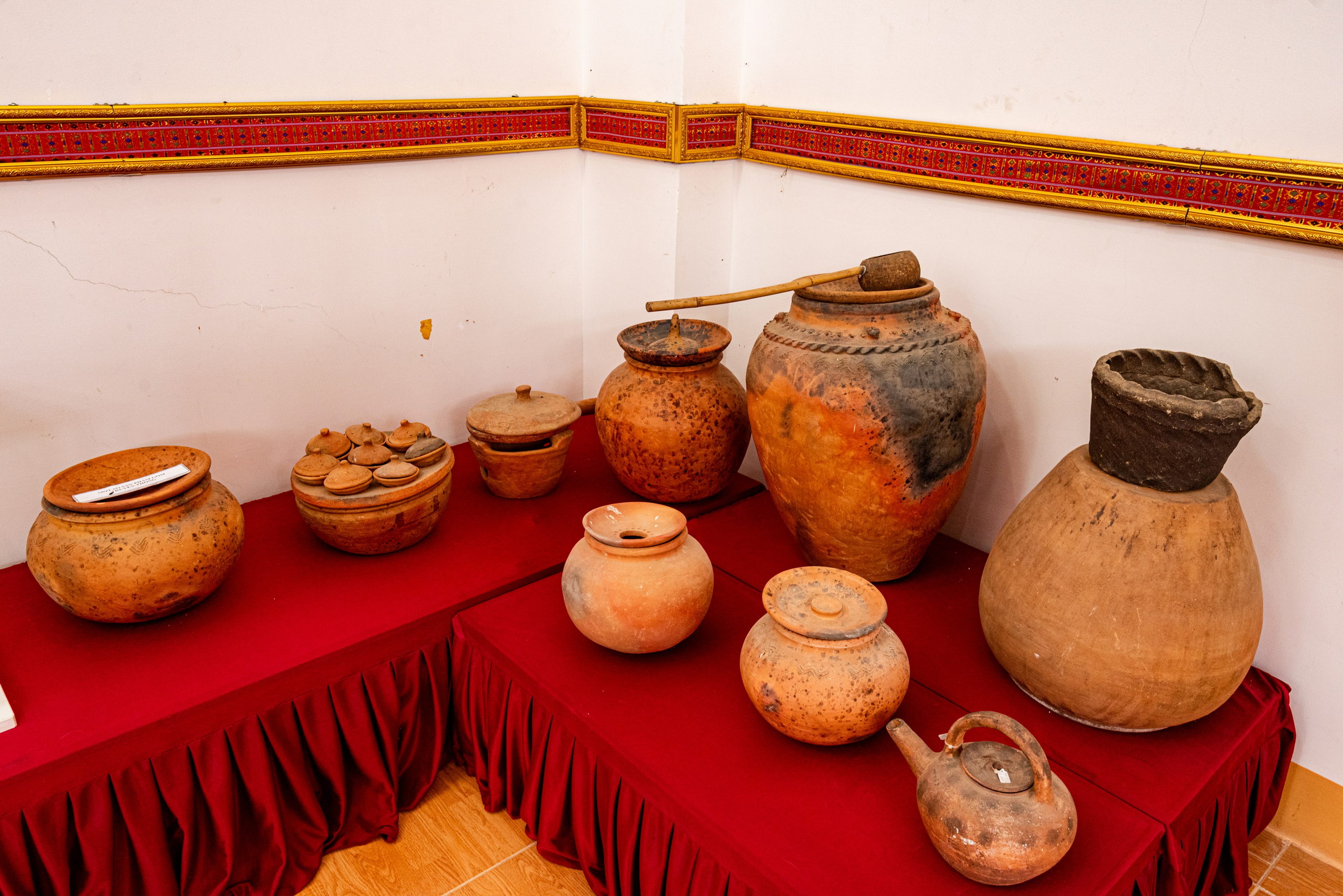
Bau Truc Cham pottery is a unique traditional craft, distinguished by the technique of making pottery by hand without the use of a turntable, and firing it in the open air. Creating a piece of pottery involves several stages: preparing the clay; shaping the pottery: molding, burnishing, and decorating; drying; and firing. In the past, Bau Truc Cham pottery products were mainly used for daily activities and worship and were transported throughout villages, widely consumed within the community. Today, as technology has developed, terracotta items are gradually used less, replaced by ceramics, porcelain, glass, and metal items of various shapes and sizes. Therefore, Cham households in Bau Truc pottery village now primarily focus on producing decorative ceramics for display, souvenirs, and feng shui items for homes, offices, and shops... which are particularly attractive to foreign tourists.
The art of Bau Truc pottery has been inscribed on the UNESCO List of Intangible Cultural Heritage in Need of Urgent Safeguarding, affirming the unique value of Cham craft knowledge in contemporary life.
My Nghiep Brocade Weaving and Traditional Herbal Medicine
From cotton, fiber, and dyes to patterns – Cham women's hands create identity
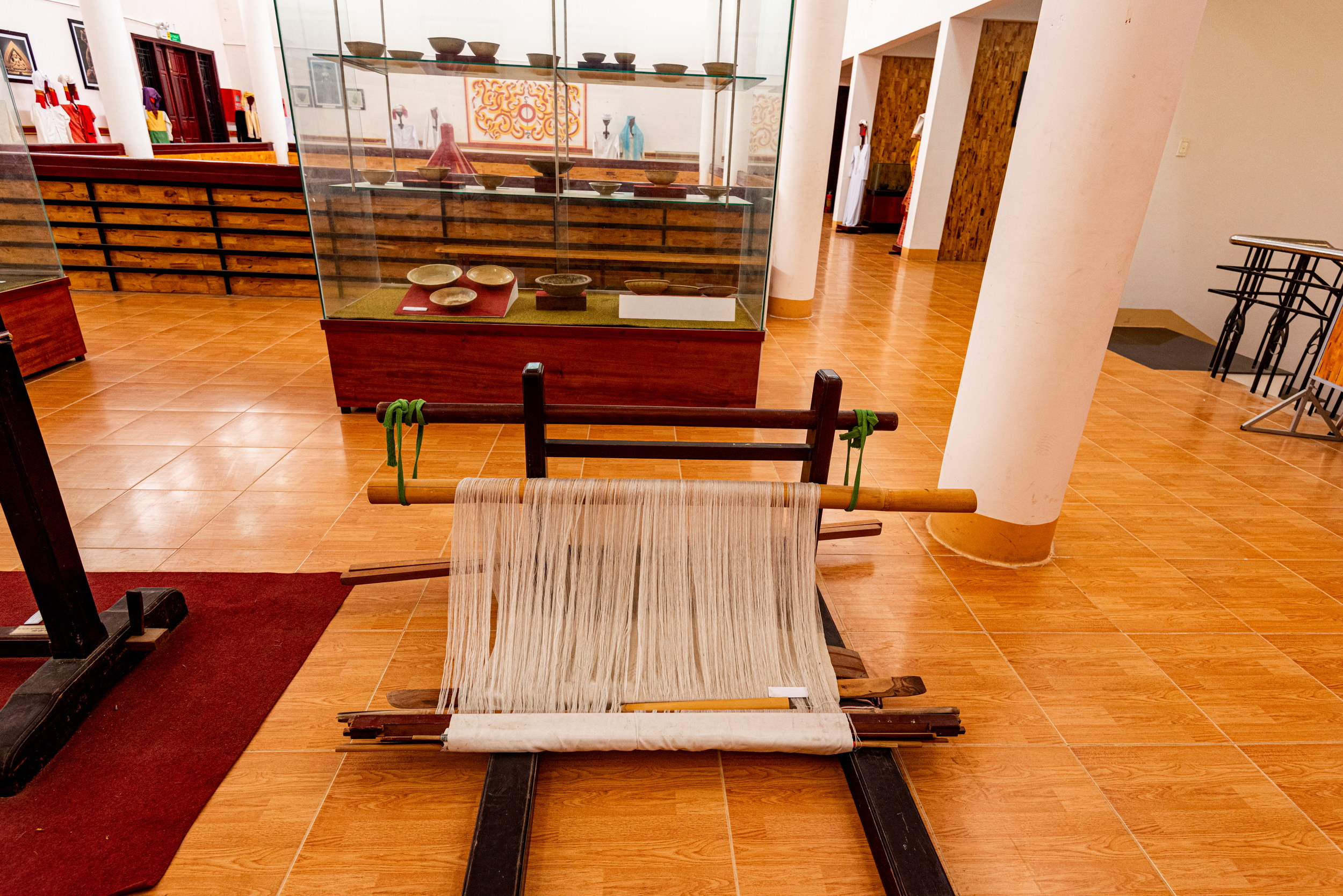
Besides pottery, the Cham people in Khanh Hoa also have a brocade weaving craft in My Nghiep village that is equally famous. This is also a traditional craft village that has existed for a long time. Around the 1950s and earlier, the Cham people often grew cotton to obtain fiber. The technique of extracting fiber and warping it follows these processes: first, the artisan separates the seeds from the cotton on a frame, then uses a bow to shoot the cotton to fluff it up. After the cotton is spread into thin sheets, they use a pointed bamboo stick to roll them into cotton slivers to draw out and spin the thread. This is followed by stages such as: winding into rolls, soaking and pounding, dyeing, starching, brushing, and polishing. The final step is warping the threads and setting the heddle to prepare the patterns before placing them onto the loom.
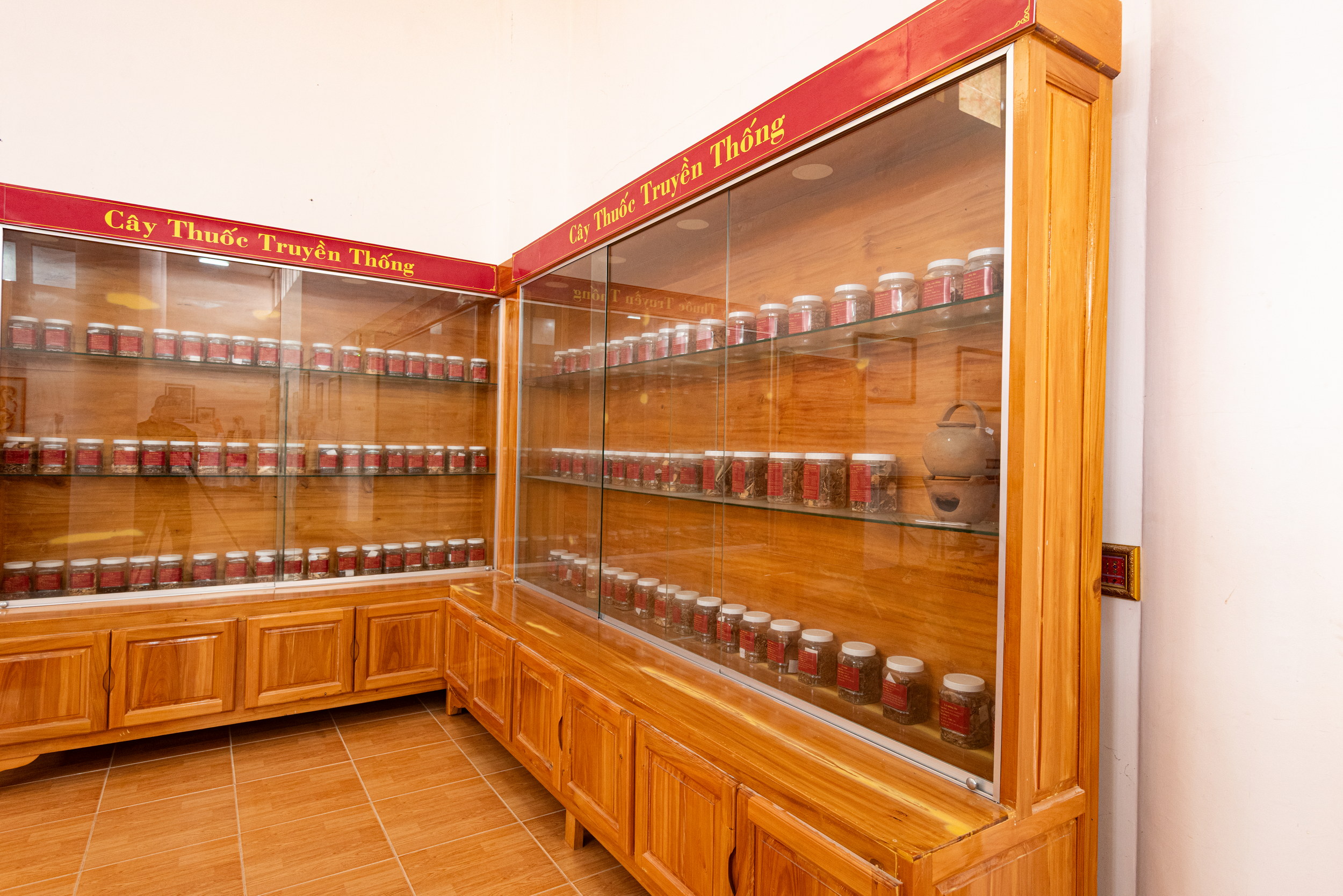
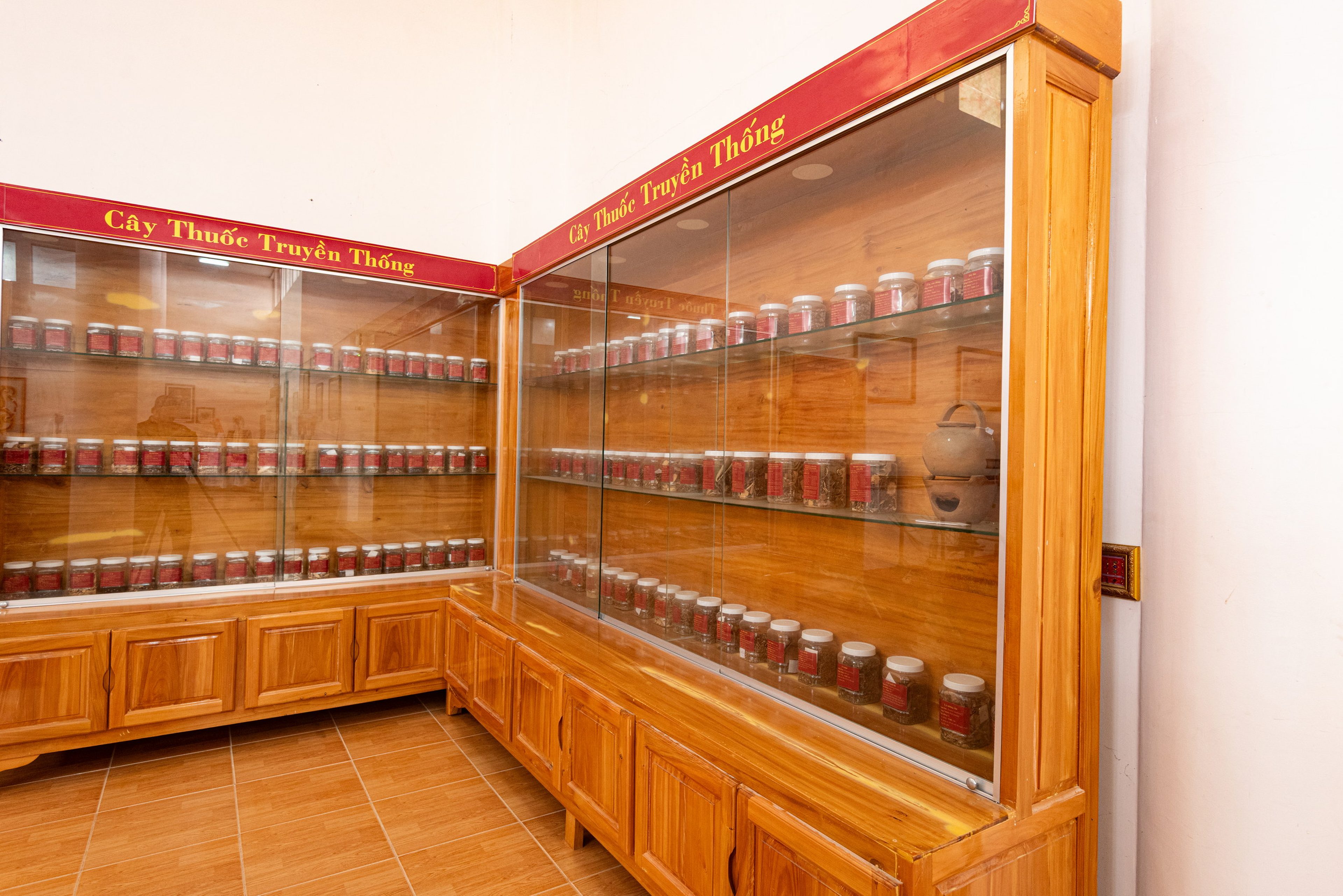
The Cham also have a long-standing tradition of herbal medicine. Healing methods that seem “mysterious” are actually the ancient healing experiences of the Cham people. Moreover, each family has its own unique knowledge of medicine, known as a secret. These secrets are not shared with outsiders but are passed down only to relatives, such as children or grandchildren, or from a master to a loyal disciple. This is because there is a belief that a healer must be virtuous and compassionate; if these secrets were passed to an outsider who might be greedy and unethical, they could exploit the profession for money, failing to respect medical ethics.
Attire, Beliefs, and Cham Community Life
Ahier, Awal, Islam – layers of identity recognized through attire, rituals, and ceremonial objects
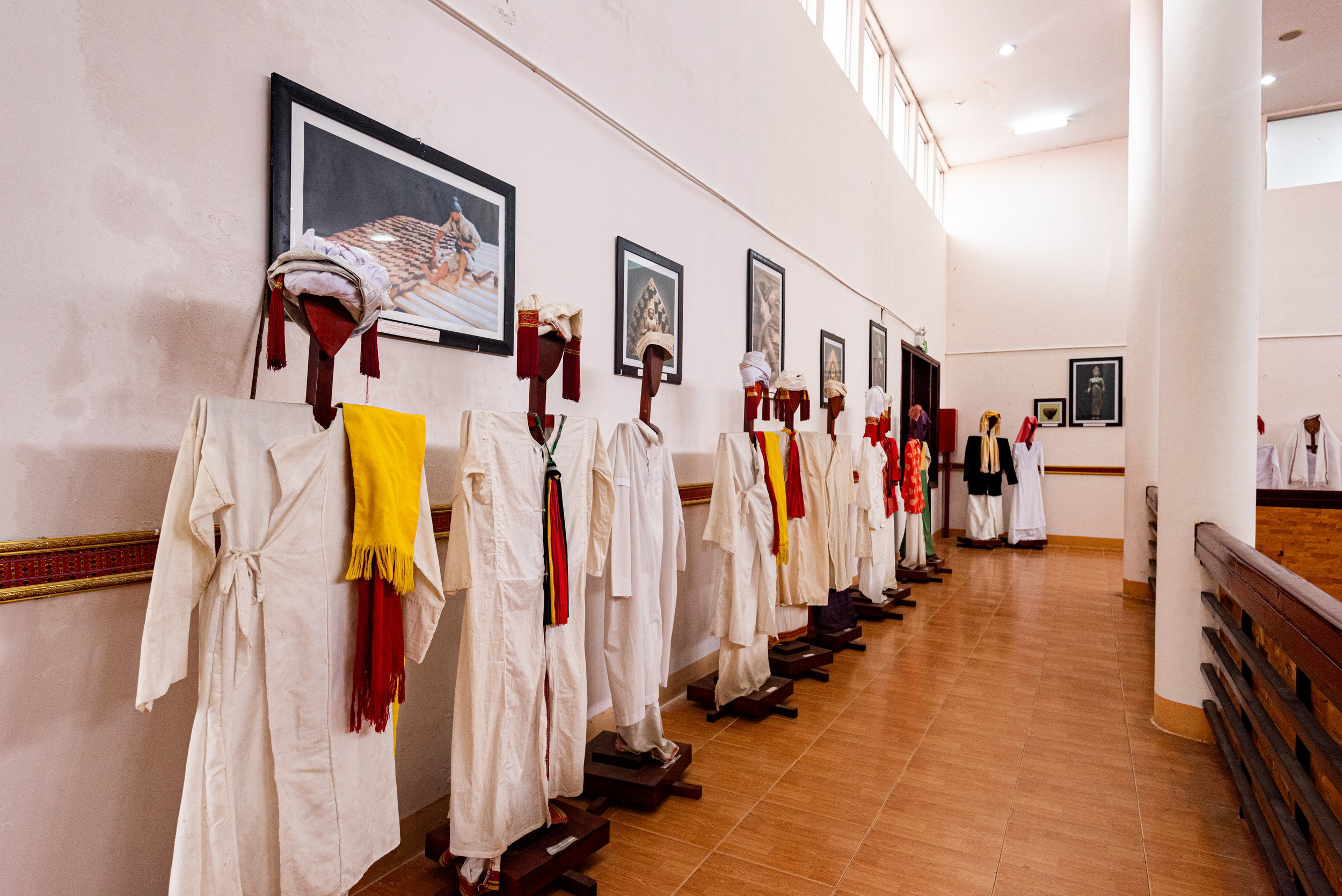
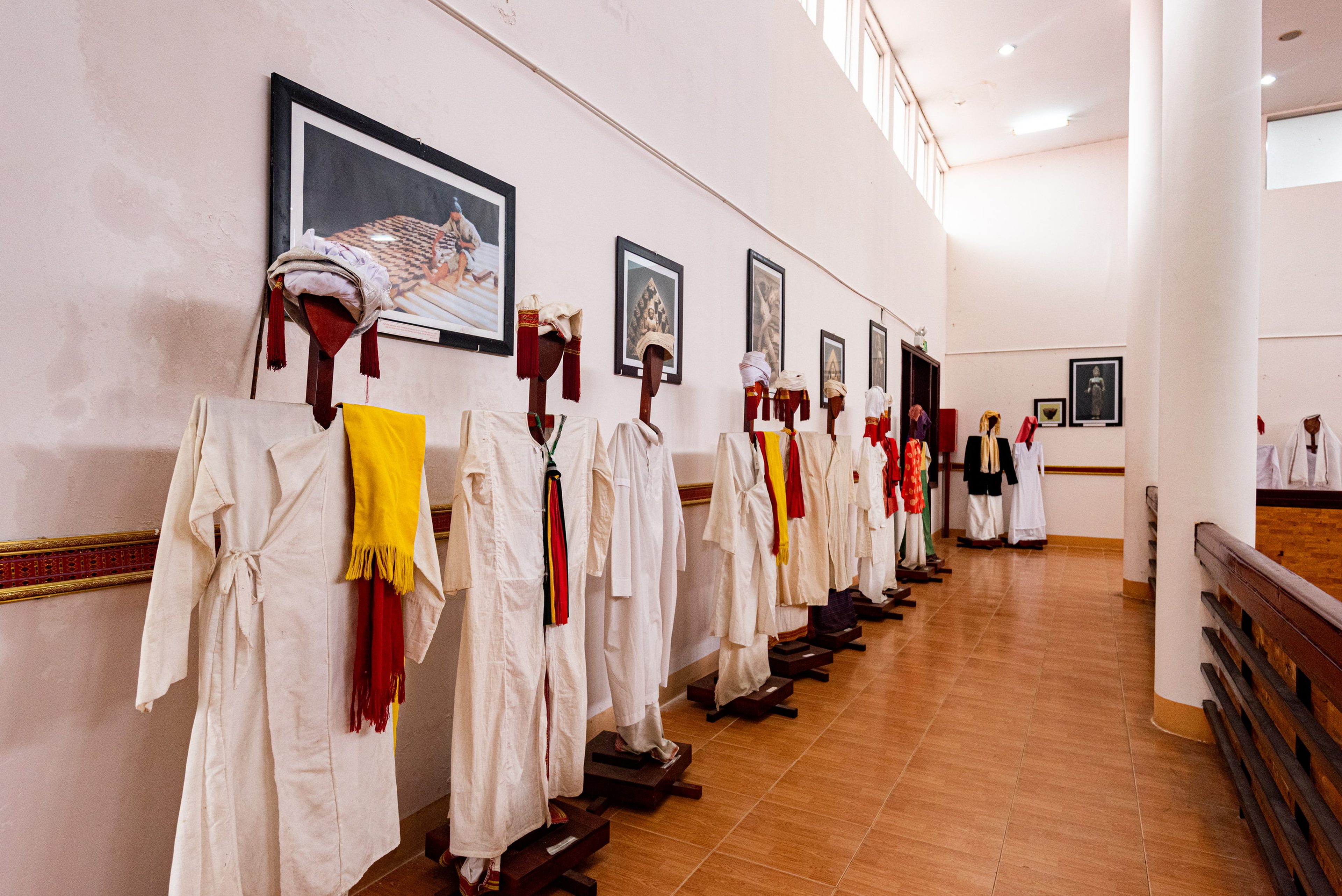
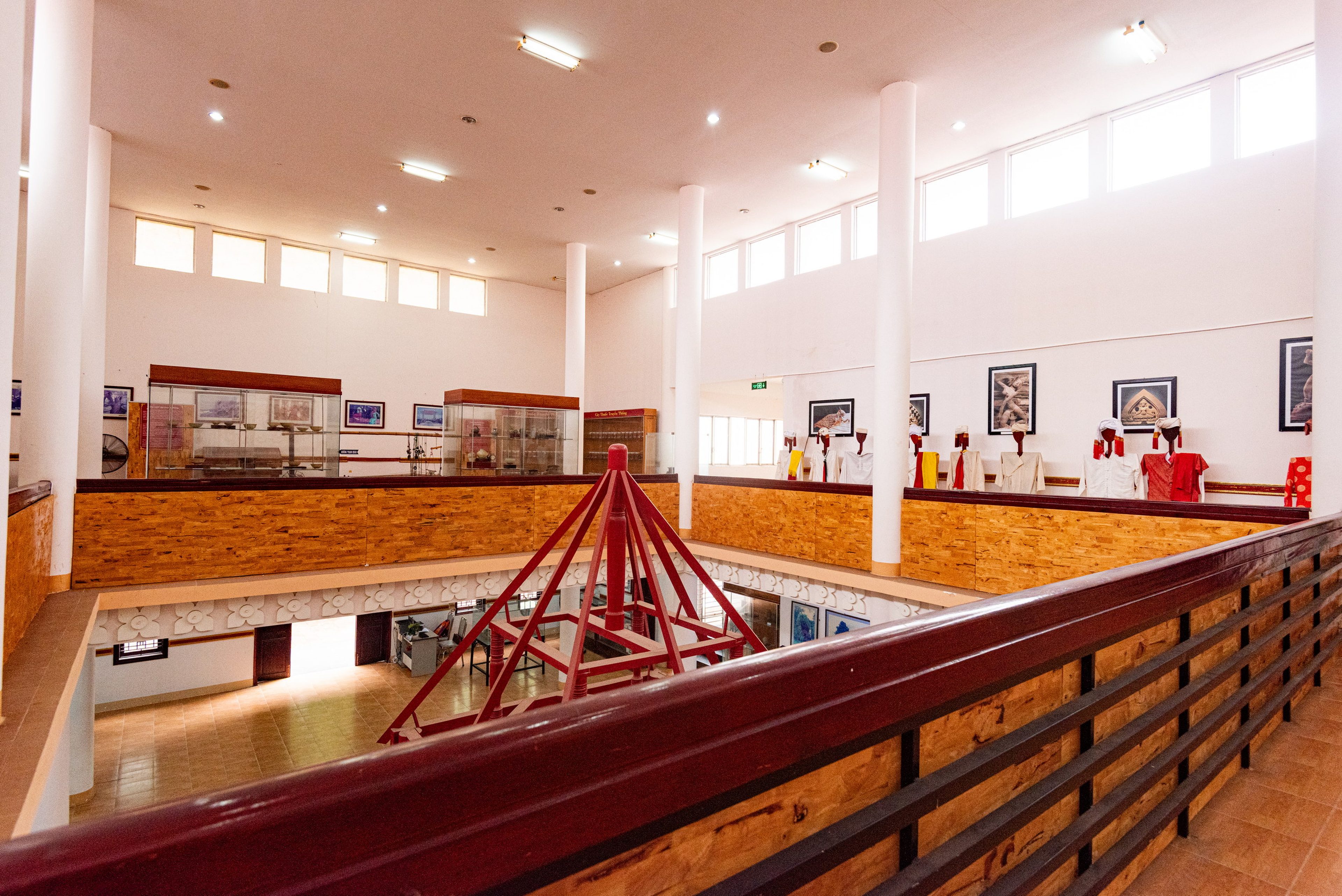
The Cham people in Khanh Hoa live in concentrated villages (Palei). They follow three religions and are divided into three communities: the Ahier Cham community (Cham influenced by Brahmanism), the Awal Cham community (Cham influenced by old Islam - Bani Cham), and the Islam Cham community (Cham following orthodox Islam). These are the costumes of the three men representing the three Cham communities: the Head Priest - Po Adhia is the religious dignitary representing the Brahmanism-influenced community, the High Priest - Po Can Gru is the religious dignitary representing the old Islam-influenced community (Bani Cham), and the Hakem represents the orthodox Islam Cham community.
This space introduces ceremonial objects often used in the worship, prayer, and rituals of the Khanh Hoa Cham people. Ceremonial objects can be made of gold, silver, copper, wood, or pottery, depending on the conditions, background, status, and context of use. Additionally, there are ceremonial outfits for young Bani-Awal Cham girls during the Kareh coming-of-age ceremony and the Muk buh rice offering ceremony. This is an area that helps visitors witness the solemnity of Cham rituals through the materials, shapes, colors, and ways of use in spiritual life.
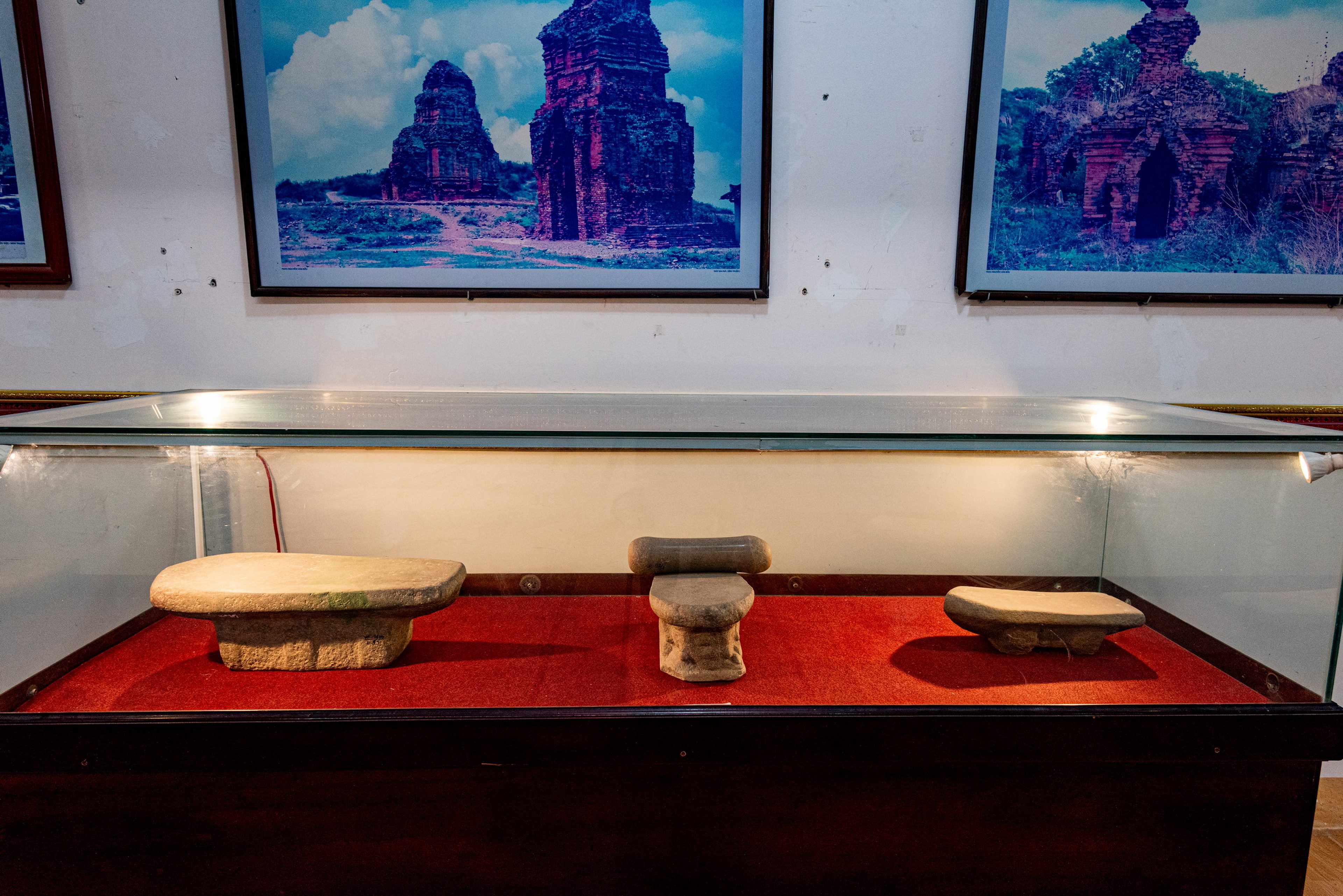
Hoa Lai Linga – Yoni
An ancient figure speaking of yin and yang, creation, and vitality in the Cham universe
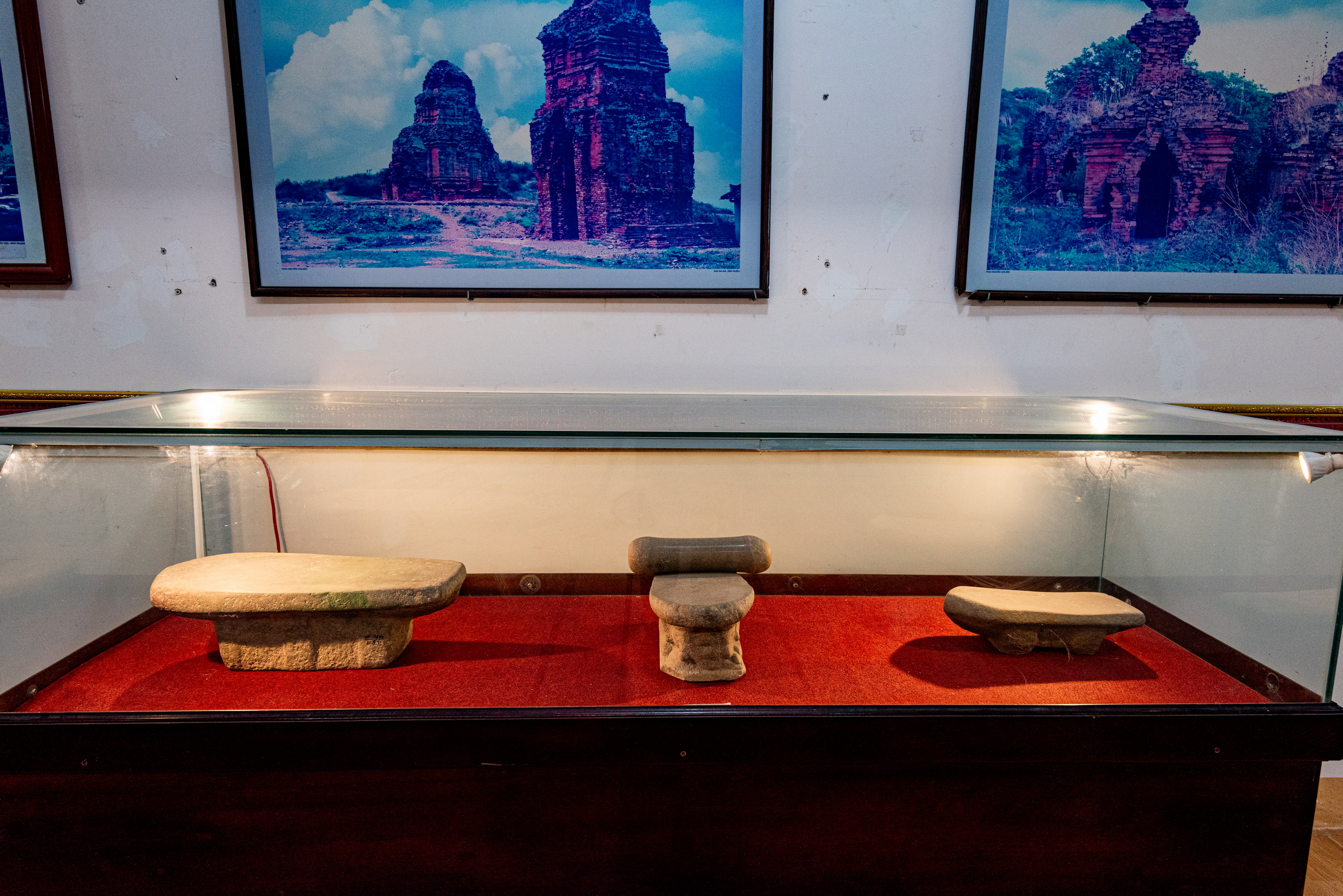
This is a replica of the Linga – Yoni discovered at the Hoa Lai tower, a complex of Cham tower relics built between the late 8th and early 9th centuries. The upper part is the Linga: a symbol of masculine nature, and the lower part is the Yoni: a symbol of feminine nature. The combination of Linga and Yoni represents the union of male and female, an expression of the two aspects of yin and yang in the universe, demonstrating birth, creation, and the development of all things.
Goddess Po Ina Nagar
The image of the Mother who created the homeland and taught the people how to farm wet rice and weave fabric
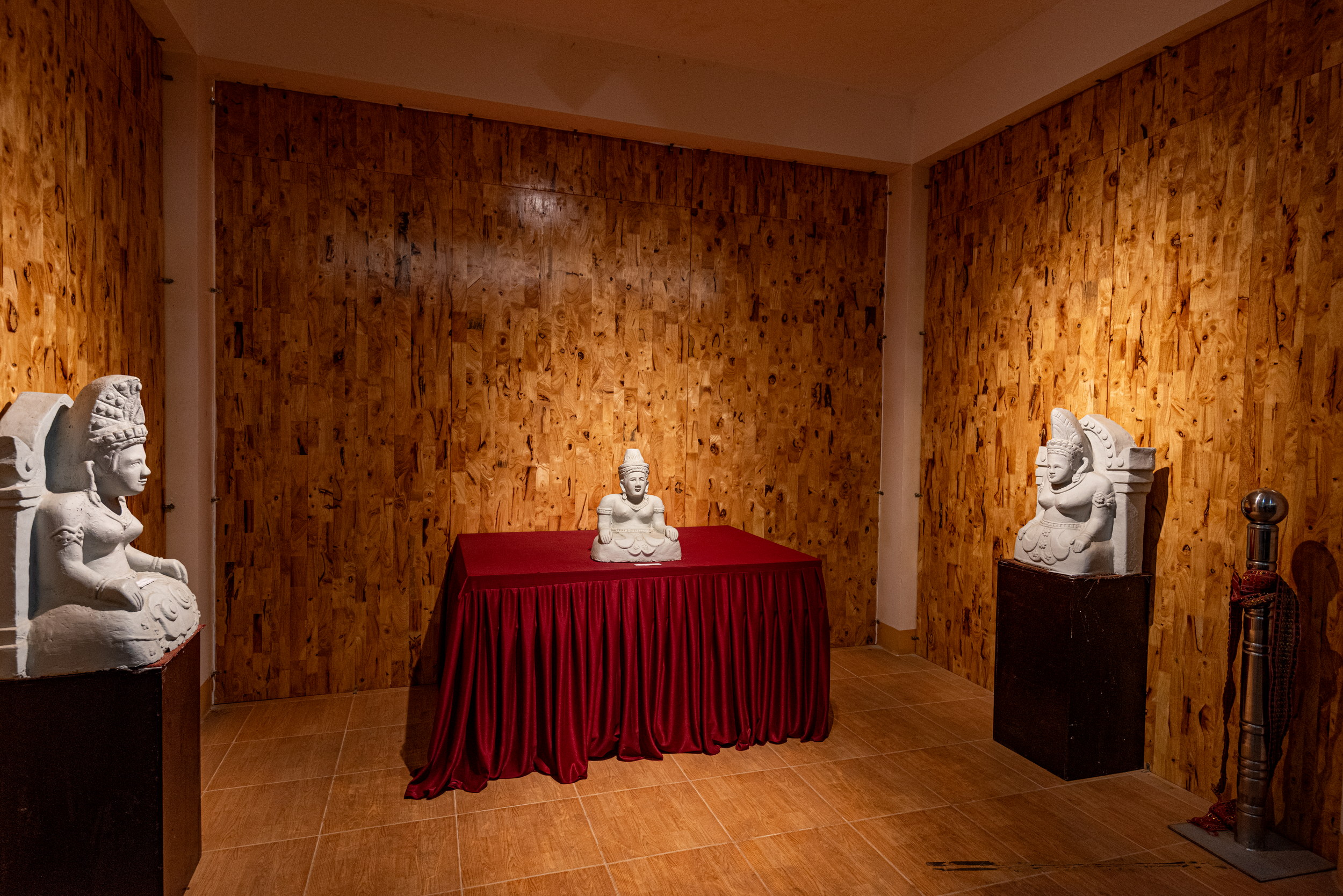
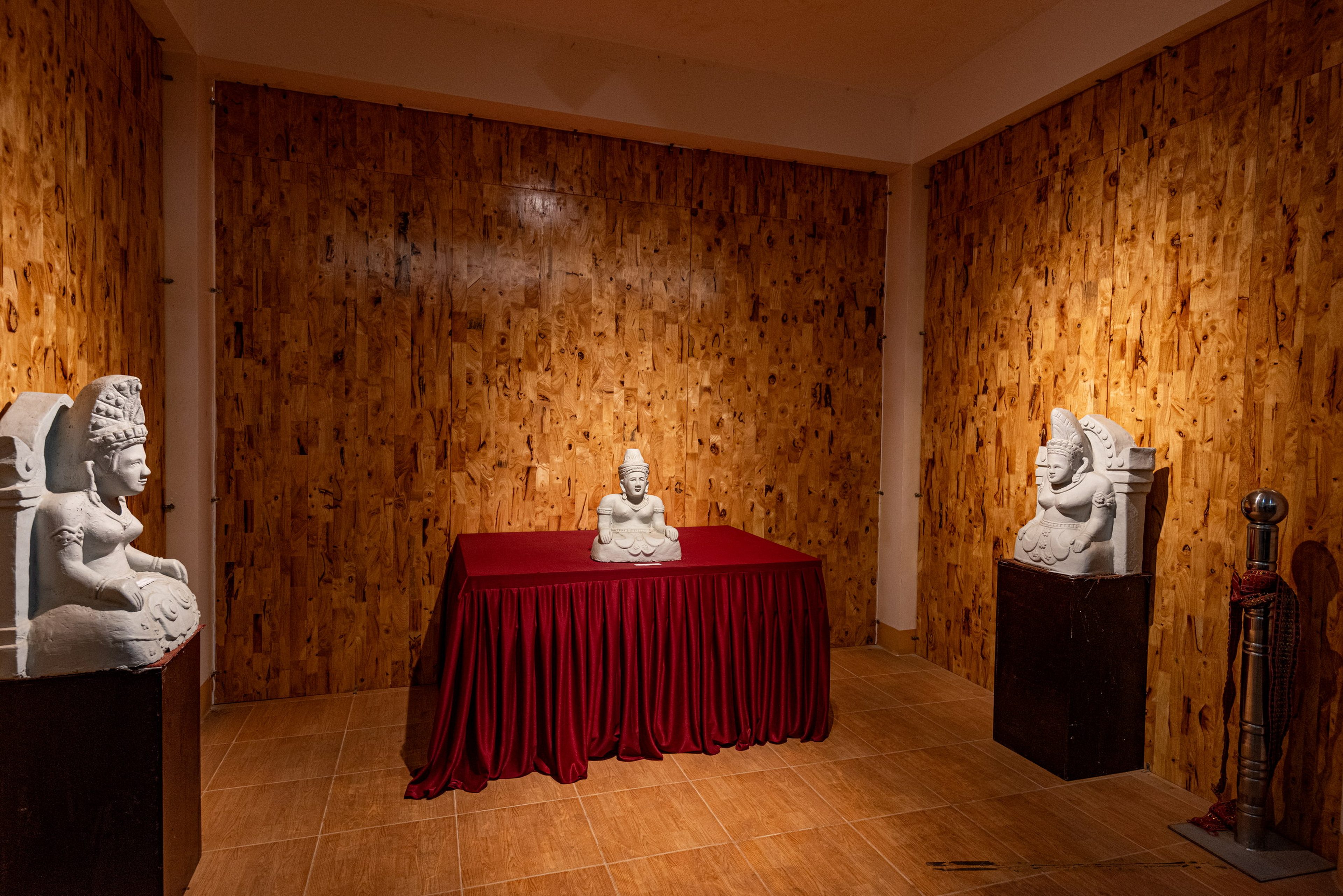
In their cultural and religious life, the Cham people highly venerate the Goddess Po Inu Nagar (Mother of the Land), a form of Mother Goddess worship. Legend has it that Po Inu Nagar was a goddess born from clouds and sea foam, who is credited with creating the homeland, plants, and teaching the people how to farm wet rice and weave fabric... Therefore, she is venerated by the Cham as the Mother Goddess of the land. She had 97 husbands and 38 daughters, all of whom are worshipped as goddesses, including Po Dara, also known as Po Inu Nagar Dara. Previously, Po Dara was worshipped at the Po Nagar Tower in Nha Trang; today, the Cham people have moved her to be worshipped at the temple in Huu Duc, Phuoc Huu, Khanh Hoa. Besides Po Dara, the temple in Huu Duc also worships Po Bia Apakal and Po Tah, who are also daughters of Po Inu Nagar, and these are the three images of these goddesses.
Relief of King Po Rome
A national treasure recording the final development stage of Cham art
The relief of King Po Rome, dating back to the 17th century and currently kept at the Po Rome tower relic site in Phuoc Huu commune, Khanh Hoa Province, is a unique, original artifact of special value. It is a rare ancient work of art, with a bust carved to occupy the lower and middle portions of the stone slab. It was chiseled and engraved on the surface of a stone carefully smoothed by the skillful hands of ancient Cham artisans. It bears historical significance, marking the final flourishing stage of the Champa Kingdom—one of the ancient kingdoms that existed on the territory of present-day Vietnam—and is linked to the career of the last king of the Cham people. It demonstrates the religious, belief, socio-cultural, and sculptural characteristics of the Panduranga region during its long period of high development over many centuries. It is a unique sculptural work of art that bears distinct features and represents the Cham cultural style of the final period, which influenced contemporary relics and artworks.
The relief of King Po Rome was recognized as a national treasure (9th batch, 2020) by the Prime Minister's Decision No. 2283/QD-TTg on December 31, 2020.
Livelihood, Cham script, and the Hama Hara Stele
From daily utensils to ancient manuscripts, Cham heritage emerges in both life and stone memories
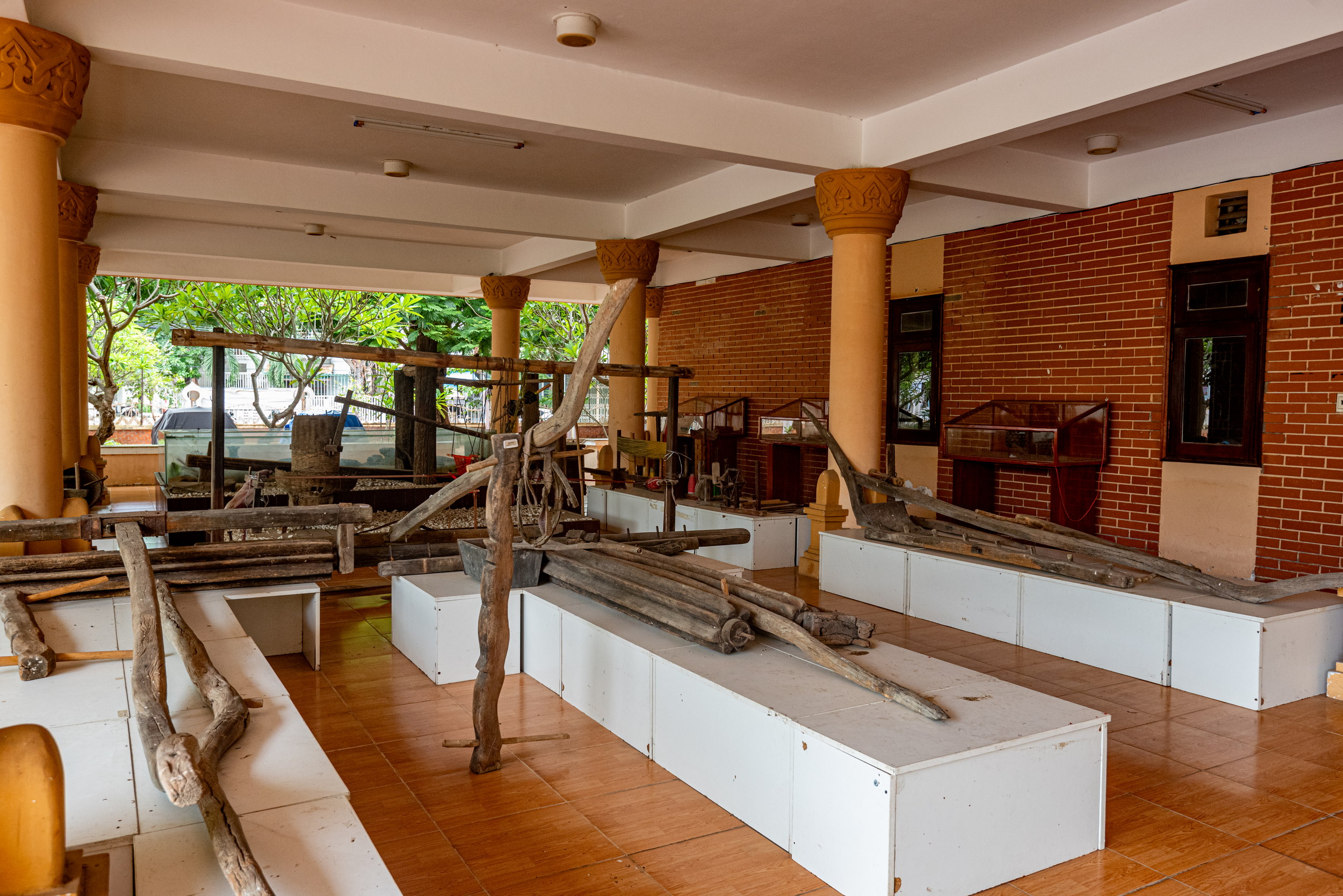
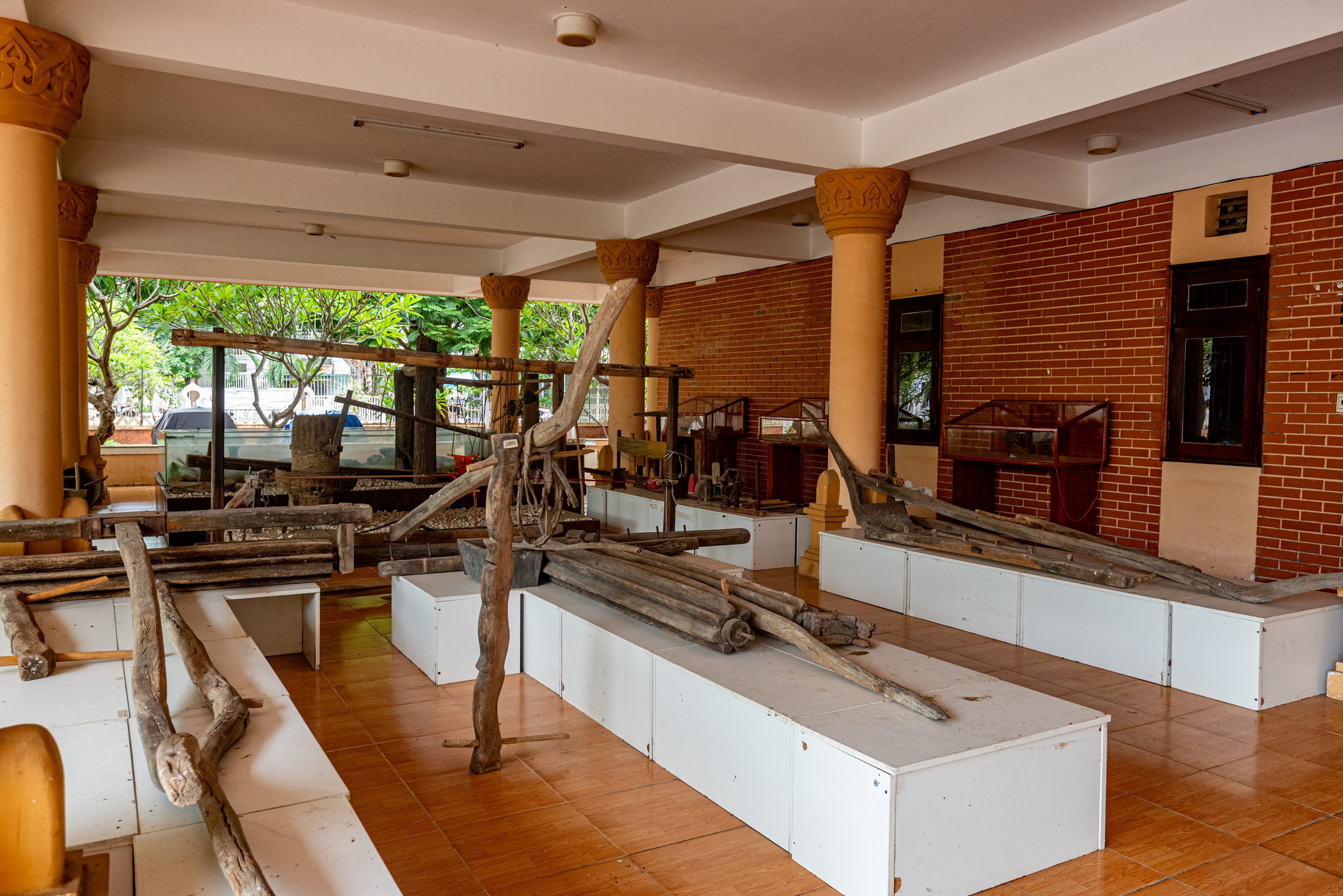
The final section of the exhibition introduces daily items used by the Cham community in Khanh Hoa: household utensils, labor and production tools, and hunting and fishing gear. Through this, visitors can clearly see that Cham life does not only consist of temples and rituals, but also of labor, farming, wet-rice cultivation, animal husbandry, and the economic transformation process in modern life.
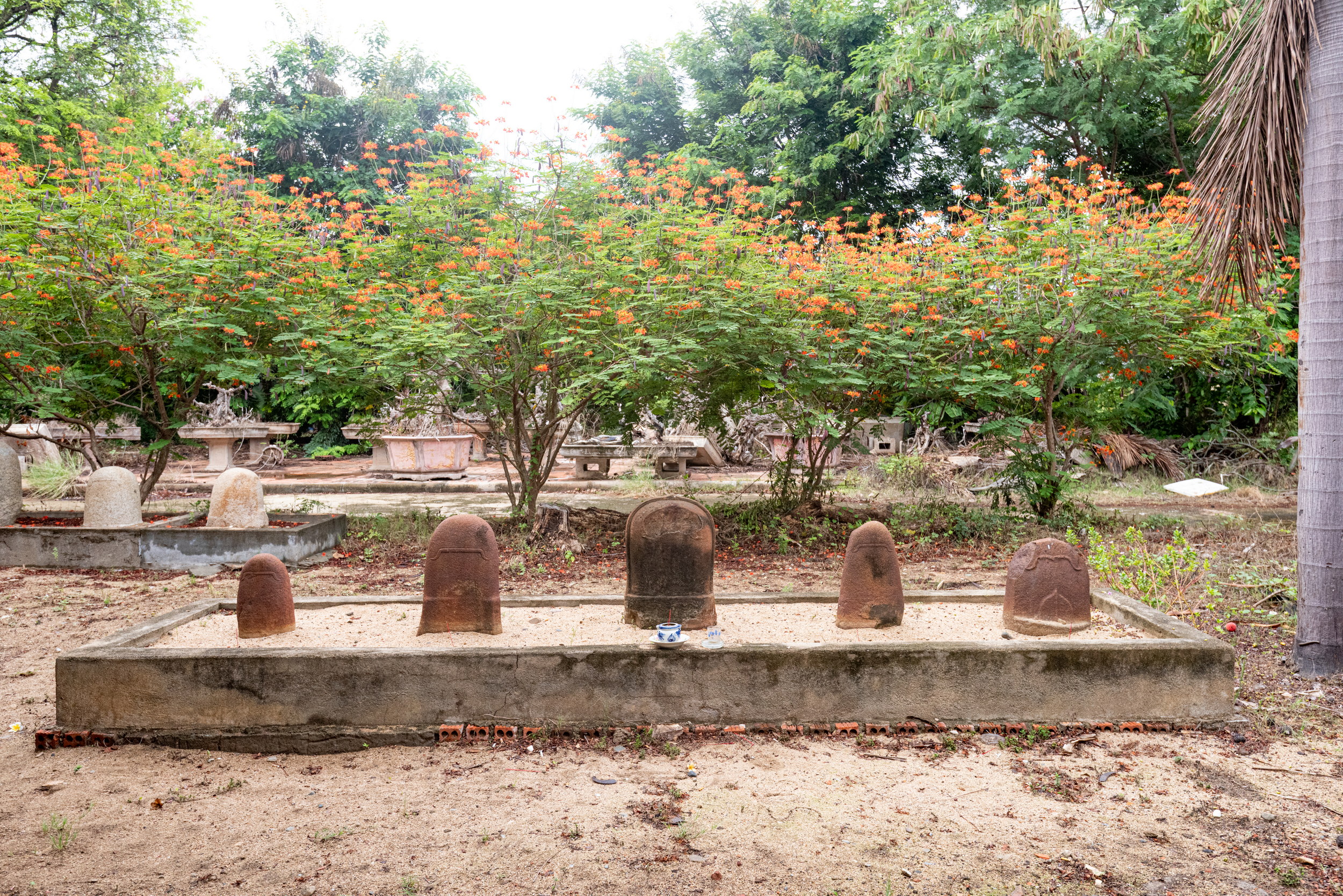
The connecting section is on the Cham language and script. Documents introduce the Malayo-Polynesian language family, the traditional Akhar Thrah script, Cham manuscripts, and a replica of the Hama Hara stele discovered in Phuoc Ha. The stele, inscribed in Sanskrit and dating back to the 7th – 8th centuries, mentions King Rudravarman, closing the journey with a layer of ancient memory carved in stone.