


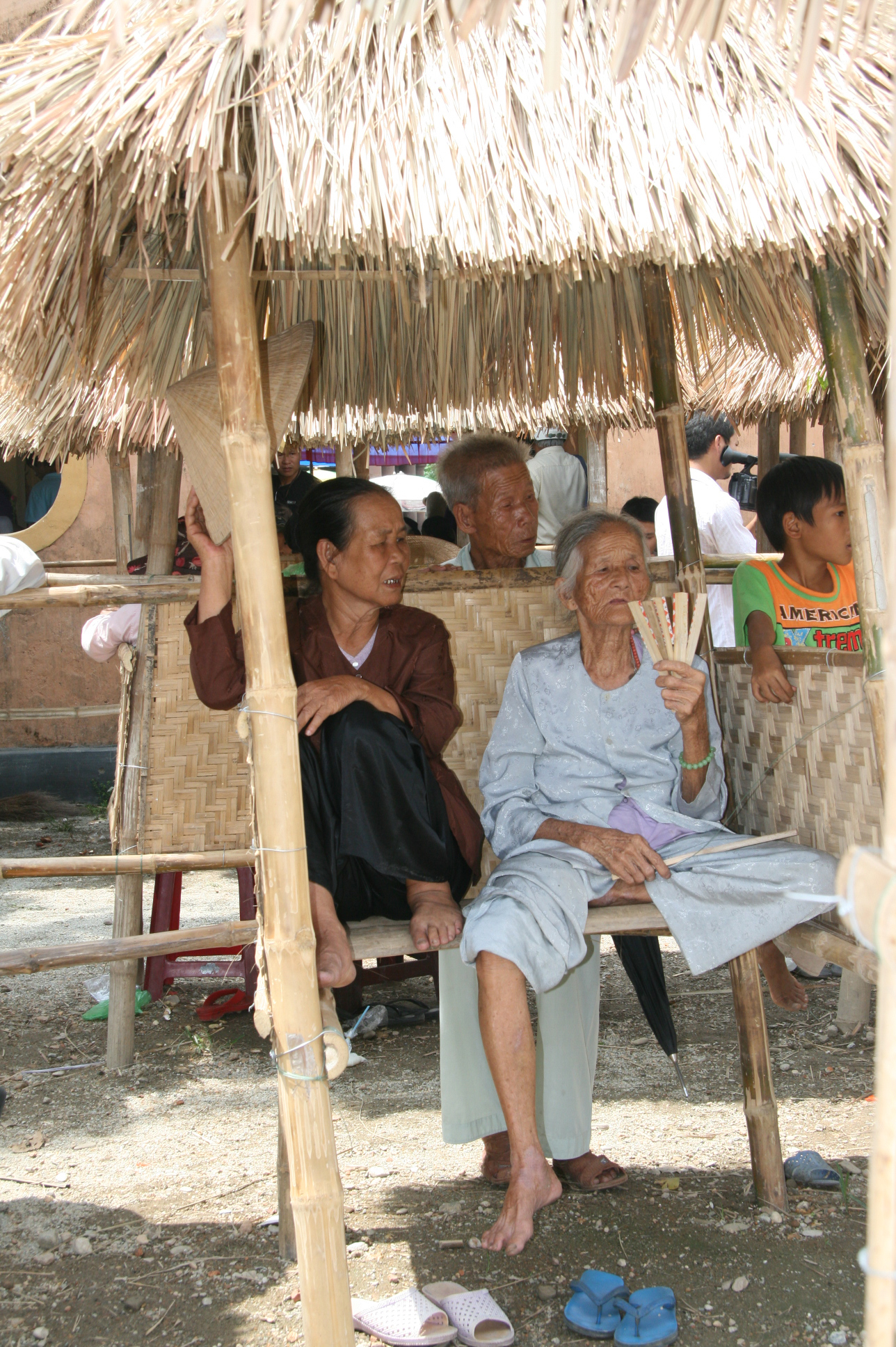
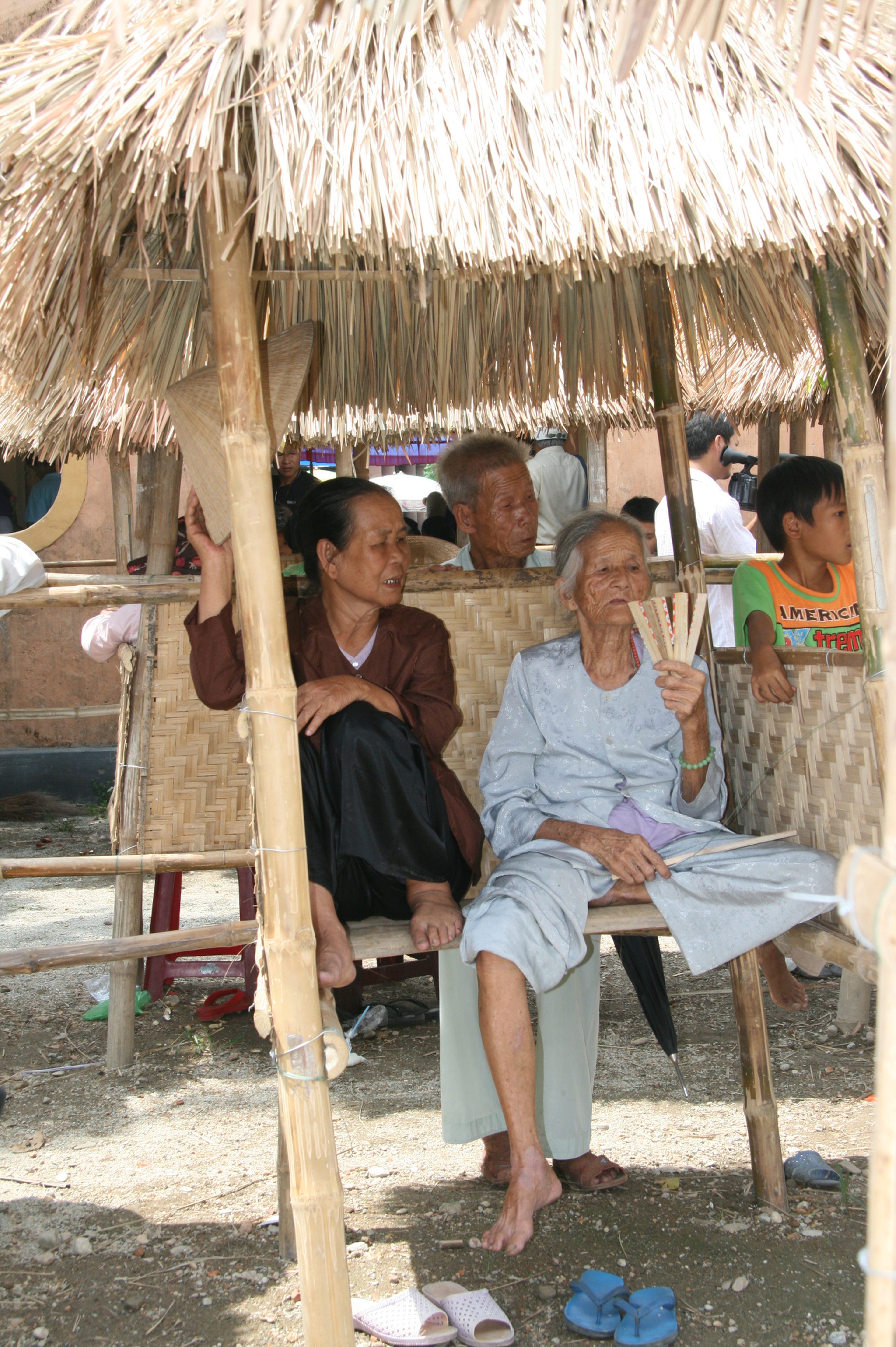
The Art of Bài Chòi in Central Vietnam (in the provinces of Quảng Bình, Quảng Trị, Thừa Thiên Huế, Quảng Nam, Quảng Ngãi, Bình Định, Phú Yên, Khánh Hòa, and Đà Nẵng) is a diverse art form that combines music, poetry, acting, painting, and literature. Bài Chòi has two main forms: “Playing Bài Chòi” and “Performing Bài Chòi”. Playing Bài Chòi relates to a card game played in bamboo huts during the Lunar New Year. In Bài Chòi performances, the Hiệu (performers) perform on a reed mat, either moving from one place to another or during private family occasions. The practitioners and guardians of Bài Chòi art are the Hiệu, solo Bài Chòi performers, and card makers. Performers and their families play a crucial role in safeguarding these practices by teaching repertoires, singing skills, performance techniques, and card-making methods to the younger generation. Together with the community, they have established nearly 90 troupes, groups, and clubs to practice and transmit the Art of Bài Chòi, attracting wide community participation. Most practitioners learn their skills and techniques for chanting and singing Bài Chòi within their families, primarily through oral transmission. However, some Bài Chòi artists today also teach knowledge and skills in associations, clubs, and schools.
The Art of Bài Chòi is a form of cultural activity and entertainment within village communities. Cultural and artistic elements such as poetry, music, painting, language, and customs within Bài Chòi are conveyed in a simple, natural way, creating appeal for the public and becoming an essential cultural activity prevalent throughout Central Vietnam. Thus, Bài Chòi practice has become an environment for artistic performance and creation, while also serving as a place to preserve folk arts, performance styles, and regional cultural values.
With its ability to transmit folk cultural knowledge through games and performances, Bài Chòi has become a form of community life with high educational value, especially for the younger generation. However, the transmission of Bài Chòi currently faces obstacles due to requirements regarding talent, aptitude, and passion; shrinking opportunities, spaces for performance, and target audiences; and the fact that many artists are elderly, live in difficult conditions, and lack financial support for learning and practicing the heritage.
Efforts to safeguard and promote the value of the Art of Bài Chòi heritage are carried out by provinces and cities at various levels: the provinces of Bình Định, Khánh Hòa, Quảng Nam, and Phú Yên built dossiers for the Art of Bài Chòi heritage, which were added by the Ministry of Culture, Sports and Tourism to the National List of Intangible Cultural Heritage from 2013-2014 (http://dsvhpvt.dsvh.gov.vn/HeritageNational.aspx). In 2012, the Vietnam National Institute of Culture and Arts Studies inventoried Bài Chòi heritage in 8 Central provinces and added it to the Institute’s database. By 2014, the Departments of Culture and Sports and Departments of Culture, Sports and Tourism of 9 provinces collaborated with the Vietnam National Academy of Music to inventory the Art of Bài Chòi heritage, with the results archived in the Intangible Cultural Heritage Management Information System of the Department of Cultural Heritage (http://dsvhpvt.dsvh.gov.vn/HeritageLocal.aspx). In addition, the Ministry of Culture, Sports and Tourism assigned the Vietnam National Academy of Music to coordinate with the Departments of Culture, Sports and Tourism of 9 provinces to organize annual training and inventory of the heritage; identify and document the heritage; restore lost elements and folk knowledge related to the heritage; and periodically organize the Bài Chòi Festival. Thanks to this, based on their understanding of the Art of Bài Chòi and the Law on Cultural Heritage, representatives from 86 troupes, groups, and clubs practicing Bài Chòi in all 9 provinces and cities with the heritage committed to supporting the submission of the dossier to UNESCO to include the Art of Bài Chòi on the Representative List of the Intangible Cultural Heritage of Humanity.
According to the Intergovernmental Committee for the Safeguarding of the Intangible Cultural Heritage, the nomination dossier for the Art of Bài Chòi in Central Vietnam meets the following criteria for inscription on the Representative List of the Intangible Cultural Heritage of Humanity:
R.1: The Art of Bài Chòi is an important cultural activity in village communities, meeting the entertainment and artistic appreciation needs of the community. Stories in Bài Chòi are moral lessons that express patriotism, community cohesion, and life experiences of the people. The nomination dossier has identified the important role of heritage guardians. As a community heritage, the teaching of Bài Chòi takes place primarily in families, villages, associations, clubs, and schools. The practice of the Art of Bài Chòi promotes gender equality as well as mutual respect among communities.
R.2: The inscription of the Art of Bài Chòi encourages dialogue between communities, groups, and individuals; creates opportunities for exchanging and sharing experiences among practitioners, thereby enriching knowledge and skills related to the practice of art forms. The inscription can also strengthen links between individuals, groups, and clubs that practice the heritage and practice other cultural traditions through related performances and festivals. Furthermore, the inscription will raise awareness about the diversity of intangible cultural heritage because the Art of Bài Chòi is a combination of many cultural and artistic fields.
R.3: The dossier has described in detail and clearly the past and present efforts to protect the heritage and ensure the survival of communities, groups, and clubs with the support of the Government. These efforts include organizing Bài Chòi associations, performing and teaching repertoires and singing skills, as well as performance techniques, card-making methods, and Bài Chòi playing skills. Through the Ministry of Culture, Sports and Tourism and local authorities, the State Party will provide financial, legal, and human resources to support the implementation of these measures, with the cooperation of the community and artists. Businesses and banks have contributed to scientific seminars on Bài Chòi and related cultural activities such as practicing and teaching the heritage, as well as collecting materials, documenting, and supporting measures to restore the heritage, as the heritage is still at risk of fading, mainly due to difficulties in transmission. Policies for the welfare of artists have been enacted, and formal education programs have been designed to attract the younger generation. Local and national media are committed to raising awareness about the value of the heritage, with the majority of learners volunteering to participate in the dissemination and promotion of the heritage.
R.4: The community actively contributed ideas for collecting and documenting the heritage, filled out inventory forms, and participated in all stages of preparing the nomination dossier. Individuals and representatives of Bài Chòi groups and clubs signed their Voluntary Consent commitments for the nomination, and their understanding of the development of the nomination dossier was also expressed in recorded audio and video interviews conducted in localities where Bài Chòi is practiced. The Department of Cultural Heritage and the Vietnam National Academy of Music were entrusted with the consultation process through national and international meetings and workshops held in 2014 and 2015. Normal practical effects do not involve adjusting or restricting access to the heritage.
R.5: This heritage was added by the Vietnamese Ministry of Culture, Sports and Tourism to the National List of Intangible Cultural Heritage during the 2014-2016 period. The inventory is stored in the Intangible Cultural Heritage Management Information System software of the Department of Cultural Heritage of Vietnam. The Departments of Culture, Sports and Tourism / Departments of Culture and Sports of the 9 provinces with Bài Chòi heritage are responsible for coordinating with the community to report annually to the Ministry of Culture, Sports and Tourism on Bài Chòi heritage inventory information. The Vietnam National Academy of Music manages the database on the Art of Bài Chòi and updates it annually.
The UNESCO inscription of the Art of Bài Chòi in Central Vietnam on the Representative List of the Intangible Cultural Heritage of Humanity affirms the rich cultural identity of the Vietnamese people, community cohesion, upholds respect for cultural diversity, and encourages dialogue between individuals, communities, and different ethnic groups for the sake of tolerance, love, and charity in accordance with the principles and objectives of the 2003 UNESCO Convention for the Safeguarding of the Intangible Cultural Heritage .