



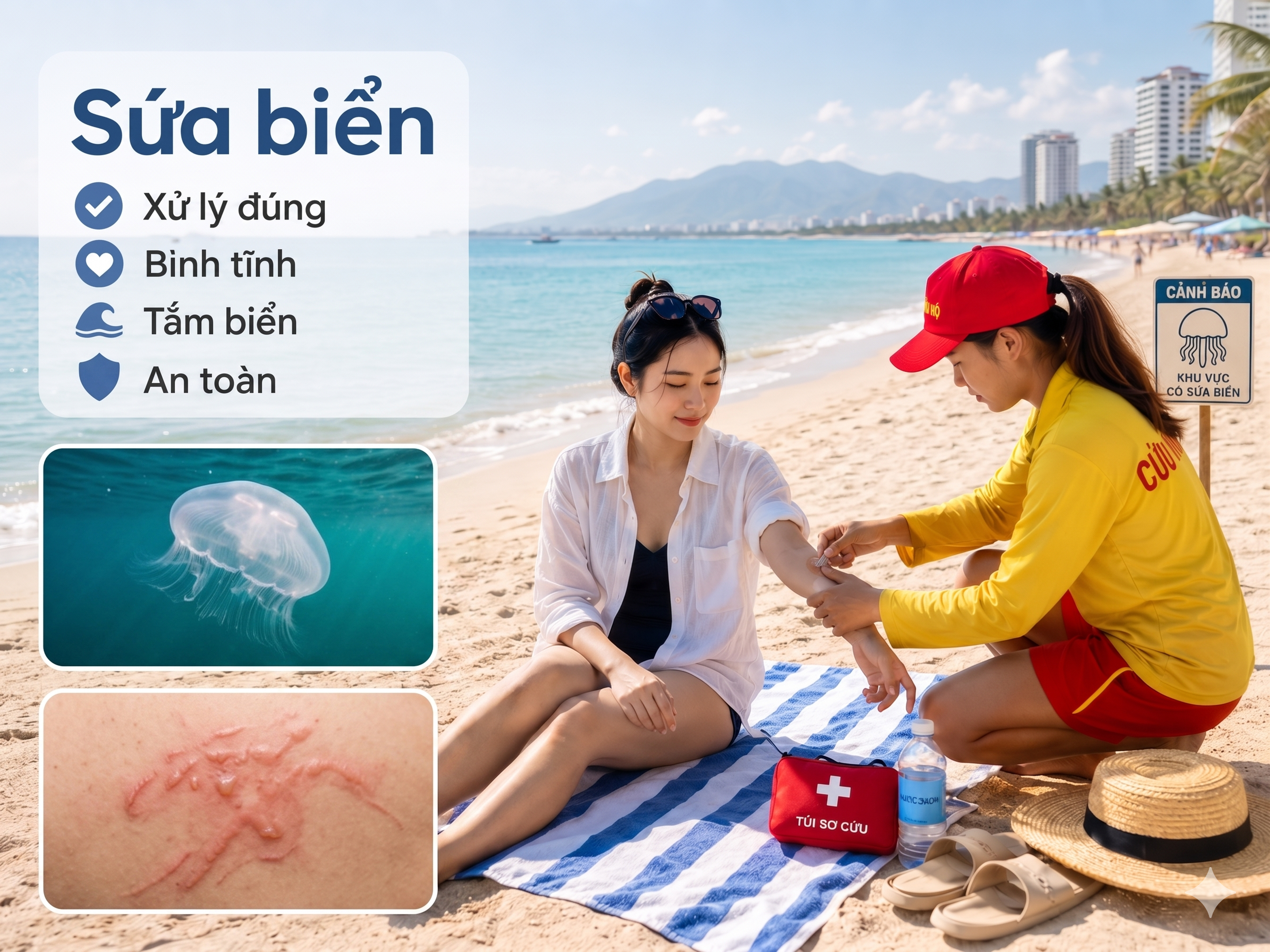
Breezy summer days across Nha Trang Bay or along the pristine shores of Cam Ranh and Vinh Hy are always an alluring invitation for beachgoers. However, the presence of jellyfish, particularly fire jellyfish during rough seas or transitional weather periods, can quickly turn a relaxing swim into a painful accident. When skin comes into contact with jellyfish tentacles, the stinging cells (nematocysts) trigger instantly, causing intense burning sensations, redness, and swelling. In this situation, staying calm and applying proper first-aid procedures are crucial to managing the injury and preventing infection.
Initial On-the-Beach First-Aid Procedure
The very first thing to do when you feel a sudden sharp, burning pain in the water is to exit the sea immediately. Move onto dry sand and alert your companions or the beach lifeguards right away. Never touch, rub, or scratch the affected area with bare hands, as this action will rupture remaining nematocysts from the tentacles, forcing venom deeper and wider into the skin layers.
Rinse the sting site continuously with clean seawater from the area to flush away any clinging tentacles. Never use fresh water (bottled water, tap water) or ice water during initial care, as the change in osmotic pressure between fresh water and the venom stimulates the stinging cells to release even more toxin. If household vinegar is available (a standard first-aid supply frequently stocked at lifeguard posts along Tran Phu Beach), pour it over the affected area and leave it on for about 30 seconds to deactivate the jellyfish toxins. Afterwards, you can use a rigid plastic card (such as a hotel room key or ID card) to scrape gently in one direction to completely remove any remaining stinging cells adhering to the skin.
When Must You Seek Medical Attention?
First-aid measures using seawater and vinegar are only designed to alleviate initial discomfort and cannot replace specialized medical treatment if complications arise. You must closely monitor your bodily response for 30 to 60 minutes after being stung.
If systemic symptoms appear—such as intense and spreading pain that does not subside, fever, headache, nausea, chest tightness, difficulty breathing, or lightheadedness and confusion—rush the patient to the nearest hospital or medical clinic immediately. This is critically important if the sting victim is a young child, an elderly person, or someone with a history of acute allergic reactions to seafood. Always choose to swim in designated public beach zones equipped with professional lifeguards and jellyfish warning signs to ensure maximum safety during your holiday.
Quick Checklist:
-
Leave the water immediately and get onto dry sand the moment you feel a sharp stinging or burning sensation on your skin.
-
Continuously flush the wound with clean seawater; never use fresh water or apply ice packs.
-
Use vinegar or a plastic card to gently detach and scrape away any tentacles still clinging to the epidermis.
-
Never rub, scratch forcefully, or apply unverified herbal poultices or folk remedies.
-
Seek immediate medical care if extensive swelling occurs or if you experience shortness of breath, dizziness, or confusion.