


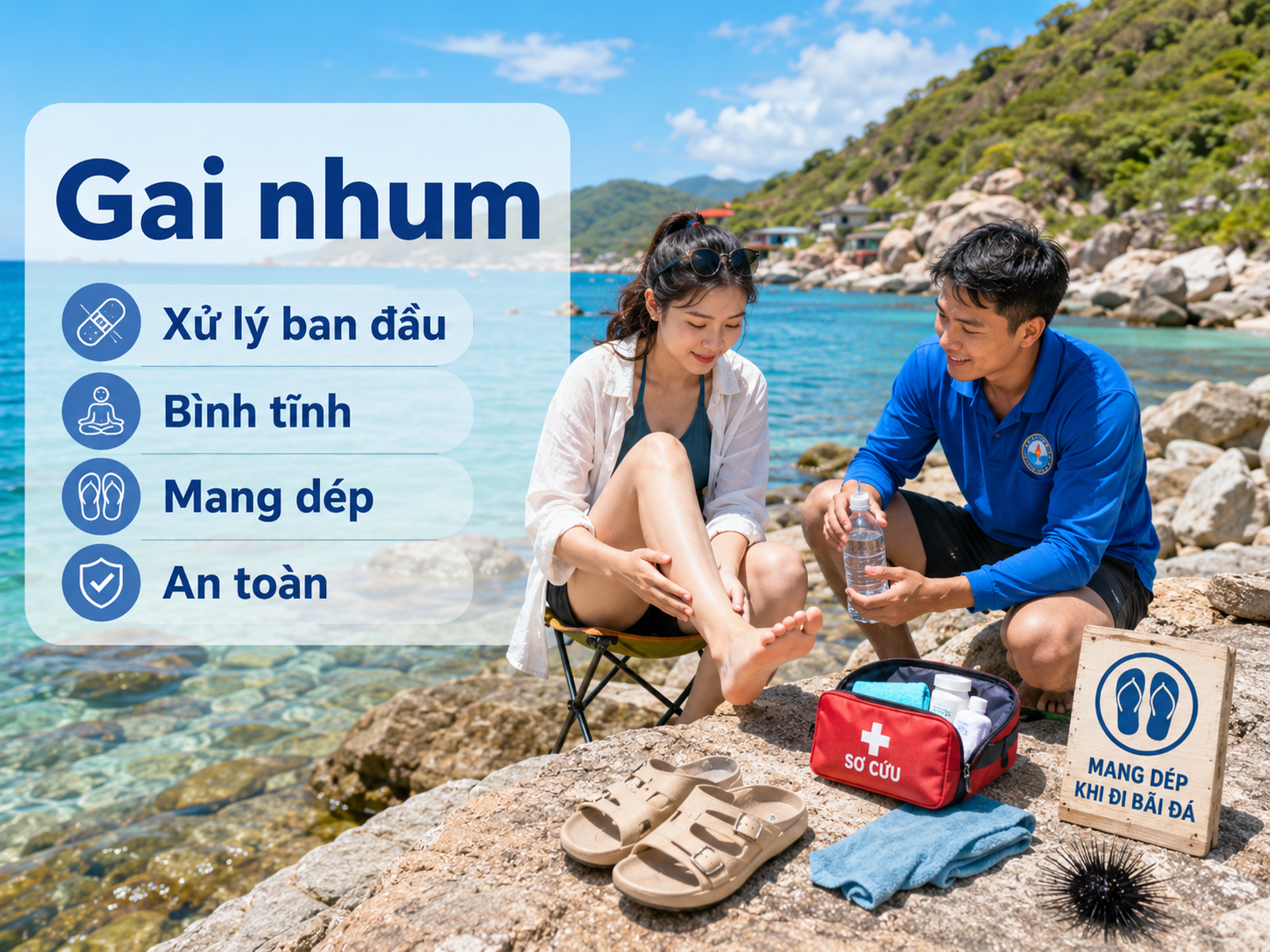
When participating in snorkeling activities at Hon Mun, Binh Ba island, or the rocky beaches around Vinh Hy Bay, visitors are often fascinated by the rich marine ecosystem. However, coral reef areas and submerged rocky outcrops are also preferred habitats for sea urchins. With their long, sharp spines containing a small amount of mild toxin, sea urchins can pierce through thin rubber sandals if you accidentally step on them. A sea urchin sting is not life-threatening, but it will immediately cause intense, throbbing pain, swelling, and leave black marks from the broken spine tips deep in the skin, making it extremely difficult to walk.
First aid steps to neutralize the toxin on the beach
As soon as you realize you have stepped on a sea urchin spine, stay calm and move slowly out of deep water to reach the shore, avoiding any panic that might cause you to step on other urchins nearby. Sit down on the sand and absolutely do not use tweezers or pliers to dig or probe into the wound in an attempt to pull the spine out. Sea urchin spines are very brittle; applying pressure to pull them out once they have broken off deep inside will only cause the tip to shatter into many small fragments within the flesh, making the wound more prone to serious infection and increased pain.
A highly effective and safe folk medical trick frequently used by fishermen in the Central region is to use an acidic substance or a light tapping force. Find a hard, smooth object (such as a plastic knife handle or a clean pebble) and tap it gently and continuously on the skin area around the sting. The purpose of this tapping is to shatter the brittle sea urchin spine tips inside the skin. Afterward, apply fresh lime juice, vinegar, or even your own urine (due to its mild acidic nature) to the wound. The natural acid will quickly dissolve the calcium part of the shattered urchin spine, miraculously reducing the sharp, stinging pain after about 1-2 hours.
Wound care in the following days
After carrying out the on-site first aid steps to cool down the pain, clean your foot again with antibacterial soap and disinfect it with medical alcohol. Over the next 2-3 days, the affected skin area will naturally absorb the dissolved spine fragments and push any small foreign objects out through the body's natural healing mechanism.
However, if you notice the wound showing signs of spreading redness, pus, fever, or increasing pain that makes it impossible to put weight on your foot, these are signs of a cellular infection. In this case, go immediately to the nearest medical station to have specialists check, clean the wound, and prescribe appropriate antibiotics. When swimming near rocky areas, always wear specialized water shoes with thick rubber soles to best protect your feet.
Quick Checklist:
-
Move slowly to the shore as soon as you discover you have stepped on a sharp object or sea urchin spine.
-
Absolutely do not use pliers or tweezers to dig into the puncture site to try and pull out the urchin spine.
-
Take advantage of folk remedies: Tap lightly to shatter the spine and apply an acidic substance (lime, vinegar) to dissolve the calcium toxin on the spot.
-
Clean the wound with antibacterial soap and closely monitor any swelling or inflammation of the skin.
-
Equip yourself with specialized sea shoes with thick soles when participating in snorkeling tours on remote islands.