


From the rhythmic chants of ho ba trao (rowing folk chants) and the resonance of lithophones (dan da) to the chanting and singing of bai choi, an increasing number of young people are turning to traditional arts. Through learning and hands-on practice, a love for traditional arts and the distinctive cultural values of their homeland has been nurtured in the hearts of youth.
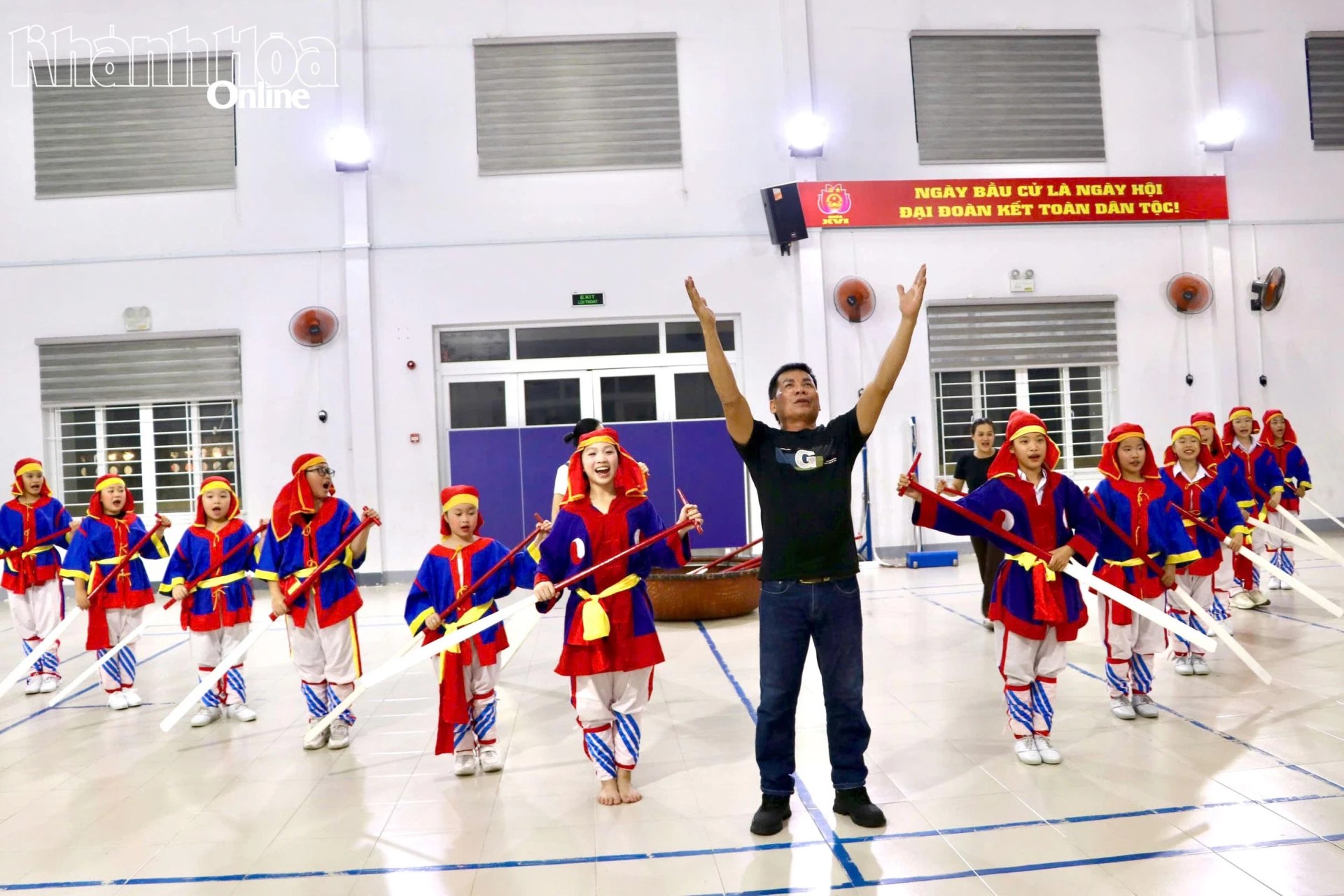 |
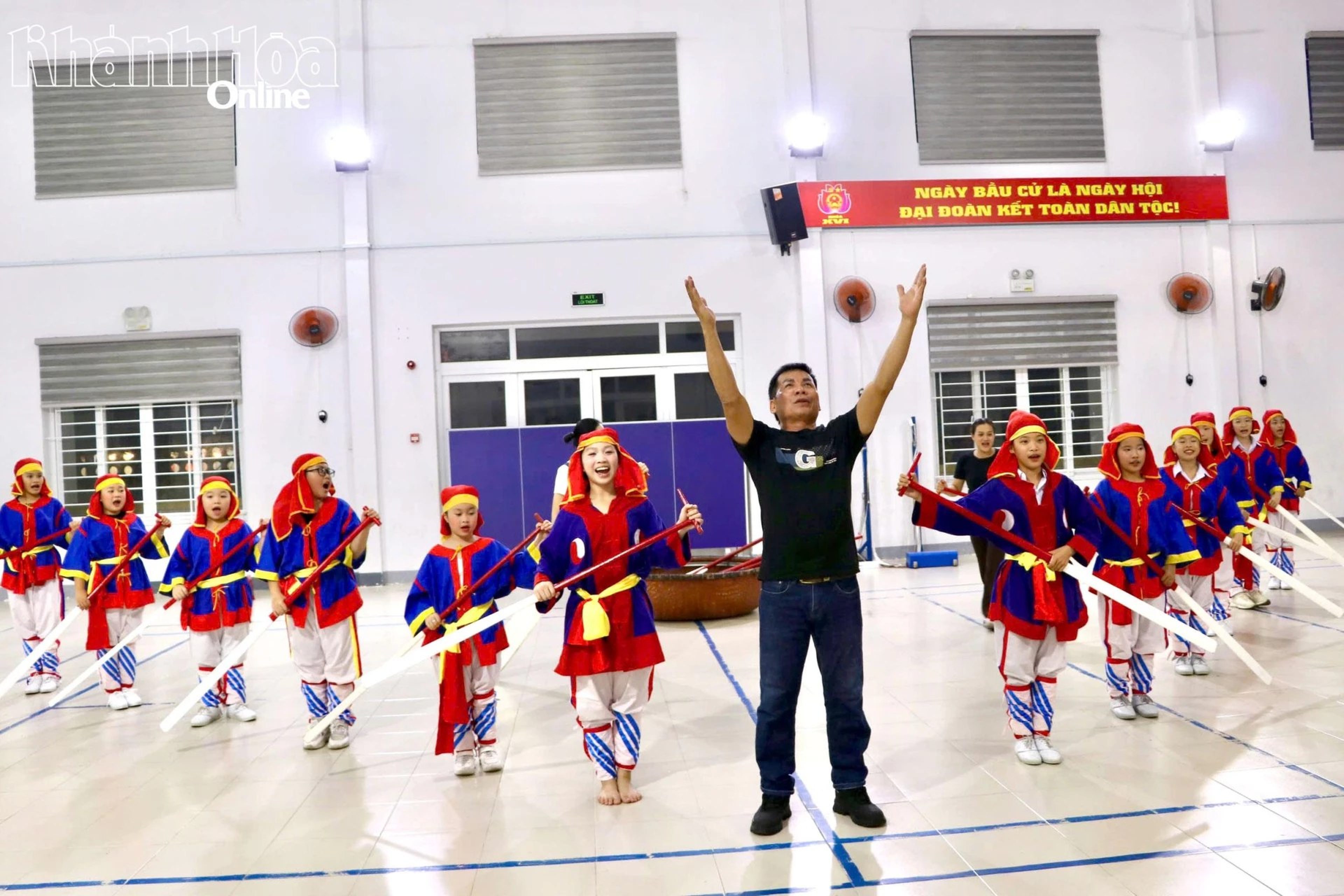
| Artists from the Provincial Traditional Arts Theater guide students in practicing ho ba trao. |
Learning the Rhythms of Ho Ba Trao
Over the past two months, at Nam Nha Trang Primary School (main campus), 20 youngsters have gathered every weekend evening to practice movements simulating boat rowing in the art of ho ba trao. Arranged into formations and holding oars, the children practice along with every vocal cue from their instructor. From initial days of hesitation and clumsiness, each child has now grown accustomed and can execute the rowing movements correctly and rhythmically. “At first, I found the rowing movements quite strange and hard to remember. But once practicing, I felt happy, and now I can perform the movements properly. Through this, I also learned more about how the art of ho ba trao is connected to the Whale Worship Festival (Cau Ngu Festival),” shared Mai Moc Mien (16 years old, Nam Nha Trang Ward).
Mr. Truong Ngoc Long (Head of the Culture - Sports and Mobile Information Team under the Center for Culture, Sports and Public Services of Nam Nha Trang Ward) shared that through each stroke of the oar and folk chant, the children not only learn an artistic performance but also explore the spiritual life of coastal dwellers. Interwoven with practicing rowing movements and learning each line of ho ba trao chants, they are introduced to the origins and significance of the folk performance art of ho ba trao, as well as the Cau Ngu Festival. From there, each child gains a deeper understanding of the unique beliefs associated with the custom of worshipping the Whale God (Ca Ong) of coastal fishing communities.
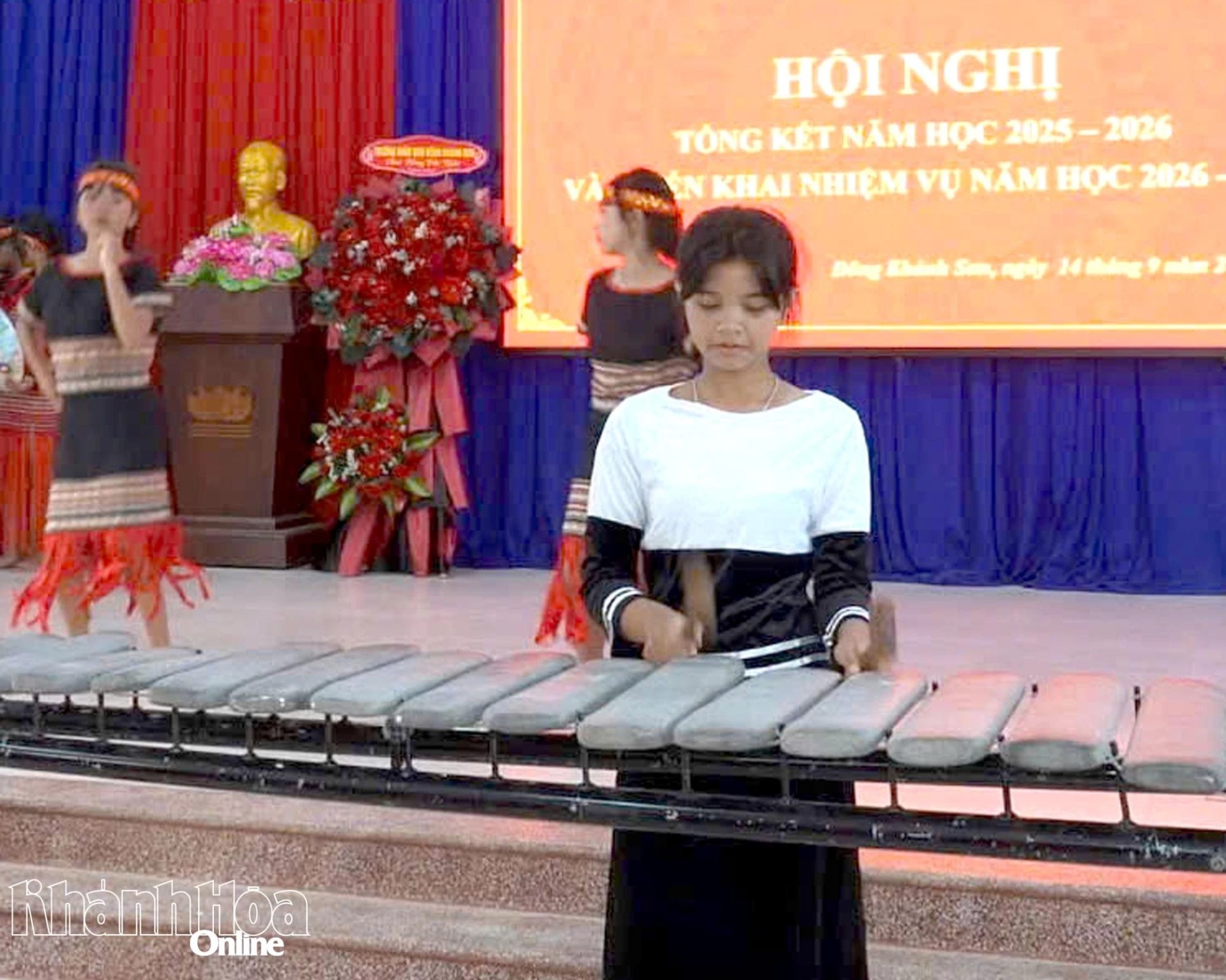 |
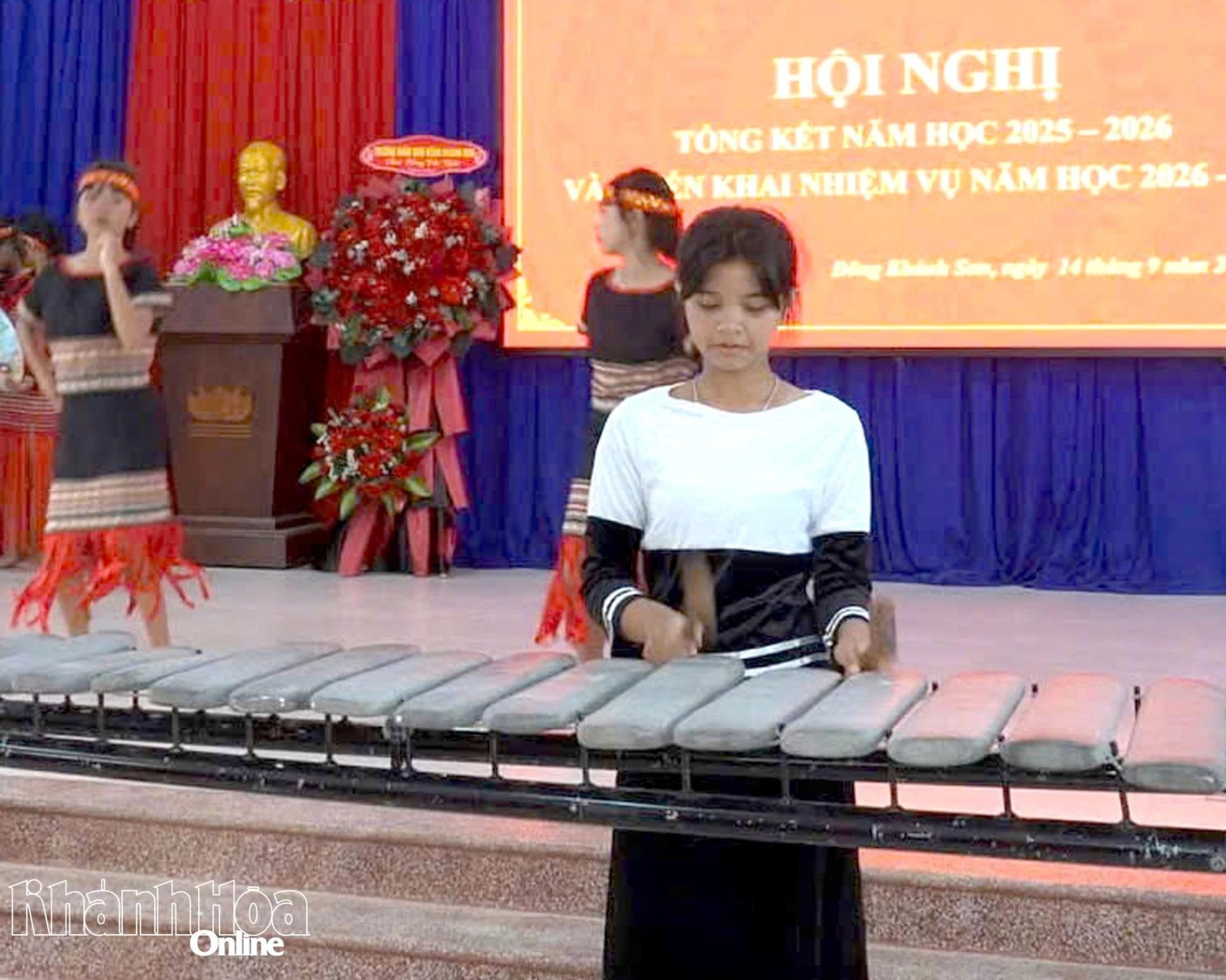
| Tro Thi Truc Vy performs on the dan da (lithophone). |
Preserving the Resonance of the Lithophone
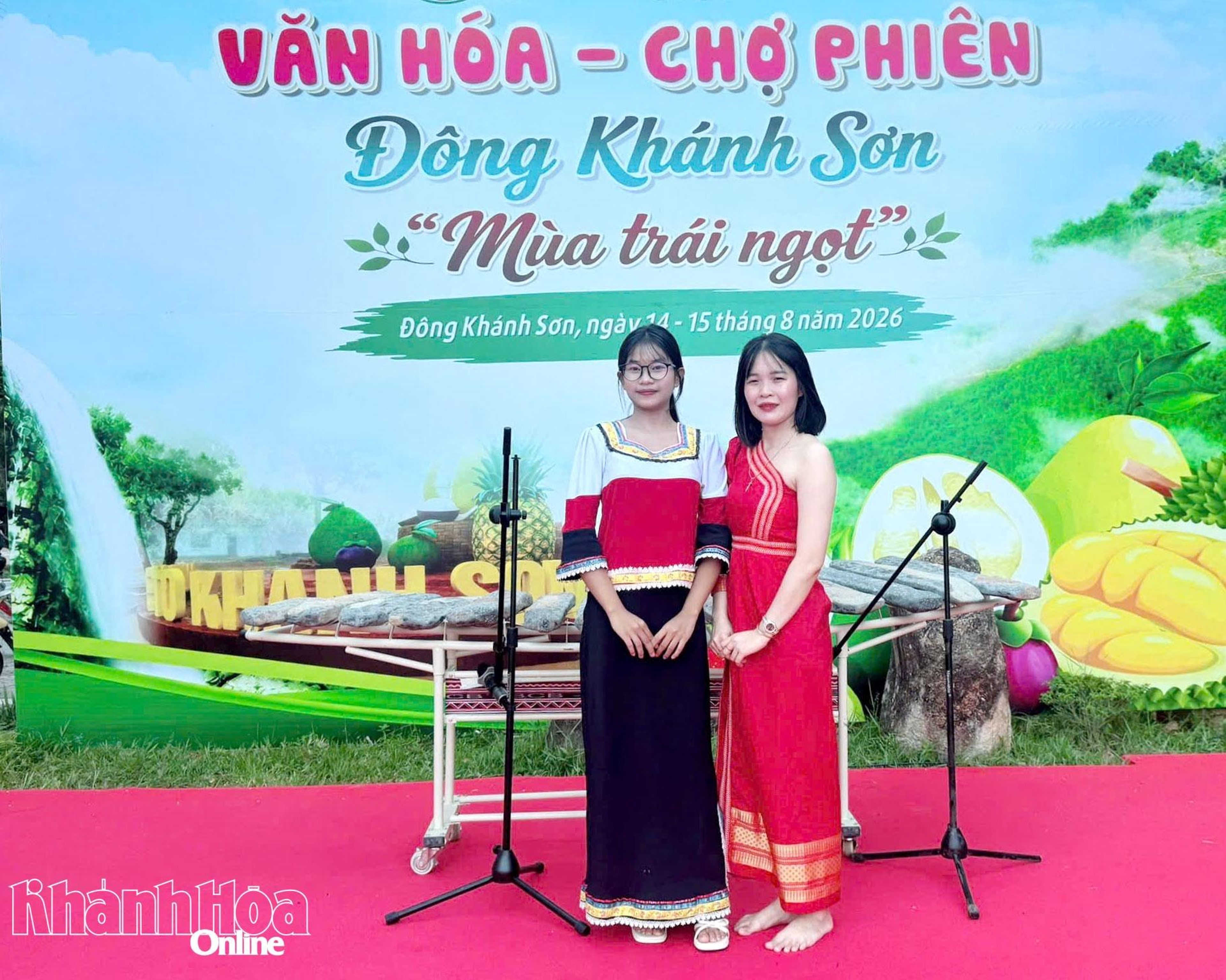
Visiting the mountainous district of Khanh Son, home to a large Raglai community, we had the opportunity to learn about a lithophone class. Since 2024, the local Raglai people have taken even greater pride in their ethnic musical instrument as the Khanh Son lithophone collection was officially recognized as a National Treasure. The movement to learn and play the lithophone across three communes in the Khanh Son area has also become increasingly vibrant. Ms. Nguyen Ngoc Thuy Ngan, a music teacher and Head of the Young Pioneer Organization at Khanh Son Ethnic Minority Boarding Junior High School, shared that lithophone classes at the Khanh Son Commune Children's House continue to be maintained. In addition, there are training classes for youth union officials and cultural workers across the communes. The lithophone has also been integrated into educational activities at several schools.
The stone slabs are meticulously carved in different sizes and arranged in rows according to specific musical scales. Initially, learners take turns using wooden mallets to strike each bar to gauge their hand strength and pitch, before gradually becoming familiar with each note and chord to play melodies and complete pieces. This journey demands perseverance while remaining captivating for learners. "I study the lithophone because it is the traditional instrument of my ethnic group. I hope more and more students will learn to play it, thereby contributing to preserving and promoting the Raglai lithophone to a broader audience,” said Tro Thi Truc Vy (an 8th-grade student at Khanh Son Ethnic Minority Boarding Junior High School).
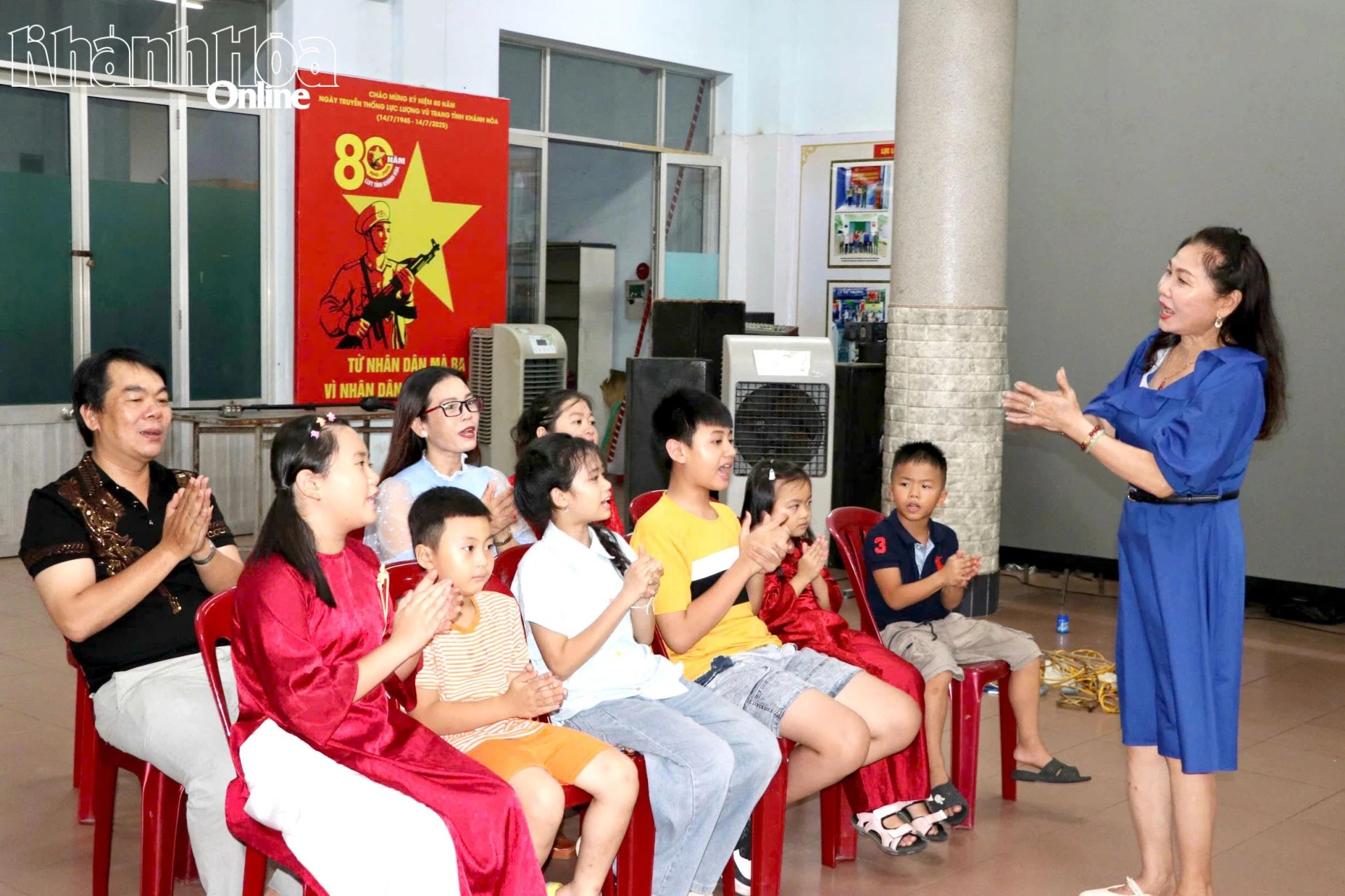 |
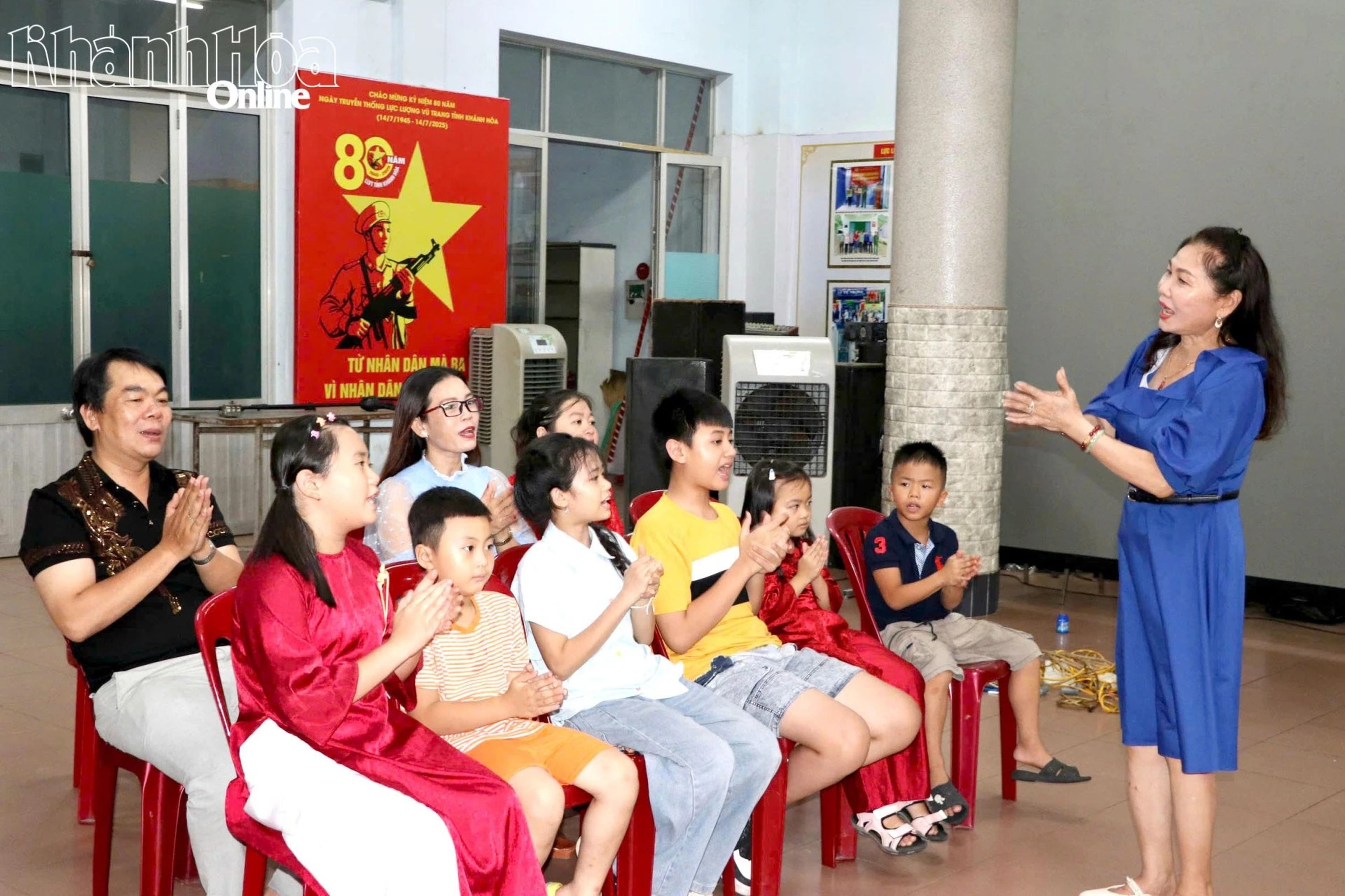
| Meritorious Artist Bich Vuong teaches children how to chant and sing bai choi. |
A Deep Passion for Bai Choi Art
Since late July, the Provincial Cultural Center has launched a class to transmit the art of bai choi chanting and singing. The class is taught by well-known local bai choi artists and artisans, such as Meritorious Artist Bich Vuong, Meritorious Artist Bich Thuy, and Meritorious Artisan Bach Lan. The class has drawn numerous young people of various ages. Although they have different vocal qualities and talents, all share a passion for this unique folk art form that has been inscribed by UNESCO as an Intangible Cultural Heritage of Humanity.
Melodies such as xuan nu, co ban, xang xe, and ho quang, along with vocal ornamentation techniques and rhythm control, are thoroughly guided by the artists and artisans. As a result, each young student masters the techniques and can confidently perform card chanting calls and popular bai choi melodies. "Learning and directly experiencing the art of bai choi has given me a clearer appreciation of this art form. While I used to only watch artists and artisans perform, now I have learned and can chant and sing on my own. That makes bai choi much more fascinating to me, and I want to learn more melodies to gain a deeper understanding of it," shared Truong Kieu Phuong Uyen (13 years old, Tay Nha Trang Ward).
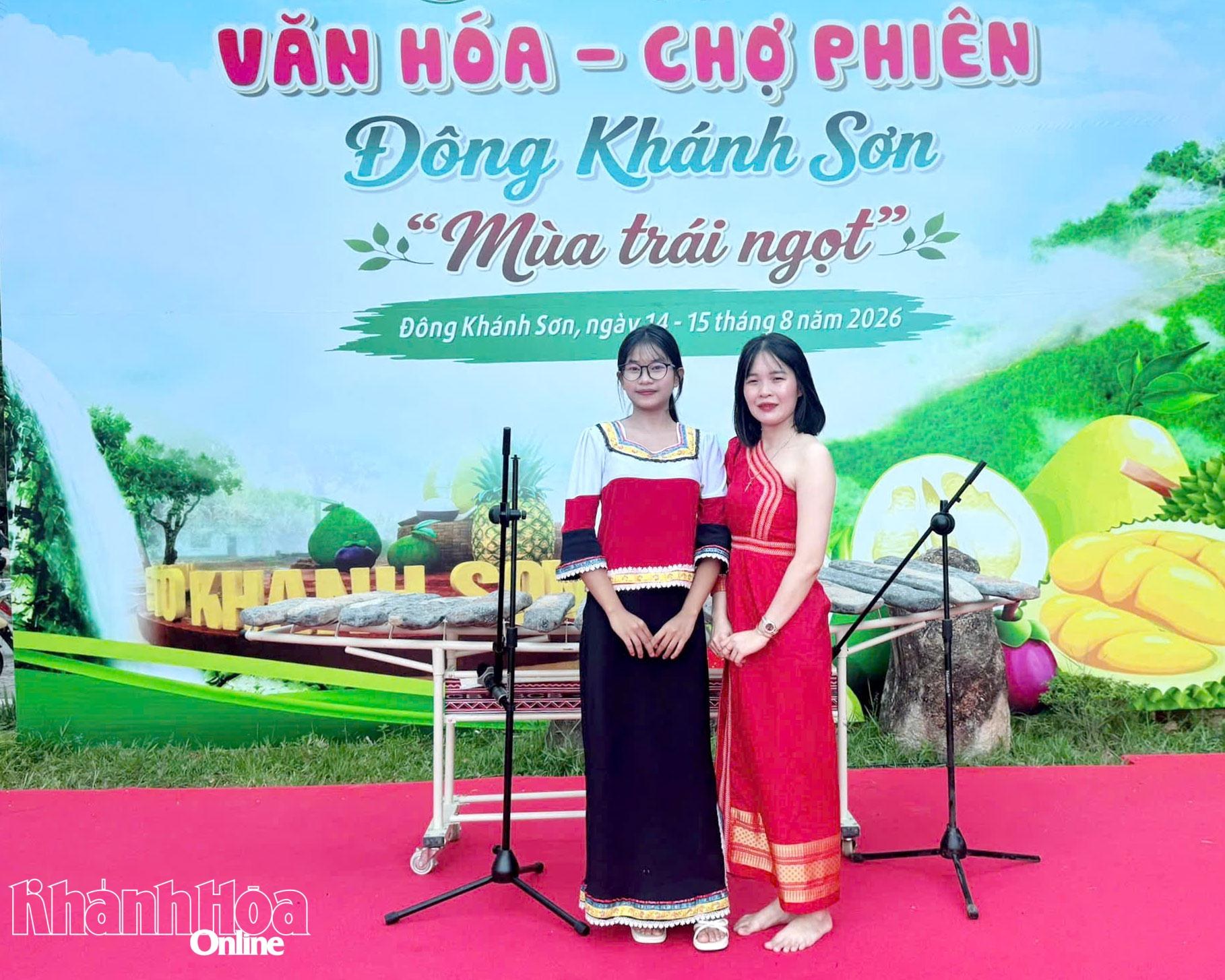 |
| Teacher Nguyen Ngoc Thuy Ngan and student Mau Thi Lam Vy with the lithophone instrument and traditional costumes. |
So That Heritage Lives On
Ho ba trao, lithophone performance, and bai choi singing are three distinct art forms, yet all are currently being passed down to the younger generation. The common ground in these classes is that youth get direct, hands-on practice under the guidance of highly skilled professionals. Every gesture, musical note, and verse is guided and refined down to the finest detail to help learners grasp and perform with the best results. In particular, these classes have contributed to fostering and sowing the love for traditional arts and the cultural heritage of the Khanh Hoa homeland among youth. This is also how traditional arts and cultural heritage are carried forward from the past to the present and into the future.
According to Mr. Nguyen Khac Duy, Deputy Director of the Provincial Cultural Center, for traditional arts to thrive among the younger generation, it is not enough merely to preserve and introduce them passively; instead, opportunities must be created for youth to learn, practice, perform, and create. Alongside artisans, artists, and schools, localities need to open more learning and performance playgrounds for traditional arts through models such as clubs, experiential spaces, school stages, and digital environments. Only then can cultural heritage be embraced, safeguarded, and spread by young people in ways well-suited to the demands and tastes of the contemporary era.
TRAN HANG