



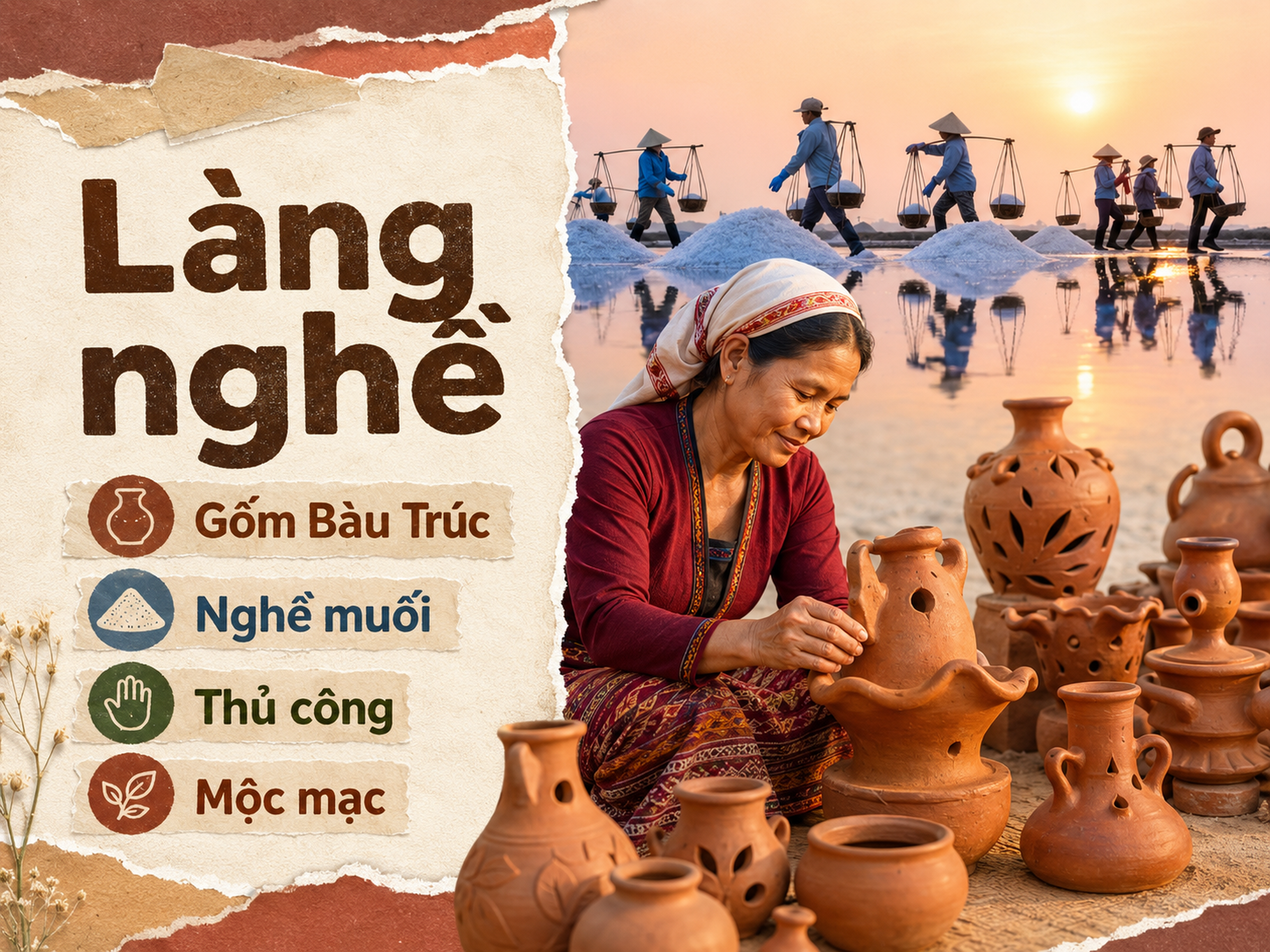
Beyond the coastal island connection, the extended Khanh Hoa travel journey leads visitors to traditional craft villages – places where time seems to stand still and original values have been preserved through generations. The most iconic highlights of this heritage journey are the vast white salt fields of the Hon Khoi region (Khanh Hoa) and the ancient Bau Truc pottery village (Phan Rang) – a pottery village inscribed by UNESCO on the list of intangible cultural heritage in need of urgent safeguarding. Visiting these craft villages provides you with powerful emotions regarding the value of manual labor.
Tasting the saltiness at Hon Khoi salt fields
The Hon Khoi salt fields are one of the most beautiful landscape photography spots in Central Vietnam. Under the harsh noon sun, the square salt pans appear like giant mirrors reflecting the sky. To obtain pure white salt grains, the salt farmers must work tirelessly from 3:00 AM, raking the salt and carrying heavy baskets on their shoulders to create towering mounds of salt.
When visiting the salt fields, tourists need to be mindful that this is an active workspace. Do not step into the salt pans while farmers are working, as your footprints can contaminate the crystallizing salt. Stand on the surrounding embankments, and if you wish to take photos, wait for their break to ask for permission, avoiding interruptions to their hurried pace of work under the sun.
Touching original clay at Bau Truc pottery village
Traveling down to Phan Rang, Bau Truc pottery village welcomes you with a space filled with open-air fired pottery featuring its characteristic reddish-pink hue. This is the oldest pottery village in Southeast Asia that still maintains hand-crafting techniques without the use of a potter's wheel. The Cham artisans (mostly women) must walk backward around the clay mass to shape the product. Each pottery piece is a unique work of art, carrying the breath and soul of its creator.
When visiting family-run pottery workshops, walk carefully because newly shaped raw pottery is spread out along the paths and is easily broken if accidentally bumped into. You can sign up for a short pottery-making experience, touch the clay with your own hands, and purchase a few small souvenirs to support the local economy and provide motivation for the artisans to preserve their craft.
Quick Checklist:
-
Schedule your salt field visit for early morning (4:30 AM - 6:00 AM) to catch the sunrise and avoid the harsh sun.
-
Absolutely do not step into the salt crystallization areas belonging to the salt farmers.
-
Walk gently and pay attention to your path when entering the raw pottery drying areas in Bau Truc village.
-
Purchase pottery souvenirs directly from artisan households to support the village economy.
-
Always ask for permission before filming or taking close-up photos of the artisans' manual crafting process.