



Investing in culture is investing in sustainable development and in the future of the nation. Transforming the linguistic vitality of ethnic minority groups into a developmental resource requires a long-term constructive strategy. Addressing this issue, a reporter from Khanh Hoa Newspaper, Radio and Television interviewed Ms. Thai Thi Le Hang - Director of the Department of Culture, Sports and Tourism.
 |
| Ms. Thai Thi Le Hang. |
* Persistently cultivating endogenous resources
- Dear Madam, Resolution No. 80-NQ/TW dated January 7, 2026 of the Politburo on the development of Vietnamese culture identifies culture as an important endogenous resource for national development. However, in the flow of modern life, the cultural identity of ethnic minority groups, including their spoken and written languages, is at risk of fading away. How has the Department of Culture, Sports and Tourism advised the Provincial People's Committee in directing, thoroughly grasping, and implementing the spirit of Resolution No. 80 to resolve this challenge?
- Resolution No. 80 of the Politburo not only affirms that culture is the spiritual foundation, an important endogenous resource, and a driving force promoting sustainable development, but also points out the urgent requirement to further promote the role of culture in the rapid and sustainable development strategy. Currently, the downside of the market economy, international integration, and the information explosion are creating objective challenges to indigenous cultural spaces. When the spoken and written languages of ethnic minority groups fade away, that ethnic group gradually loses its "soul". In Khanh Hoa, although the socio-economy is increasingly developing, there is still a certain gap in the level of access to and enjoyment of culture among different areas.
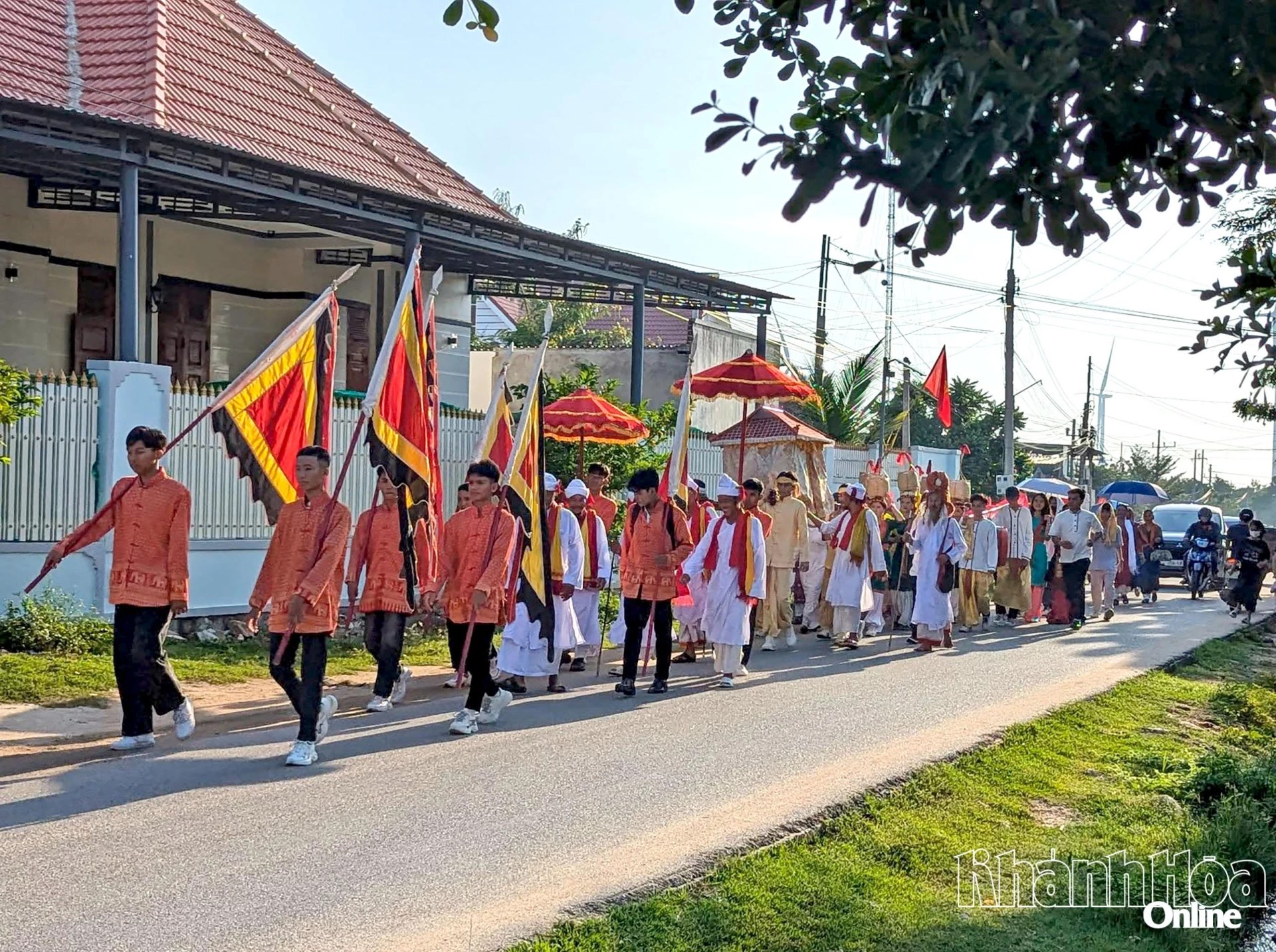 |
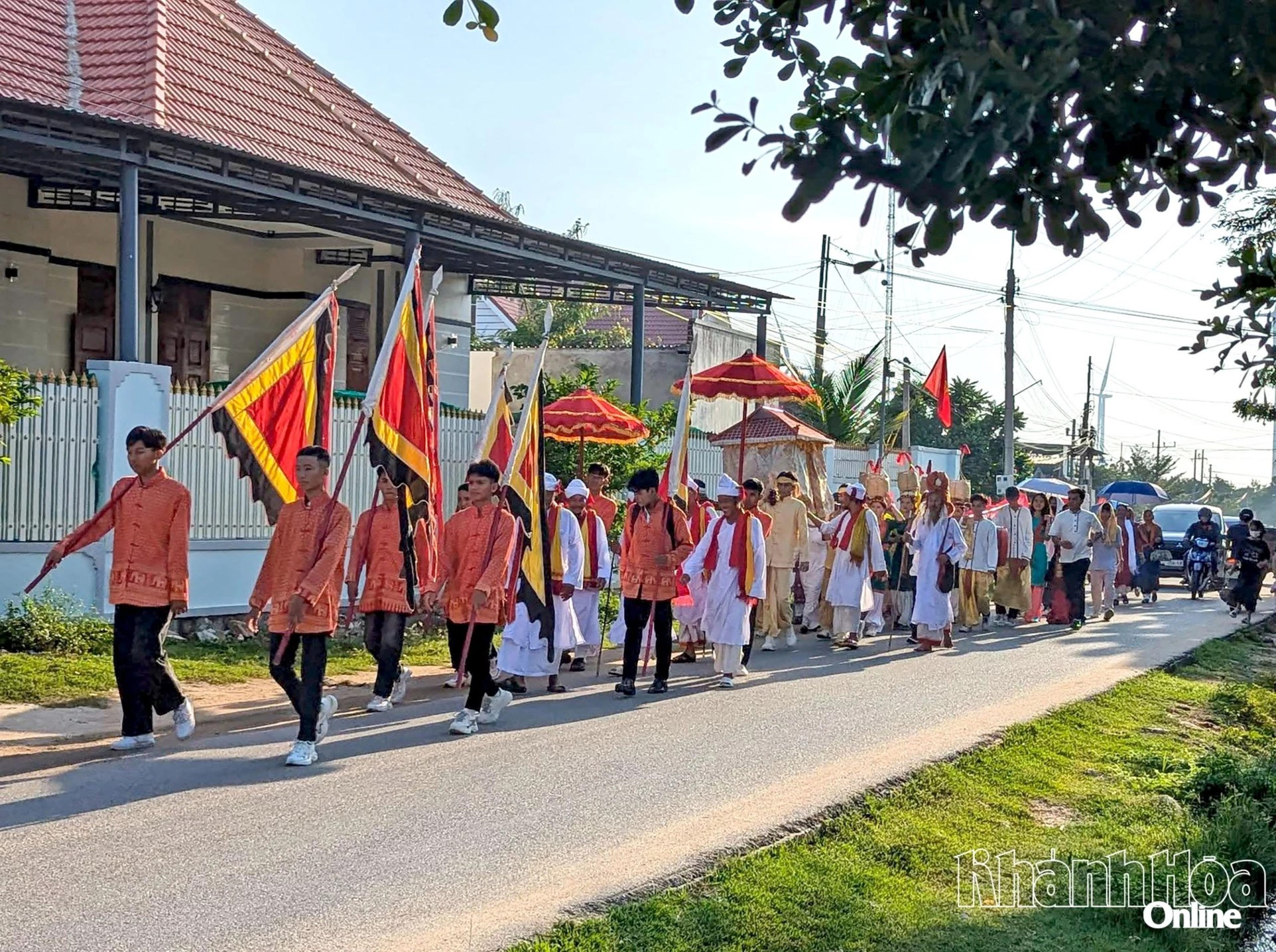
| Costume procession at the 2024 Kate Festival in Hau Sanh village (Phuoc Huu commune). |
Deeply grasping the spirit of Resolution No. 80, the Department of Culture, Sports and Tourism advised the Provincial People's Committee to persevere with the goal: Developing culture commensurately with economic development, not trading cultural heritage for heated growth, and implementing solutions to promote indigenous cultural values. The province's policy is that Party committees and authorities act as facilitators providing mechanisms, spaces, and resources, while ethnic minority people directly practice, protect, and pass on the culture of their ethnic group. The province has proactively introduced ethnic languages into community institutions, schools, and radio and television broadcasts, creating spaces for the mother tongues to “live”, be practiced, and spread. Only when the spoken and written languages and identities of ethnic minorities are preserved will their culture truly become an endogenous resource, contributing to sustainable livelihoods and helping people confidently overcome poverty and achieve prosperity right in their homeland.
- Khanh Hoa province currently has 34 ethnic minority groups with more than 266,000 people, mainly Cham and Raglai people. In recent times, what solutions has the province implemented to preserve the spoken and written languages of ethnic minority groups, Madam?
- Over the past time, the Provincial Party Committee, the Provincial People's Council, and the Provincial People's Committee have concretized cultural preservation tasks into many provincial resolutions and programs. Highlights include implementing the Project on Preserving and Promoting the Fine Traditional Cultural Values of Ethnic Minorities in Association with Tourism Development for the 2021 - 2025 Period under the National Target Program for Socio-Economic Development in Ethnic Minority and Mountainous Areas; allocating investment resources for cultural institutions; supporting the organization of traditional cultural festivals; inventorying intangible cultural heritage and documentary heritage; equipping grassroots information and communication systems; launching the Digital Platform of Cham Cultural Heritage in Khanh Hoa; implementing preferential policies to honor those who directly preserve and transmit cultural values; introducing local educational content (including teaching ethnic minority languages) into schools... We also acknowledge the effectiveness of several creative models and practices from agencies, units, localities, and individuals in preserving the cultural heritage stream of ethnic minority groups.
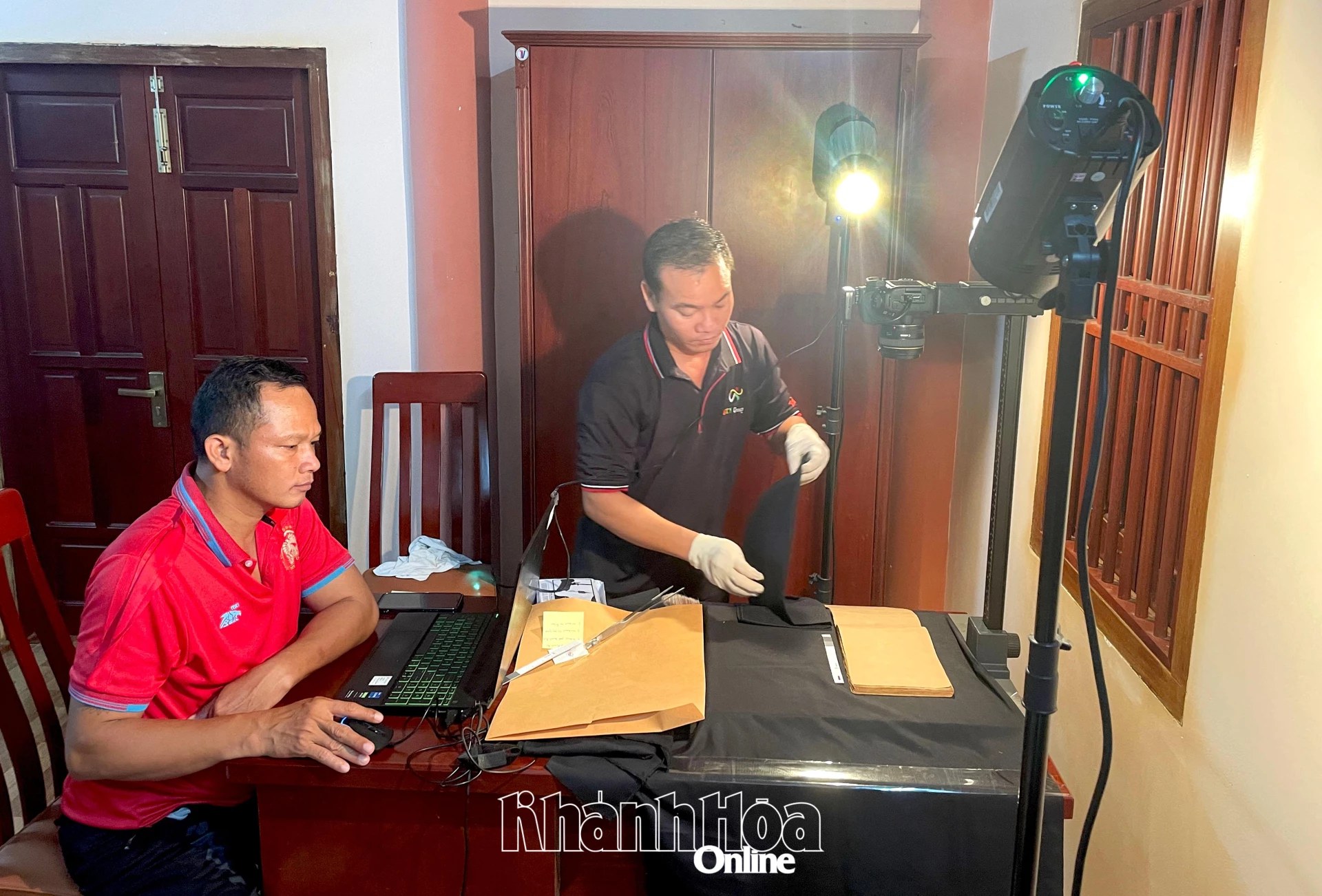 |
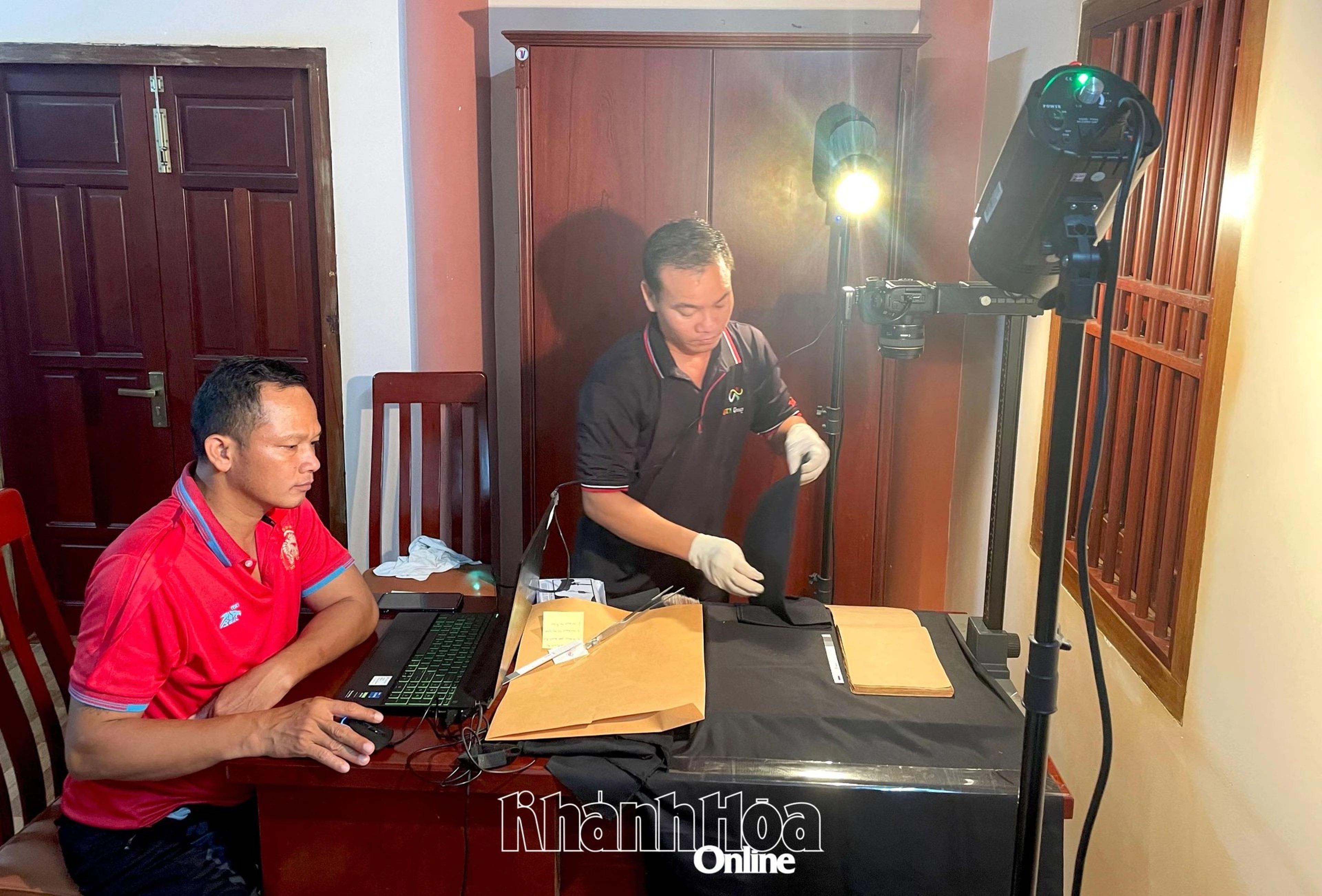
| The research team of Mr. Dong Thanh Danh (Phan Rang ward) restores and digitizes Cham manuscripts. |
When the spoken and written languages of ethnic minority groups are cherished, protected, and promoted in contemporary life, they will deeply feel the attention of the Party and State towards their ethnic communities. With culture reinforced and national pride awakened, ethnic minority groups will place even greater trust in the Party's leadership, actively eliminate outdated customs, and strive to progress. This is precisely the sustainable root to narrowing the gap between regions, fostering high social consensus, firmly consolidating the great national unity bloc, maintaining political security, and promoting the sustainable socio-economic development of the entire province.
* Determination to turn endogenous resources into development momentum
- In order for ethnic minority languages to be passed on to future generations, enrich endogenous resources, and become a driving force for socio-economic development in the new era, what key measures will the Department of Culture, Sports and Tourism advise the province to continue implementing, Madam?
- One of the province's strategic orientations in the new era is to maximize the transformation of endogenous resources from culture into a driving force for rapid and sustainable development. To achieve this, breakthrough and comprehensive decisions are required. The Department of Culture, Sports and Tourism will advise the Provincial People's Committee to continue implementing several breakthrough solutions.
Among them, the department advises the province to enhance synchronized budget allocation, resolutely avoiding making culture a "last priority" field. In particular, it is crucial to continue offering deserving preferential and honoring policies for intellectuals, artisans, and those who quietly teach the spoken and written languages of ethnic minority groups.
At the same time, closely link language preservation with cultural and community-based tourism development, creating unique tourism products and contributing to increasing income for ethnic minorities. This is also the way to directly integrate culture into the economic value chain.
In addition, accelerate the digitization of cultural heritage, especially the digitization of spoken and written languages of ethnic minority groups. Digital technology will transcend spatial and temporal barriers, creating convenient access channels for generations, helping protect and widely spread ethnic minority culture in harmony with the times.
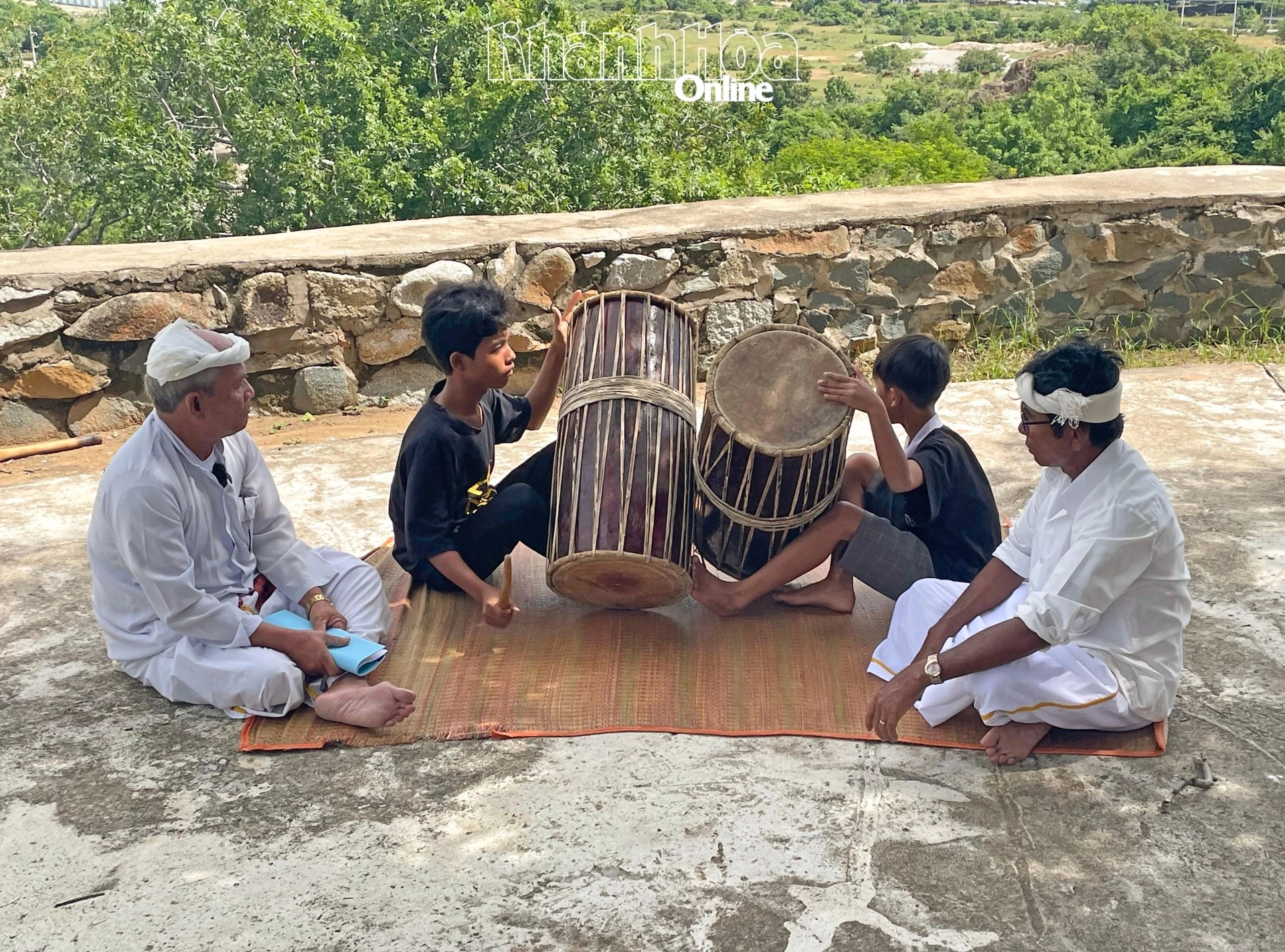 |
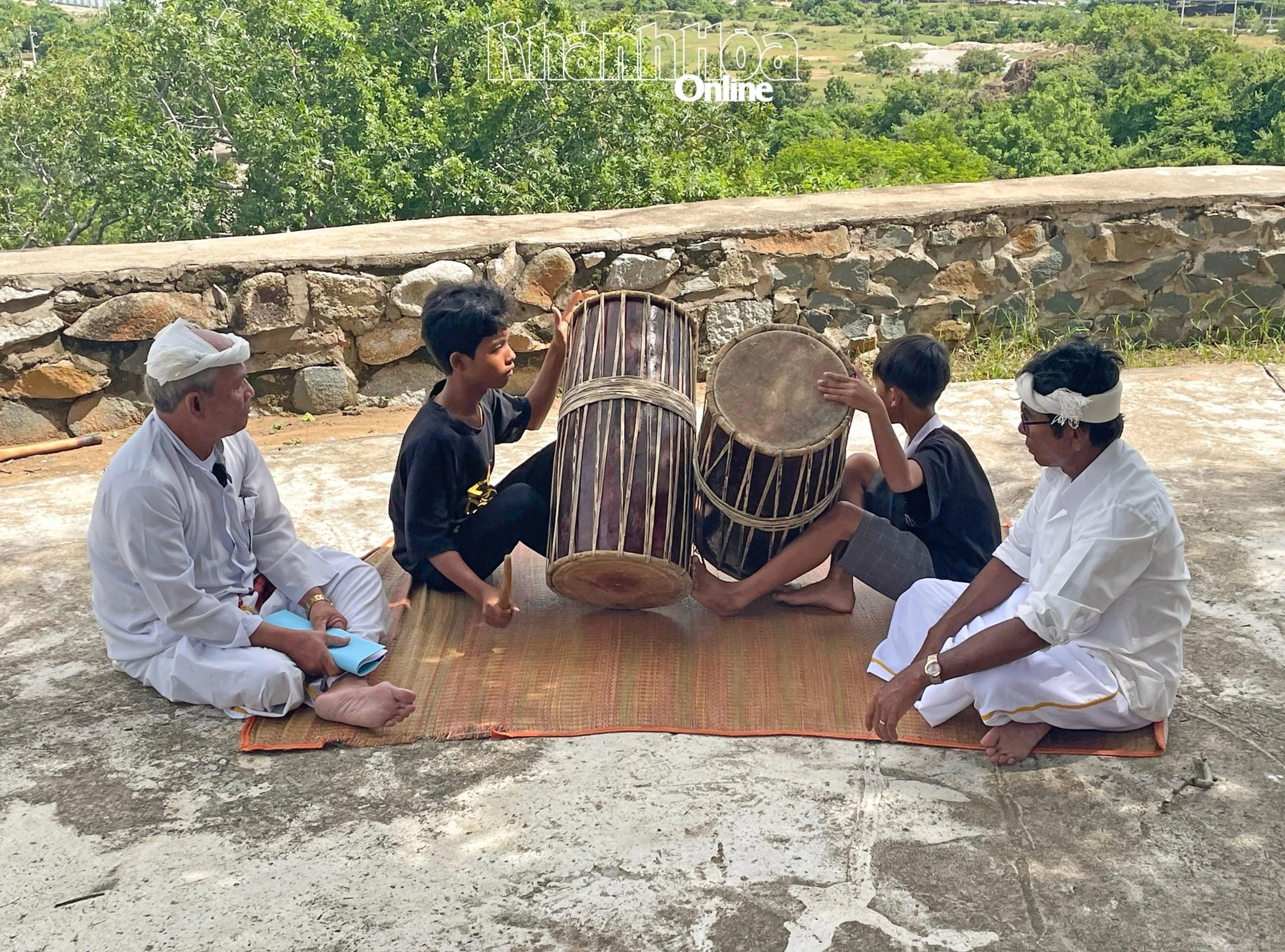
| Cham youth being guided in practicing the Ginang drum performance. |
During his lifetime, the late General Secretary Nguyen Phu Trong once concluded: "Culture is the soul of a nation, expressing the nation's identity. If culture remains, the nation remains." The culture of ethnic minorities is an inseparable piece of the Vietnamese national cultural identity. The sustainable development of Khanh Hoa is measured not only by economic growth indices, but also anchored by a profound and enduring cultural foundation. We believe that preserving and promoting the cultural stream of ethnic minorities will create a solid foundation for the entire province to confidently rise strongly.
- Thank you very much, Madam!
NGUYEN VU - MINH TAM (conducted)