


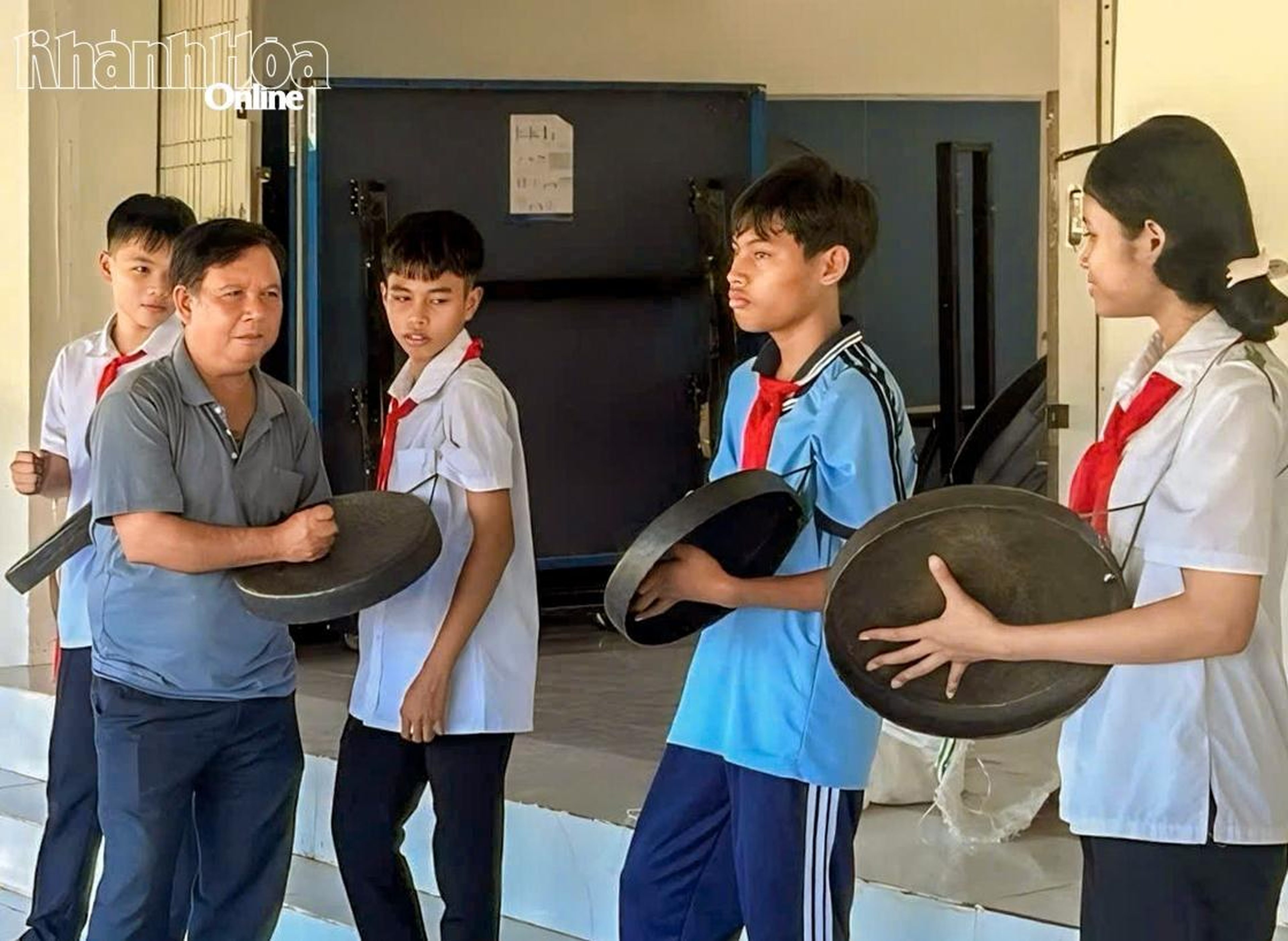
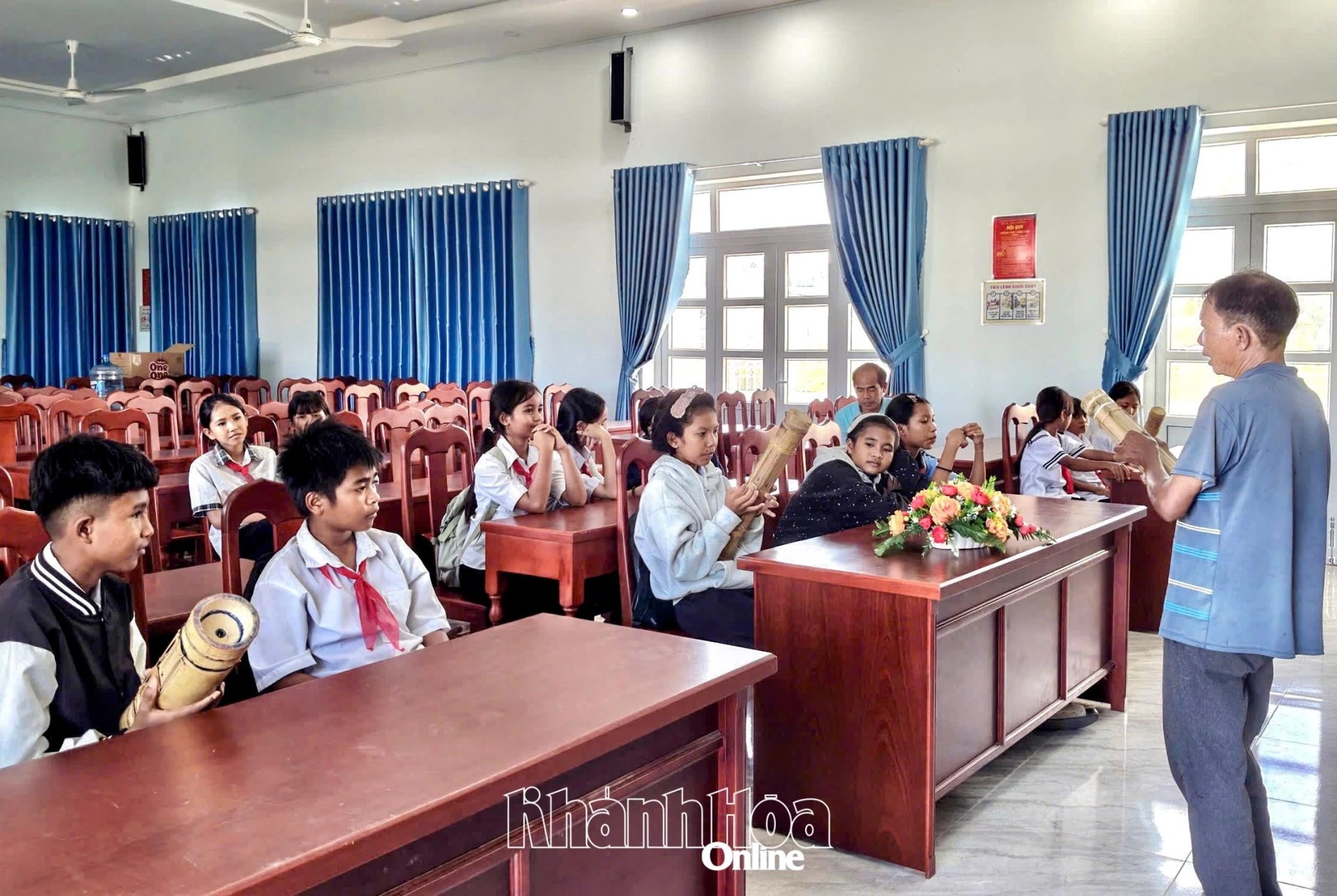
From the lively melodies of the ma la to the rustic sounds of the chapi, traditional musical instruments of the Raglai people are being taught to students of Phuoc Ha Ethnic Semi-Boarding Secondary School (Phuoc Ha Commune). Through classes with artisans, love for ethnic culture is nurtured among the younger generation, contributing to preserving traditional values right from the highland school.
Lively sounds of the ma la
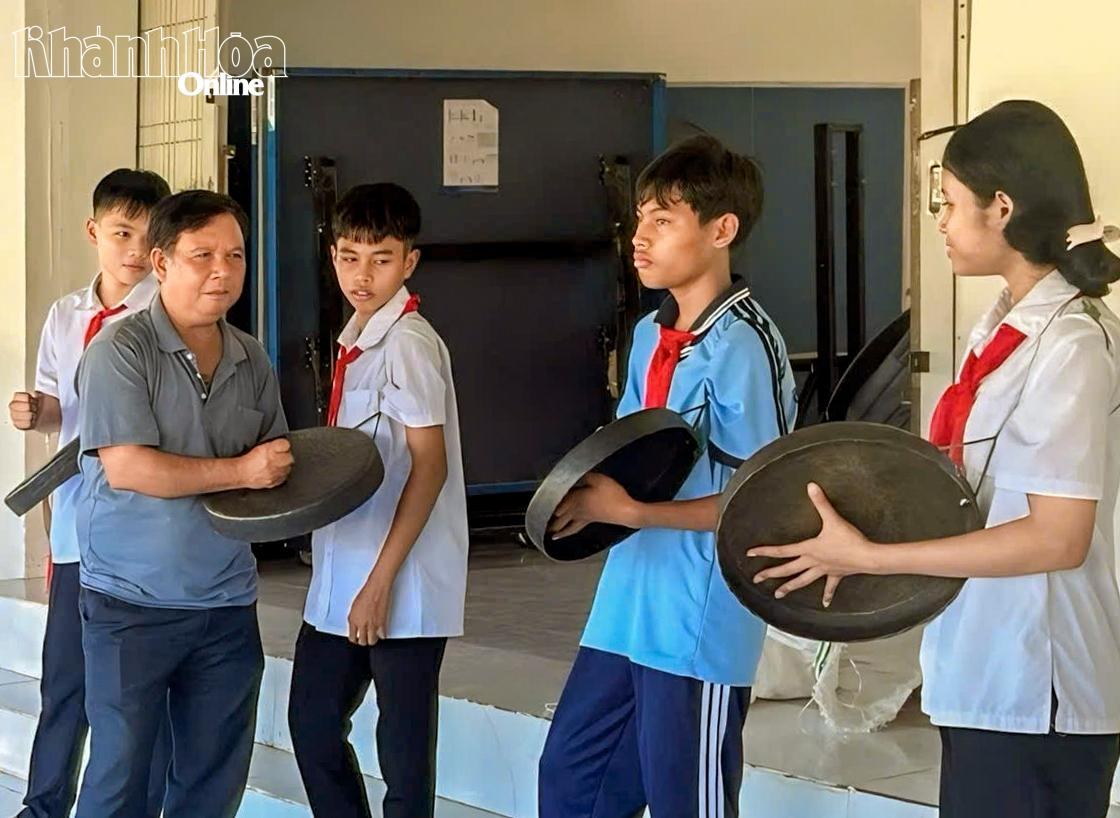
For nearly 10 years, on Tuesday and Thursday afternoons every week, ma la instrument practice sessions under a club model guided directly by local artisans have been held at Phuoc Ha Ethnic Semi-Boarding Secondary School. From the early days with few students participating, the school's ma la team has now attracted nearly 50 members. On the school campus, the sound of the ma la rings out steadily through each practice session. Amidst the performance ensemble, Ta Nu Thu Cuc (a 9th-grade student) coordinates rhythmically with her peers, creating familiar melodies. After 4 years of learning, from being hesitant with playing techniques, Cuc is now able to guide new members. “I found the playing technique the hardest, so I had to practice many times to improve. Through the artisans, I have gained a lot of knowledge about the ma la. I want to pass it on to my schoolmates, and when I go home, share it with my family so that everyone understands more about Raglai culture,” Thu Cuc shared.
 |
| Students of Phuoc Ha Ethnic Semi-Boarding Secondary School learn to play the chapi. |
The ma la is one of the representative musical instruments of the Raglai people. Not only producing distinctive sounds, the ma la is also associated with rituals, festivals, and important community events. In traditional belief, the ma la is a sacred instrument, signifying a connection between humans, ancestors, and the spiritual world. When performed, each ma la takes on a distinct role, requiring players to coordinate rhythmically to form a complete melody. According to Meritorious Artisan Ta Thia Banh (Phuoc Ha Commune), organizing ma la classes right at school makes gathering and managing students more convenient; students also have the opportunity to study regularly, acquire techniques, and develop their passion for traditional musical instruments. Through the classes on playing the ma la, students have shown keen interest and enthusiasm. Many have picked it up quickly and are already able to perform in the school's cultural events, as well as take part in mass art festivals and competitions.
Joy along with the sounds of the chapi
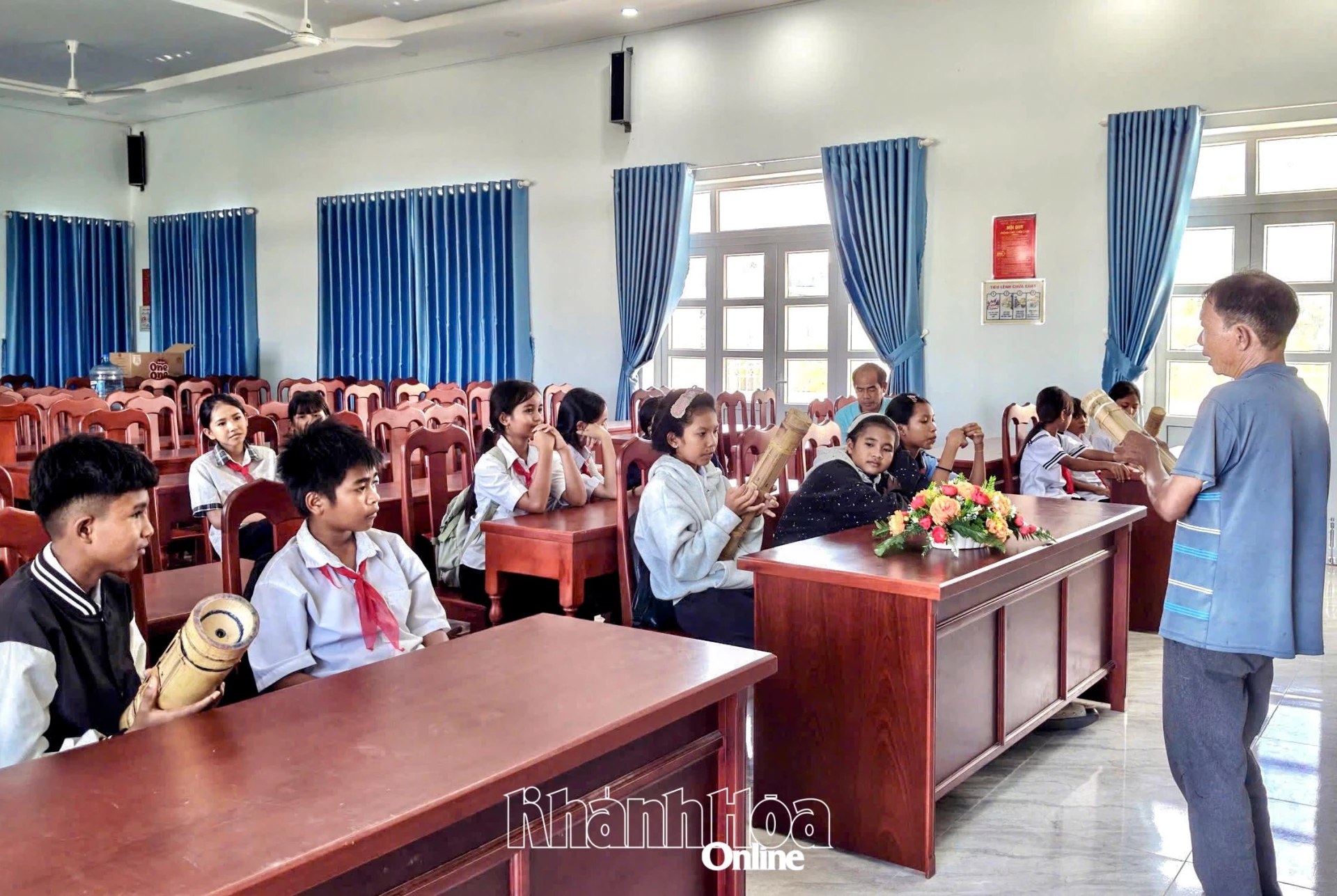
From the 2026 - 2027 school year, Phuoc Ha Ethnic Semi-Boarding Lower Secondary School opened an additional class on playing the chapi musical instrument. This activity is part of the plan to implement Resolution No. 14 of the Phuoc Ha Commune Party Committee on preserving and promoting Raglai ethnic culture in association with tourism development for the 2025 - 2030 period, with a vision toward 2035. With its rustic design and warm, familiar sound, the chapi instrument has been closely tied to the lives of the Raglai people for generations and became even more renowned through the song “Giac mo chapi” (The Chapi Dream) by composer Tran Tien.
 |
| A class on playing the ma la musical instrument for students of Phuoc Ha Ethnic Semi-Boarding Lower Secondary School. |
In the classroom, chapi instruments were handed to each student in turn. For many of them, this was the first time they directly learned about and practiced playing this unique musical instrument. Every movement of placing their hands and plucking the strings required patience to produce musical notes and melodies. “I have just started learning the chapi, so it feels quite difficult, but I will try my best to practice. I feel happy and proud because this is part of the cultural identity of the Raglai people. If given the chance, I want to introduce the chapi to my friends so that everyone can understand more about our ethnic culture,” said Ba Rau Thi Hieu (a student of class 7/1).
Organizing parallel classes teaching how to play the ma la and the chapi helps students access different forms of musical practice. Through each lesson, they not only hone their performance skills but also have the opportunity to learn about the instruments, customs, and cultural life of the Raglai people. Teacher Hoang Luong Dan, Principal of Phuoc Ha Ethnic Semi-Boarding Lower Secondary School, shared that the school recognizes integrating traditional musical instruments into educational activities as one of the practical ways to preserve ethnic culture. Through these classes, the school hopes students will know how to play the instruments, understand the value of the handed-down cultural heritage, and be conscious of preserving it in daily life. To sustain the classes and enhance their effectiveness, the school will coordinate closely with artisans in guiding and teaching the students.
From after-school practice sessions, the sounds of the ma la and the chapi are gradually becoming a part of the daily life of Raglai students in Phuoc Ha Commune. When students know how to play these musical instruments and take pride in their ethnic culture, it serves as vivid proof of the sustainable preservation and promotion of traditional cultural values.
TRAN HANG

