|
|
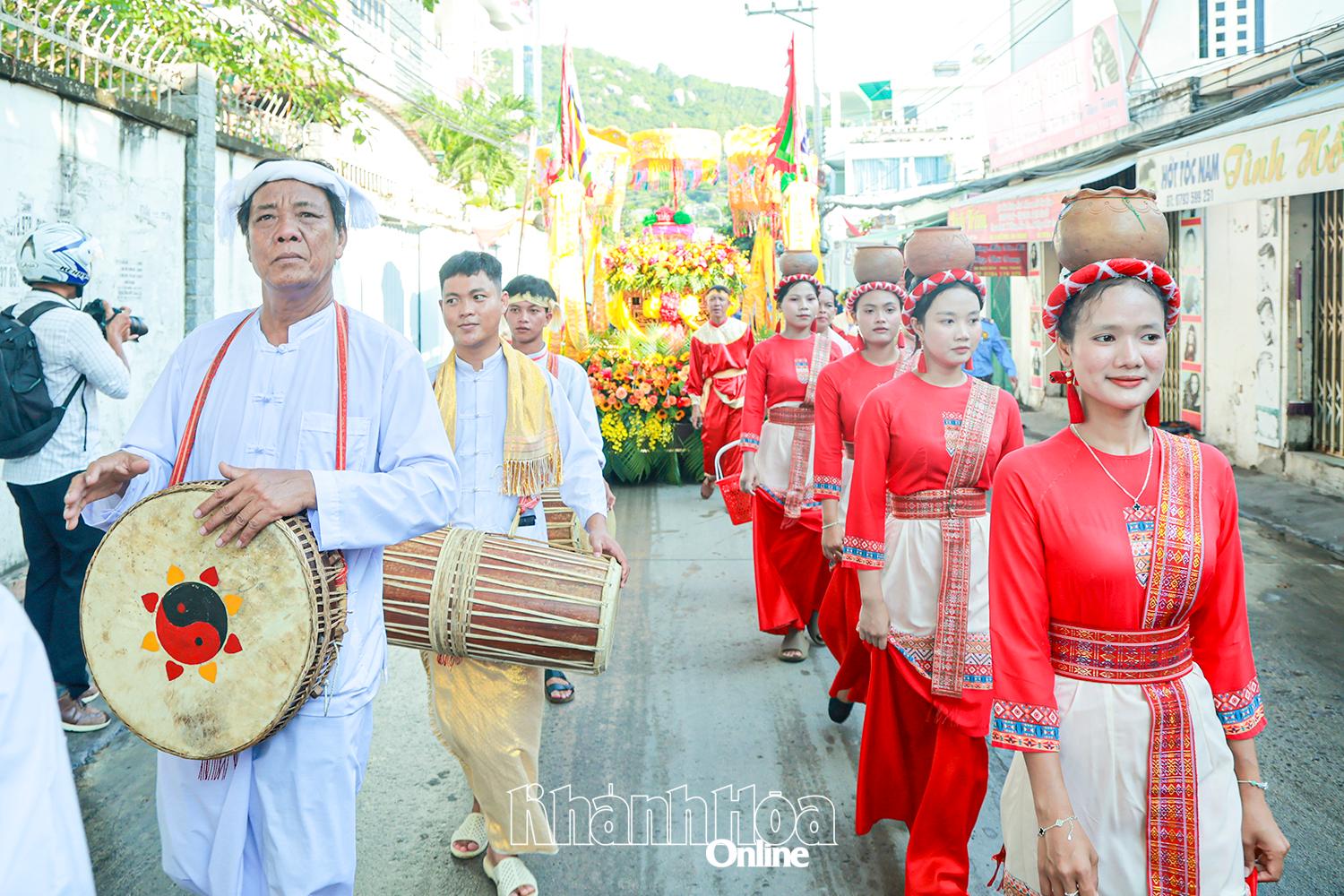
| The water procession carries the significance of praying for favorable weather and lush crops. |
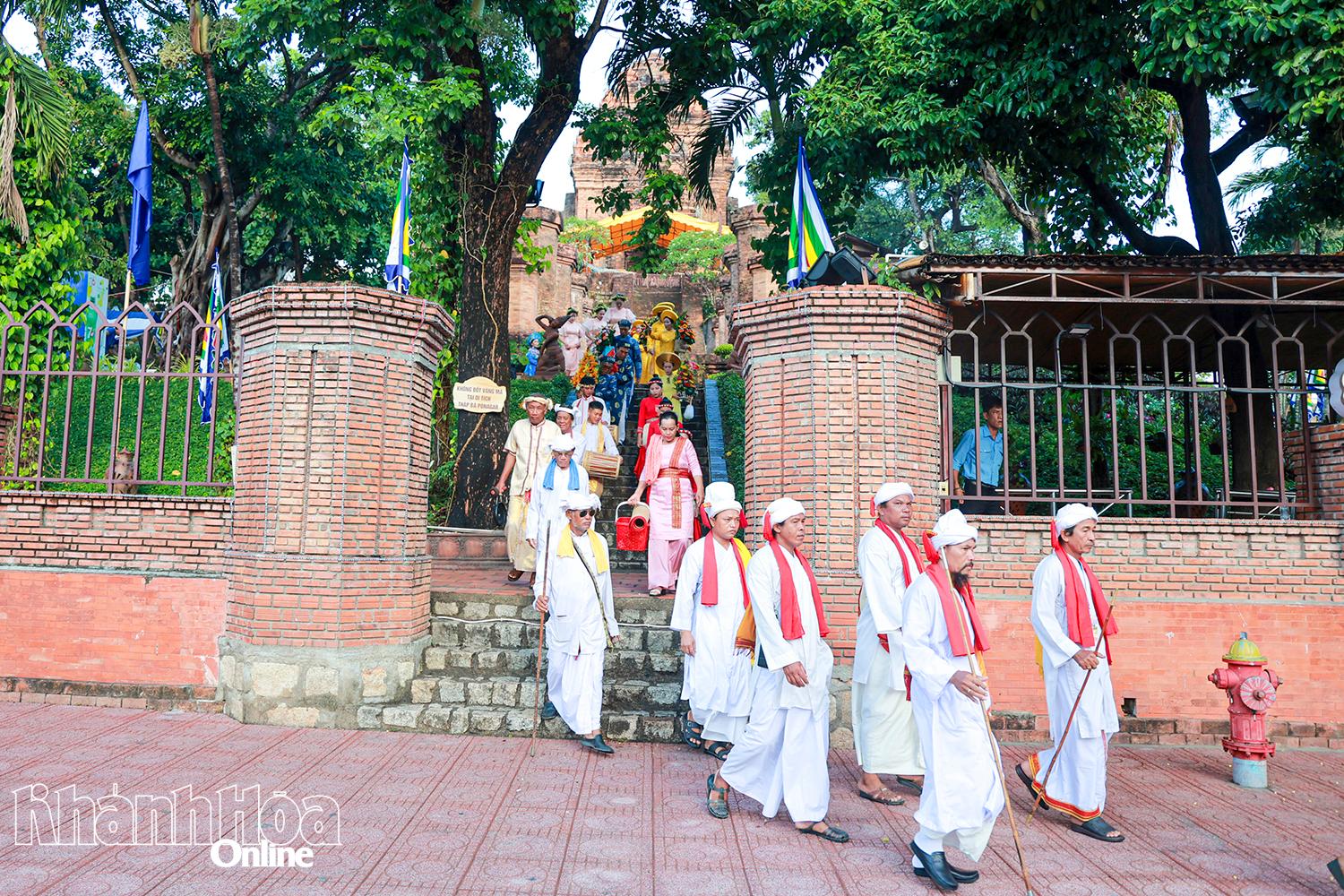
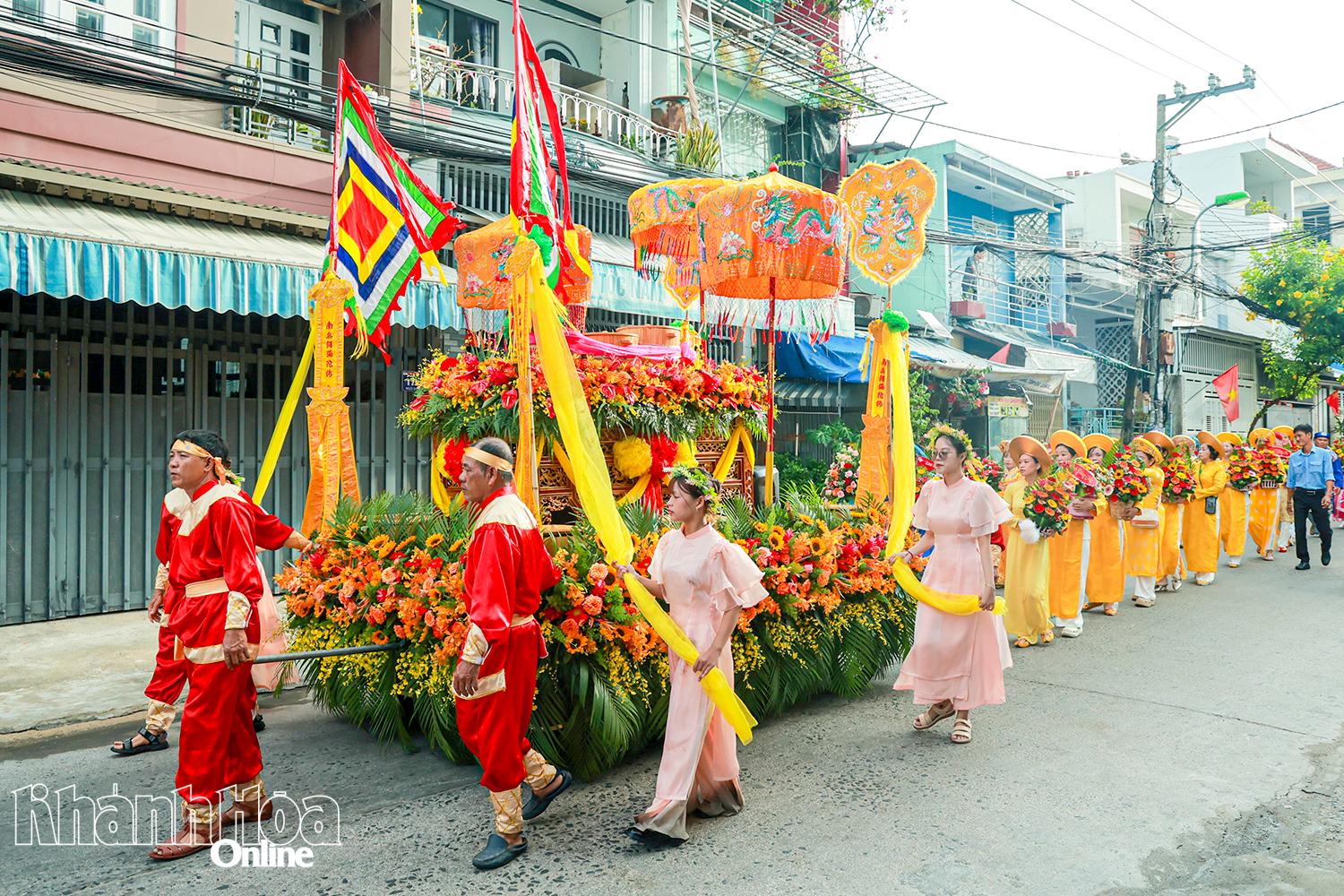
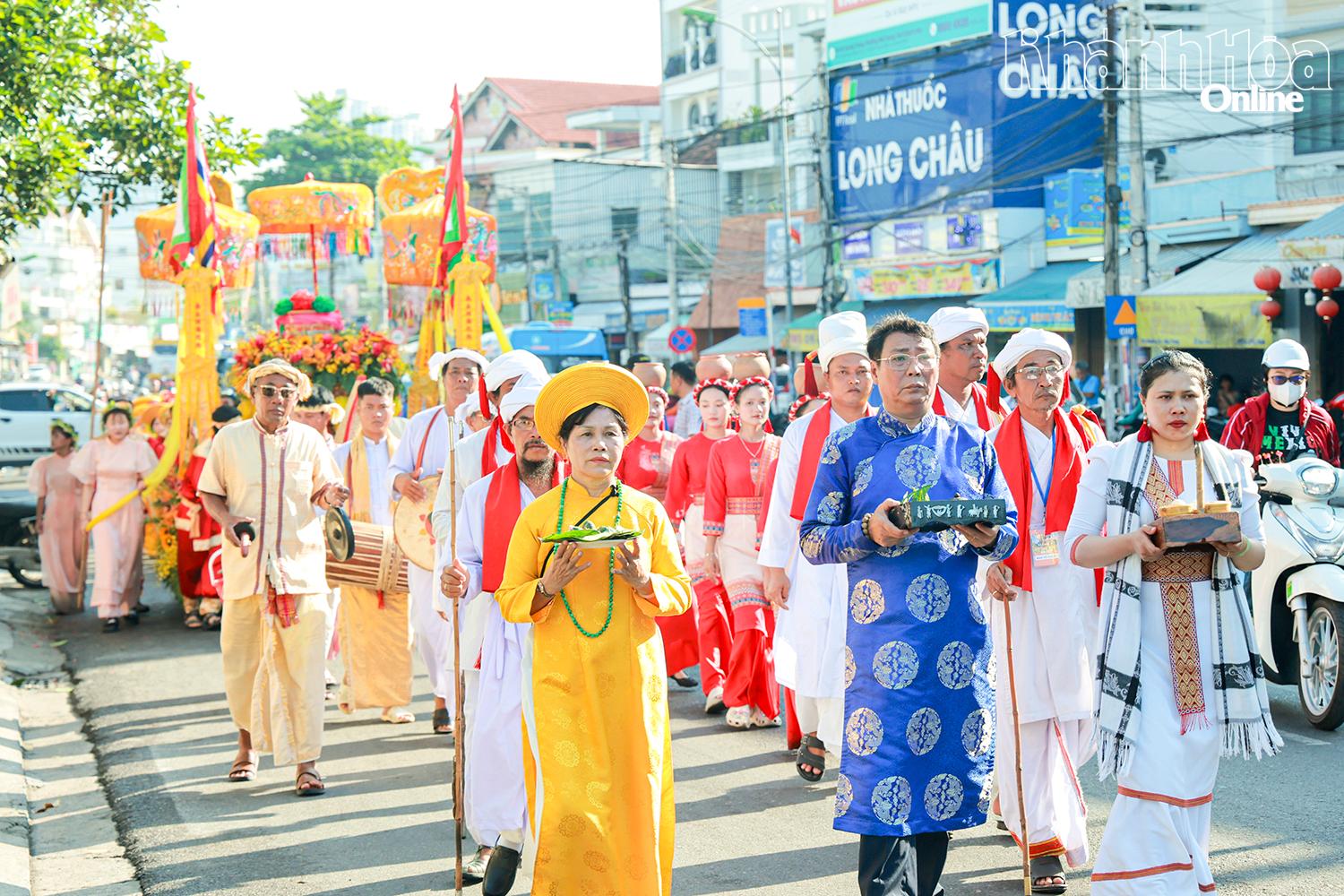
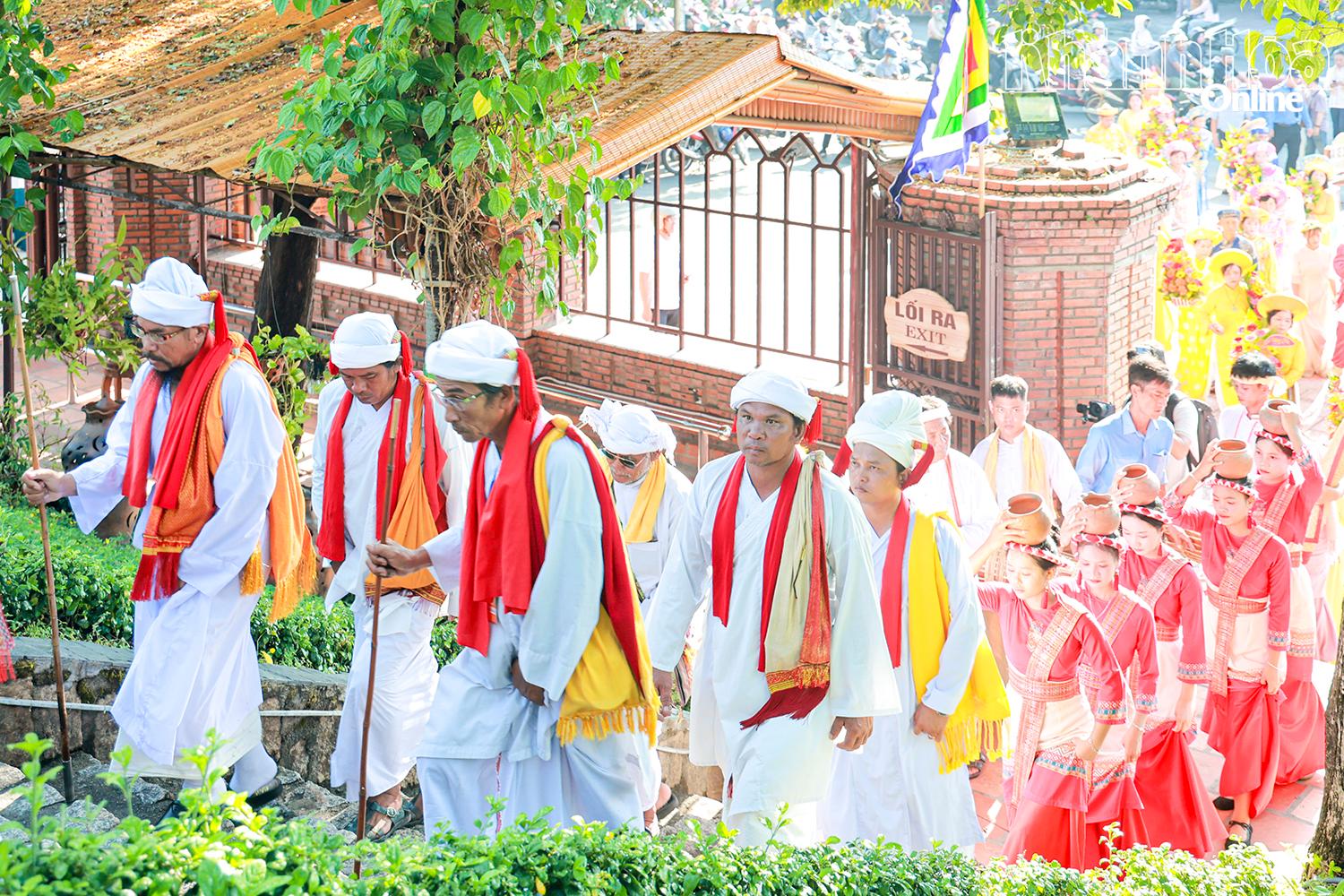
From early morning, the area around the Po Nagar Tower Special National Relic Site was bustling with preparations for the water procession. The procession, comprising over 100 main members, stood out with beautifully decorated floats, vibrant palanquins and parasols, and fluttering festival flags. The members of the procession, including both Vietnamese and Cham people in traditional ao dai or traditional Cham attire, created an iconic image of solidarity between the two ethnic groups. Carrying offerings, fruits, betel and areca nuts, and incense arrangements, the procession moved from the Po Nagar Tower Special National Relic Site to Hai An Pagoda (Ngo Den Street, Bac Nha Trang Ward). Along the way, Cham musicians played the ginang drum, paranung drum, and gongs with traditional Cham melodies, creating a vibrant atmosphere.
|
|
| The water procession departs from the Po Nagar Tower Special National Relic Site. |
|
|
| Floats, palanquins, and parasols are beautifully decorated. |
Since ancient times, the water procession has been associated with the sacred meaning of praying for favorable weather and lush crops, while also symbolizing purification, cleansing, and the bestowing of blessings from the deities upon the people. 'The Cham community often organizes the water procession to offer to the deities and pray for favorable weather, large families, prosperous livelihoods, abundant health, and general prosperity for the community everywhere. Today's water procession is a highly significant activity that was organized very methodically. I hope this ritual will be maintained and passed down to many future generations just as we received it from our ancestors,' said Mr. Dang Tan Nien, a member of the Cham Brahman Dignitaries Council of the province.
|
|
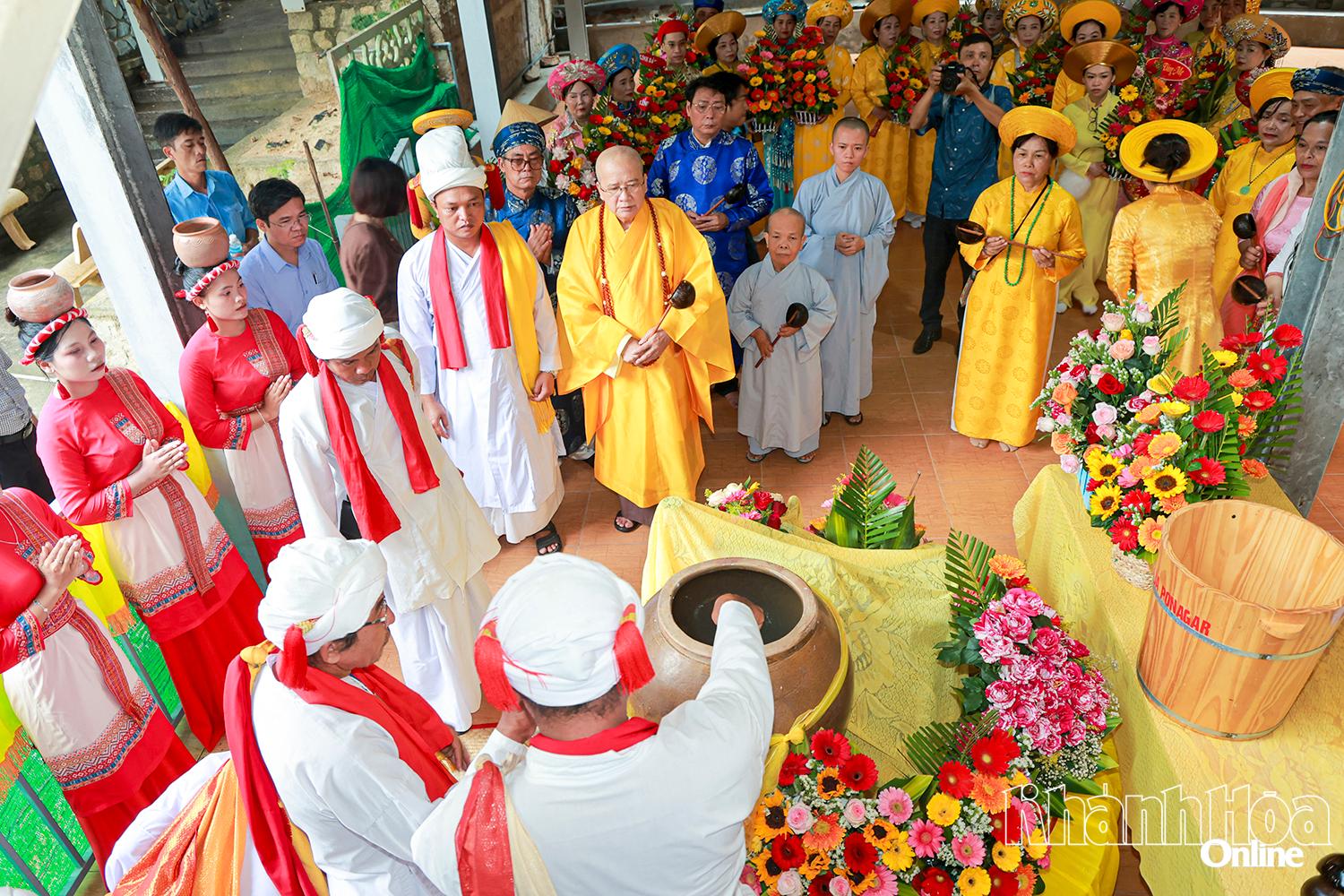
| Performing the ritual of drawing water from Hai An Pagoda. |
|
|
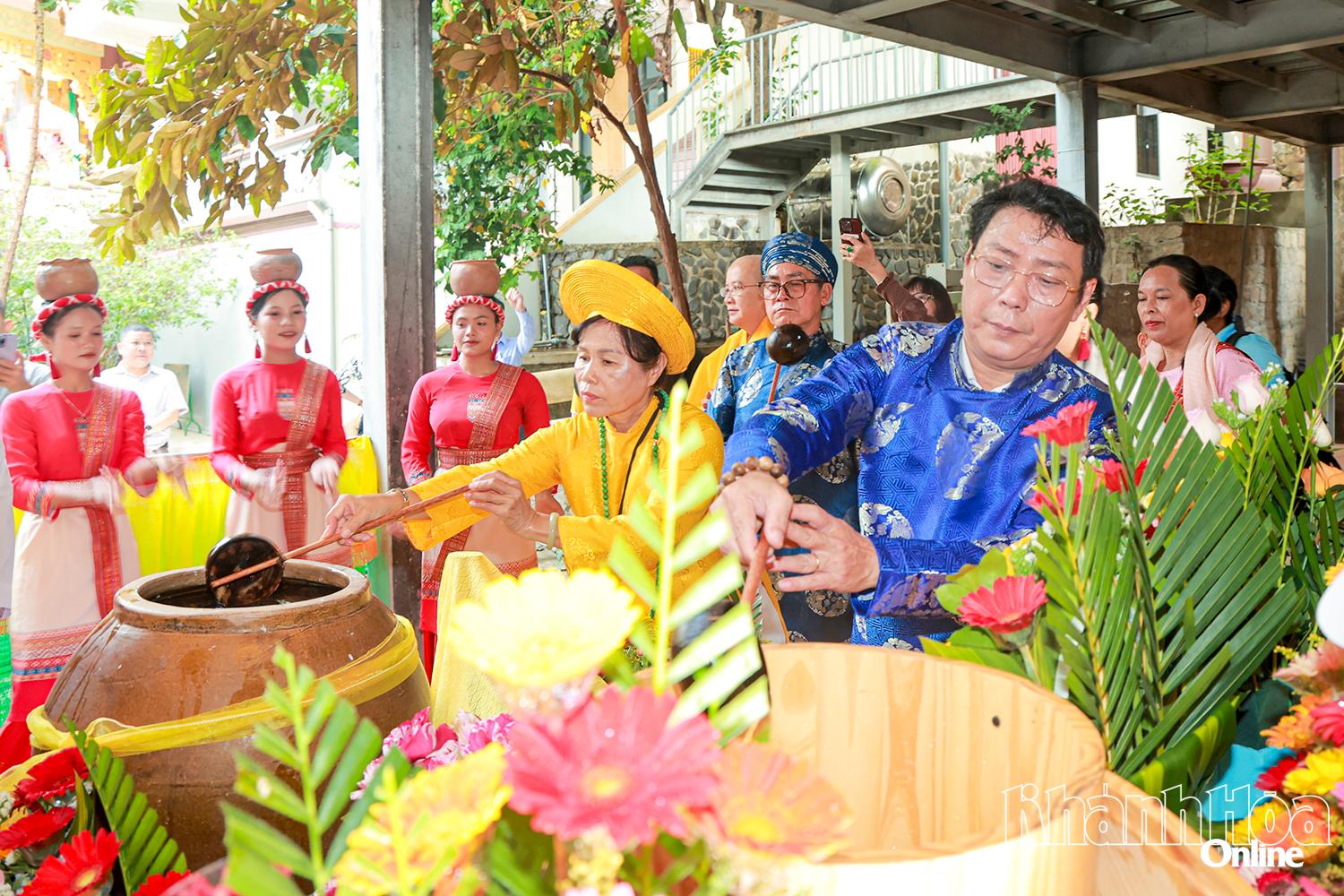
| Members of the procession collect water to offer to the Goddess. |
|
|
| A Cham dignitary performs the water collection ritual. |
|
|
| The procession moves from Hai An Pagoda, bringing water to offer to the Goddess at the Po Nagar Tower Special National Relic Site. |
|
|
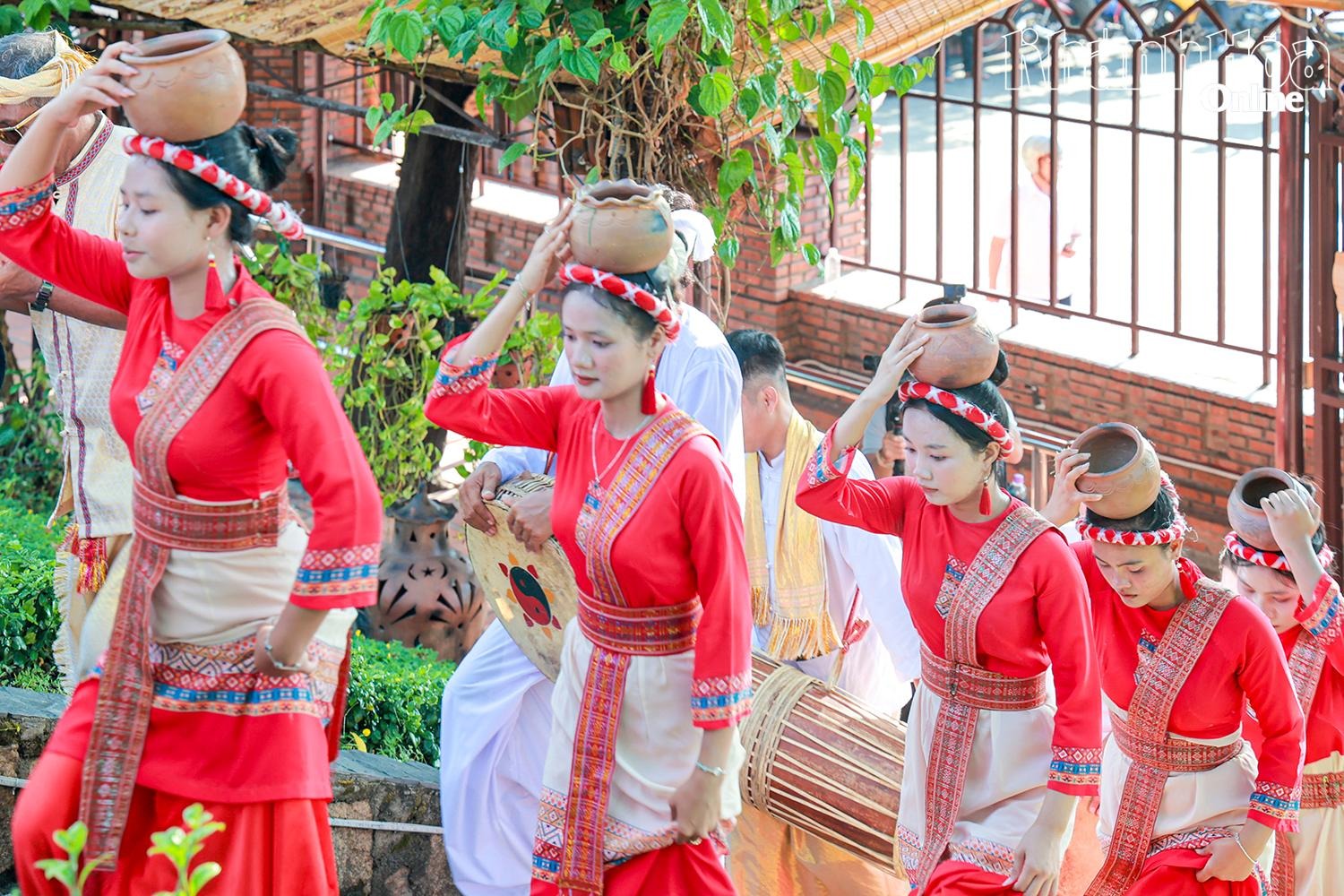
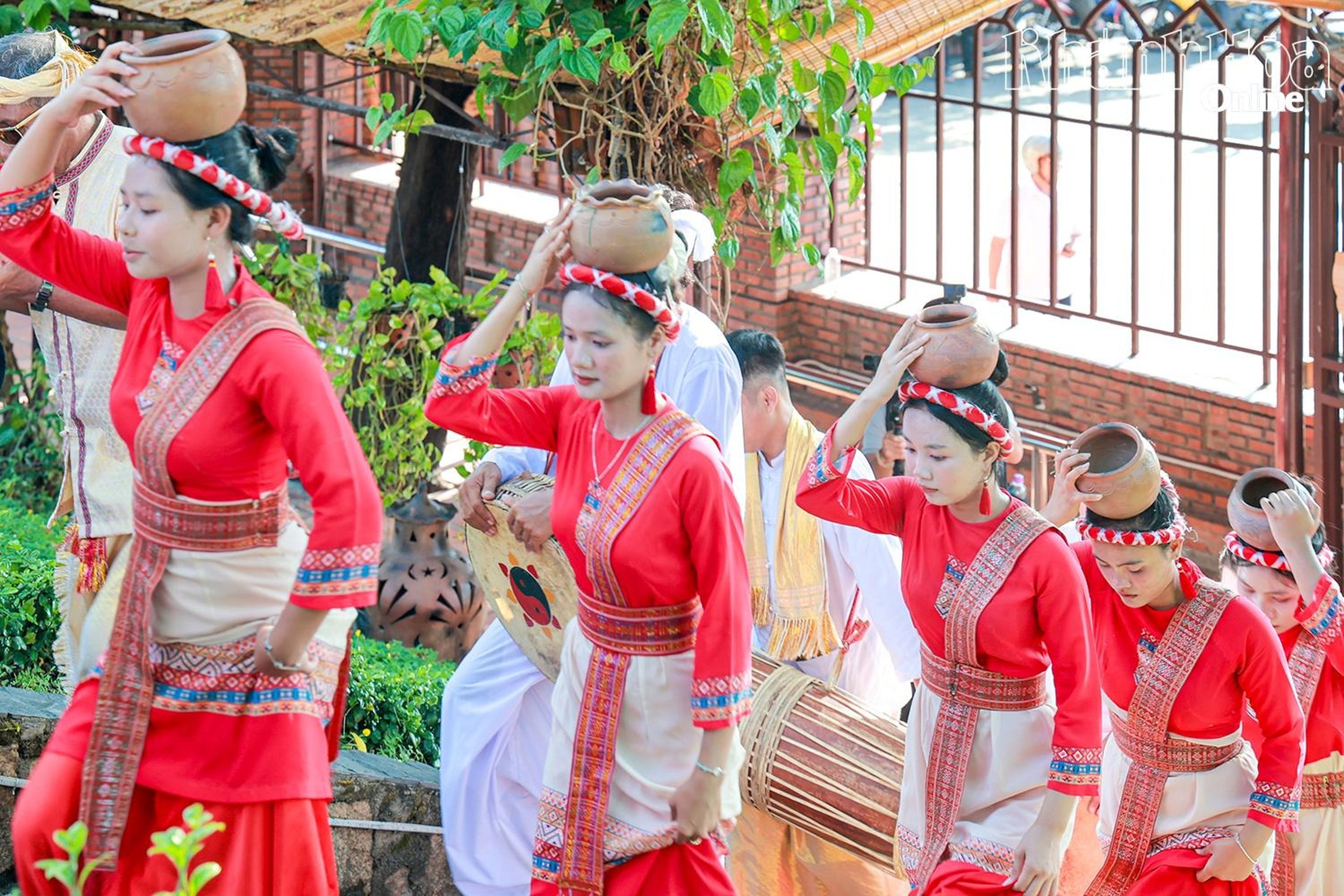
| Members participating in the water procession in traditional clothing. |
|
|
| Cham dignitaries participating in the water procession. |
|
|
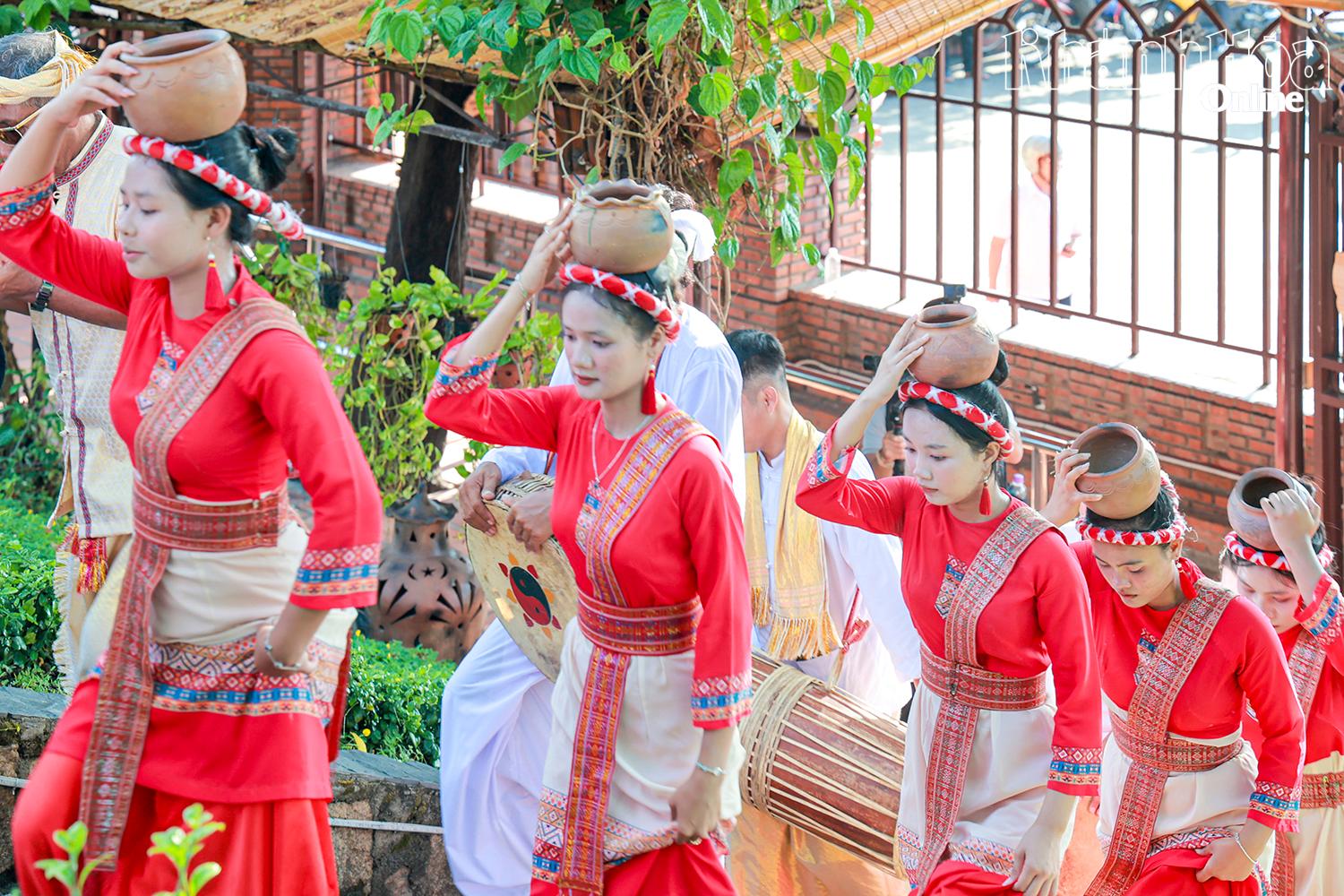
| Cham maidens in traditional attire, carrying jars on their heads, participate in the water procession. |
|
|
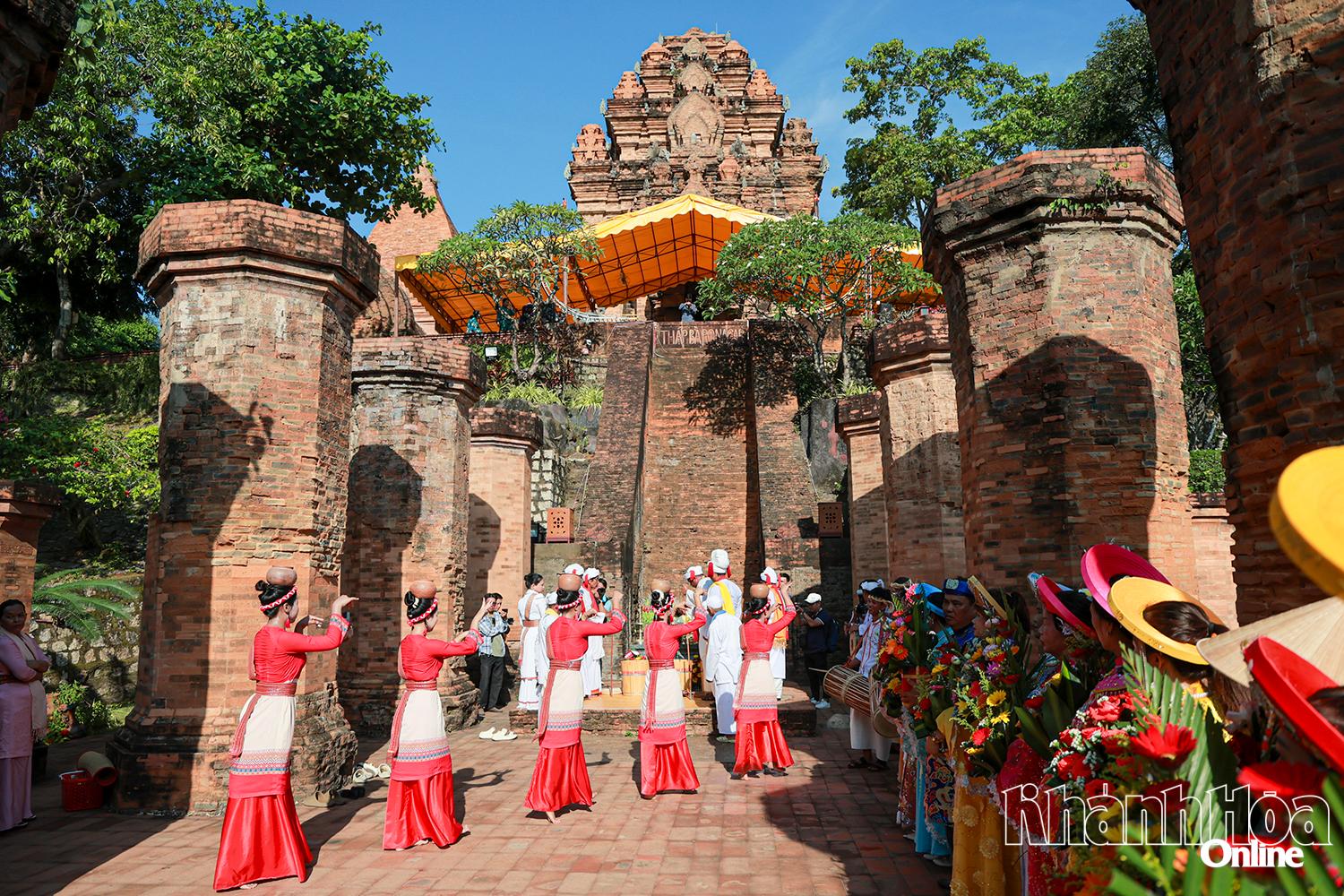
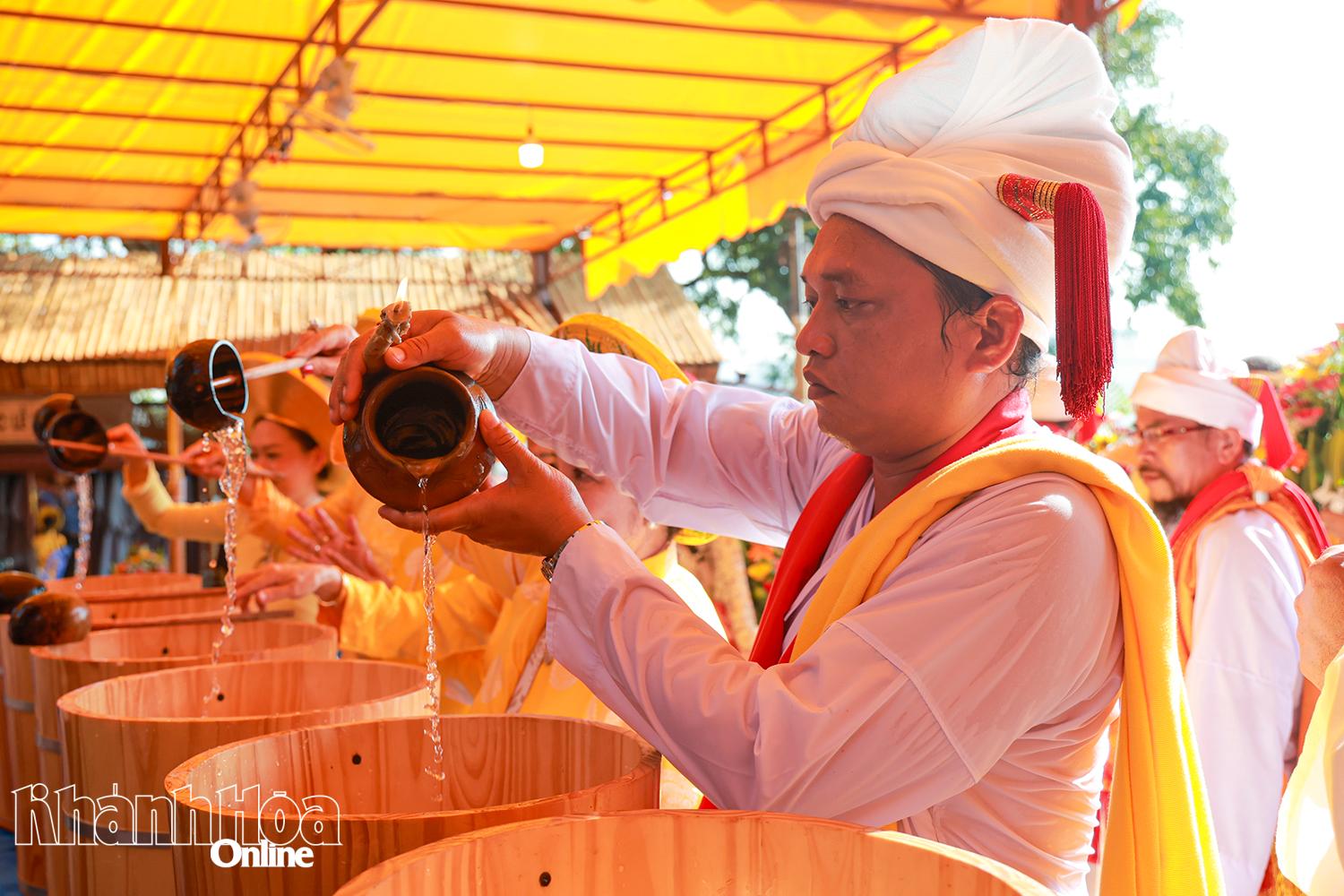
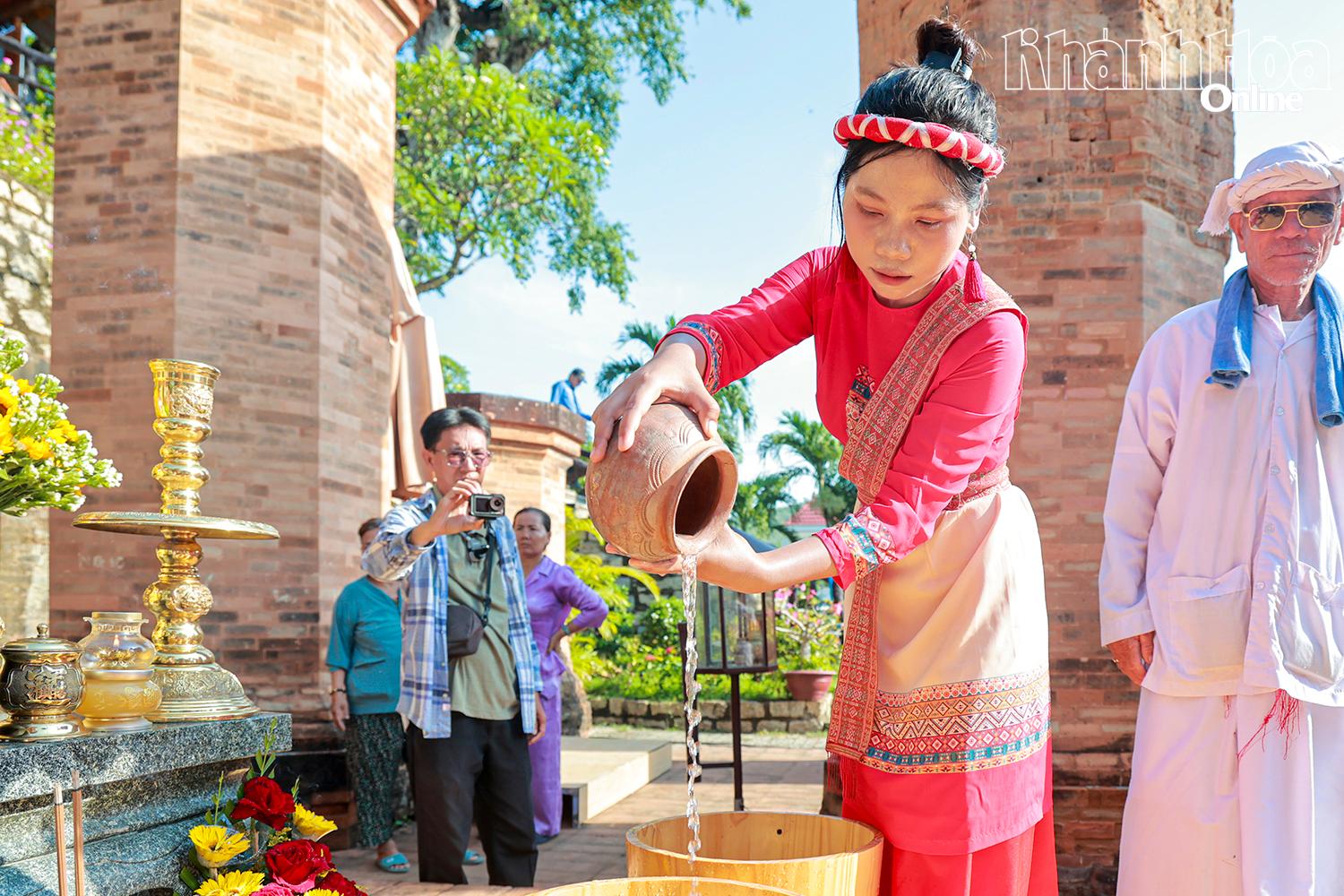
| A Cham maiden pours water from a ceramic jar into a container. |
|
|
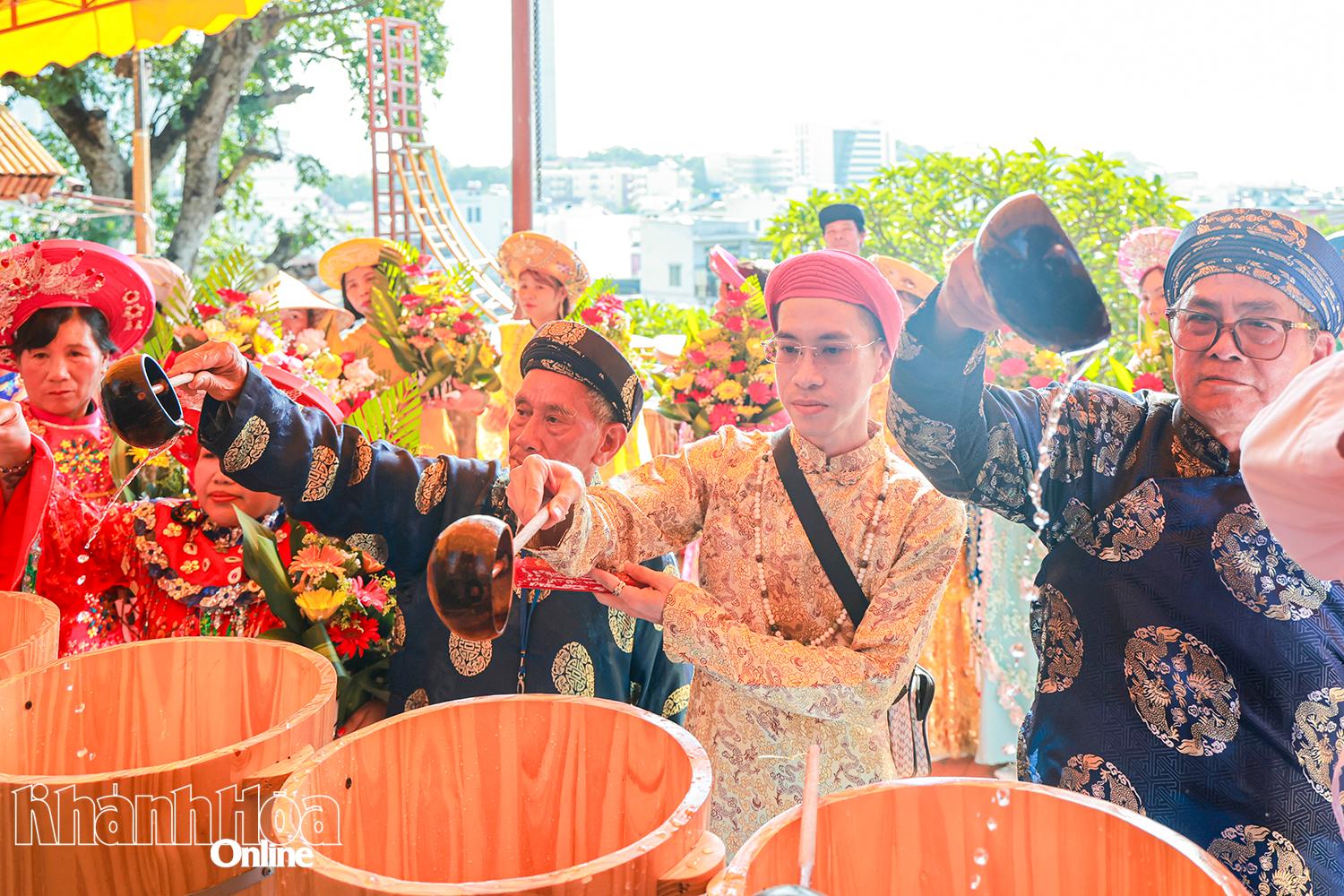
| Members of the clubs practicing the Mother Goddess Thien Y A Na worship ritual perform the water offering ceremony. |
In Vietnamese culture, water is not only the source of life but also a symbol of fertility and growth. The people chosen to participate in the water procession are typically highly respected elders with good moral character and happy families, or elegant young women. The water procession during the Po Nagar Tower Festival honors and expresses gratitude for the virtues of the Mother of the Land, Goddess Po Inư Nưgar of the Cham people and the Holy Mother Thien Y A Na of the Vietnamese - who taught the people to grow rice, weave fabric, and make pottery; protected the people from natural disasters and invaders; and taught them rituals and customs... 'This is the second time I have participated in the water procession. For days, I have arranged my family affairs to participate in the procession on time. Through this ritual, I hope to contribute by offering cool, fresh water to the Holy Mother Thien Y A Na, along with prayers for good things to come to every home and everyone,' said Ms. Ngo Thi Lien (Van Thuan Village, Nam Ninh Hoa Commune).
|
|
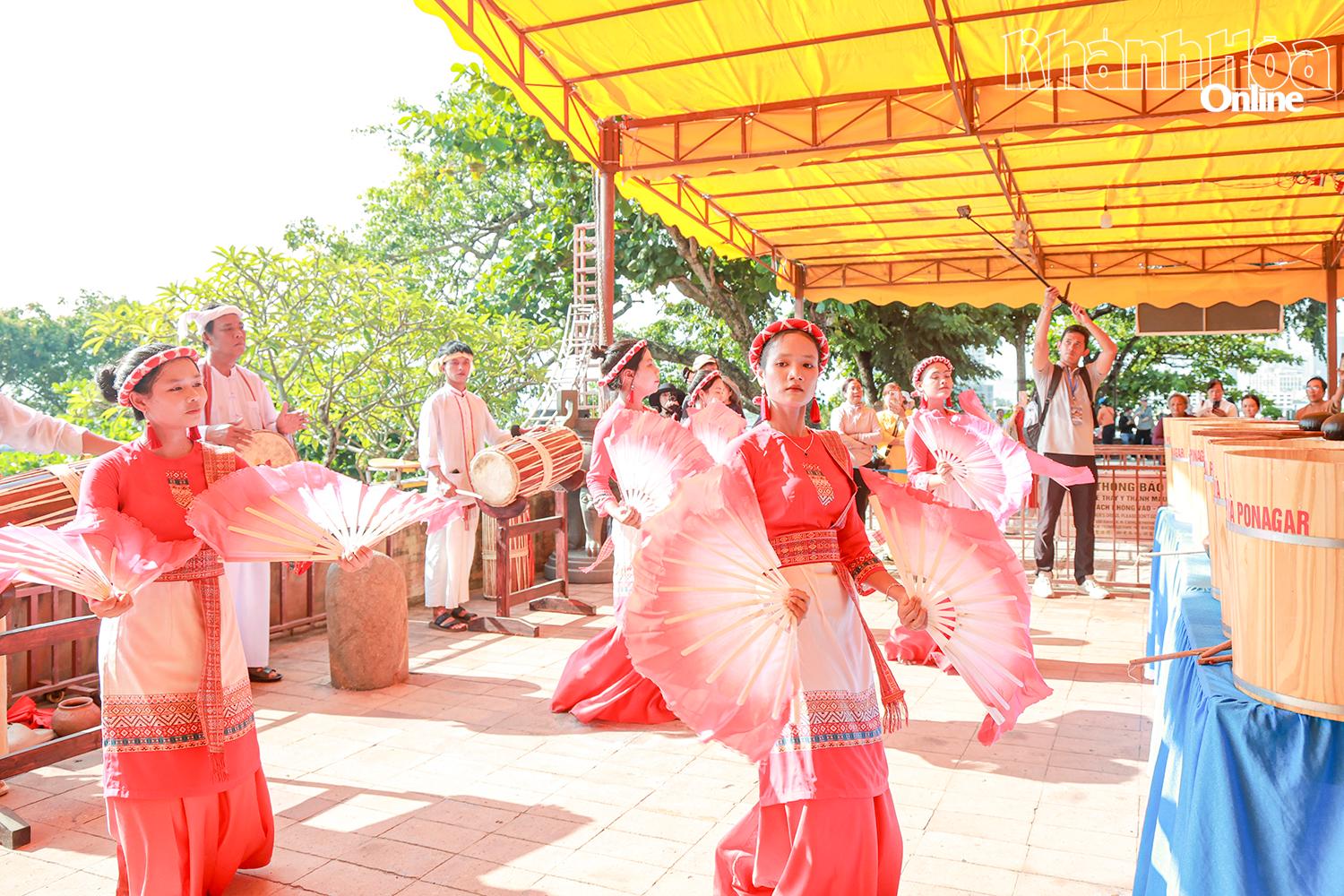
| A graceful fan dance performance by Cham maidens. |
The water brought from Hai An Pagoda to the Po Nagar Tower Special National Relic Site is ceremonially processed at the Mandapa area before being taken to the main tower area to be offered to the Goddess. From this cool water, members of the Po Nagar Tower Festival Ritual Committee will prepare for the ritual of bathing the statue of Goddess Po Inư Nưgar during the Goddess's robe-changing ceremony on May 6 (corresponding to the 20th day of the third lunar month). The water used to bathe the statue will be boiled with white wine and flowers that have beautiful colors and characteristic fragrances. The water procession during the Po Nagar Tower Festival is a unique traditional ritual, acting as a spiritual thread connecting humans with the supernatural world and their ethnic roots, while bringing faith that good things will come to everyone's life.
Source https://baokhanhhoa.vn/goc-anh/202605/le-hoi-thap-ba-po-nagar-doc-dao-le-ruoc-nuoc-9df46f9/