

On Cu Lao hill, amidst the wind from the sea mouth and the gentle Cai River, the special national monument Po Nagar Cham Towers is not only a unique architectural work but also preserves the journey of encounter and acculturation of the Cham and Viet cultures over hundreds of years.
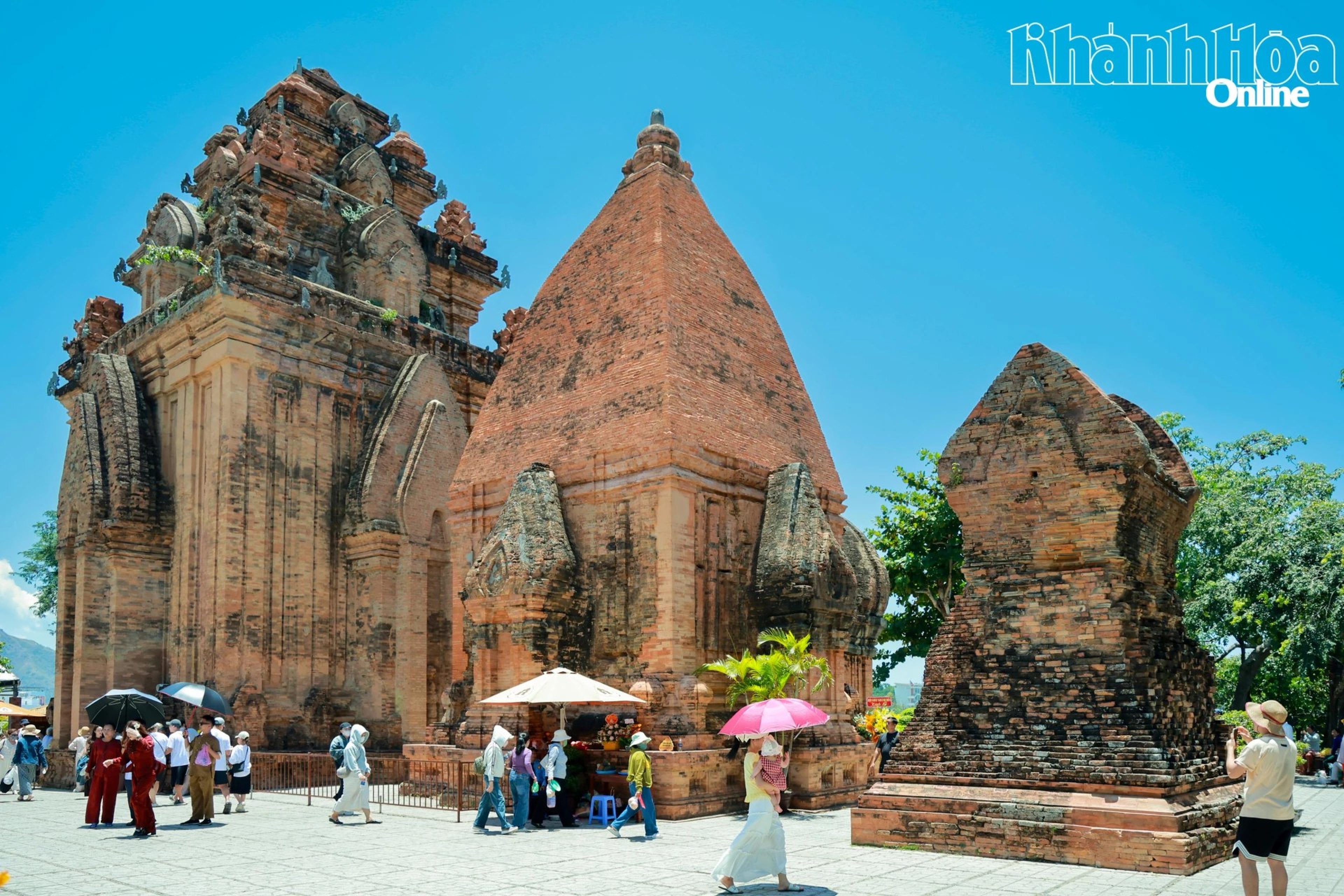
There are places that you only need to visit once to remember. There are places that every time you return, you feel something different. For me, the special national monument Po Nagar Cham Towers is such a place. One summer morning, from the foot of Cu Lao hill, I followed the stone steps leading up to the monument. Looking down, the Cai River quietly flowed towards the sea; above, the red brick towers stood out against the blue sky. The wind from the sea mouth blew up, carrying a very light salty taste. The scene was both majestic, as befits a thousand-year-old structure, and peaceful, as if detached from the hustle and bustle of the coastal city.
 |
| The special national monument Po Nagar Cham Towers - a famous destination in Khanh Hoa. |
I stood for quite a long time under the rows of brick columns of the Mandapa area. The old bricks had aged with time, some covered with moss, some bearing the marks of time. Amidst all the changes, the rows of brick columns stood silently as witnesses to a part of the memory of this land. Not only does it impress and move visitors with its architectural beauty, the special national monument Po Nagar Cham Towers also tells each person a cultural story of the exchange and acculturation among brother ethnic groups.
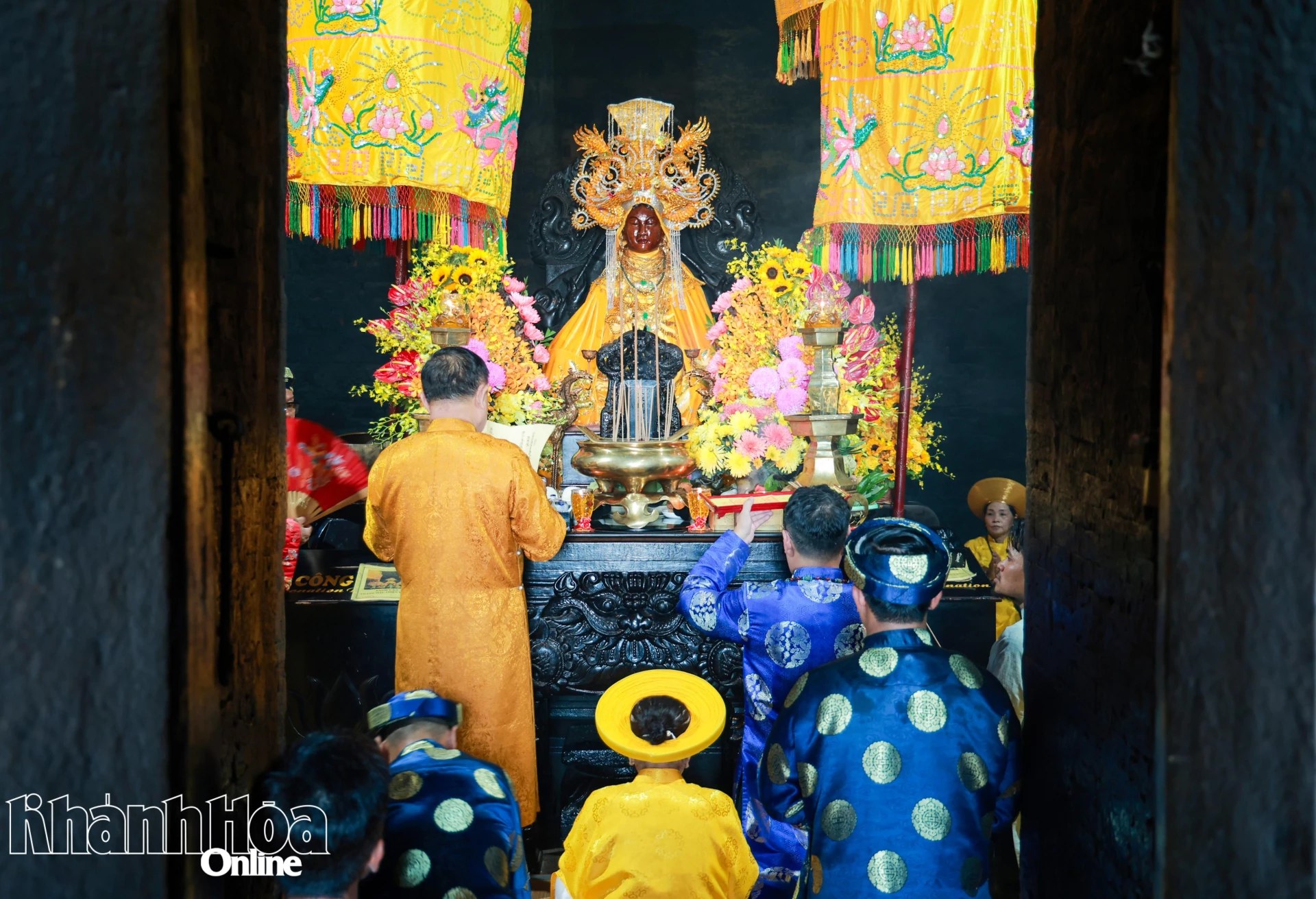
Po Nagar Cham Towers was built by the Cham people from the 8th to the 13th century to worship the Goddess Po Nagar, the Mother of the Cham people. This is an architectural complex consisting of a gate tower, a Mandapa, and a temple tower area. However, due to historical changes, the monument now retains 5 architectural structures on two levels: the Mandapa and the temple tower area. In the belief of the Cham people, the Goddess Po Nagar is a symbol of fertility and protection. Through history, the Vietnamese who came to this land accepted and revered the goddess because of the similarities in the concept of Mother Goddess worship, so they called her Thien Y A Na Thanh Mau. Two peoples, two different names, but both place their faith in a common symbol of gratitude towards heaven, earth, and people, as well as a sincere heart towards the good values that will come in human life.
 |
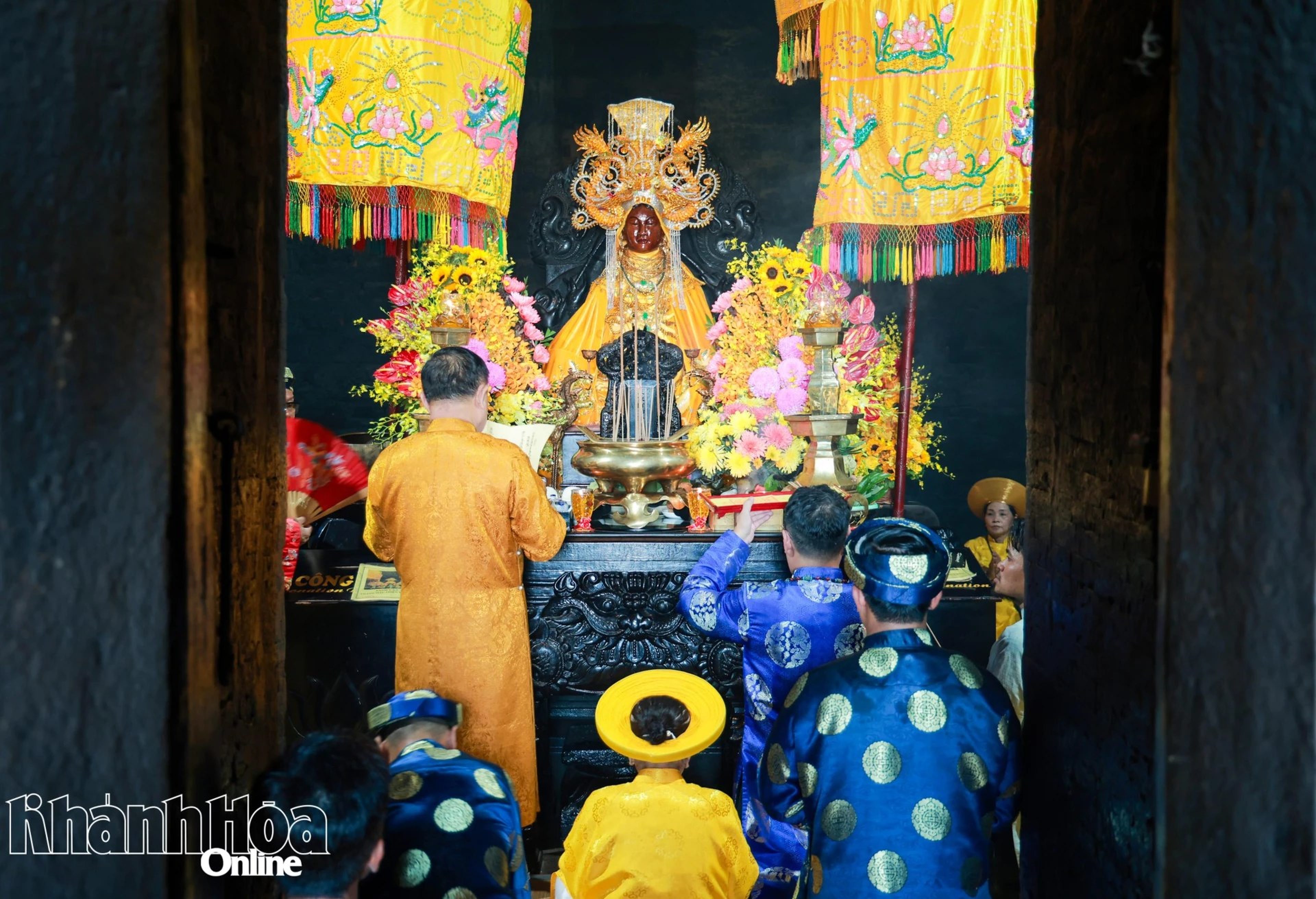
| Image of the statue of the Goddess Po Nagar in the main tower. |
Inside the main tower, gazing at the statue of the Goddess Po Nagar amidst the incense smoke swirling in the space creates a feeling that is both intimate and sacred. There, some Vietnamese people quietly clasp their hands in prayer, and some Cham women in traditional attire respectfully offer offerings. That simple scene is enough to express the eternal common values in each person: faith, gratitude, and a spirit of aspiration towards the lofty and good things that will come to each individual, to the community, and to the country. Each person silently practices their spiritual belief in the simplest way, but that is also the noblest expression of preserving heritage values. "Coming to the special national monument Po Nagar Cham Towers, I feel the sacredness and harmony. Standing before the thousand-year-old ancient tower, I feel more deeply the cultural depth that is being preserved and practiced here," shared Ms. Le Phuong Mai (63 years old, from Hanoi). Living near the monument, Ms. Nguyen Thi Hoa (58 years old) comes to Po Nagar Cham Towers almost every day, simply because this place brings her a sense of peace in her soul.
Today, the special national monument Po Nagar Cham Towers has become a famous destination in Khanh Hoa. Every day, thousands of people and tourists come here to admire the tangible values and feel the intangible values that are being preserved and passed down. Day after day, the ancient towers and rows of octagonal brick pillars are silently telling us the story of the enduring values in the spiritual and religious life of the people of Khanh Hoa today and in the future.
HUYEN DIEU