

Po Nagar Cham Towers
A space of spirituality, architecture, and community memory
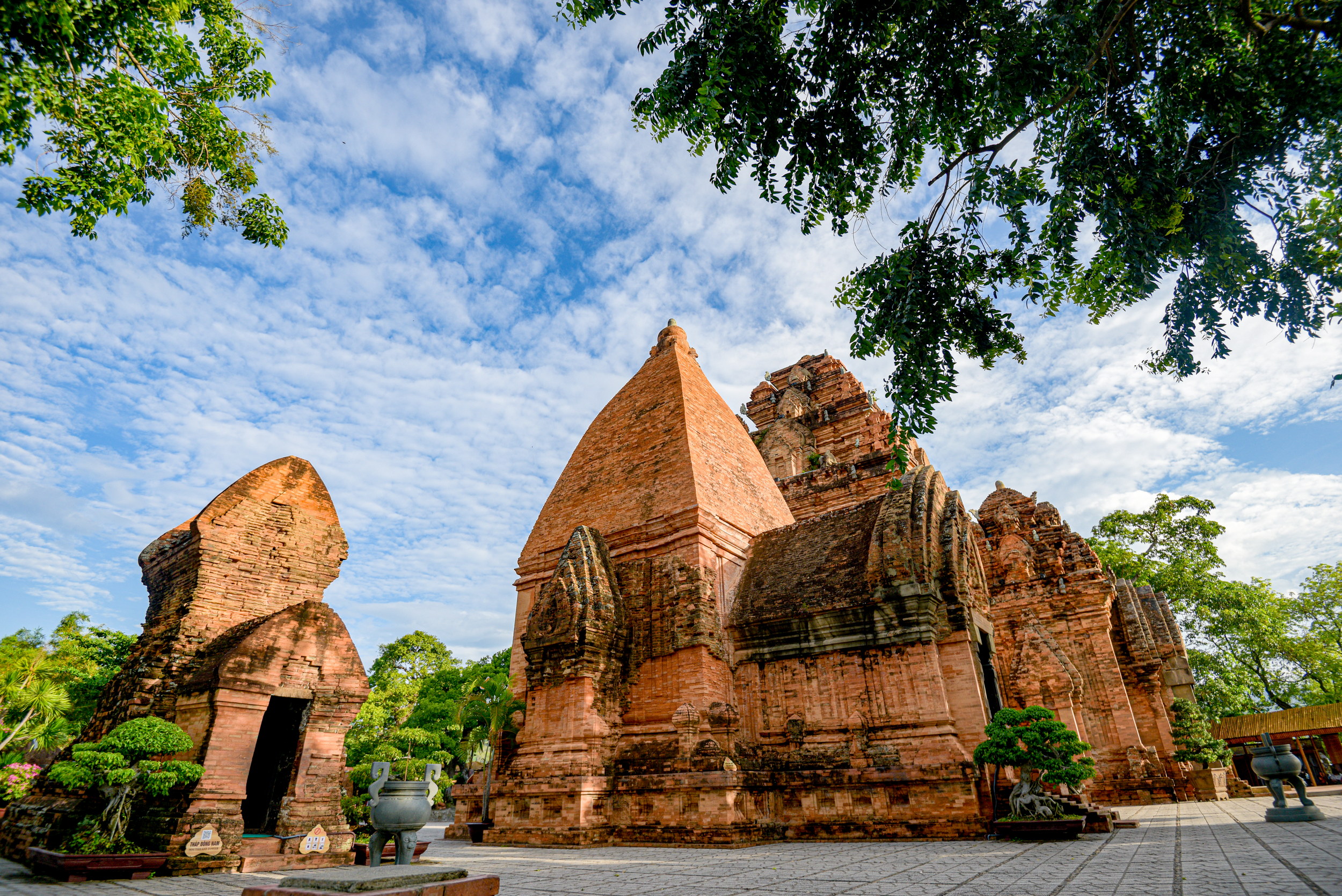
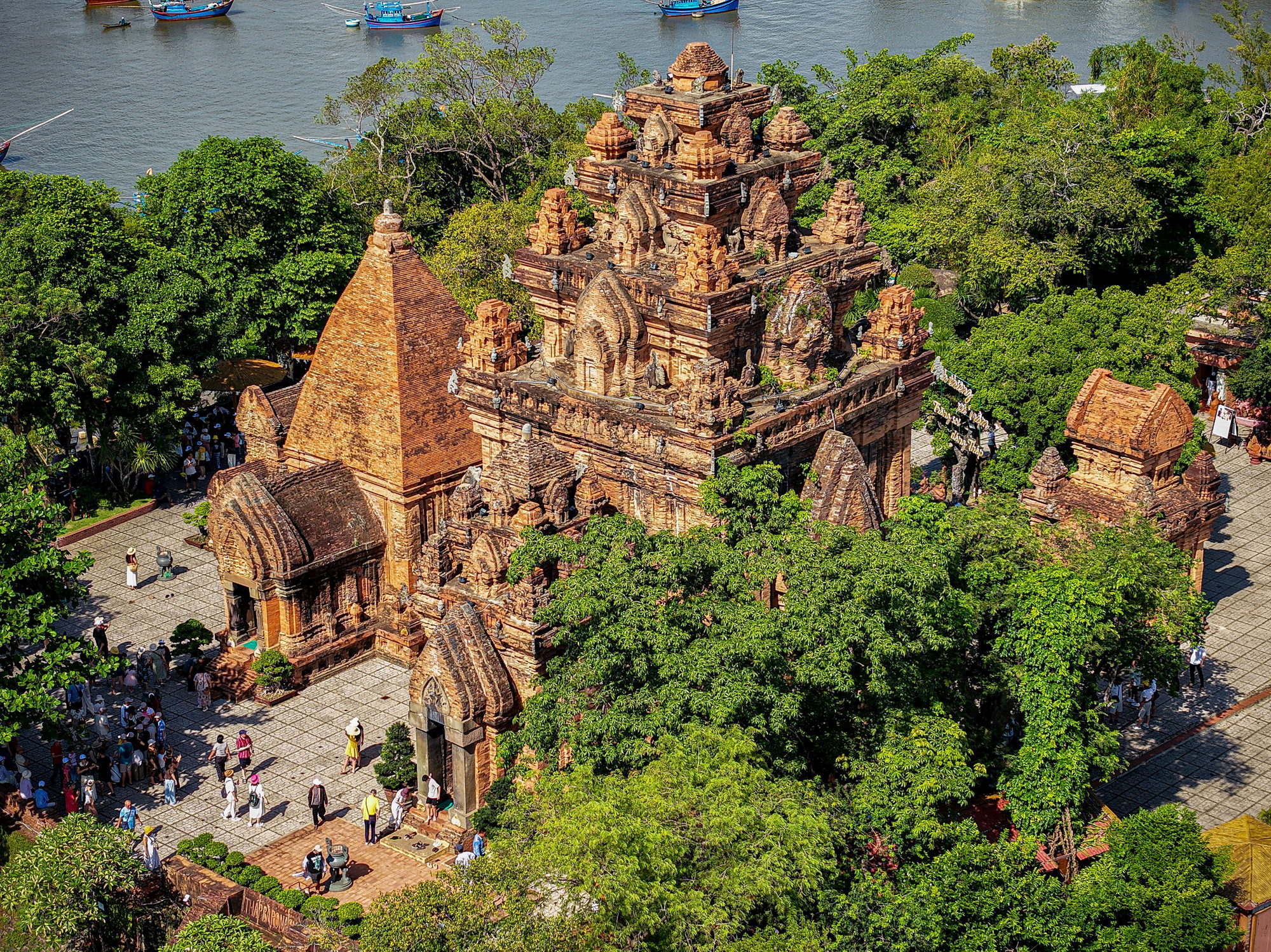
Amidst the vibrant rhythm of the coastal city of Nha Trang, the Po Nagar Cham Towers (commonly known by locals as Thap Ba, or the Lady Tower) emerge as a realm of ancient memory, preserving the cultural imprint of the Cham people through architecture, belief, sculpture, and festivals. This is not only a famous landmark of Khanh Hoa, but also a sacred space associated with the worship of the Goddess Po Nagar – the Mother of the Realm for the Cham people.
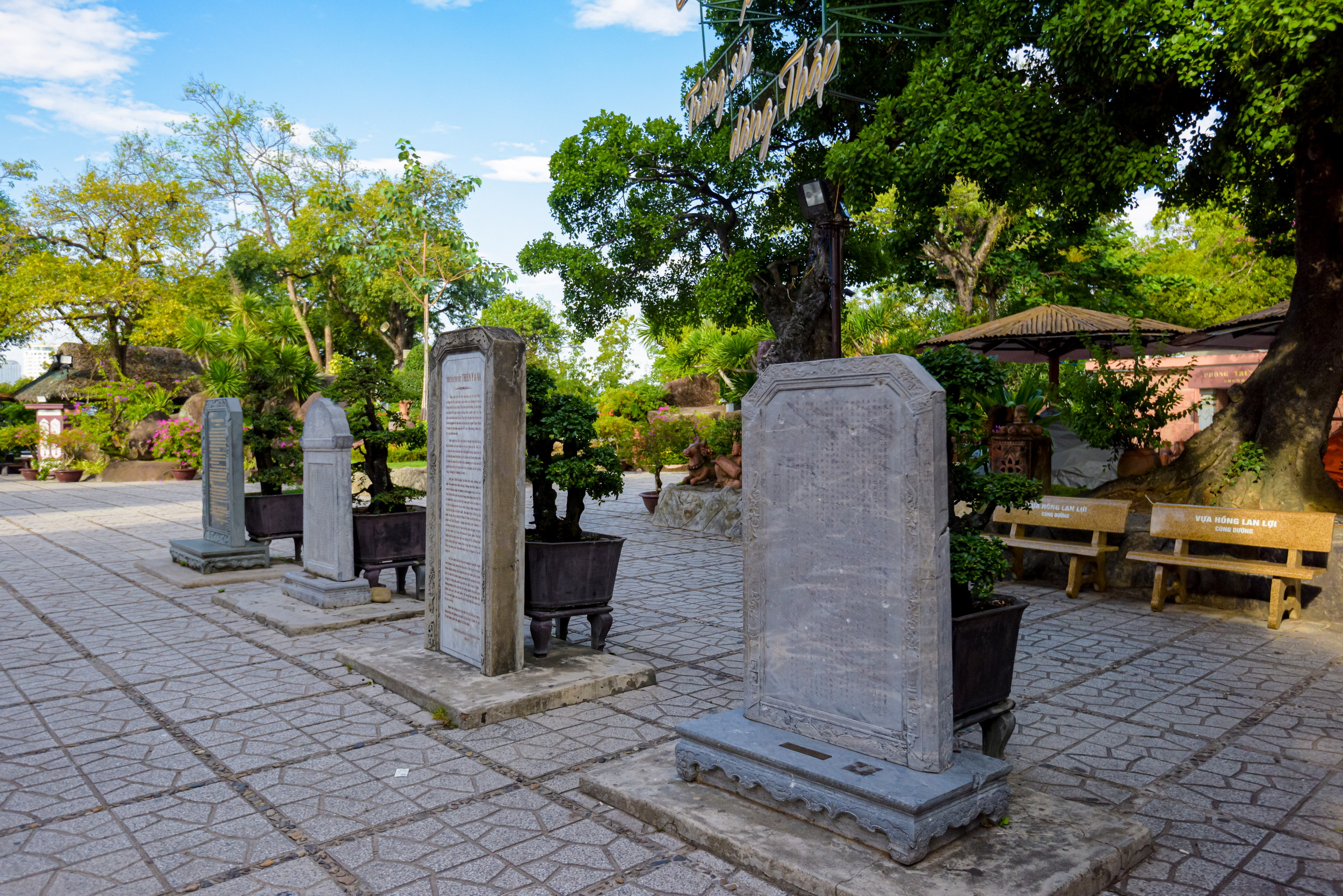
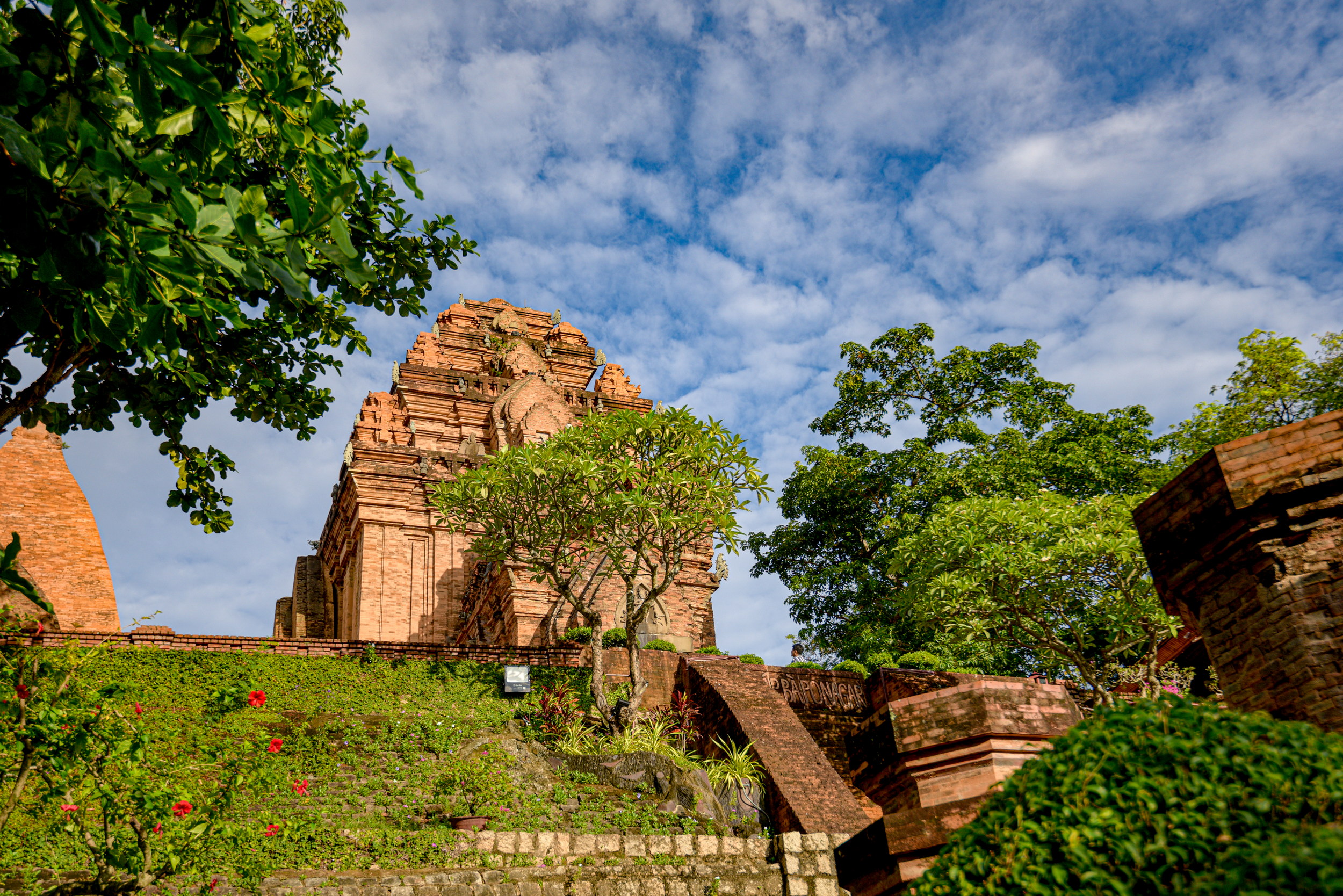
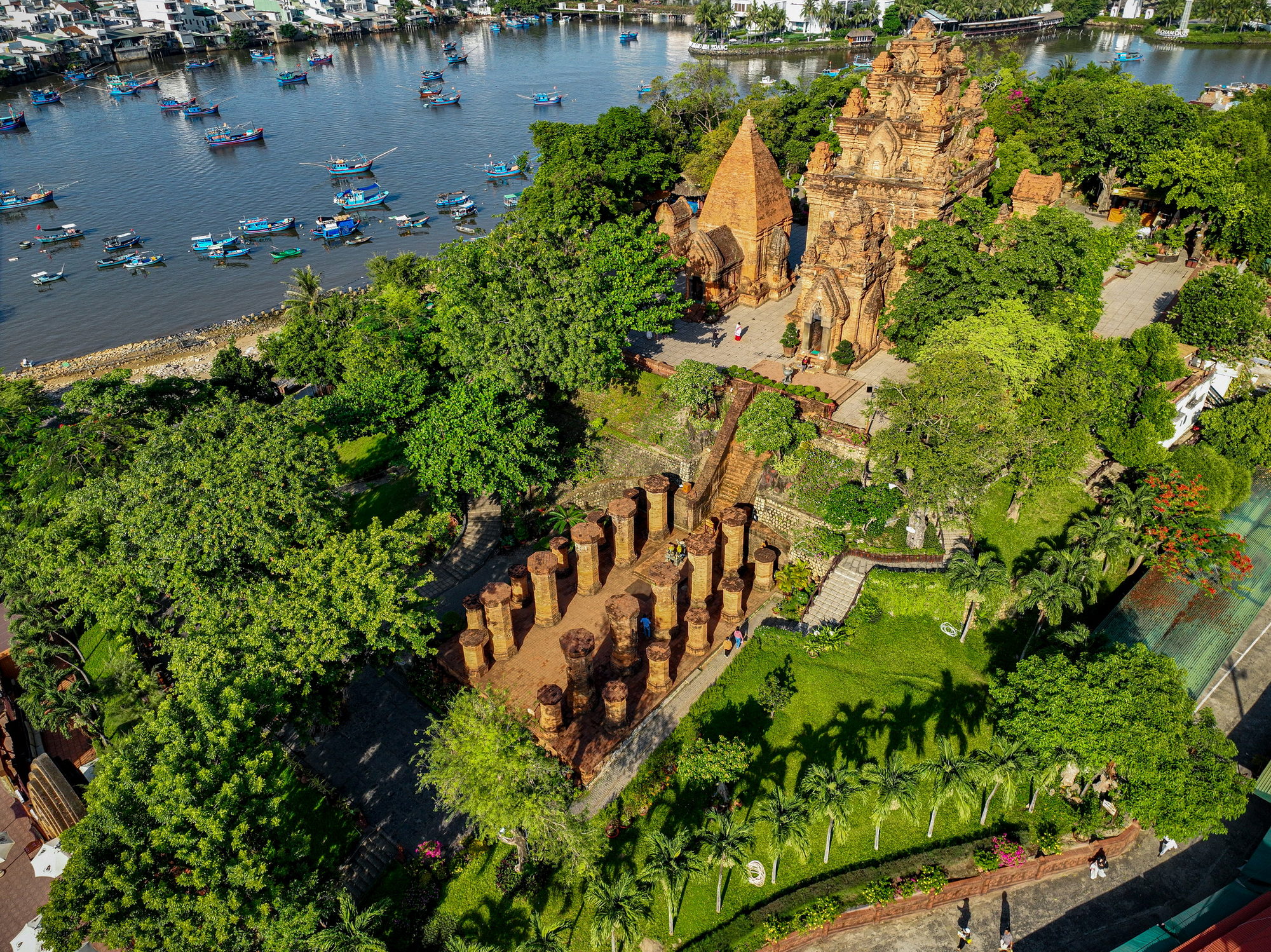
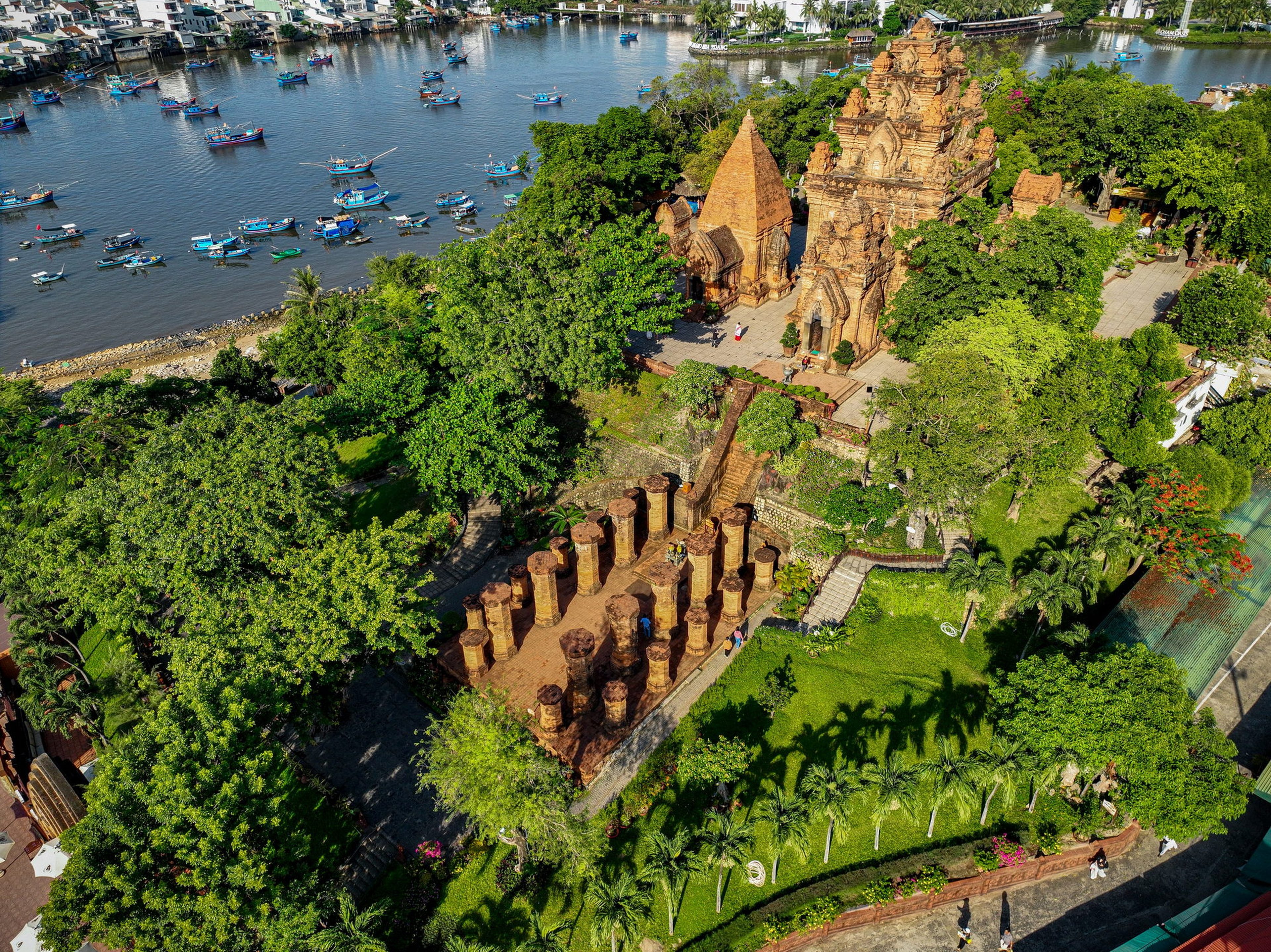
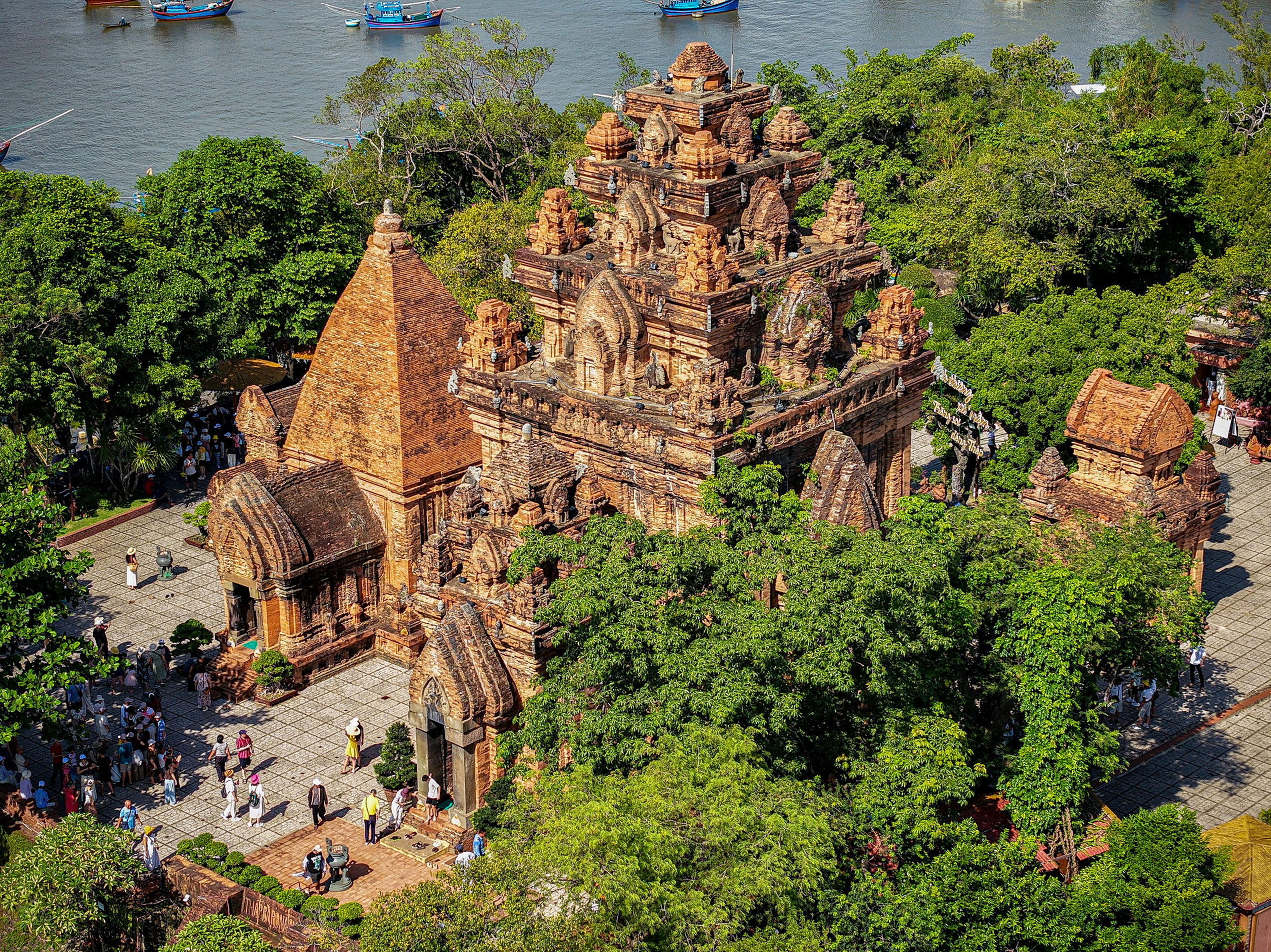
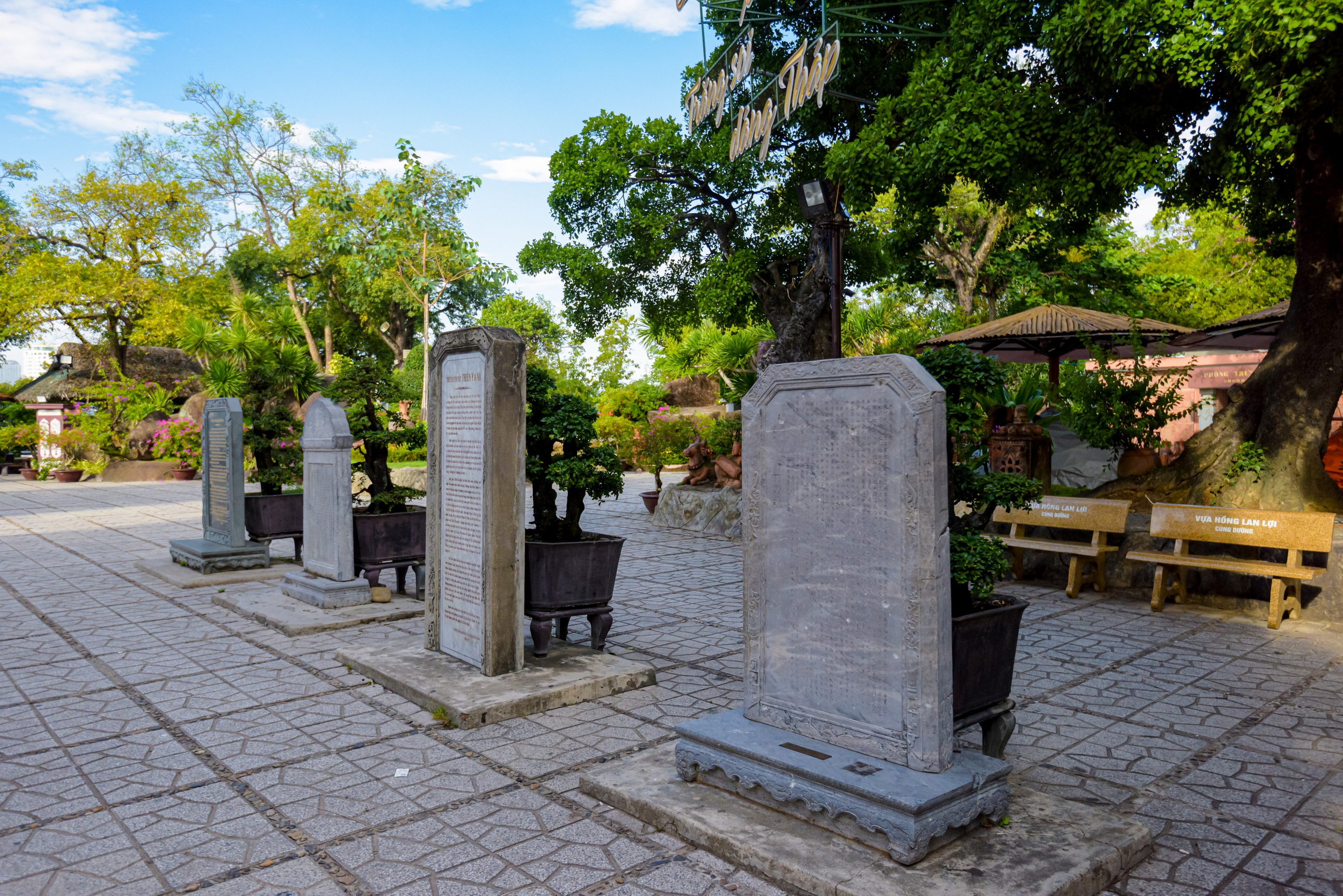
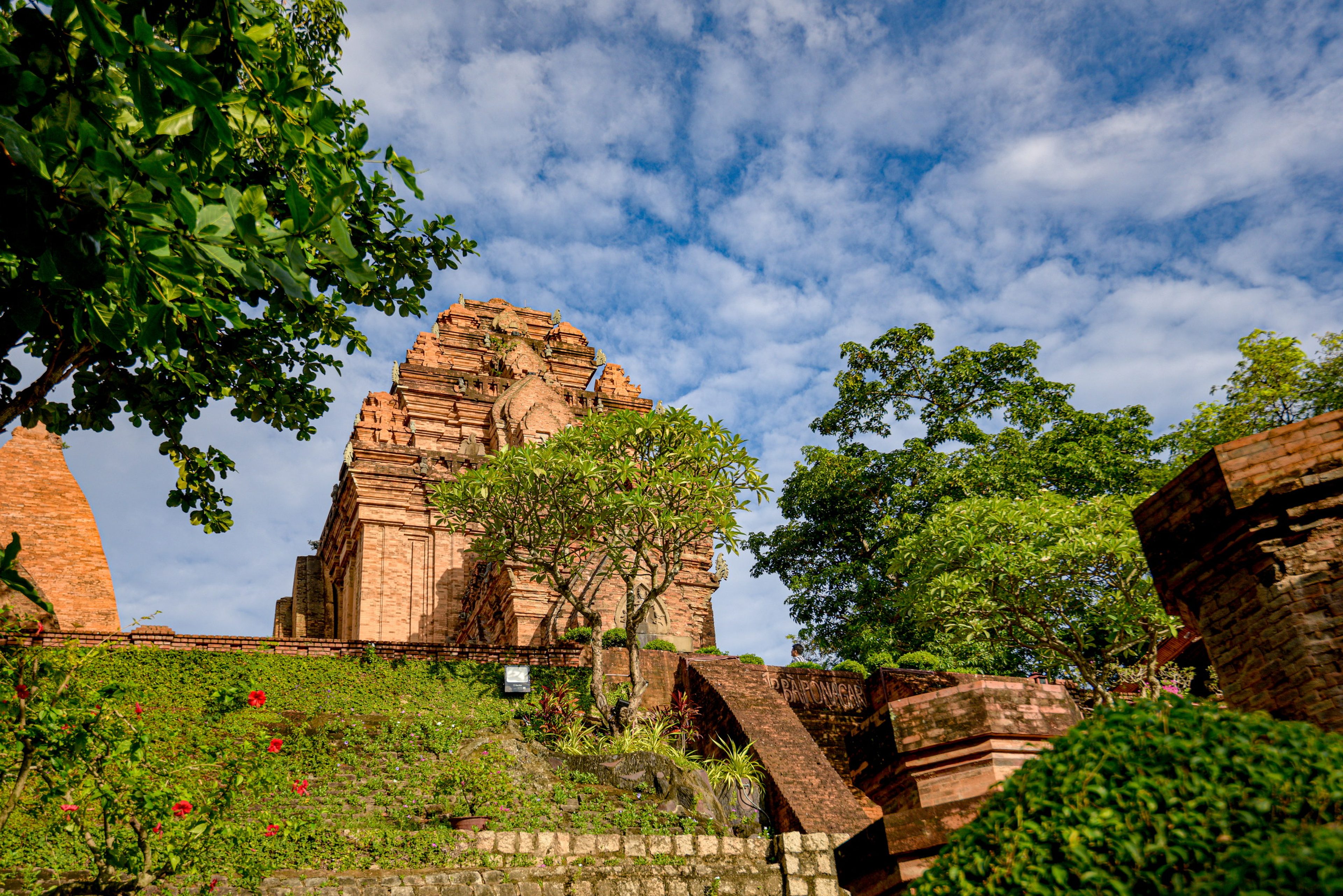
Po Nagar Cham Towers are situated on Cu Lao Hill, at an elevation of over 20 meters above sea level. According to the latest data, the site covers an area of 17,683.6 square meters and is located approximately 2 kilometers north of Nha Trang's city center. The monument is a unique architectural and artistic complex built by the Cham people between the 8th and 13th centuries. It served as a religious center for the worship of the Goddess Po Nagar (the Mother of the Realm for the Cham people) and has been maintained and developed by the Kinh people as a place of worship for the Holy Mother Thien Y (Thien Y Thanh Mau) within the South Central coastal community.
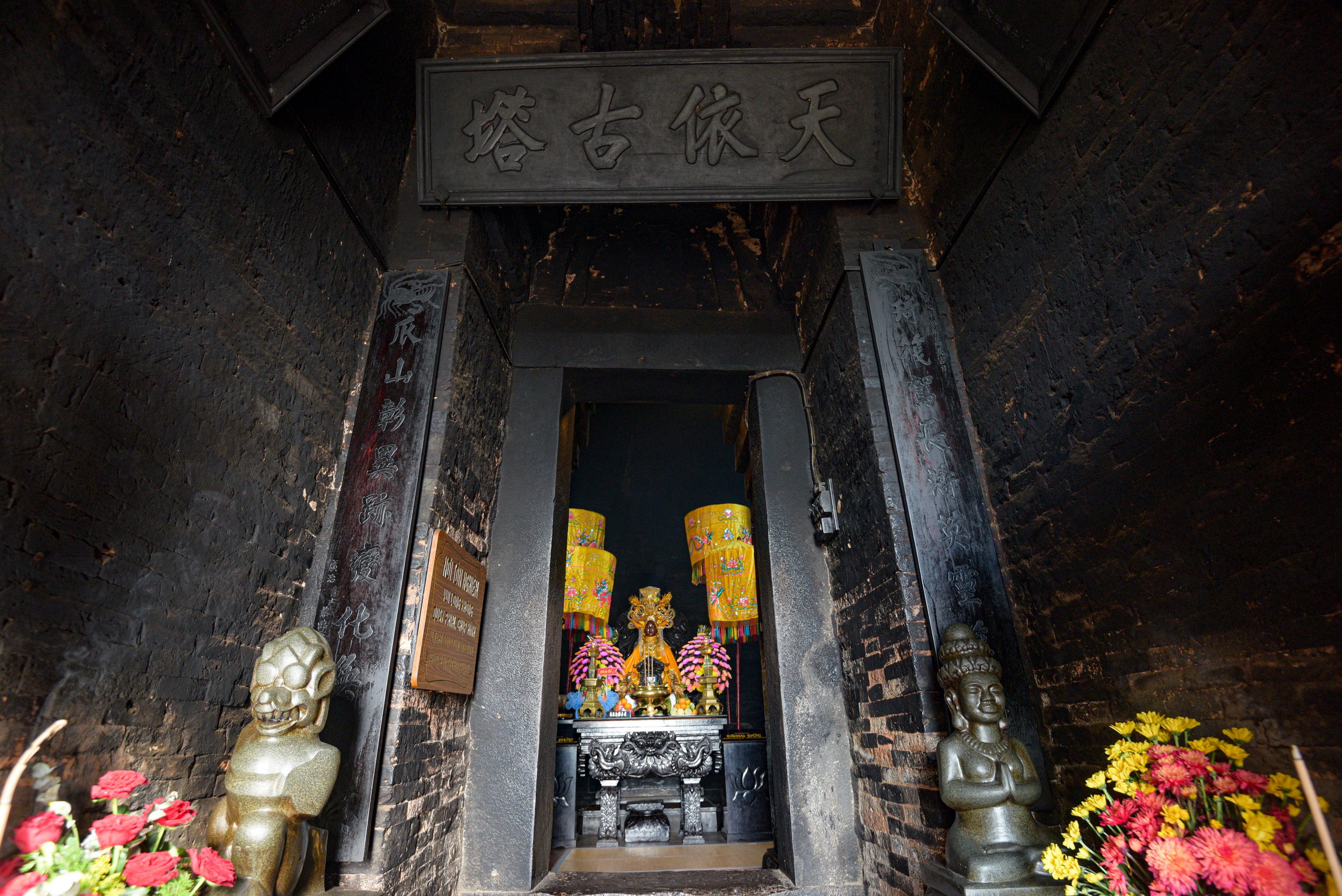
The Main Tower is dedicated to the Goddess Yang Po Inư Nưgar (the Mother of the Realm of the Cham people). Legend says she was born from clouds and sea foam; she was the supreme goddess of the ancient Kingdom of Champa, worshiped in the land of Kauthara, and is also identified as the Holy Mother Thien Y A Na in the Vietnamese Mother Goddess worship tradition. A unique feature of the Po Nagar Towers is this blending of Cham and Kinh cultures. The Cham tradition of worshiping the Mother of the Realm was later adopted by the Kinh people and Vietnamized into the worship of the Holy Mother Thien Y A Na within the Po Nagar complex. Thus, the towers are not only a Cham monument but a shared spiritual space where generations of residents from Khanh Hoa and beyond have placed their faith, gratitude, and hopes for peace.
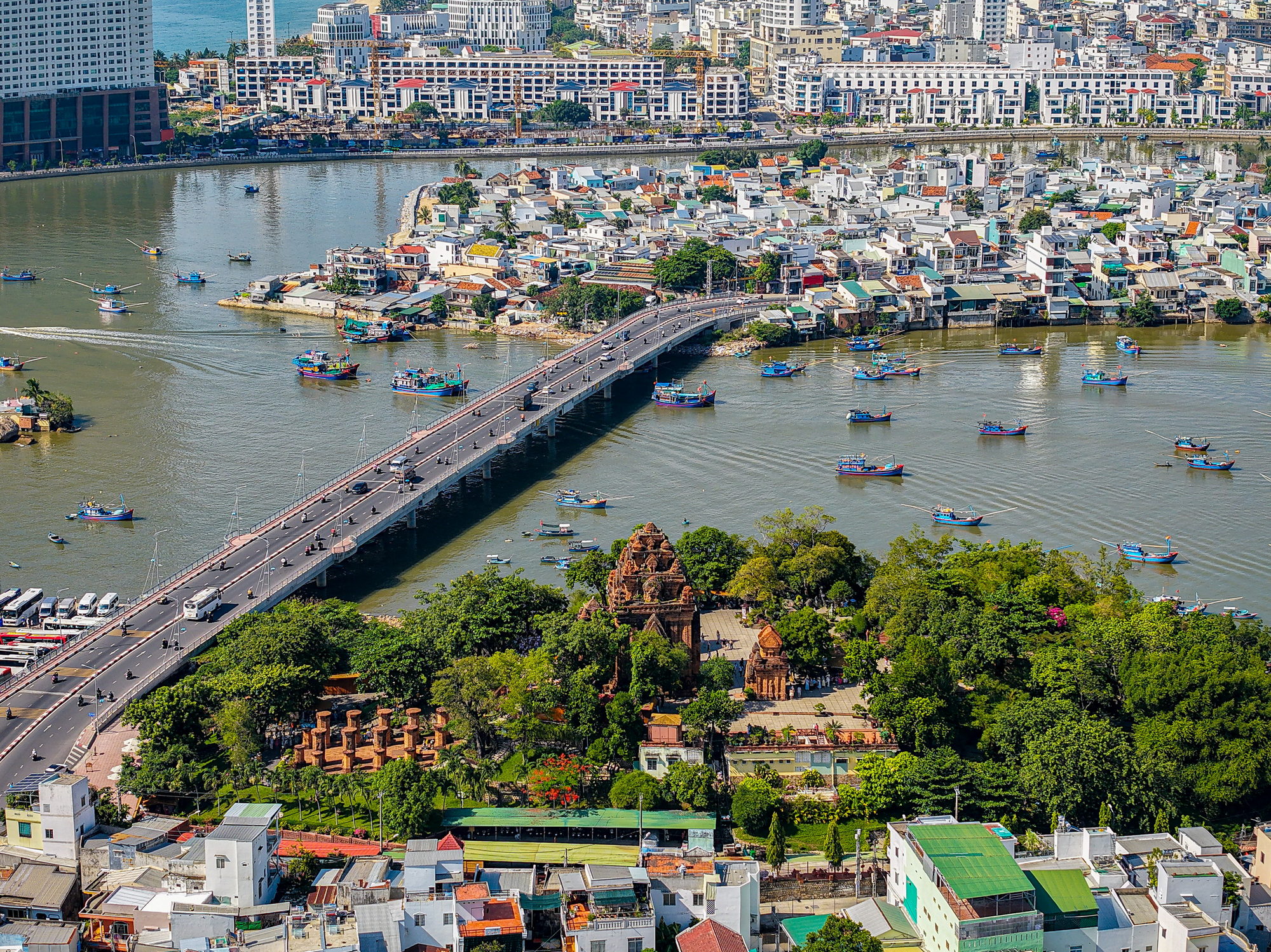
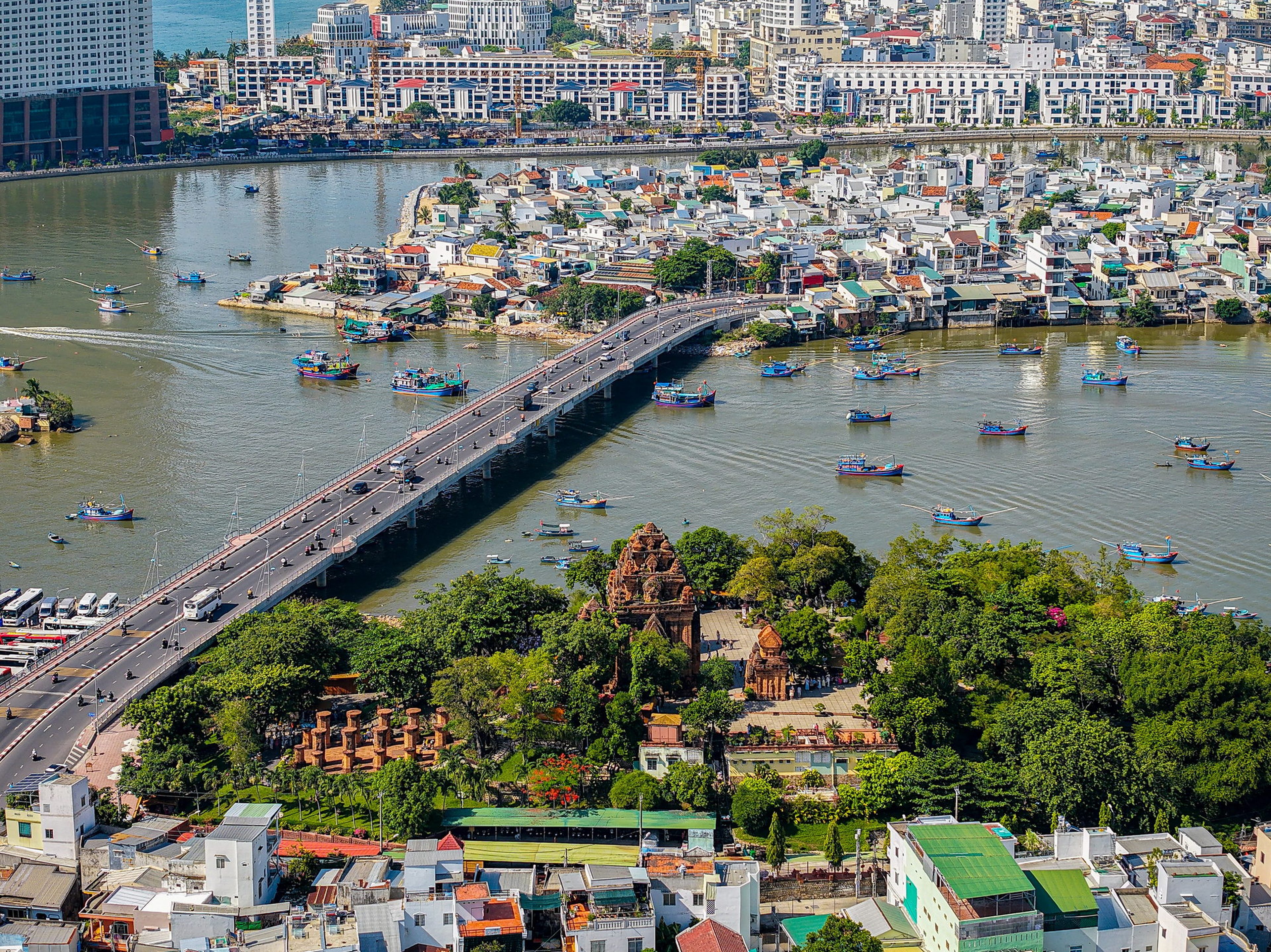
The location of the towers is highly distinctive: built on Cu Lao Hill, near the mouth of the Cai River, looking out over the waters of Nha Trang. It sits at the intersection of landscape, settlement, commerce, and belief, belonging to the ancient region of Kauthara.
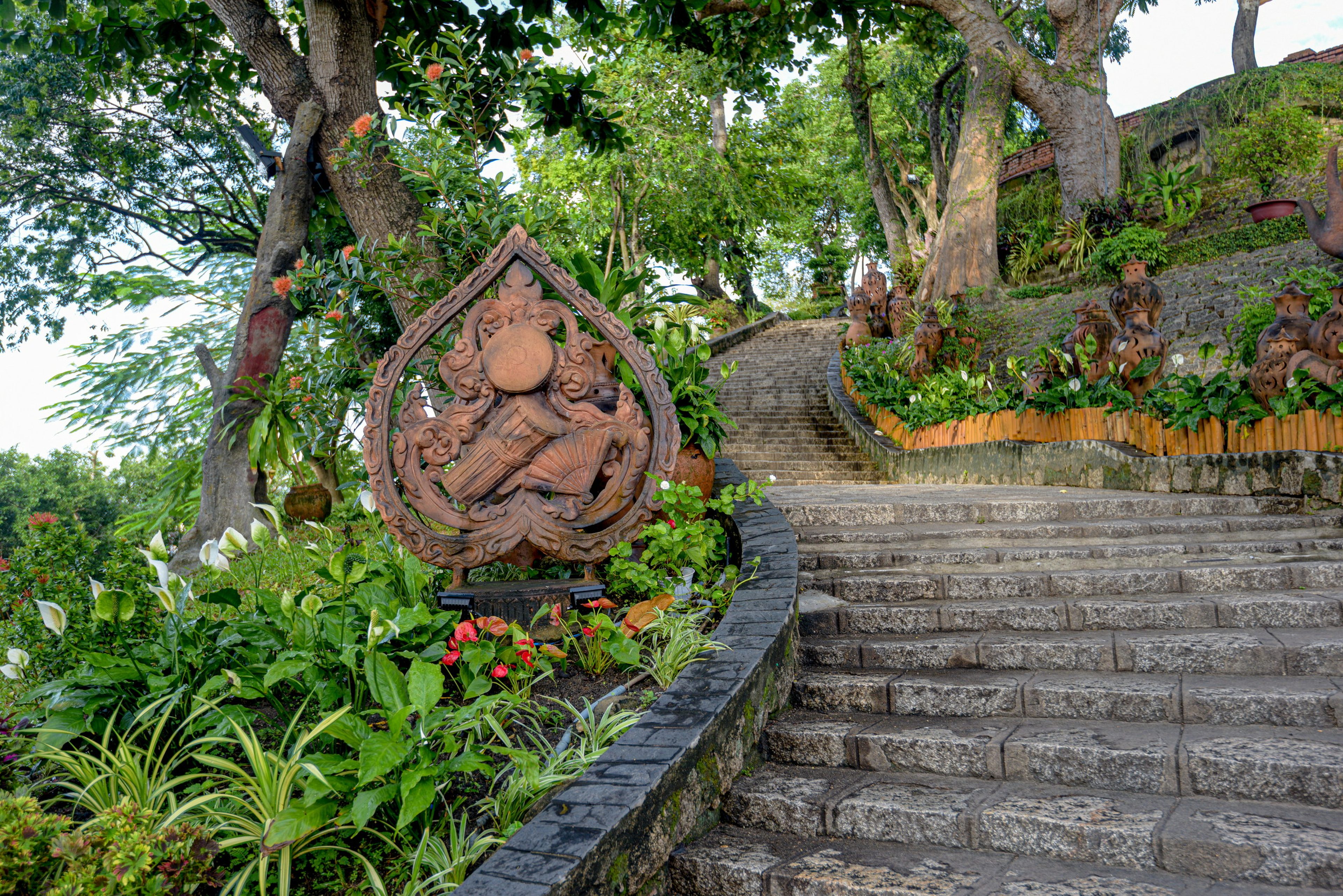
Cu Lao Hill is surrounded by the Cai River, which the Cham called Yatran (meaning Reed River). On the hill, many centuries-old trees coexist with the thousand-year-old towers. From here, visitors can admire Nha Trang with the Cu Huan river mouth, the Xom Bong Bridge spanning the Cai River (the bridge bears the name of the 'Xom Bong' hamlet, home to the sacred 'Bong dance' performed by dancers for the Goddess Po Nagar/Holy Mother Thien Y A Na during festivals), and the Nha Trang Bay with its islands: Yen Island, Hon Tre, Hon Noi, Hon Ngoai, and more.
Mandapa - The place where rituals begin
A place for believers to settle before the ritual journey
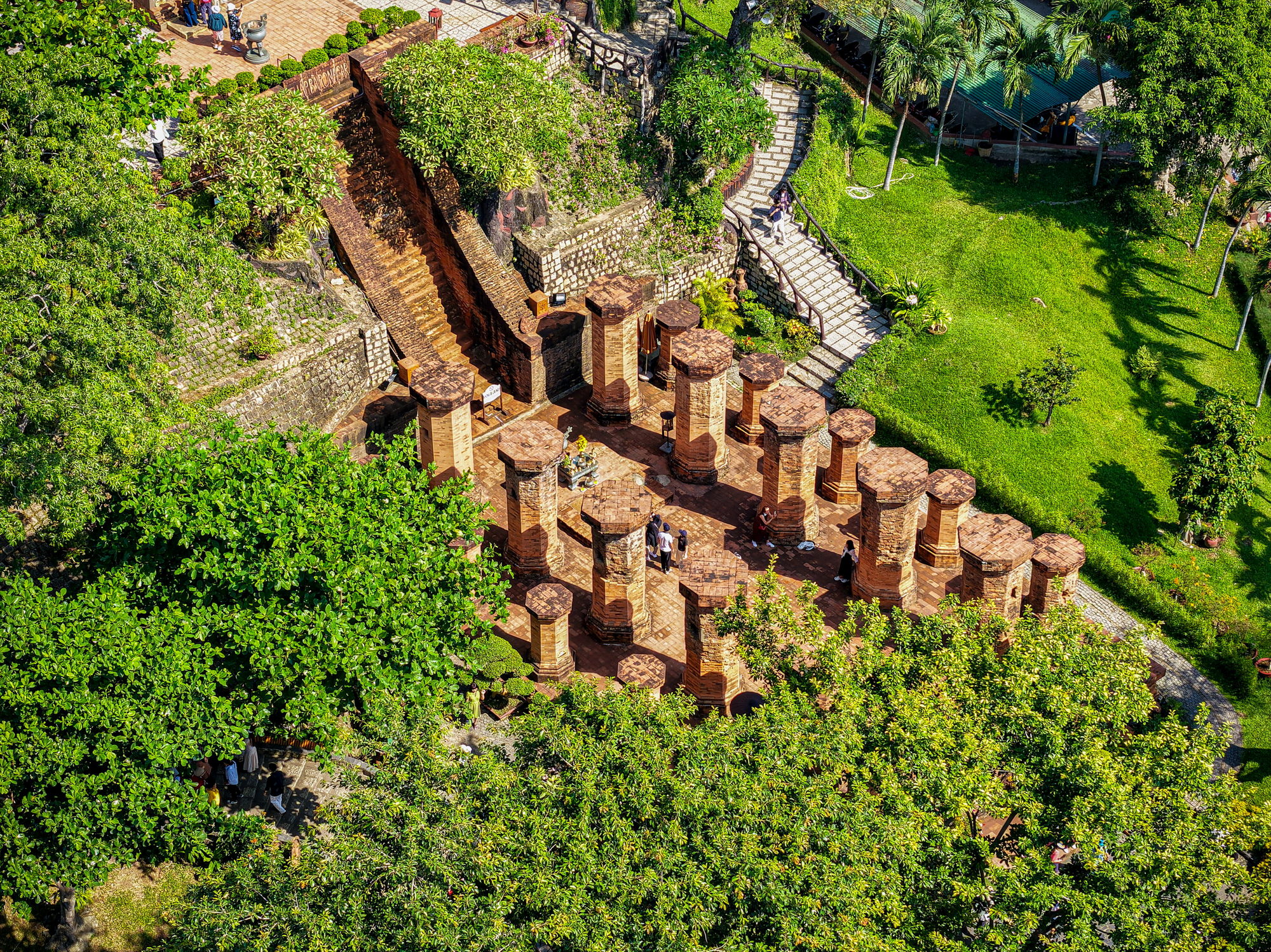
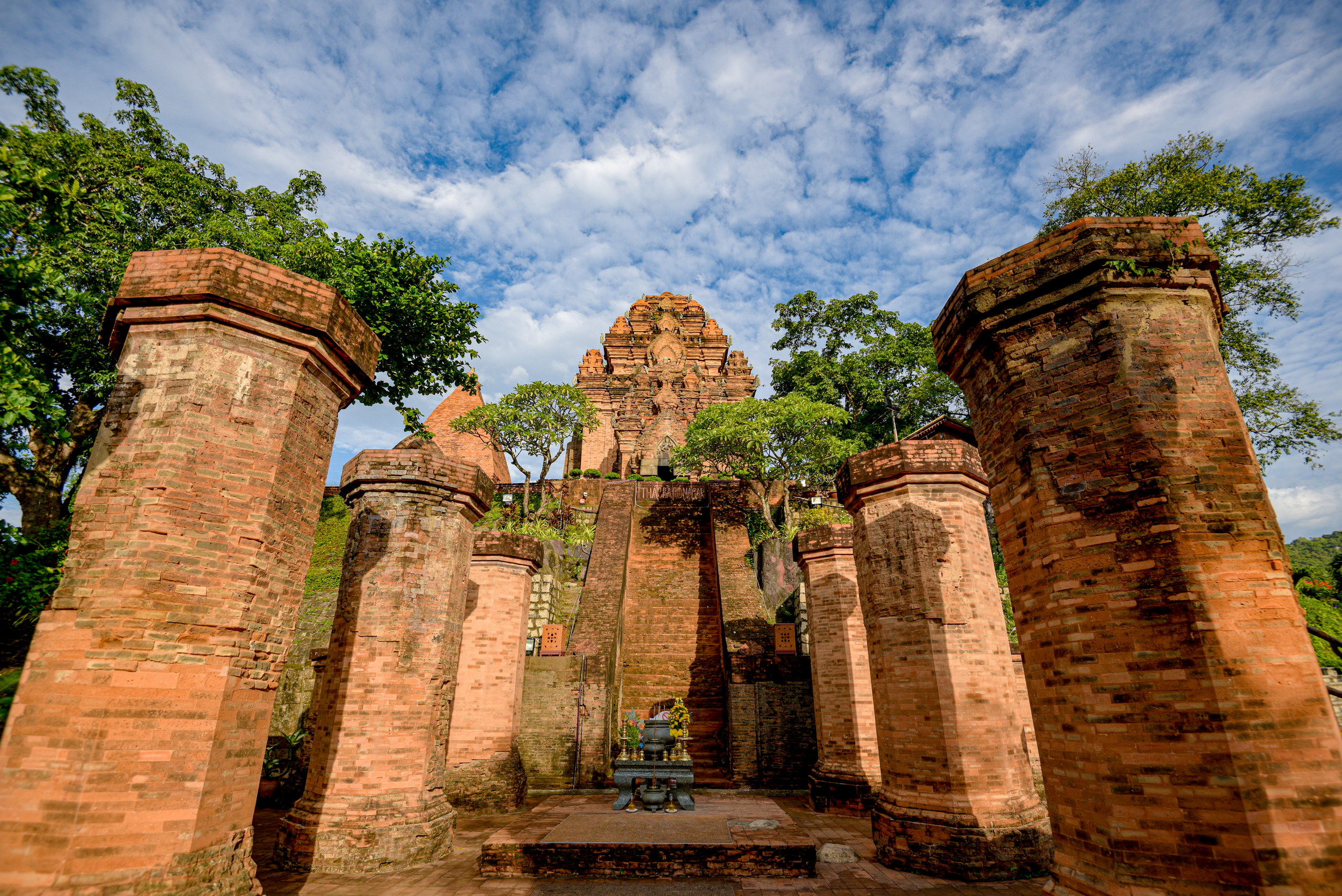
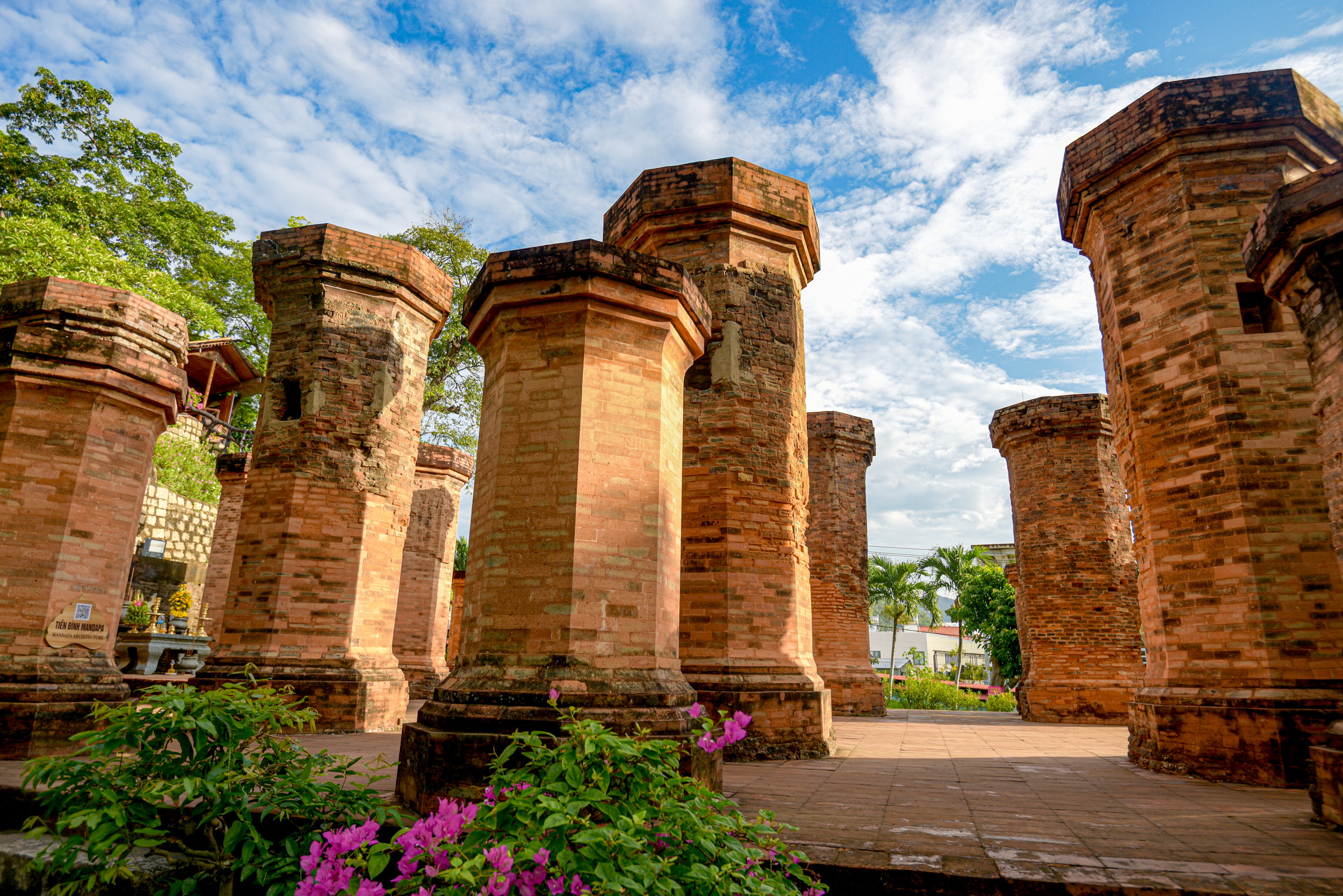
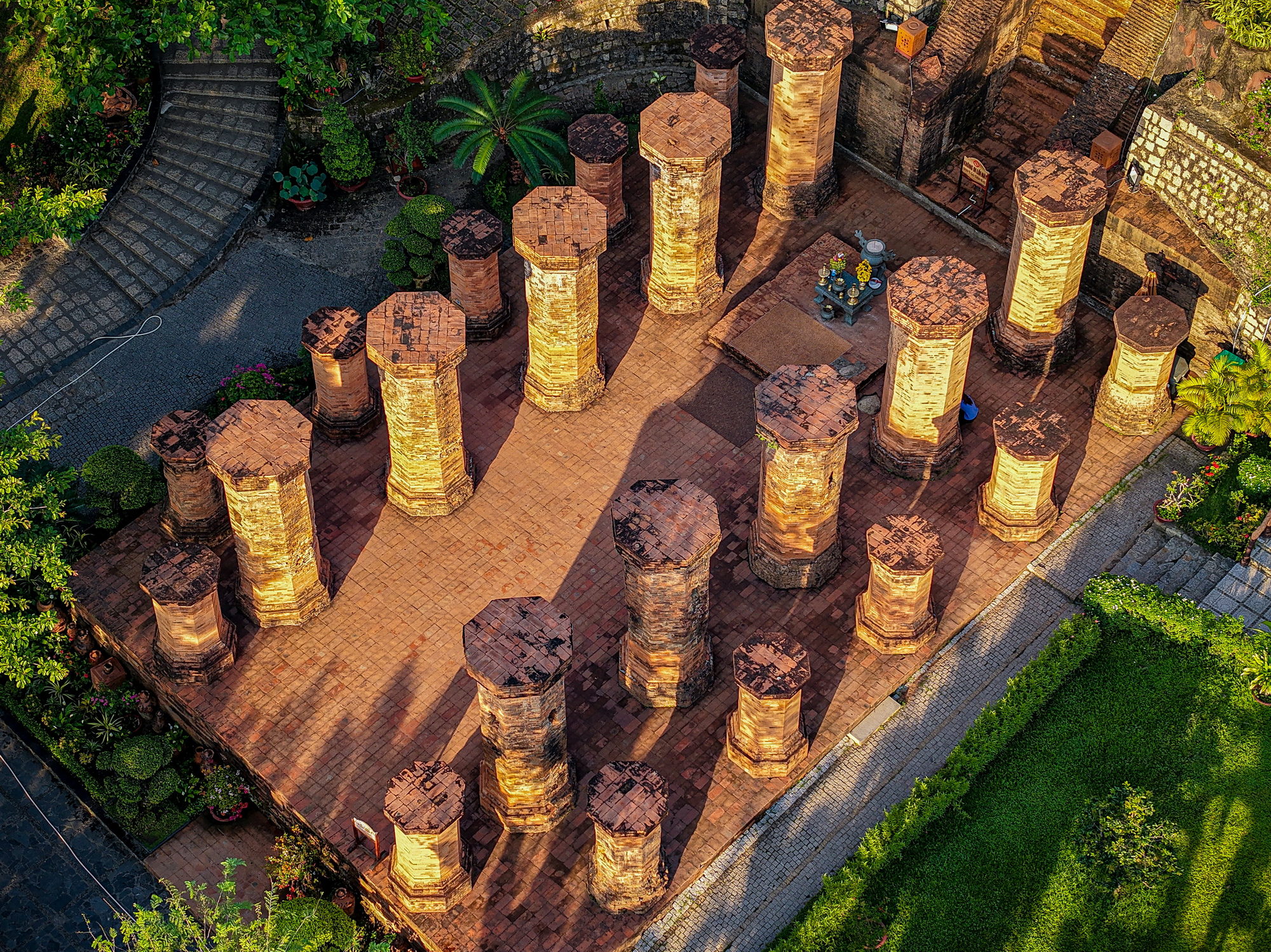
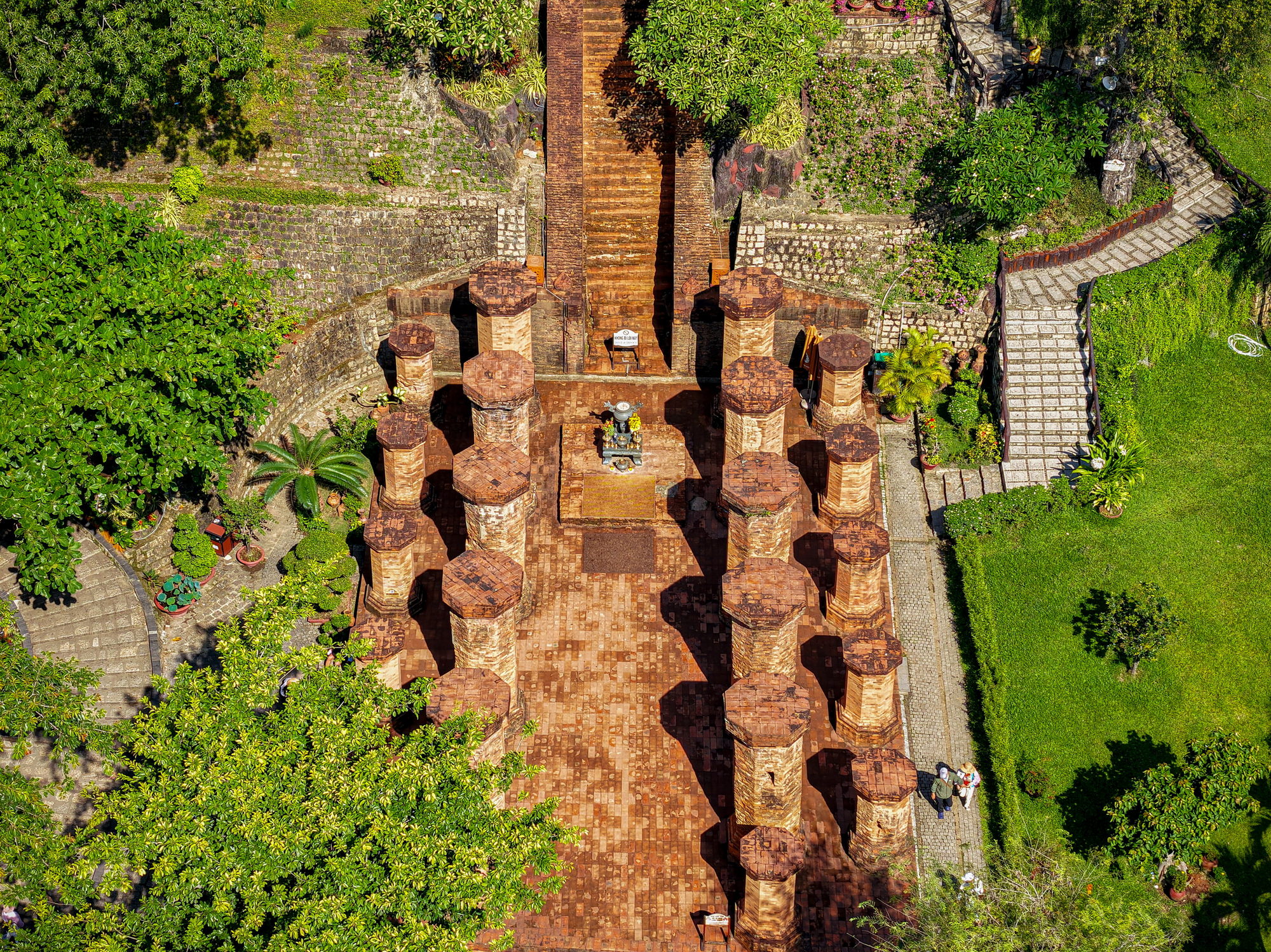
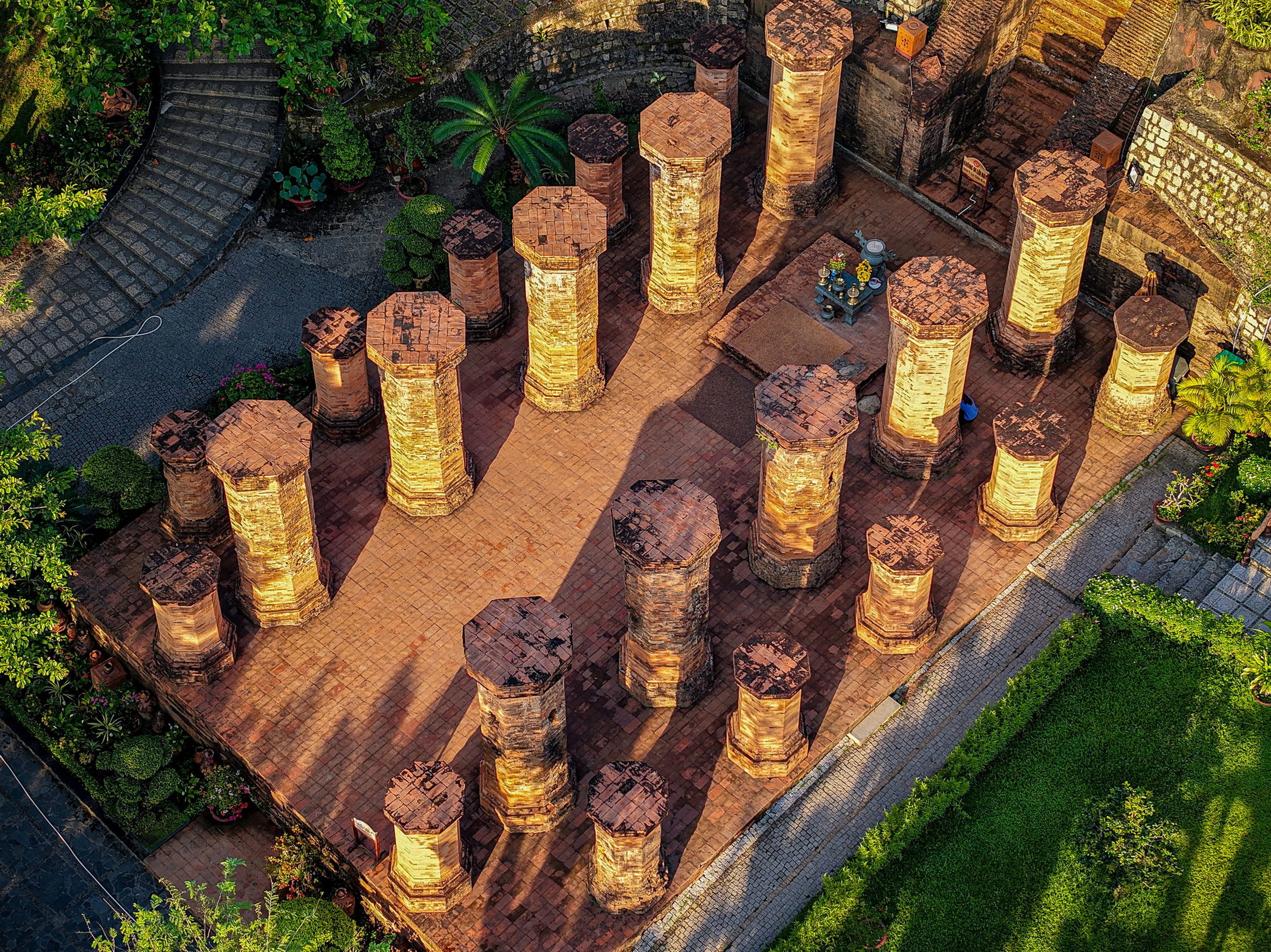
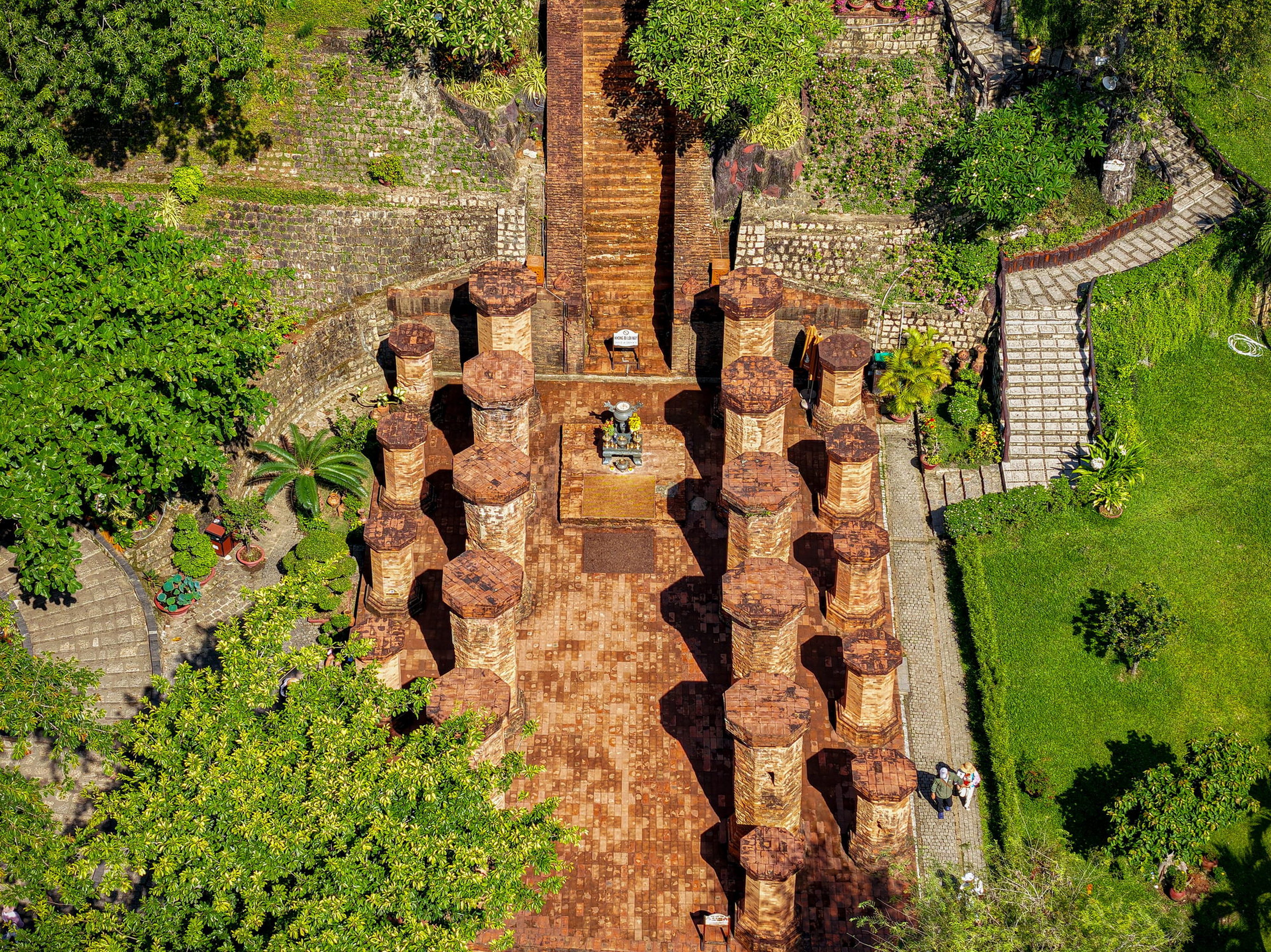
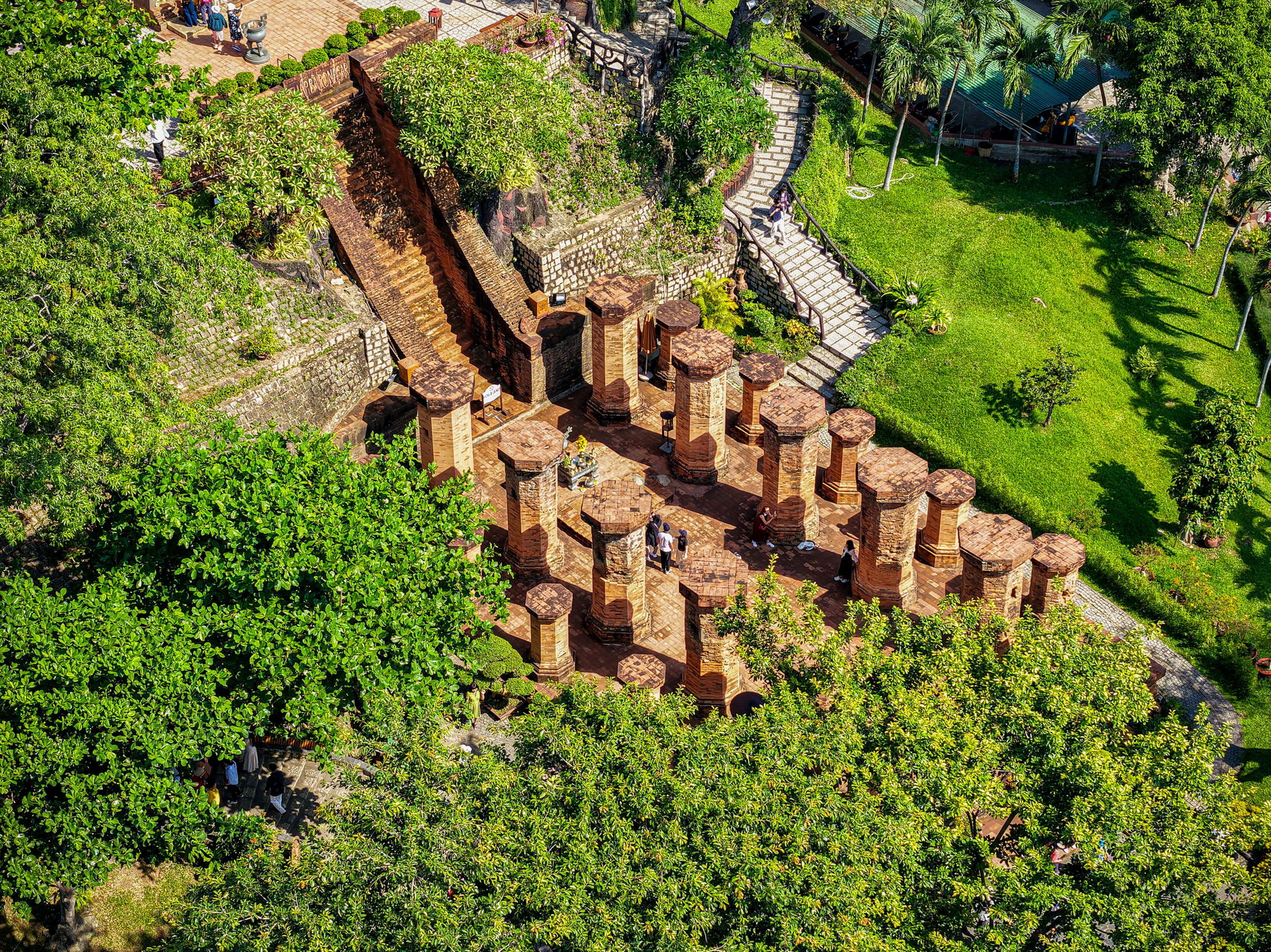
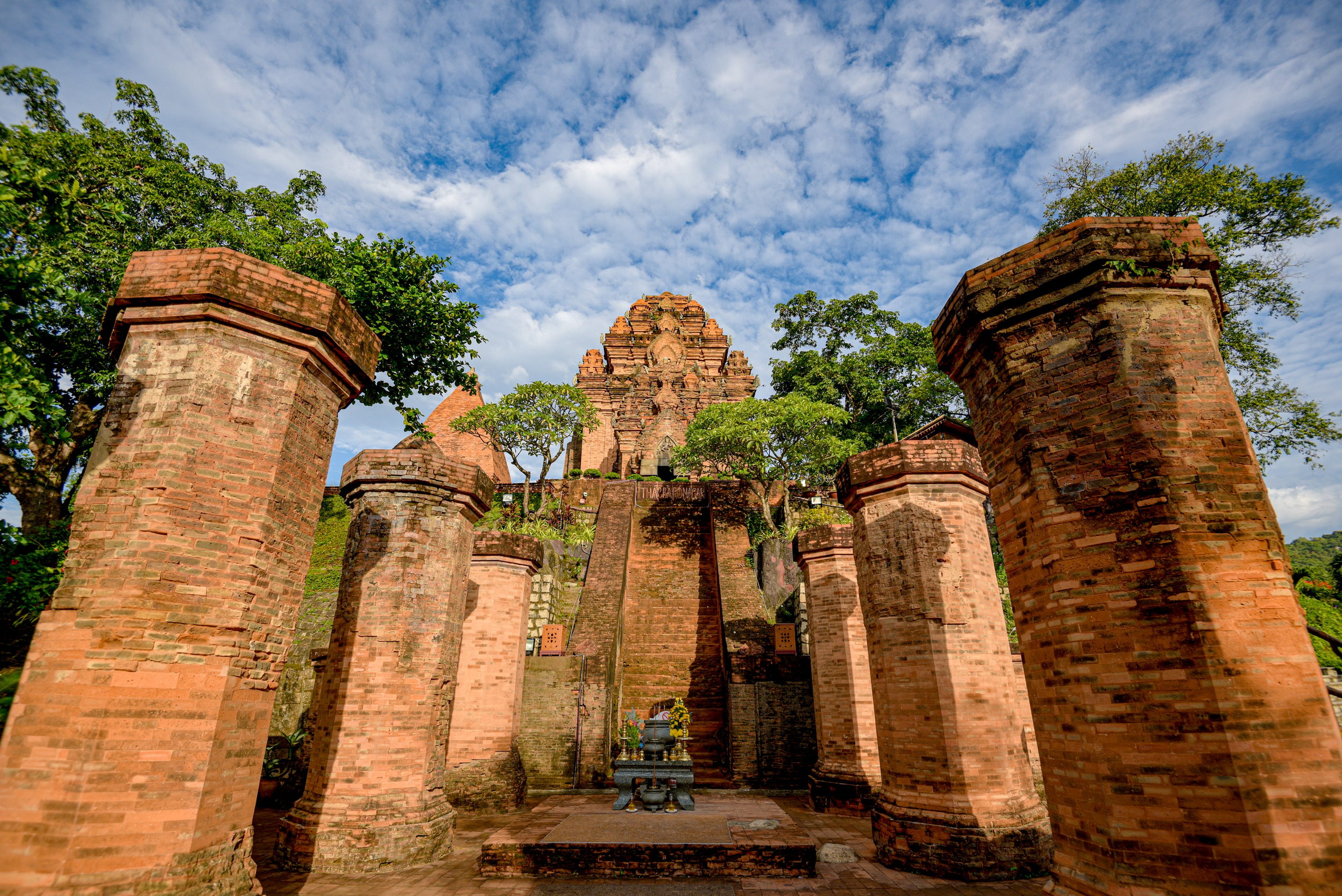
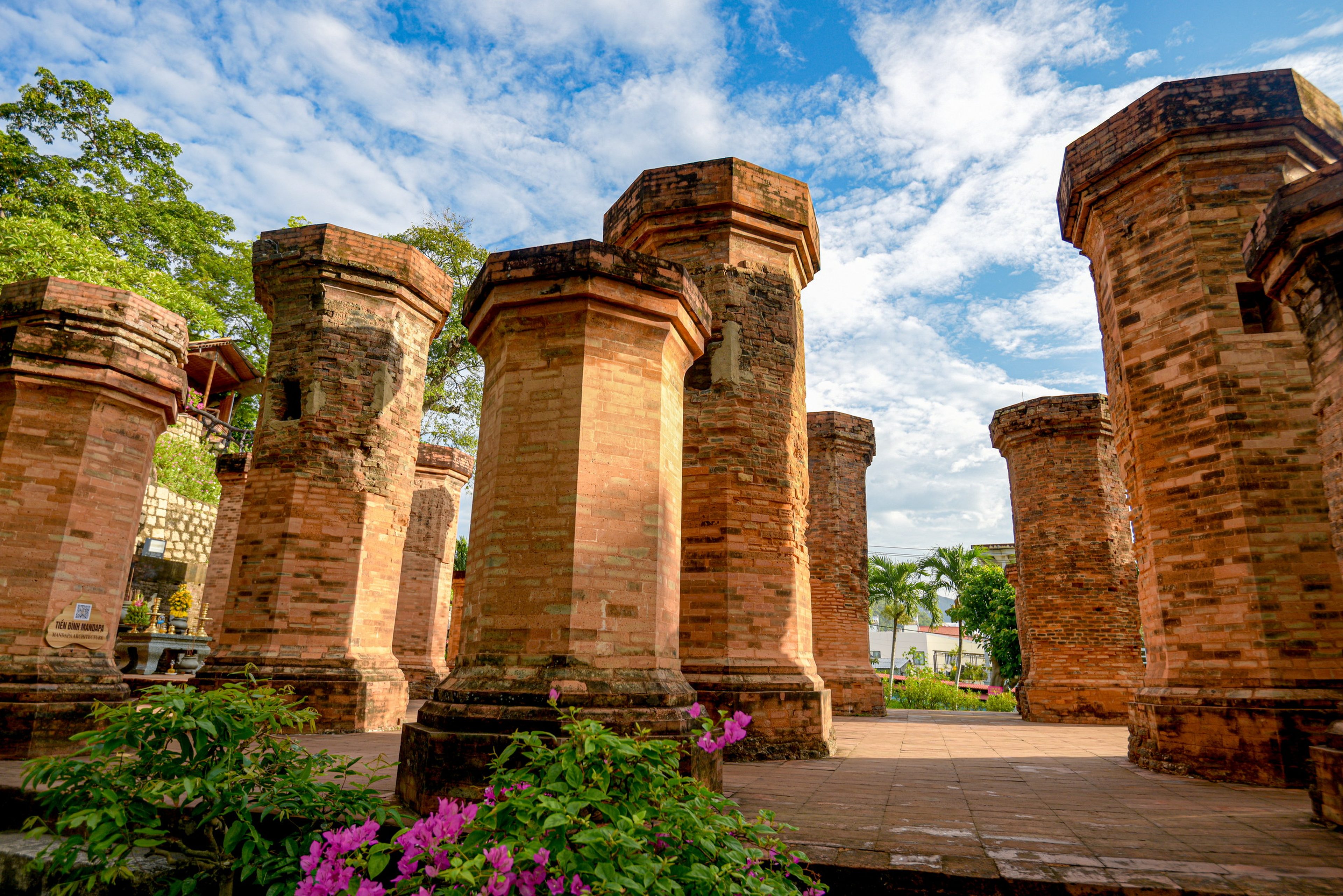
This is where believers prepare offerings and calm their minds before performing rites at the Main Tower. The architecture consists of four rows of octagonal columns (10 large and 12 small). On the large columns, at the same height as the small ones, there is a rectangular cavity carved into the pillar, serving as a 'mortise' in timber architecture. Researchers believe these mortises acted as supports for crossbeams to hold a roof, which has since collapsed and left no trace.
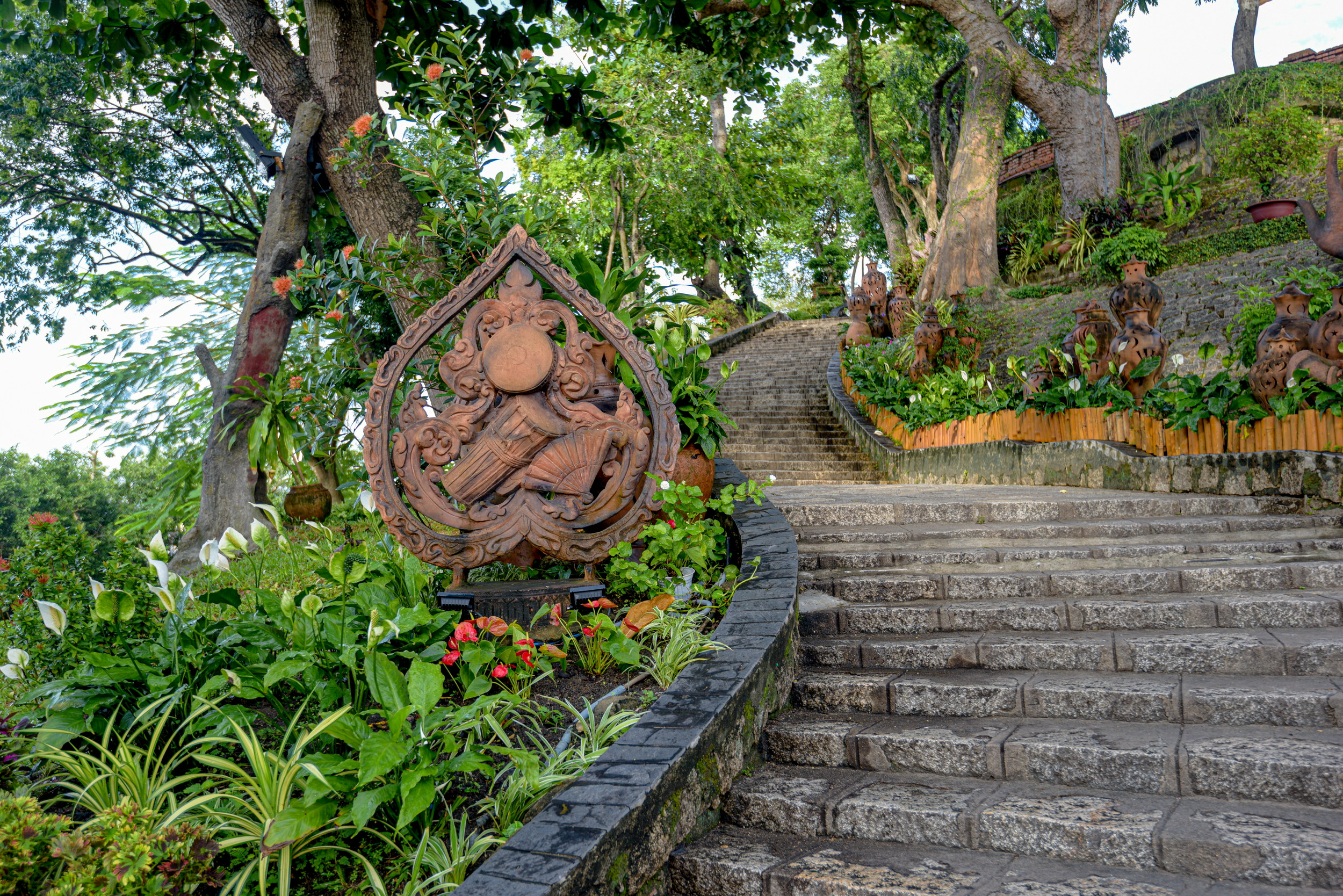
In the past, the Mandapa also featured two smaller pillars below the floor level, on either side of the steps leading up and aligned with the old temple gate. The gate, the Mandapa, and the great tower above formed a direct East-West axis. The current Mandapa architecture dates back to the same period as the final construction of the Main Tower, around the 11th–12th centuries. From the Mandapa, there are 36 steep, straight steps leading up to the temple area. Legend has it that to show reverence to the deities, especially the Goddess Po Nagar, believers ascending to the temples for rituals had to walk with a stooped posture, and descend walking backward, never turning their backs to the temple. Later, for the convenience of tourists, a stone access path was added on the southern side of Cu Lao Hill.
The Main Tower - The heart of the monument
A convergence of architecture, sculpture, and Mother of the Realm worship
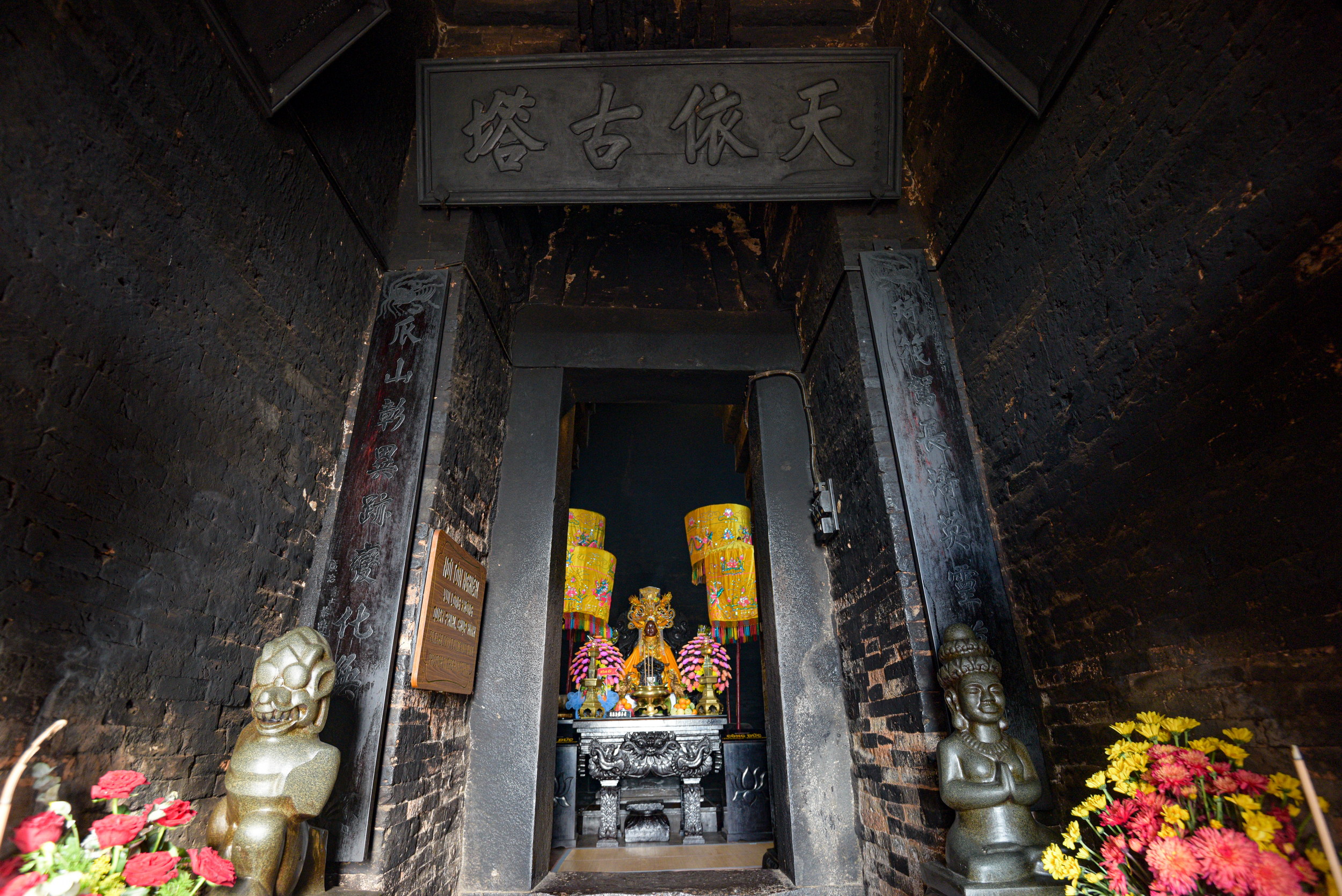
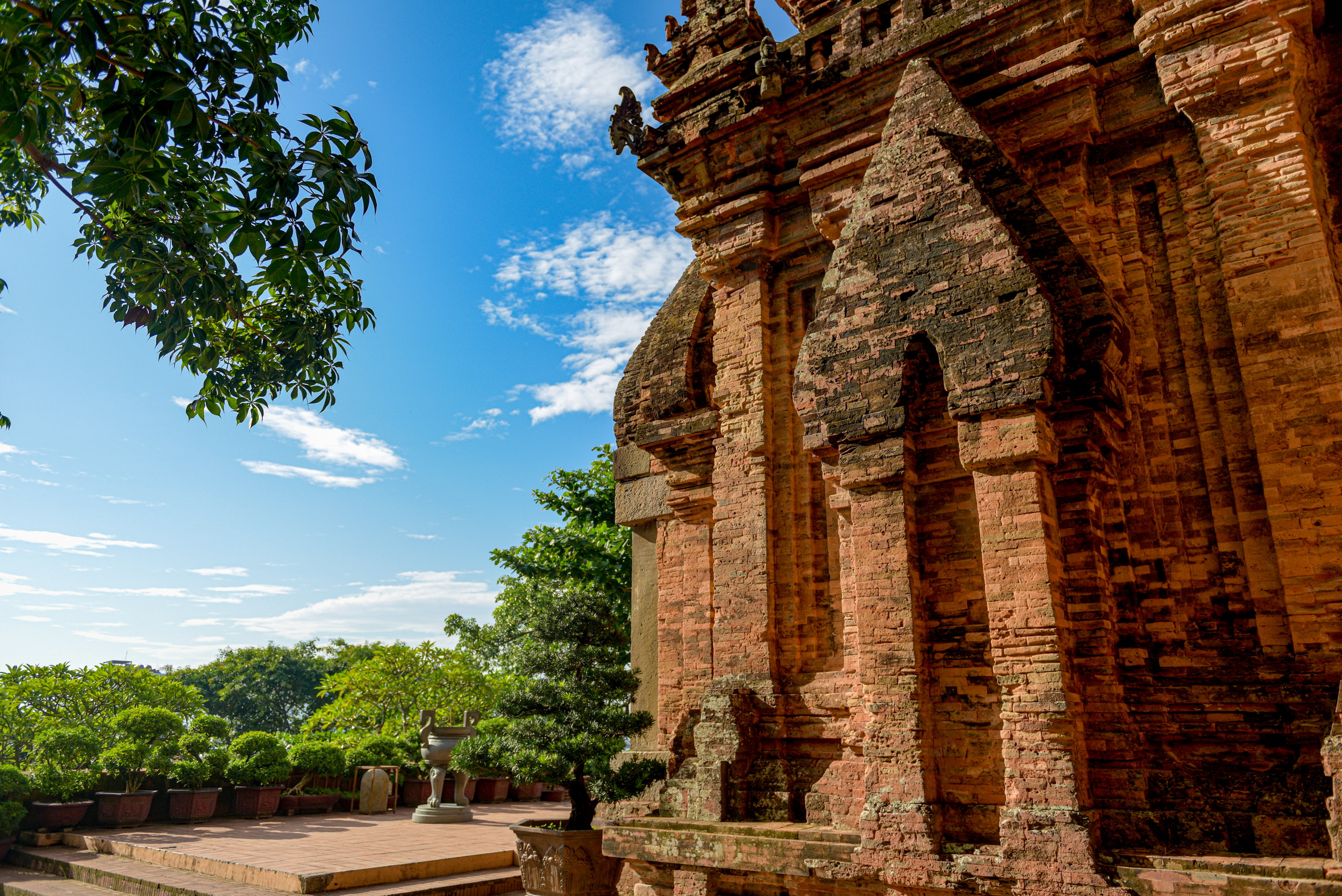
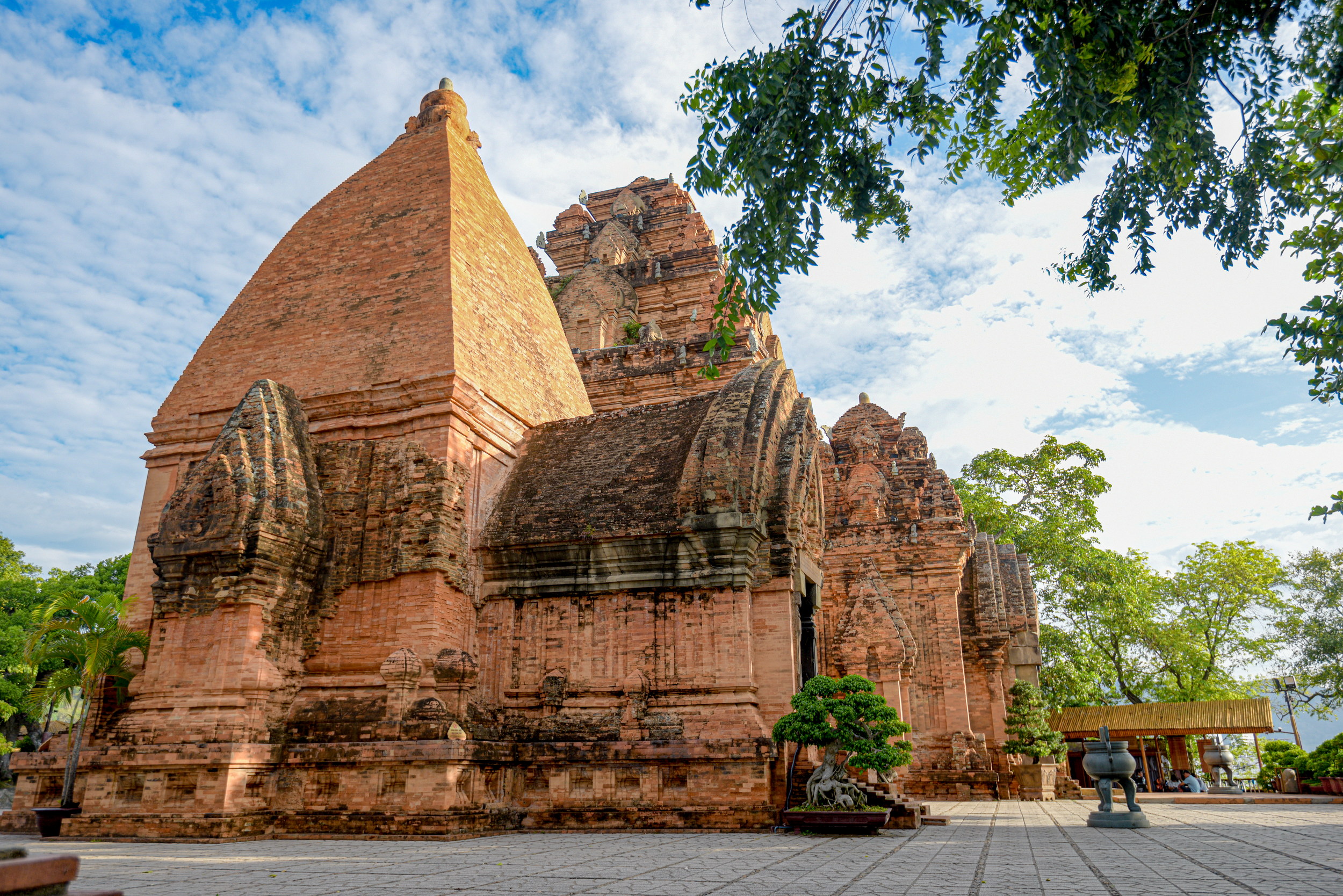
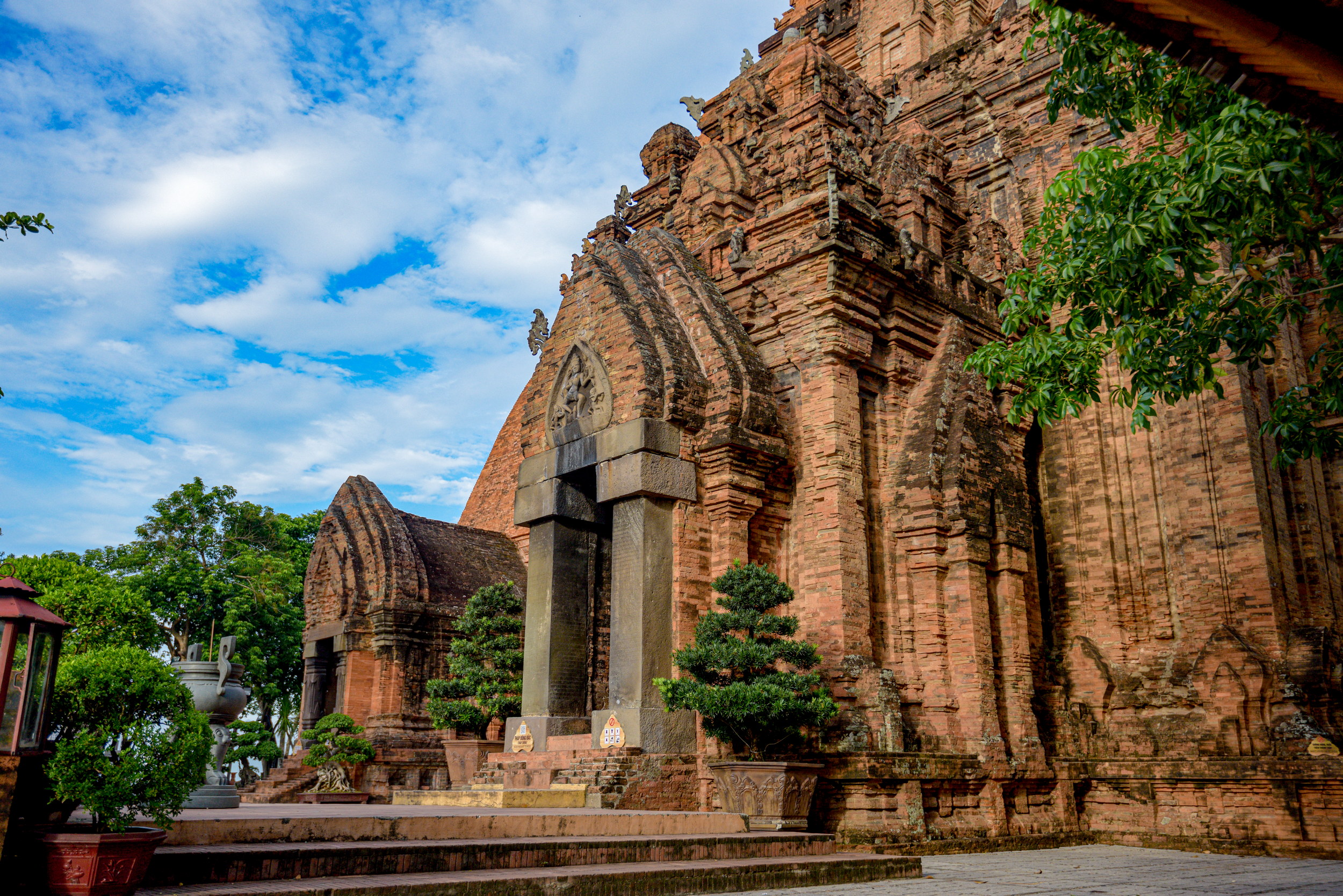
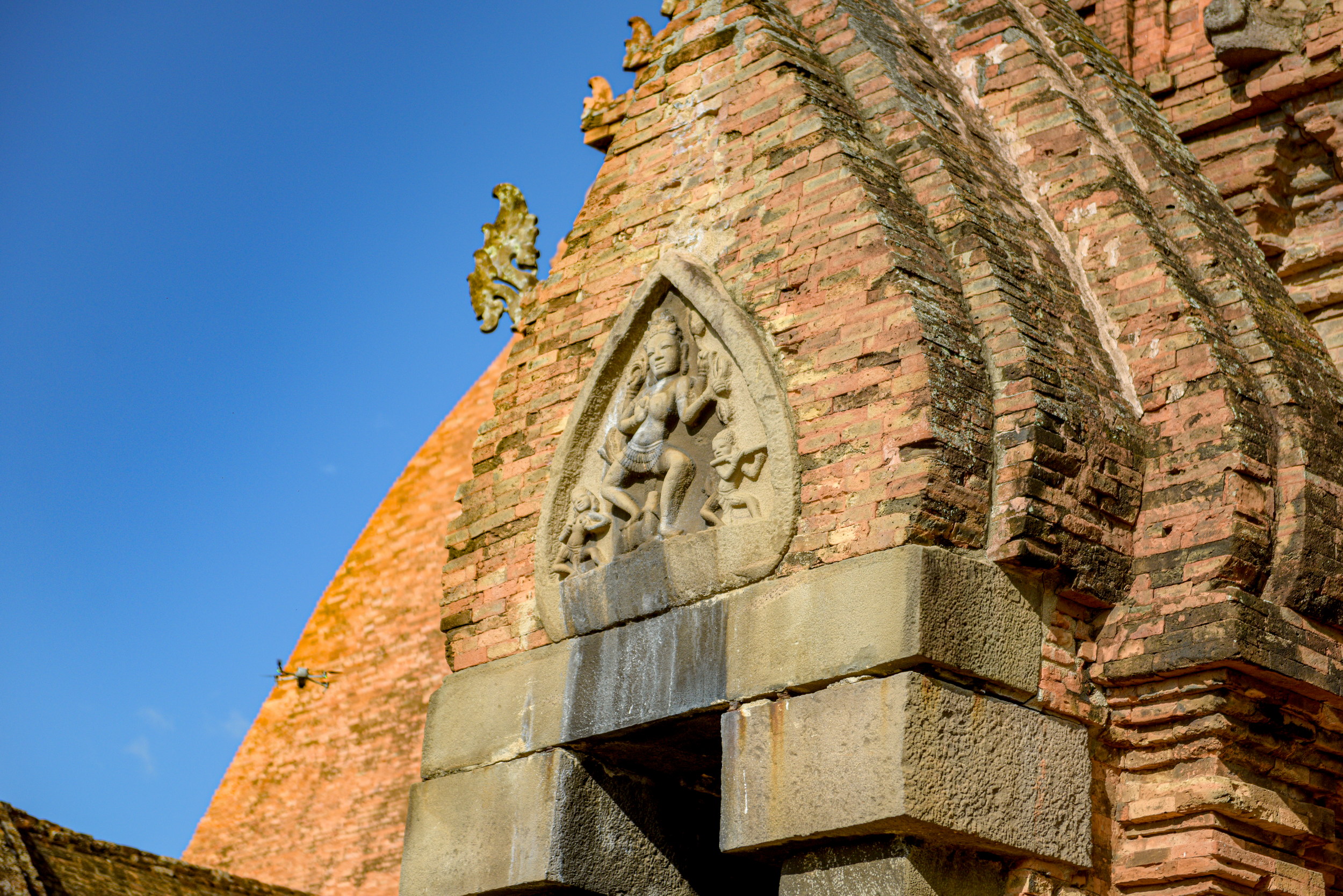
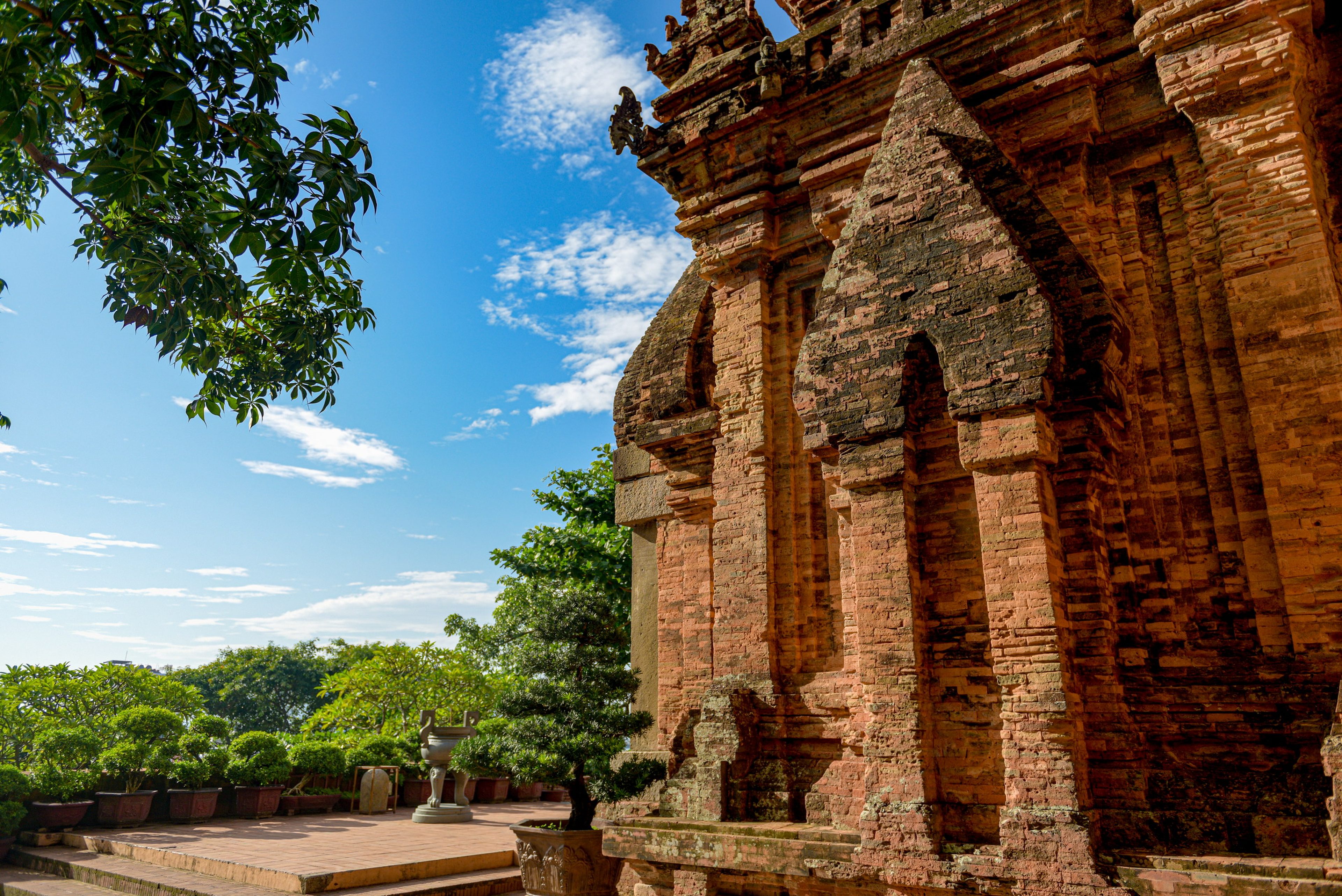
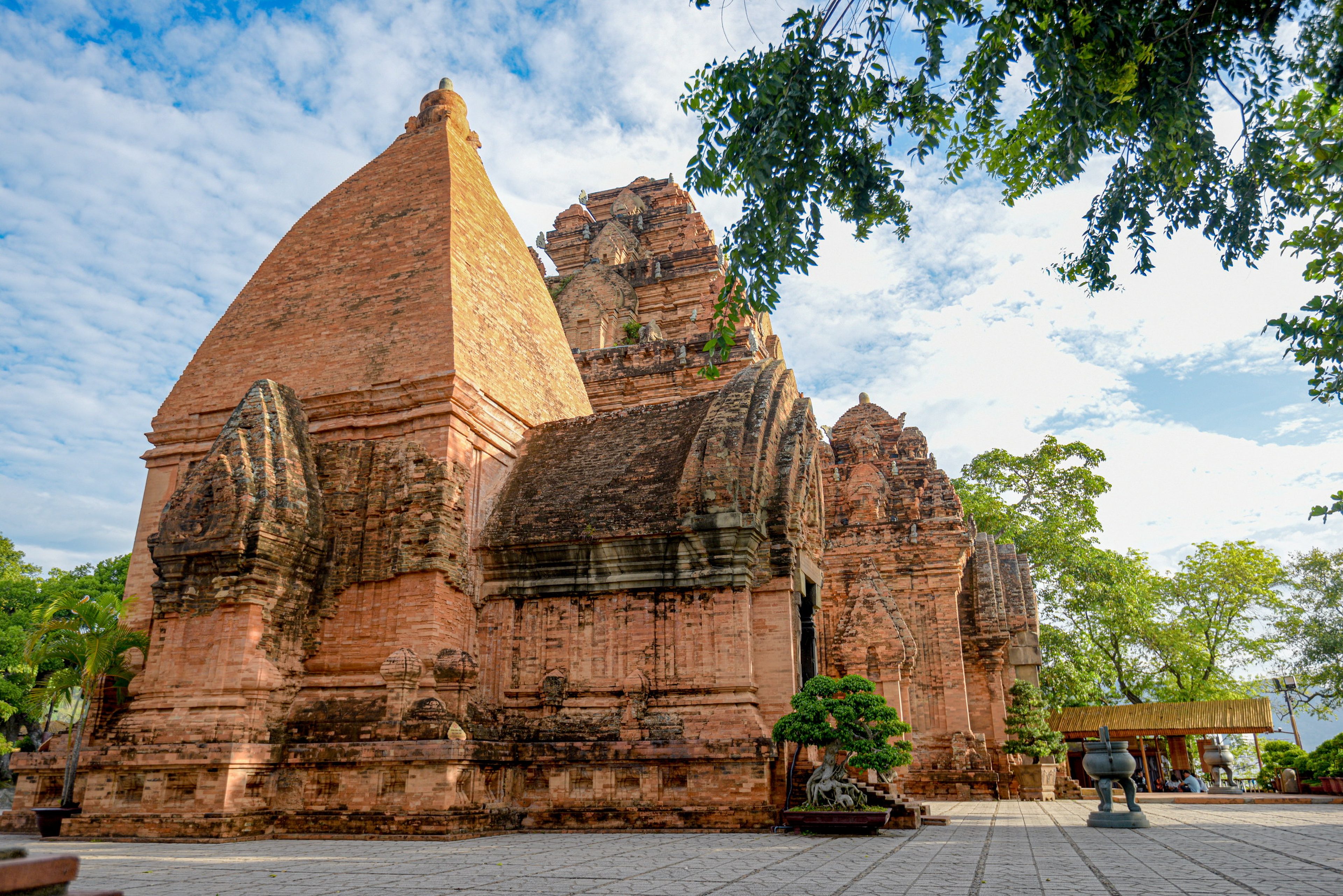
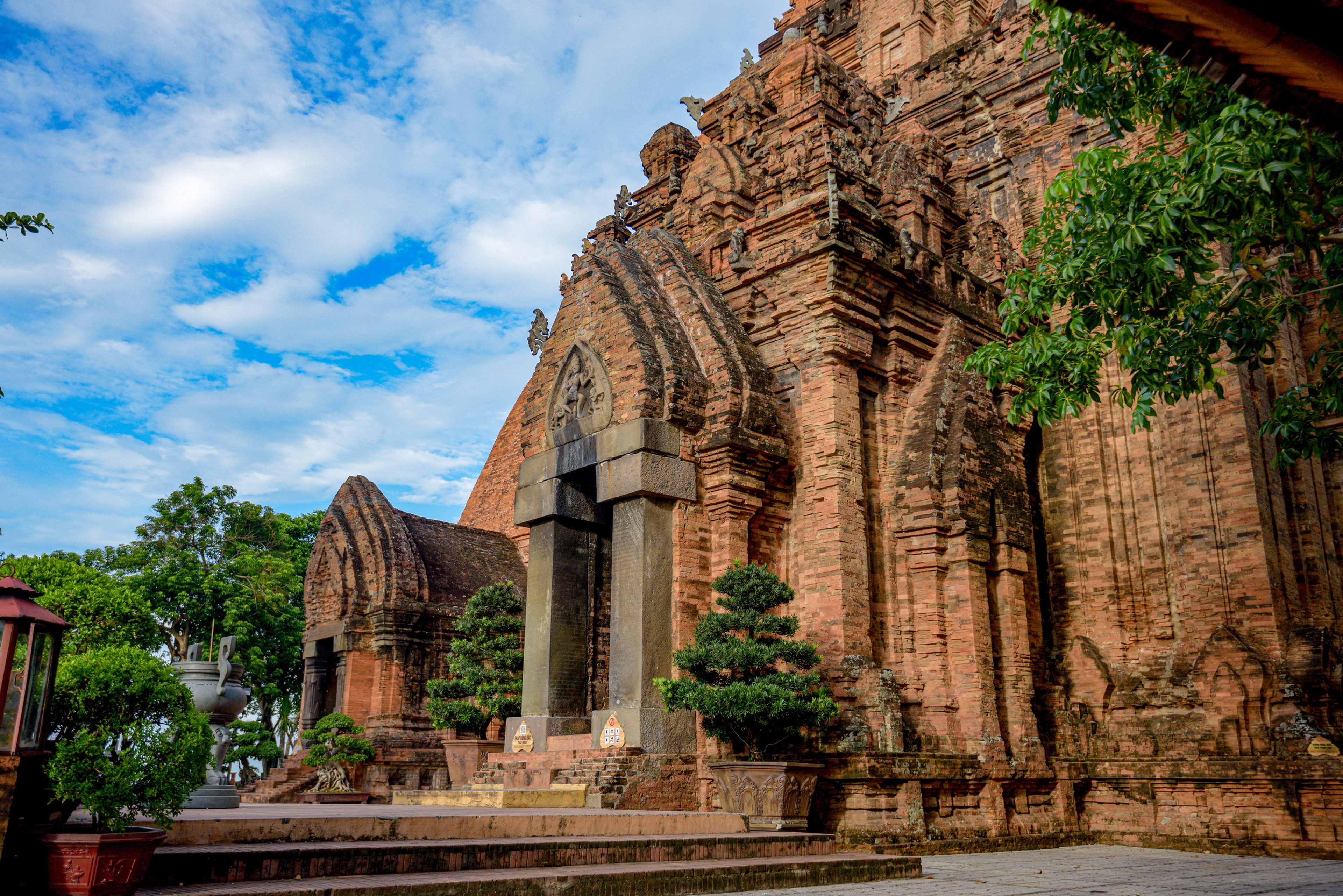
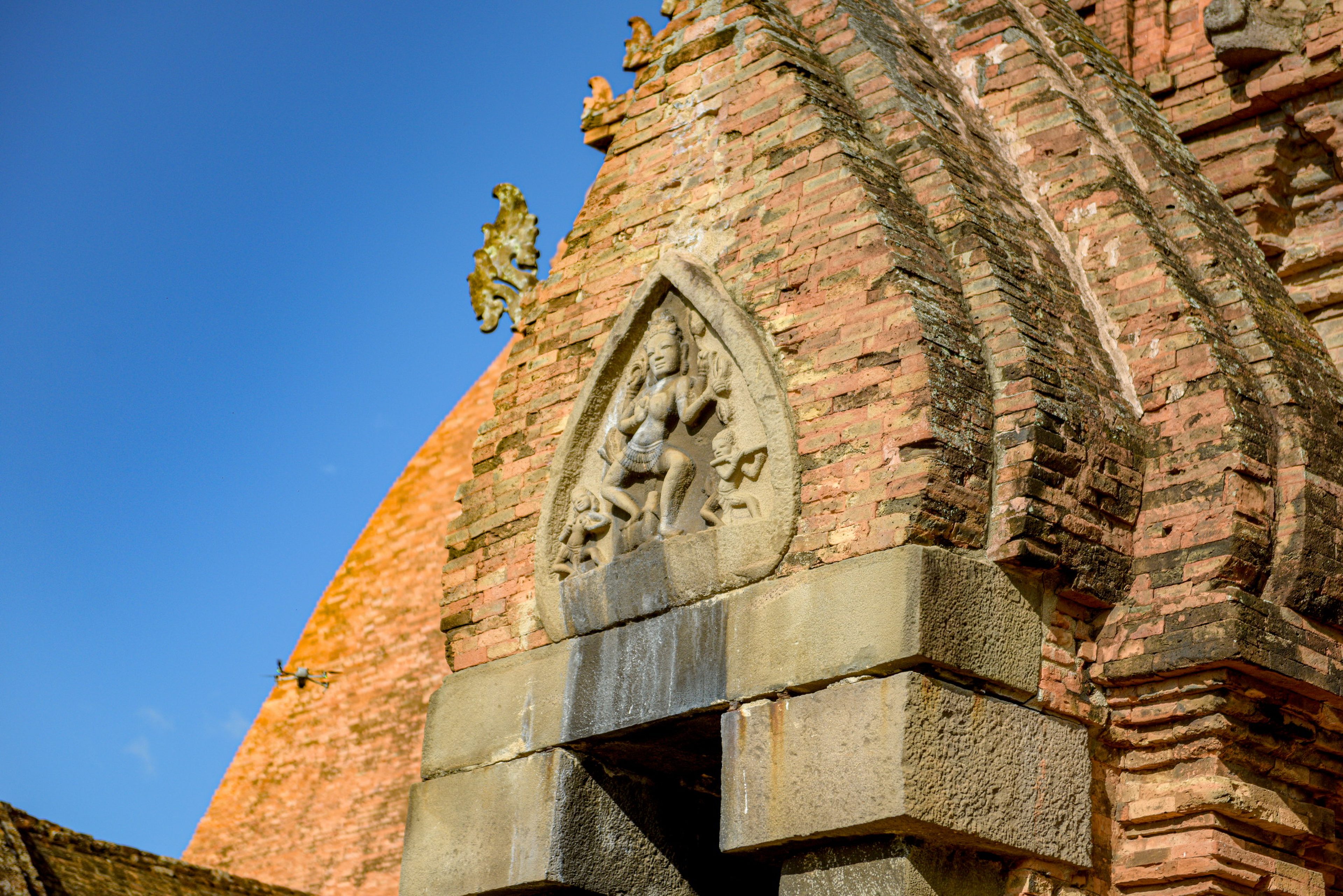
The Main Tower (Northeast Tower) is the largest and most representative of the traditional Cham tower. It stands approximately 23 meters high and consists of three parts: the tower base, the body, and the roof. The three-story roof tapers toward the top, with each upper story being a miniature replica of the one below. The tiers are decorated with sacred figures: geese, goats, elephants, and praying priests (sometimes referred to as Apsaras). Above the doorway, a relief in the shape of a Bodhi leaf depicts the god Shiva, one foot resting on the back of the bull Nandin, dancing joyfully accompanied by two musicians playing the flute and cymbals. This relief dates back to the 11th century and is one of the most beautiful examples of Cham culture preserved in Vietnam. The tower has four doorways facing the cardinal directions, but only the East door is open; the others are false doors. The East doorway is supported by two stone pillars inscribed with ancient Cham and Sanskrit characters.
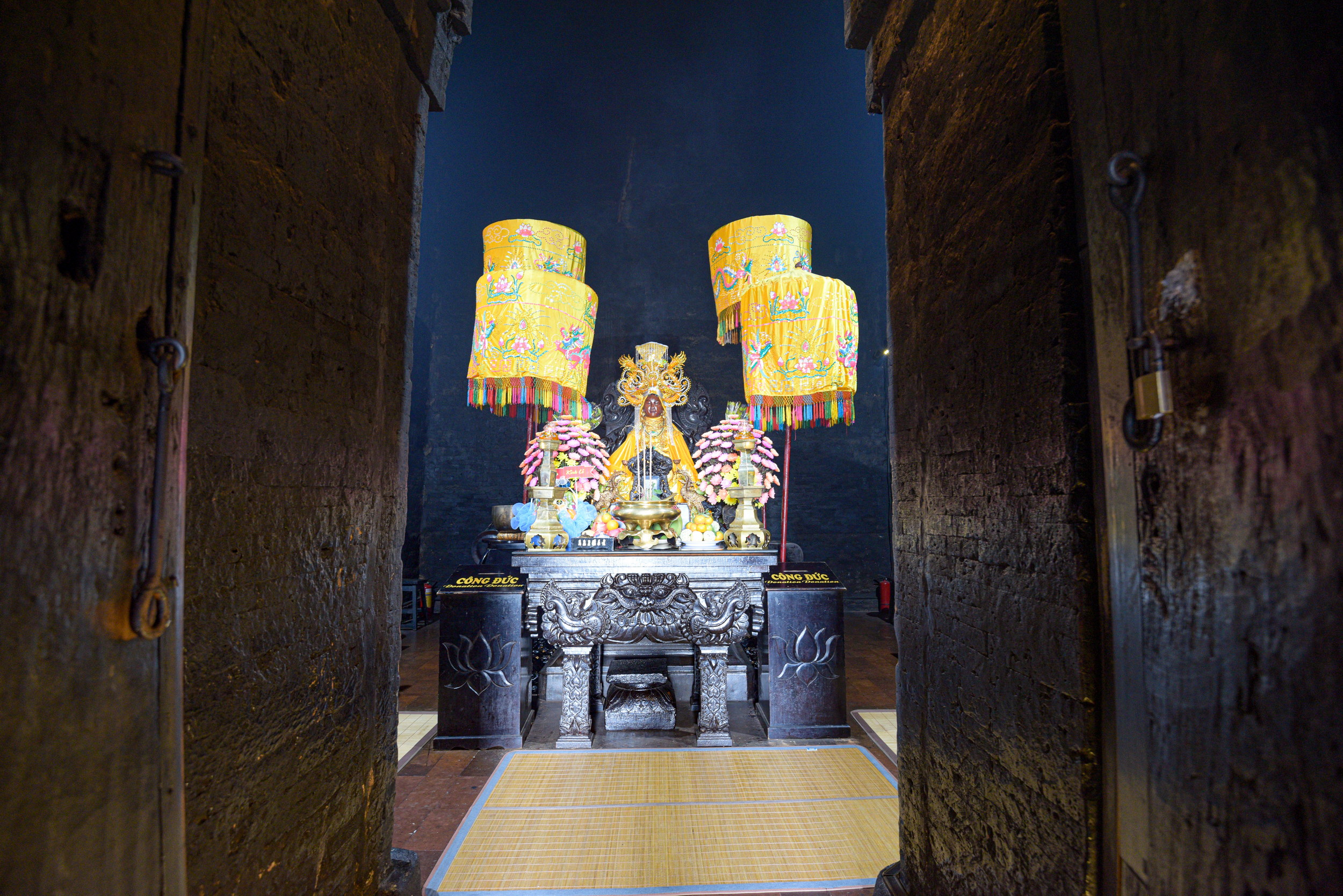
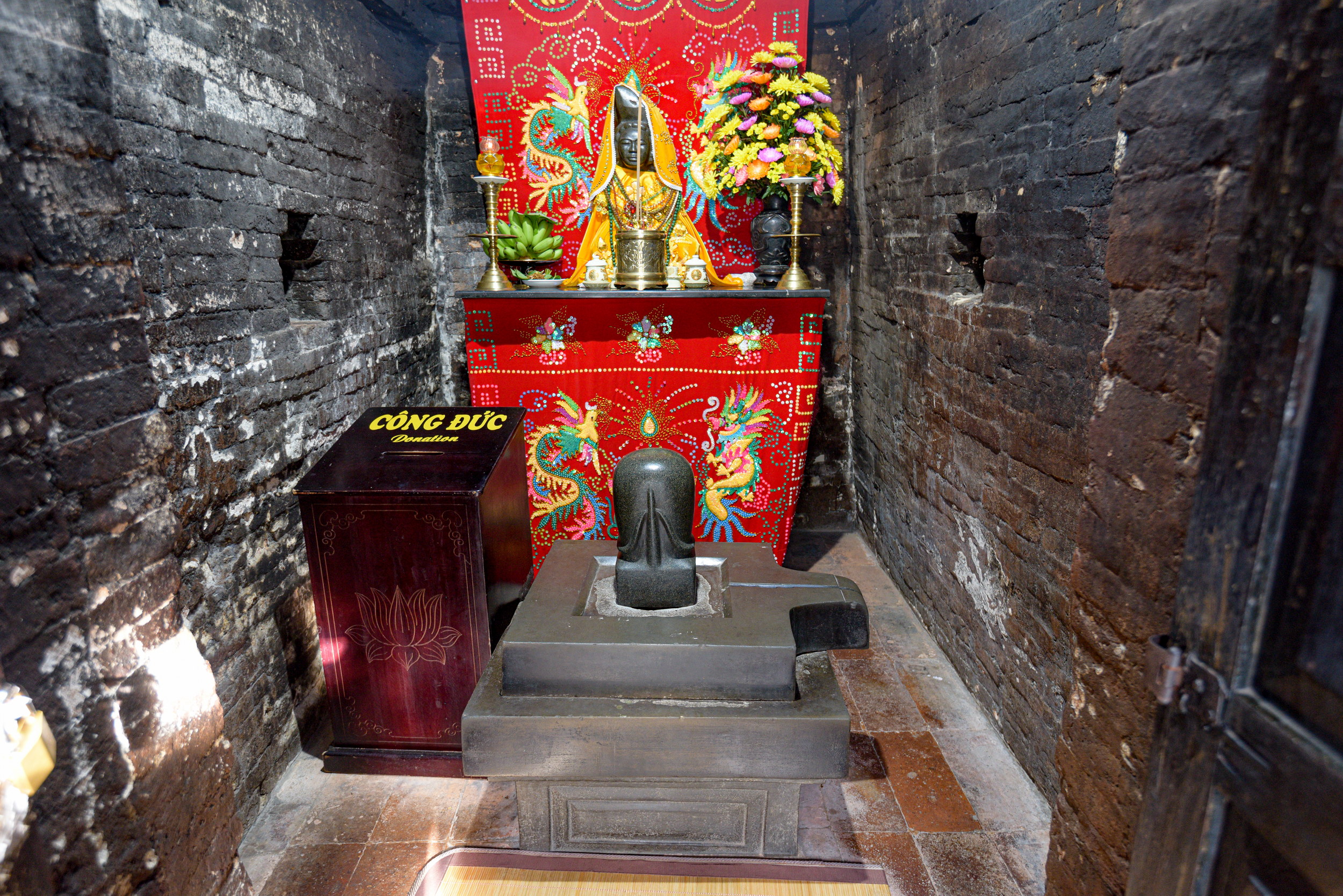
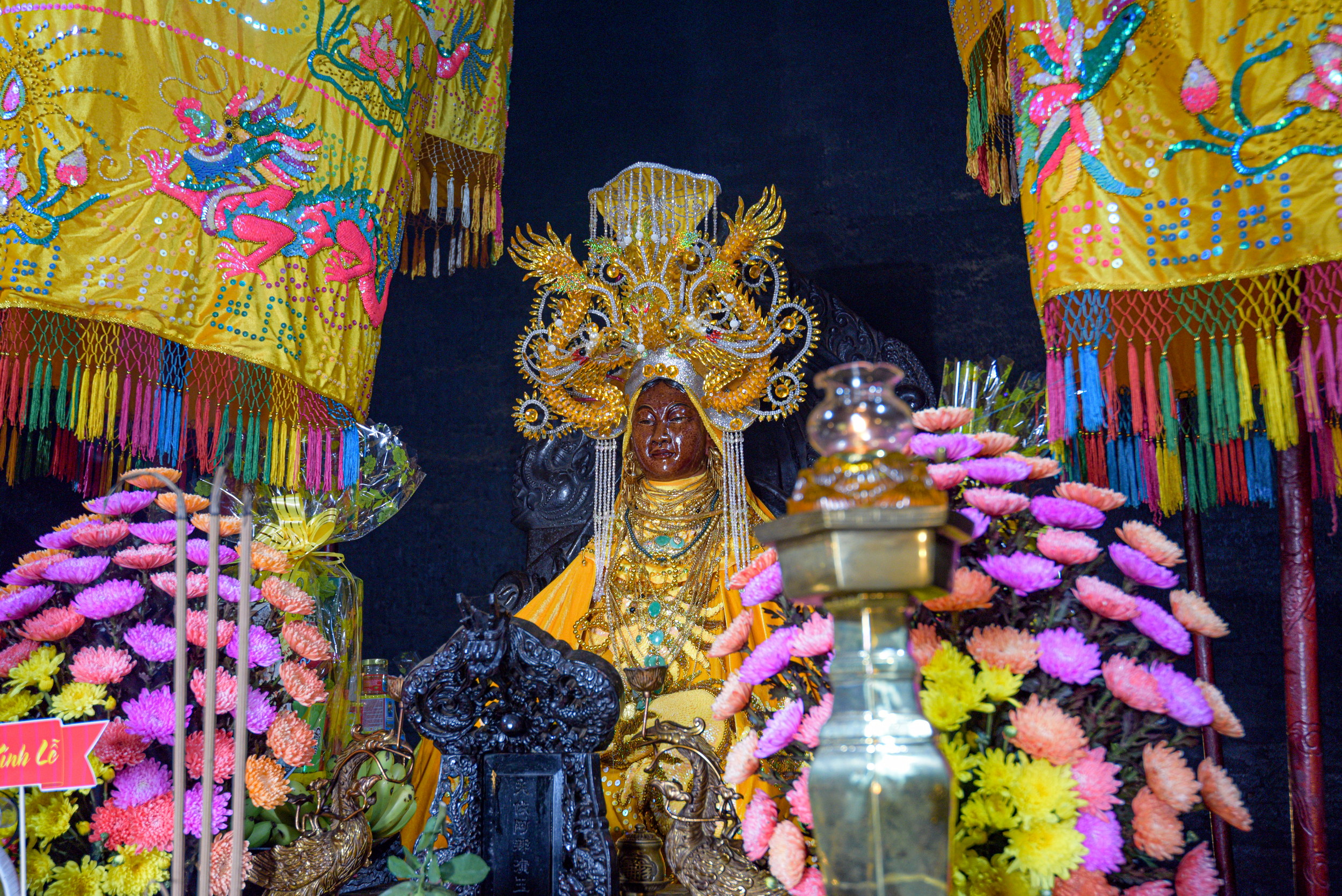
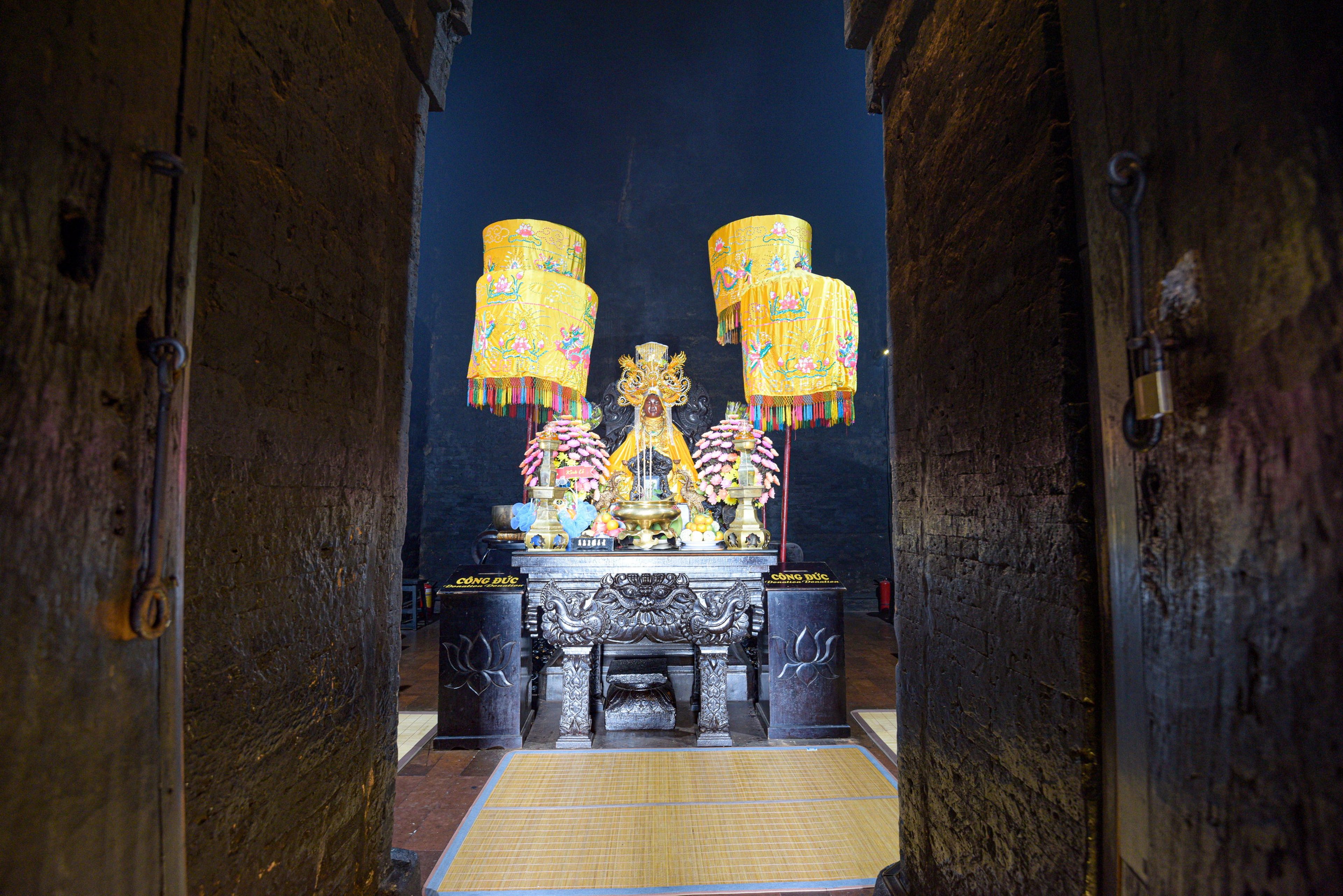
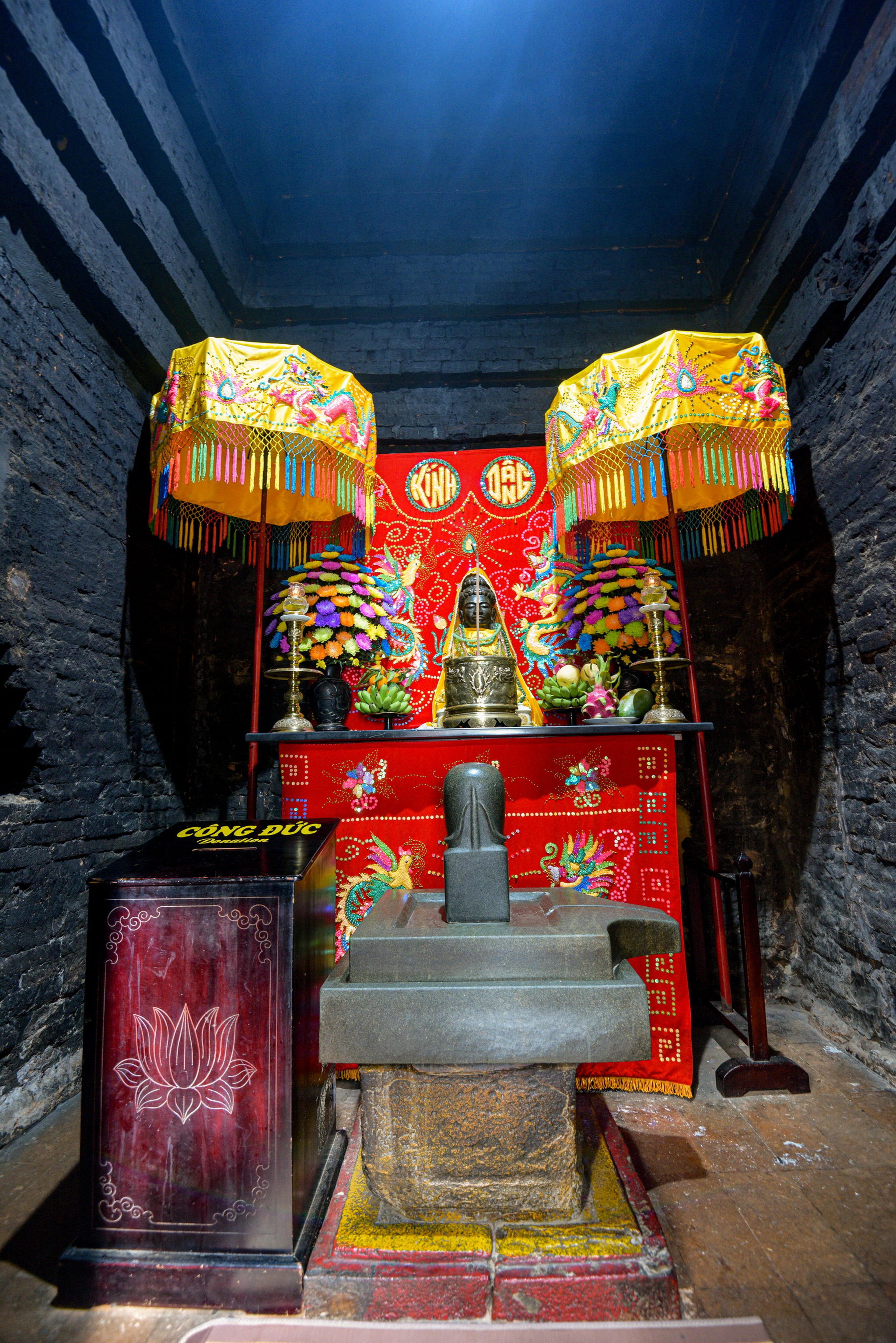
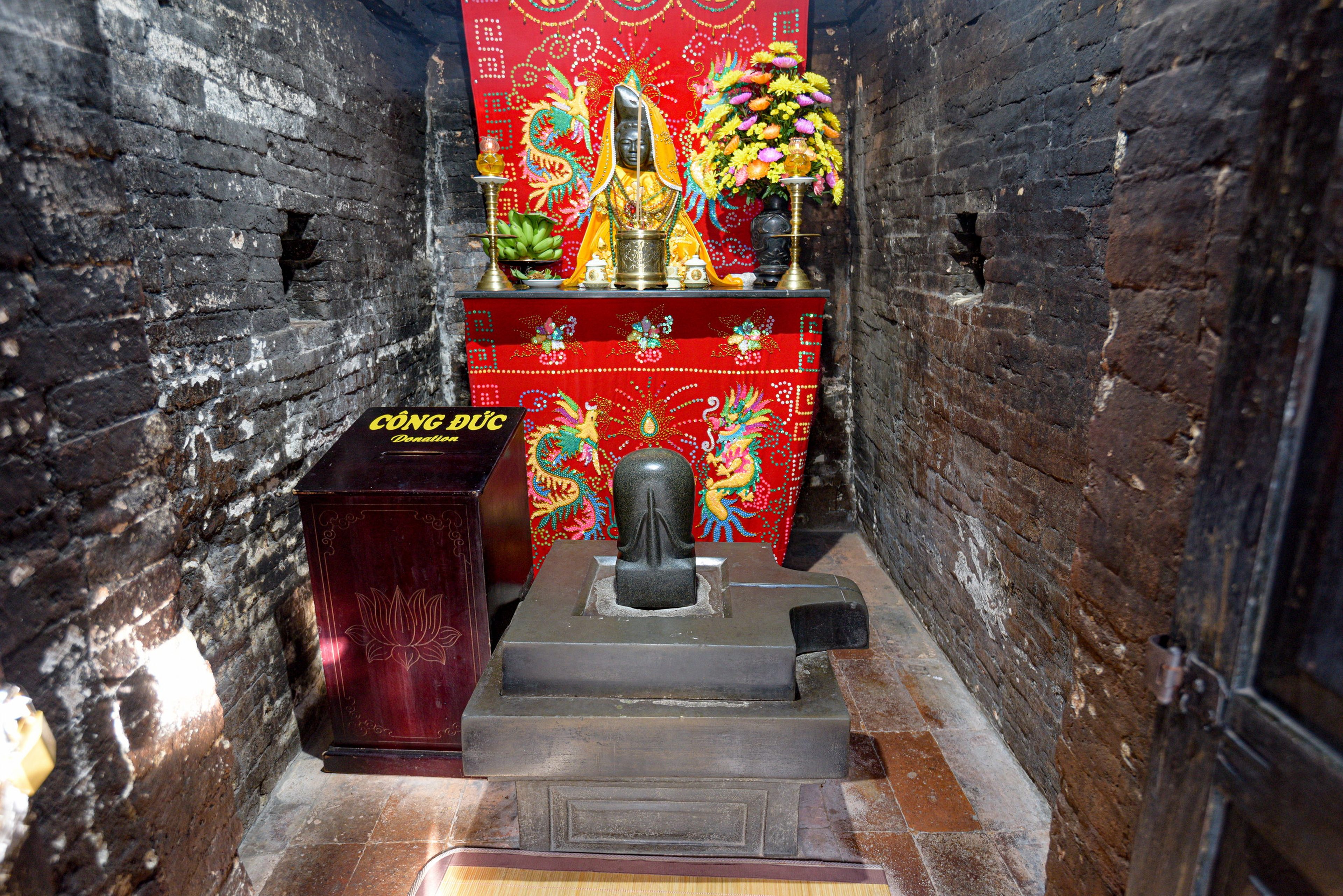
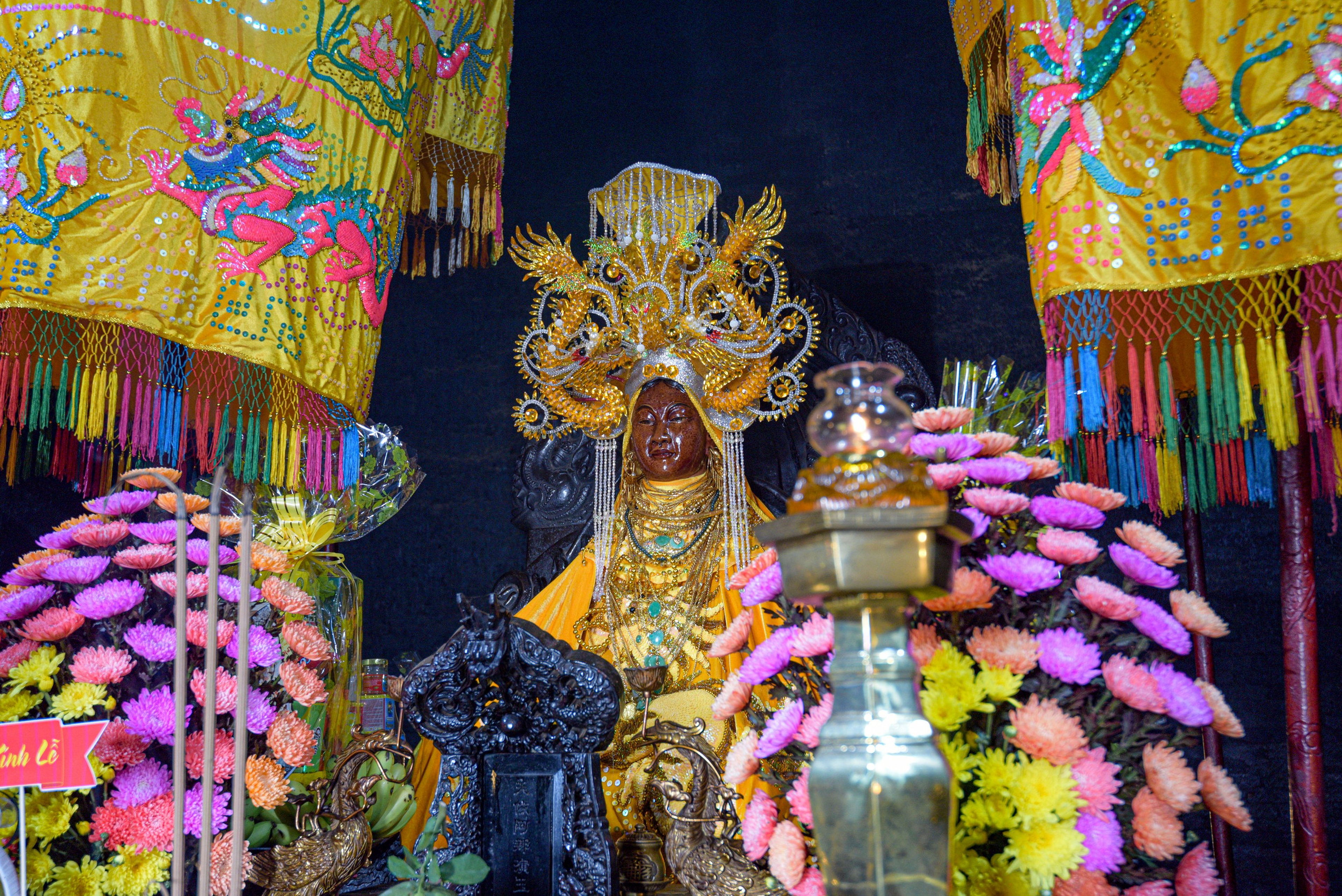
Inside the tower sits the statue of the Goddess Po Nagar—the Mother of the Realm in Cham folk belief, a symbol of fertility, protection, blessings, guidance, and abundance. For local people, this is not just an ancient structure, but a place to deposit faith, gratitude, and wishes for peace across many generations.
Goddess Yang Po Inư Nưgar
The Mother of the Realm of the Cham people
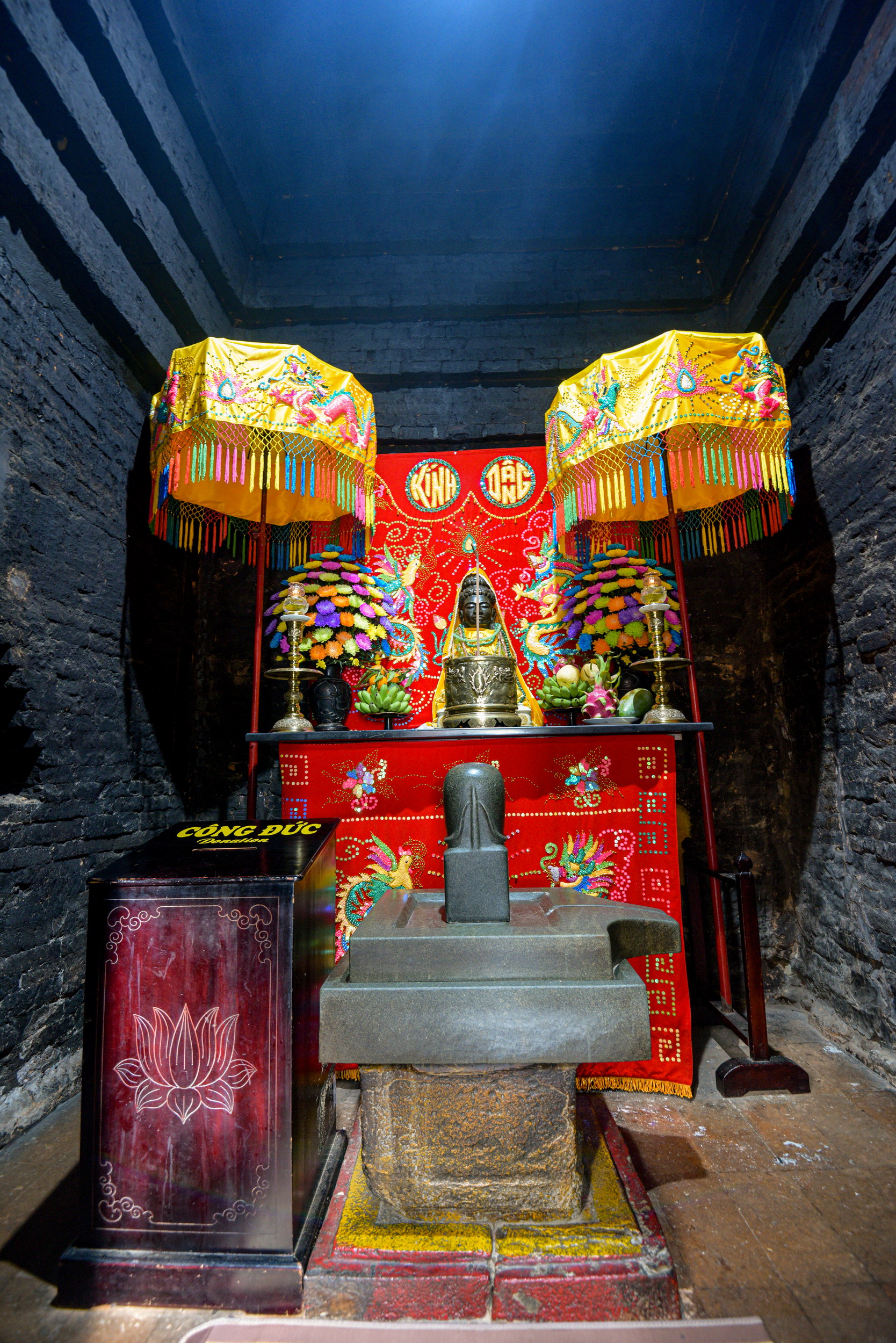
The statue of the Goddess is carved from a solid block of granite, sitting majestically on a lotus-shaped stone pedestal, her back resting against a large Bodhi-leaf-shaped slab. This is a masterpiece of Cham sculpture, harmonizing round-statue technique with high relief. The entire statue and its backing rest on a large stone Yoni pedestal. With a composition featuring the statue as the Linga and the pedestal as the Yoni, this is a complete Linga-Yoni set—a union of male and female representing life and the most sacred object for the Cham people.
To this day, among the remaining Cham temple complexes in our country, there is no other statue of a presiding deity as large and complete as this one. This illustrates the immense religious, cultural, historical, and artistic value of the statue to the Po Nagar site. On either side of the Goddess's altar are two altars dedicated to her two children (Princess Quy and Prince Tri, according to Kinh traditions).
South Tower, Southeast Tower, and Northwest Tower
Connecting the space within the complex
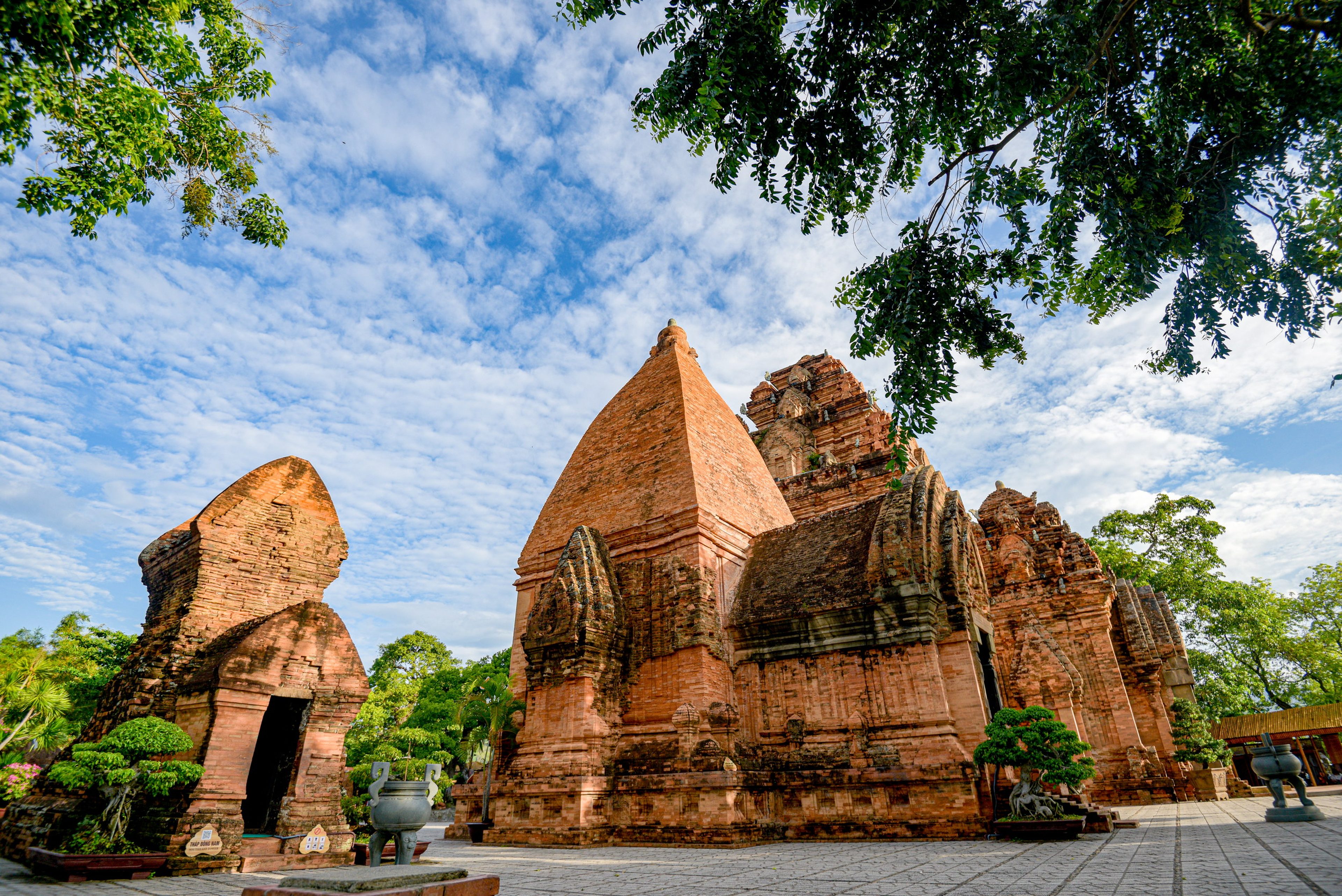
Besides the Main Tower, the Po Nagar complex also includes auxiliary towers with their own architectural and spiritual significance. The South Tower, standing about 18 meters tall, dates back to the 13th century and is dedicated to the god Cri Cambhu, another name for Shiva. Inside is a Linga-Yoni set, symbolizing the power of creation, destruction, and rebirth in Cham belief. According to Vietnamese folk belief, this tower is considered the place of worship for Ong Nam Hai, the husband of the Holy Mother Thien Y A Na.
The Southeast Tower is about 7 meters high with a boat-shaped roof, considered an auxiliary structure from a later period, around the 13th century. Inside, it houses a stone Linga-Yoni dedicated to the god Sandaka, the son of Shiva. Vietnamese people call this the 'Co' (Aunt) Tower, associated with the tradition of worshiping the adoptive parents of the Holy Mother Thien Y A Na.
The Northwest Tower, located behind the Main Tower, is about 9 meters high with a saddle-shaped roof. Its false doors still bear traces of unique motifs such as the sacred bird Garuda, the god Kala, and the goddess Indra riding an elephant. Inside is a Linga-Yoni set dedicated to the god Ganesa, a symbol of wisdom, luck, and happiness. Vietnamese people call this the 'Co Cau' (Children) Tower, dedicated to the two children of the Holy Mother Thien Y A Na.
The Thap Ba Festival - A living heritage of the community
Promoting heritage values
Annually, the Po Nagar Tower Festival takes place from the 20th to the 23rd of the third lunar month. It is an occasion for locals and tourists alike to turn their hearts toward the Mother, participate in traditional rituals, and experience the sacred atmosphere of the heritage.
The festival not only brings the memory of these beliefs to life but also contributes to connecting the community, preserving cultural identity, and spreading the value of Cham-Kinh cultural exchange and the diverse ethnic communities in today's life.