

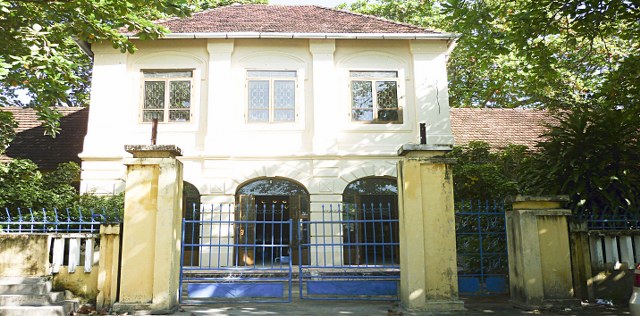
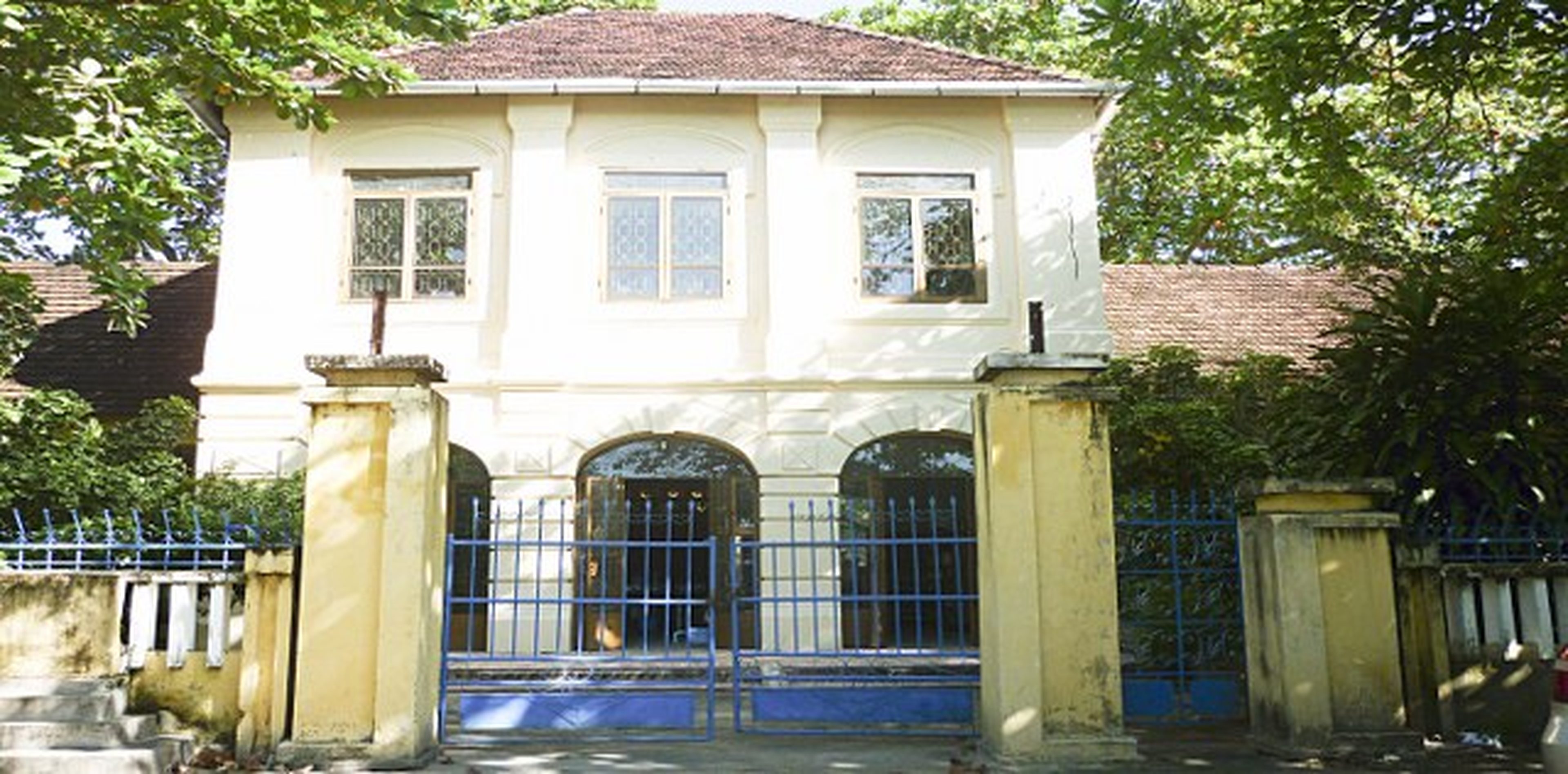
The Ninh Hoa French-Vietnamese School was built in 1922 during the reign of King Khai Dinh. It was the first school of the Ninh Hoa prefecture (comprising the two districts of Tan Dinh and Quang Phuoc) constructed by the French colonial administration following the abolition of the Confucian-based imperial examination system under the Nguyen Dynasty in 1919.
The Ninh Hoa French-Vietnamese School has undergone many name changes: from "École Élémentaire Franco-Indigène" to "École Primaire de Ninh Hòa," followed by "Ninh Hoa Primary School," and then "Ninh Hoa Community Primary School" (prior to 1975). After 1975, the school was given the new name "Ninh Hiep Primary School Level I," and later "Ninh Hiep Primary and Secondary School." Despite the many names it has held throughout historical periods, local people still affectionately call it the Ninh Hoa French-Vietnamese School.
The Ninh Hoa French-Vietnamese School served as an educational institution for the Ninh Hoa prefecture, where many generations of teachers taught and students learned. Mr. Cung Quang Bao was the school's first principal (known as the "Doc") from 1923 to 1926. During that time, teachers Ngo Duc Dien and Duong Chuoc (often called "Tro Chuoc") also taught there. Both men were members of the Tan Viet Party—a precursor to the Communist Party of Vietnam—and were actively involved in spreading revolutionary ideals among the youth and students. Mr. Duong Chuoc later became one of the organizers and leaders of the protest on July 16, 1930, in Tan Dinh District.
Between 1930 and 1945, the Ninh Hoa Primary School was the only public school in the prefecture, even serving students from Van Ninh District (back when that district had not yet opened the final years of primary education). This was a period when the school saw many principals and numerous dedicated teachers who put their hearts into educating their students. Most of those students at the Ninh Hoa Primary School eventually set aside their studies to answer the sacred call of the Fatherland when the August Revolution broke out in 1945 and achieved victory.
During the resistance war against the Americans, generations of students from the Ninh Hoa French-Vietnamese School continued to leave their studies to join the provincial and district armed forces. Although they were still young, students attending the school had been educated by their parents and teachers to participate in secret guerrilla organizations. The Ninh Hoa French-Vietnamese School served as a revolutionary base and a place to teach youth and students to embrace revolutionary ideals and defend the Fatherland, with some never returning from the fight. Generations of teachers and students have brought honor to the school, their families, and the Ninh Hoa homeland. The Ninh Hoa French-Vietnamese School is not only a source of pride for the generations of teachers and students who have been connected to it, but it also remains an eternal symbol of pride for the people of Ninh Hoa regarding their tradition of studiousness and patriotism.
After the liberation of the South on April 30, 1975, and the reunification of the country, as the nation entered a period of reconstruction, the children of Ninh Hoa and the teachers and students of the French-Vietnamese school all strove to contribute their modest efforts to the development of their homeland. Today, the Ninh Hoa French-Vietnamese School serves as the Political Training Center for Ninh Hoa Town.
In recognition of the historical and cultural values of the Ninh Hoa French-Vietnamese School, the People's Committee of Khanh Hoa Province issued Decision No. 57/QD-UBND on January 7, 2013, designating it as a provincial-level historical and cultural site.
Source:https://disanvanhoa.khanhhoa.vn/vi-vn/disan-vanhoa/disanvanhoa/TR%C6%AF%E1%BB%9CNG%20PH%C3%81P%20-%20VI%E1%BB%86T%20NINH%20H%C3%92A%20(%20TR%C6%AF%E1%BB%9CNG%20TI%E1%BB%82U%20H%E1%BB%8CC%20PH%C3%81P-%20VI%E1%BB%86T%20NINH%20H%C3%92A)-180