




There are structures that have been gone for decades, yet still live on in the memories of the local people. For the people of Nha Trang, the white house—Lau Ong Tu—is one such building.
My old friend, who had just returned from far away, texted: “Let's meet tomorrow morning for coffee at Lau Ong Tu.” Just like that, that place—opposite the corner of Nguyen Binh Khiem and Tran Phu streets, now Nha Trang View Restaurant - 378 Guest House, or whatever else it may be... is still familiarly referred to by long-time Nha Trang residents as Lau Ong Tu.
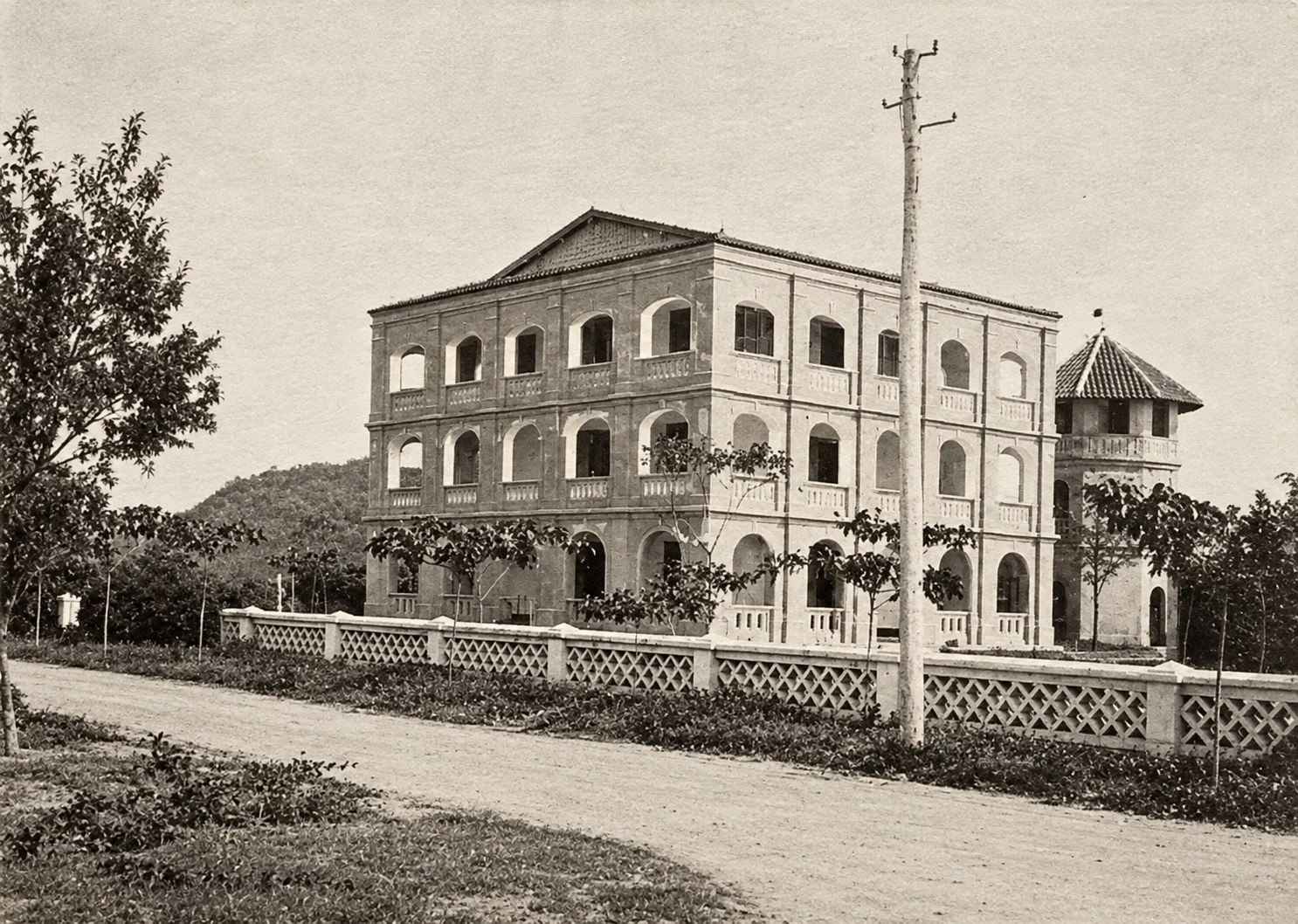 |
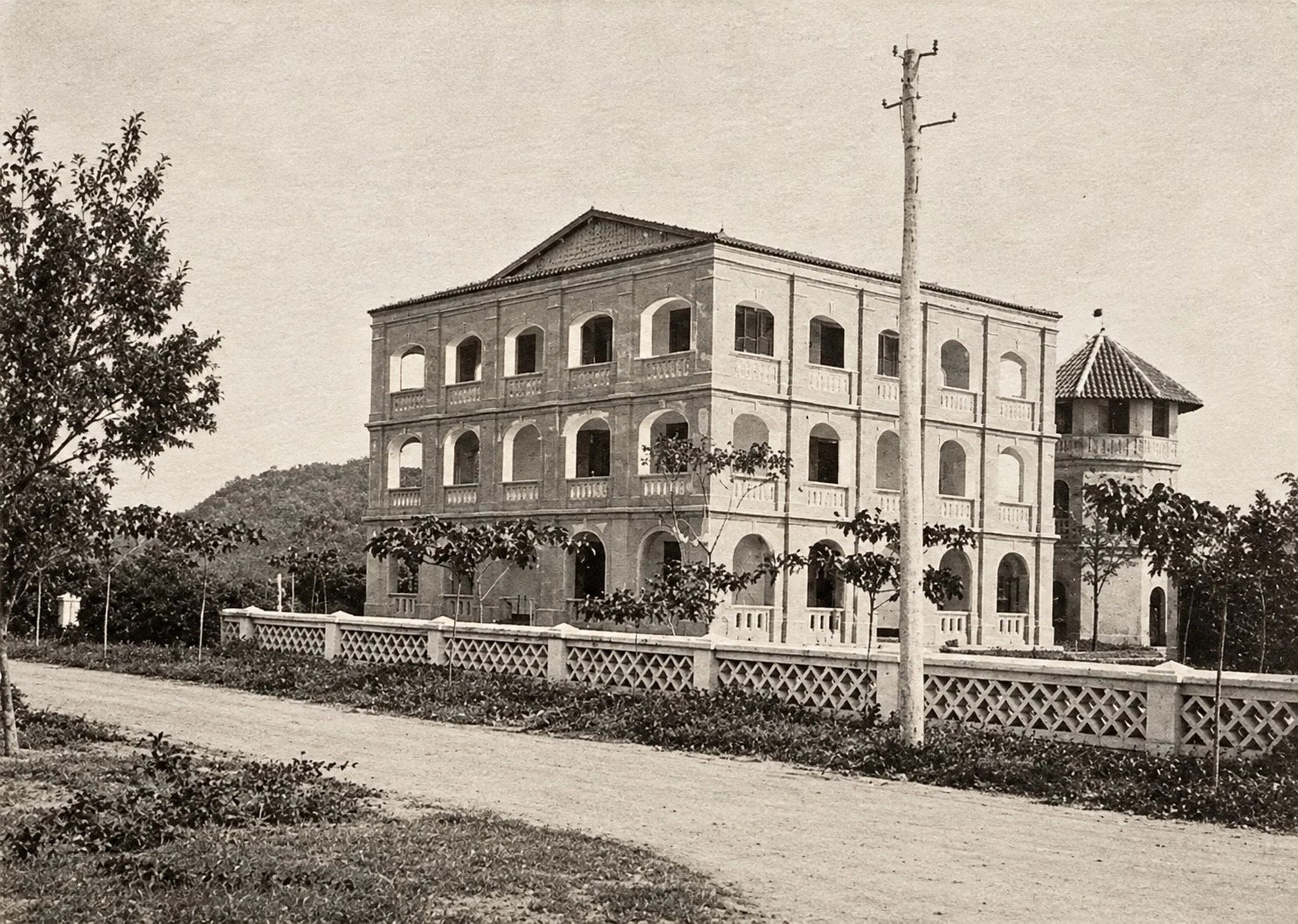
| Lau Ong Tu. Photo: Archive |
I arrived at the meeting spot a bit early, looked out at the sea, and suddenly remembered an anecdote recounted by poet Quach Tan in “Xu Tram Huong”: “In the old days, this place had only thatched cottages with mud walls. Only Dr. A. Yersin's building was an imposing brick-and-tile structure covered in whitewash. A foreigner sailing past the Cu Huan sea saw the mainland and asked what place it was. Catching a glimpse of Dr. A. Yersin's whitish house, the interpreter replied 'Nha Trang' (White House). The foreigner recorded it on the map, but because European script lacks diacritics, it was written as 'Nha Trang'.” According to poet Quach Tan, it was a humorous story, as the toponym Nha Trang had already existed prior and derived from Ya-tran (the Cham name for the Cai River). Nonetheless, the anecdote shows the special standing of Lau Ong Tu in Nha Trang's early days.
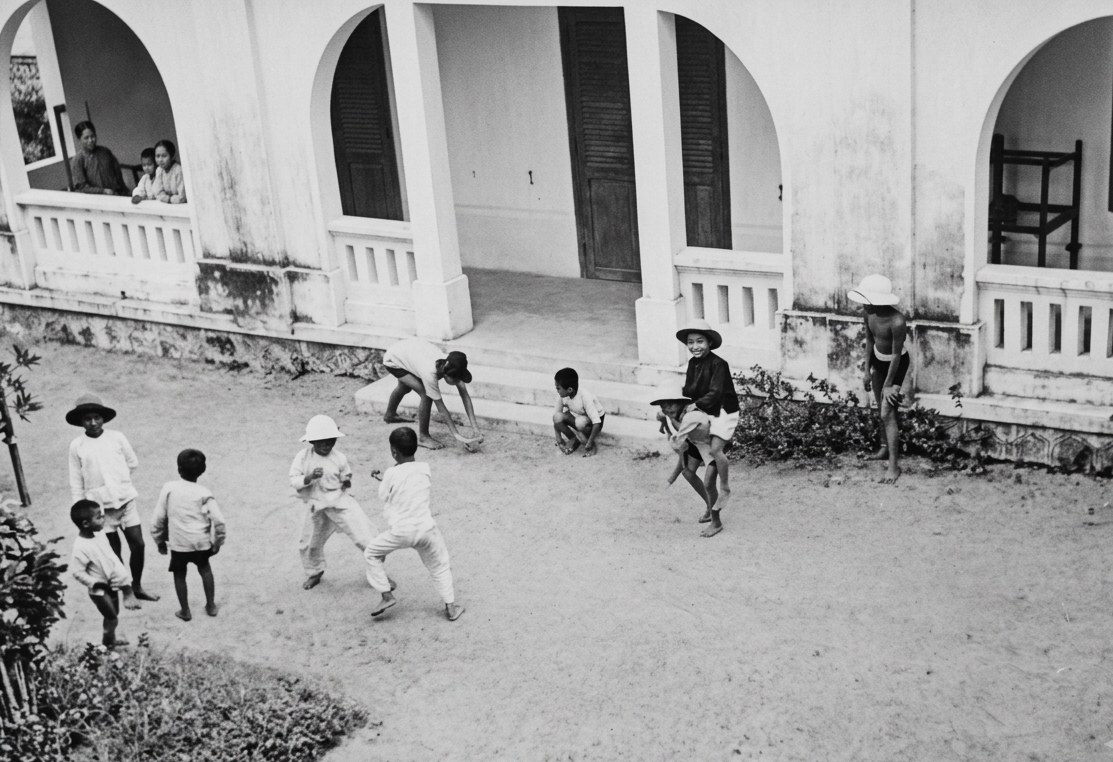 |
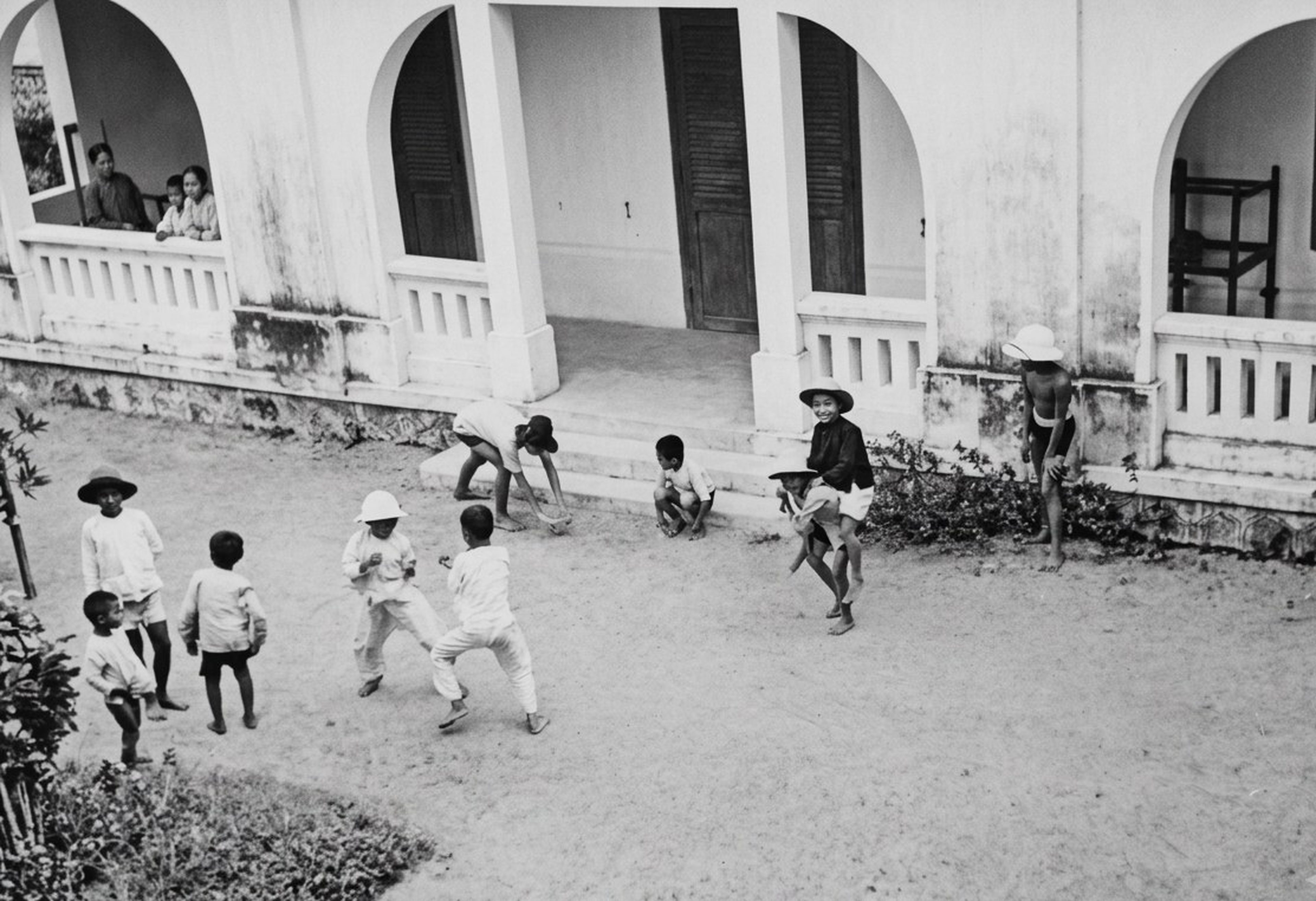
| Children playing on the grounds of Lau Ong Tu. Photo: Archive |
Lau Ong Tu, originally an abandoned military blockhouse, was bought by him and converted into a three-story house. Each floor had only one room: the ground floor served as a kitchen and dining room, the second floor as a bedroom, the third floor as a study, and at the very top was a dome where he housed a telescope, one of the instruments he used to observe and forecast the weather for the fishermen in the village. In 1939, he predicted a tsunami and a major storm, and sent someone to summon all the villagers of Xom Con to take shelter in his house; after a night of the storm ravaging and destroying their homes, the people were all safe. Lau Ong Tu was like a miraculous house emerging from legend to save the poor through hardship.
***
My friend is a doctor who, since childhood, has regarded A. Yersin as his lifelong idol. During our school days, he would often passionately tell stories about Dr. A. Yersin treating the poor of Xom Con without ever taking money. Everyone who fell ill went to Lau Ong Tu. He attentively checked their pulses, cleaned their wounds, and personally dispensed medicine. The poor people of Xom Con brought him fish and coconuts to express their gratitude. He never accepted money, but he gladly accepted gifts from the locals so they would not feel uneasy, and then found ways to give other gifts to their children. To the children of Xom Con, Lau Ong Tu was a "paradise." He often gave them sweets and books, encouraging them to learn to read and write. Despite his busy schedule, he still organized movie screenings for the children. The poor kids were thrilled to see moving images on the white cloth screen, cheering loudly in that house filled with benevolence. Lau Ong Tu was a “temple” of knowledge and benevolence rare in this world.
My friend recalled a memory from 40 years ago. In the summer of 1986, during a beach cleanup labor session, our group was assigned the stretch of beach from the Pasteur Institute to Lau Ong Tu. Someone had overheard somewhere that Lau Ong Tu still had a first-floor corner inside the Ministry of Interior's rest house (now the Ministry of Public Security's 378 Guest House), while someone else said that wasn't true at all. That sparked an unresolved argument, because everyone was just relying on hearsay, as none of us had ever been inside that rest house. Later, we learned that the white house had left no trace since 1975, but every time we passed the Nguyen Binh Khiem - Tran Phu street corner, we remembered the location of Lau Ong Tu, along with the stories about him. Therefore, now, each time we come here, we are not just having coffee, but feeling as though we are reconnecting with memories that live forever in the hearts of Nha Trang's people.
***
“When will Lau Ong Tu be rebuilt?” my friend asked. I replied: Two years ago (2024), the Khanh Hoa Provincial People's Committee approved the outline of the A. Yersin Museum Construction Project. Reading the full text of that approval decision, my friend was particularly fond of the emphasized passage: “In particular, emphasis must be placed on structures and heritage associated with the memories of the people of Nha Trang regarding Dr. A. Yersin in this land. Accordingly, the architecture of the building should replicate the model of the former “Lau Ong Tu” in Xom Con as the main exhibition area and the architectural highlight of the A. Yersin Museum, meeting the aspirations of all strata of Nha Trang's people regarding the restoration of Lau Ong Tu.” According to the plan, this museum will open by 2030.
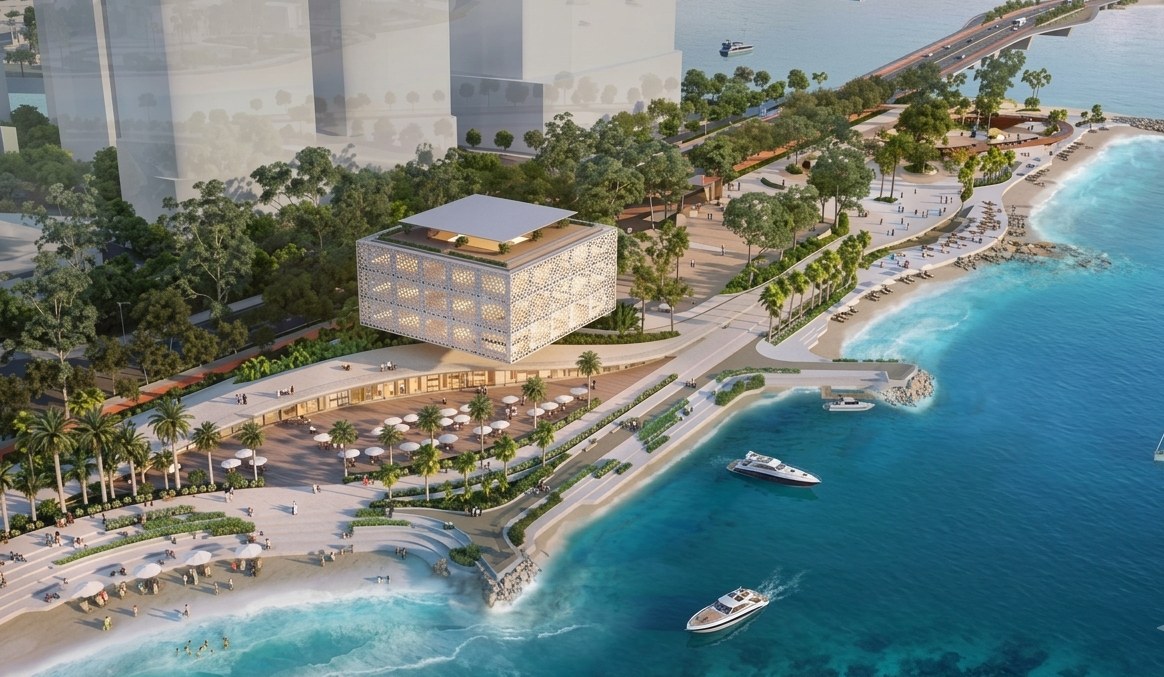 |
| Perspective model of the A. Yersin Museum at the former site of Lau Ong Tu. |
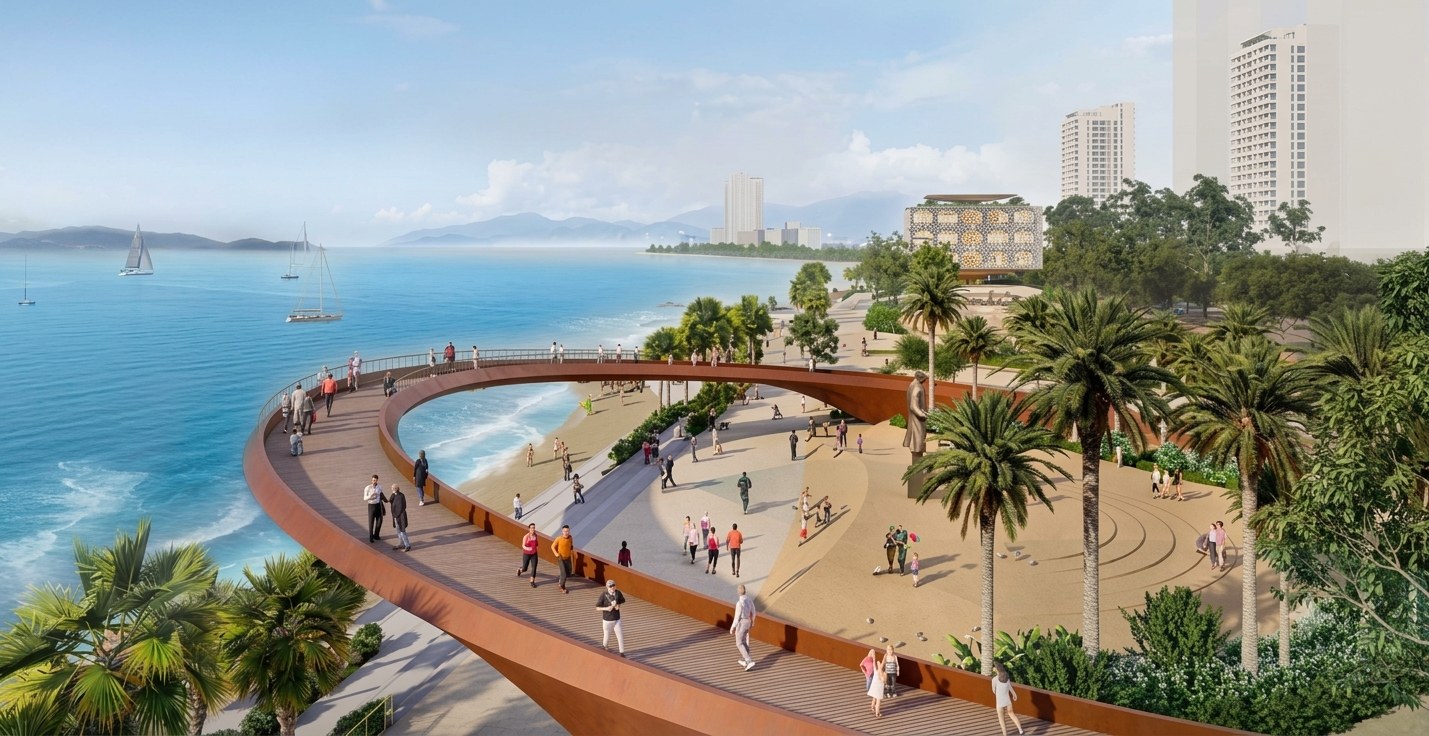 |
| Perspective model of the A. Yersin park-museum complex. |
At this point, I suddenly recalled meeting Mr. Daniel Minsen (75 years old), a grandnephew of Dr. A. Yersin, more than 10 years ago. He said: “Here, my grand-uncle is cherished more than anywhere else in the world. I was once very surprised to see the local people caring for his grave like that of their own family member. In their homes and in pagodas, people even worship him. Many legacies left by him are respectfully preserved. His name was chosen for a beautiful street in the city. Here, he lives on forever.” Therefore, I think restoring Lau Ong Tu is not only the aspiration of the people of Nha Trang, but also the wish of his family and admirers all over the world.
NGUYEN VINH XUONG

