


In the past, this locality was also known as Cat Nem village. At the beginning of the Nguyen Dynasty, it was part of An Luong commune, located in Ha canton, Quang Phuoc district, Binh Hoa prefecture. Cat Nem village was originally a wasteland where only wild weeds grew. Two predecessors, Nguyen Van Loc and Ngo Van Luong, arrived here and realized the terrain was suitable for fishing (the marine industry), so they built camps and houses. Gradually, the population gathered to settle down, and they formed the village.
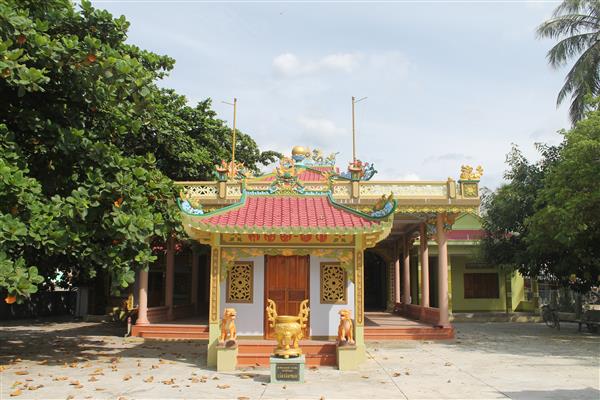
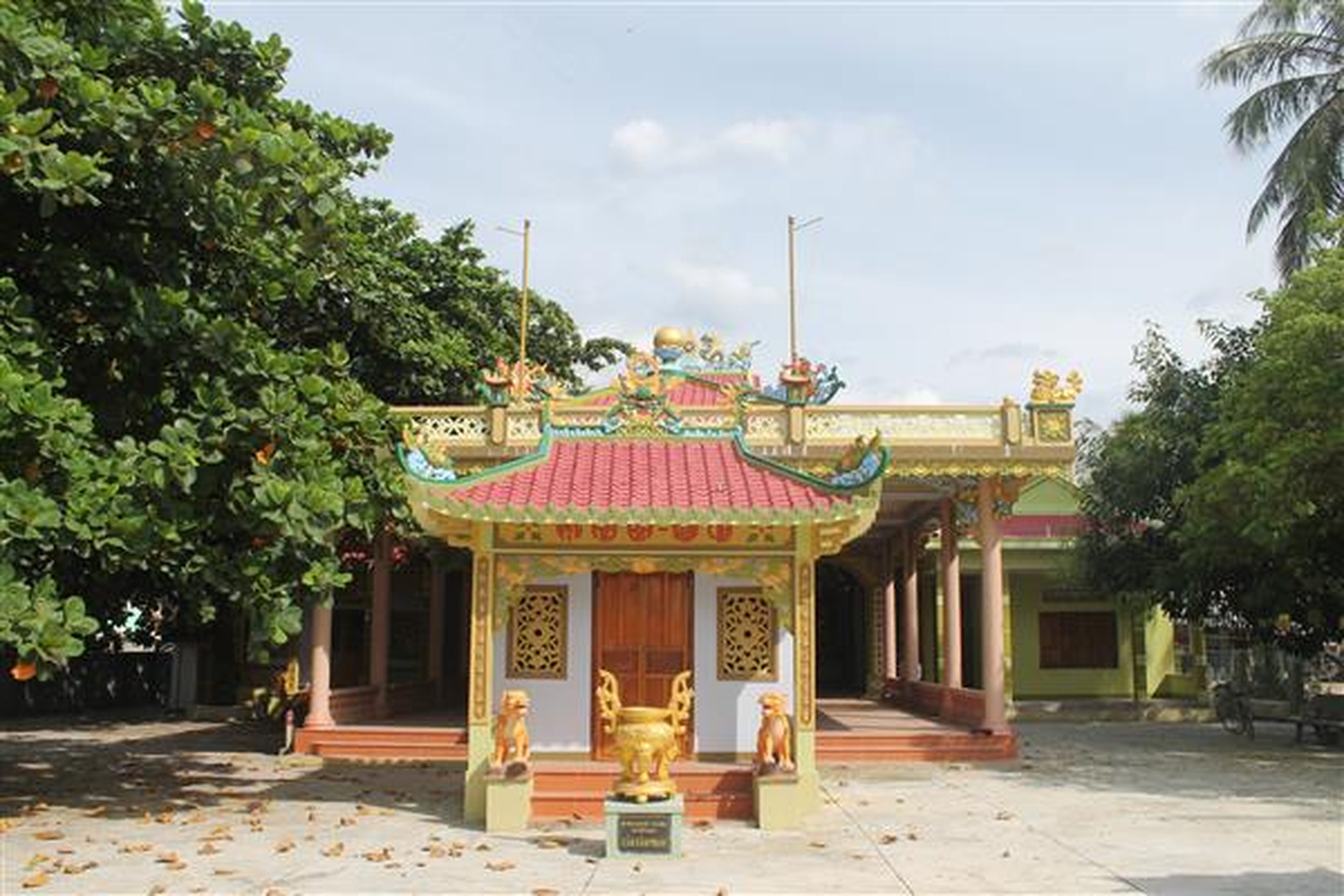
Luong Hai Mausoleum was built around the end of the 18th century by two individuals, Nguyen Van Loc (also known as Mr. Xu) and Ngo Van Luong, who were from Cat Nem village and mobilized the people to construct it. Initially, the mausoleum was made with a thatched roof and earthen walls, using locally sourced materials so the village could have a place to worship Ong Nam Hai (the Whale Deity) and pray for the peace of the villagers. The mausoleum was built using coral stone and lime mortar mixed with molasses, and it was roofed with yin-yang tiles, possessing the characteristic ancient appearance of the 'Ong' (Whale) mausoleum architecture in coastal villages.
 General layout of Luong Hai Mausoleum
Luong Hai Mausoleum is located on a spacious, flat campus with an area of 1500.1 m2, facing East. The mausoleum consists of several items and structures: the Ceremonial Gate, the Ha Ba (River Deity) and Son Lam (Mountain Deity) shrines, the screen wall, the performance stage, the front ceremonial hall, the main sanctuary, the east house, the Co Hon (Wandering Souls) shrine, and the Ong Nam Hai mausoleum.
On the Ceremonial Gate, there is a pair of parallel sentences in Han-Nom script praising the merits of Ong Nam Hai:
Transliteration: Nam Hai nghiem lang, cam ung giang lam phong ba cuu ho,
Tran duong linh mieu, trung than pho tri quoc thai dan an.
Translation: The Nam Hai mausoleum is solemn; through miraculous response, the deity descends to rescue from storms,
The sacred shrine guards the site; loyal subjects assist to ensure national peace and public prosperity.
 The council altar at Luong Hai Mausoleum
The main sanctuary consists of two parts: the outer porch and the inner worship area. The two corners of the porch have two altars for guardian deities. Inside the main sanctuary, there are five altars: in the center is the Council altar, and on either side of the Council altar are the altars for Nam Hai and Thuy Long Thuan Nu (Water Dragon Goddess); flanking the Nam Hai and Thuy Long altars are two altars for the predecessors, successors, and early and late virtuous founders.
 The main sanctuary architecture follows the traditional Vietnamese style
Main sanctuary architecture: designed according to the traditional architecture of the Vietnamese people. The load-bearing system consists of four main columns, each (25cm in diameter, 8.5m high); the two front columns are plain, while the two back columns are decorated with “dragons coiled around the column shafts”. The four columns connect to the system of trusses, beams, rafters, and laths, which, together with the walls, support the roof system.
In addition to the unique beauty of its architectural art, Luong Hai Mausoleum also preserves many valuable historical and cultural artifacts: three royal decrees granted by the Nguyen Dynasty kings, Han-Nom documents, the royal palanquin, ceremonial umbrellas, gongs, drums, wooden fish, rituals, worship ceremonies, orations, ritual music, costumes, and more. Notably, the traditional annual festival is held on the 16th day of the 2nd lunar month.
The three royal decrees of Luong Hai Mausoleum consist of:
+ Decree from the 5th year of Duy Tan (1911) conferring titles on the Tutelary Deity and the Nam Hai Great Clan Jade Whale Deity.
+ Decree from the 5th year of Duy Tan (1911) conferring titles on Thien Y A Na Dien Ngoc Phi.
+ Decree from the 2nd year of Khai Dinh (1917) conferring titles on the Water Dragon Goddess.
Luong Hai Mausoleum is one of the earliest 'Ong' mausoleums established in Khanh Hoa province in general and in the Van Ninh region in particular. The mausoleum was erected to worship Nam Hai, the Water Dragon Goddess, Ha Ba, Son Lam, and the early and late virtuous ancestors who founded the village and established the hamlet. Beyond its historical and cultural value in marking the formation of new residential areas in Cat Nem (modern-day Luong Hai), the most prominent feature of the relic is its architectural and artistic value, characterized by intricate decorative motifs that remain preserved in the local traditional style. Notably, the mausoleum also preserves a unique folk cultural practice known as 'Ho Ba Trao' (rowing chants). The 'Ho Ba Trao' at Luong Hai Mausoleum is considered to be among the most complete and original examples remaining in Khanh Hoa specifically and the South Central Coast region generally.
Luong Hai Mausoleum was ranked as a Provincial-level Relic by the People's Committee of Khanh Hoa province through Decision No. 1007/QD-UBND, dated November 22, 2007.
Nguyen Chi Khai