


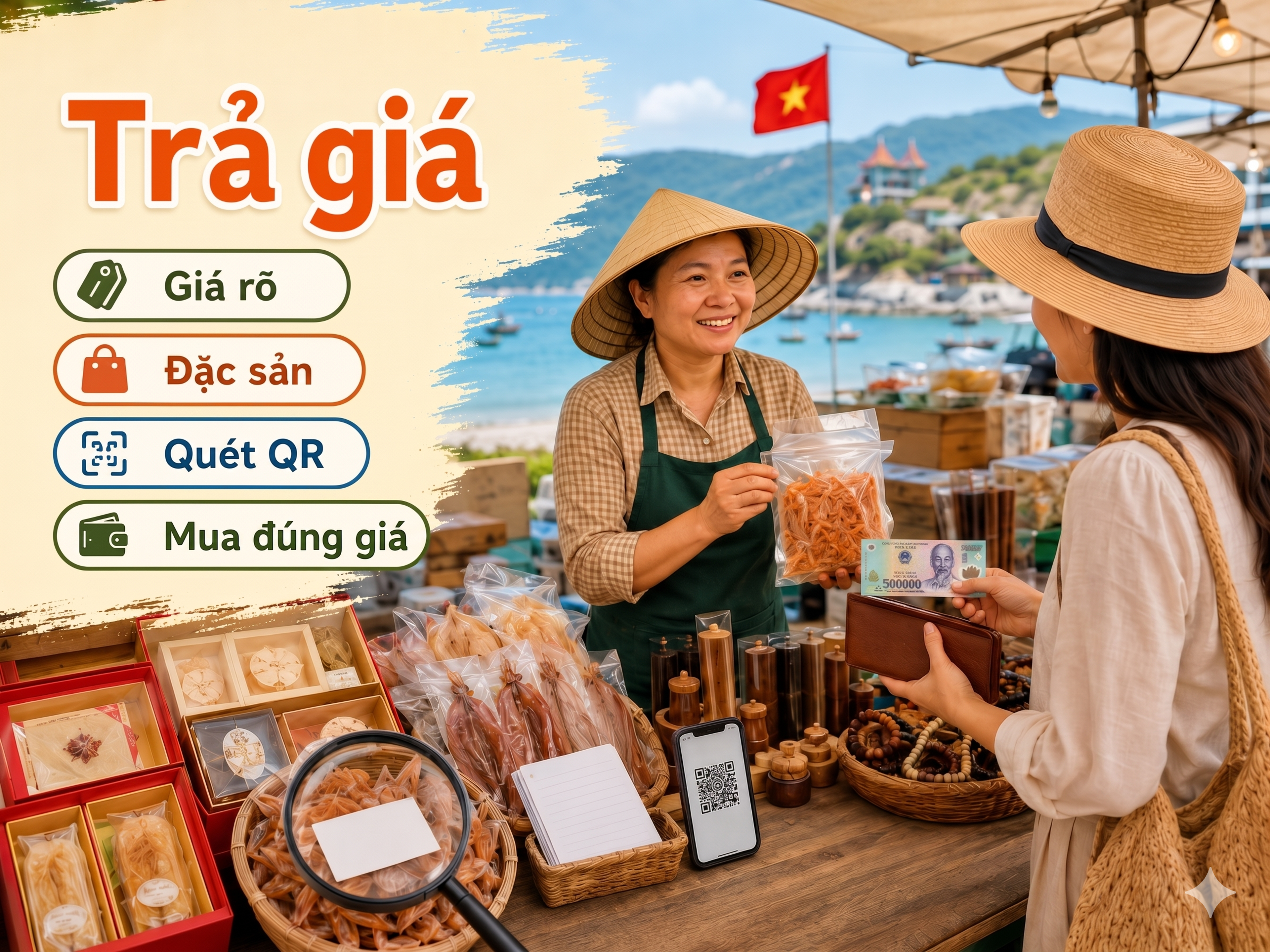
Traditional markets like Dam Market and Xom Moi Market in Nha Trang or Phan Rang Market always hold a special appeal due to the abundance of specialties ranging from one-sun-dried squid and bird's nest to local snacks. However, the fear of being "overcharged" often makes many tourists hesitant when stepping into stalls. Haggling at a tourist market is actually a cultural trait; if you know how to behave politely and with moderation, this not only helps protect your wallet but also turns the shopping trip into a pleasant conversation.
The art of scouting prices and practical observation
Before deciding to start haggling for an item, an experienced editor would never buy immediately at the first stall at the market entrance. Spend about 15-20 minutes walking around the central market area to survey the general price levels. Observe where the locals tend to shop, as those are usually places with a stable supply and more reasonable prices.
When asking for a price, change your approach. Instead of asking a confrontational question like, "Why is this so expensive, can you lower it?", start with a smile and a friendly greeting: "Ma'am, how much is this type of dried squid per kilo this morning?". Using appropriate pronouns (ma'am, auntie, sister) and a gentle tone will immediately create rapport, making the seller more open to offering a good price.
Principles of civilized bargaining and respecting local customs
Once you have grasped the floor price, you can proactively suggest your desired price, usually 10% to 15% lower than the merchant's initial asking price for dried goods or souvenirs. However, strictly avoid lowballing (reducing the price by half or one-third) as this may be seen as disrespectful to the seller's labor.
A crucial superstitious note in the trading culture of Central Vietnam is the concept of "opening the shop." If you go to the market early in the morning (from 6:00 AM to 8:00 AM), when stalls have just opened, refrain from bargaining too aggressively or asking for a price and then walking away without buying anything. Traders strongly avoid this because they believe it brings bad luck for the entire day. If you only want to look around and check prices, choose to visit the market around noon or late afternoon, when business has already been steady; vendors will be more easy-going and comfortable giving you a discount.
Quick Checklist:
-
Walk through at least 2-3 stalls inside the market to survey prices before deciding to stop and buy.
-
Maintain a cheerful, open attitude and use polite language when negotiating prices with vendors.
-
Avoid excessive bargaining for fresh food items or low-value goods.
-
Refrain from haggling and walking away during the early morning hours when the store has just opened.
-
Once the agreed price is reached, happily pay, without hesitation or asking for further discounts.