



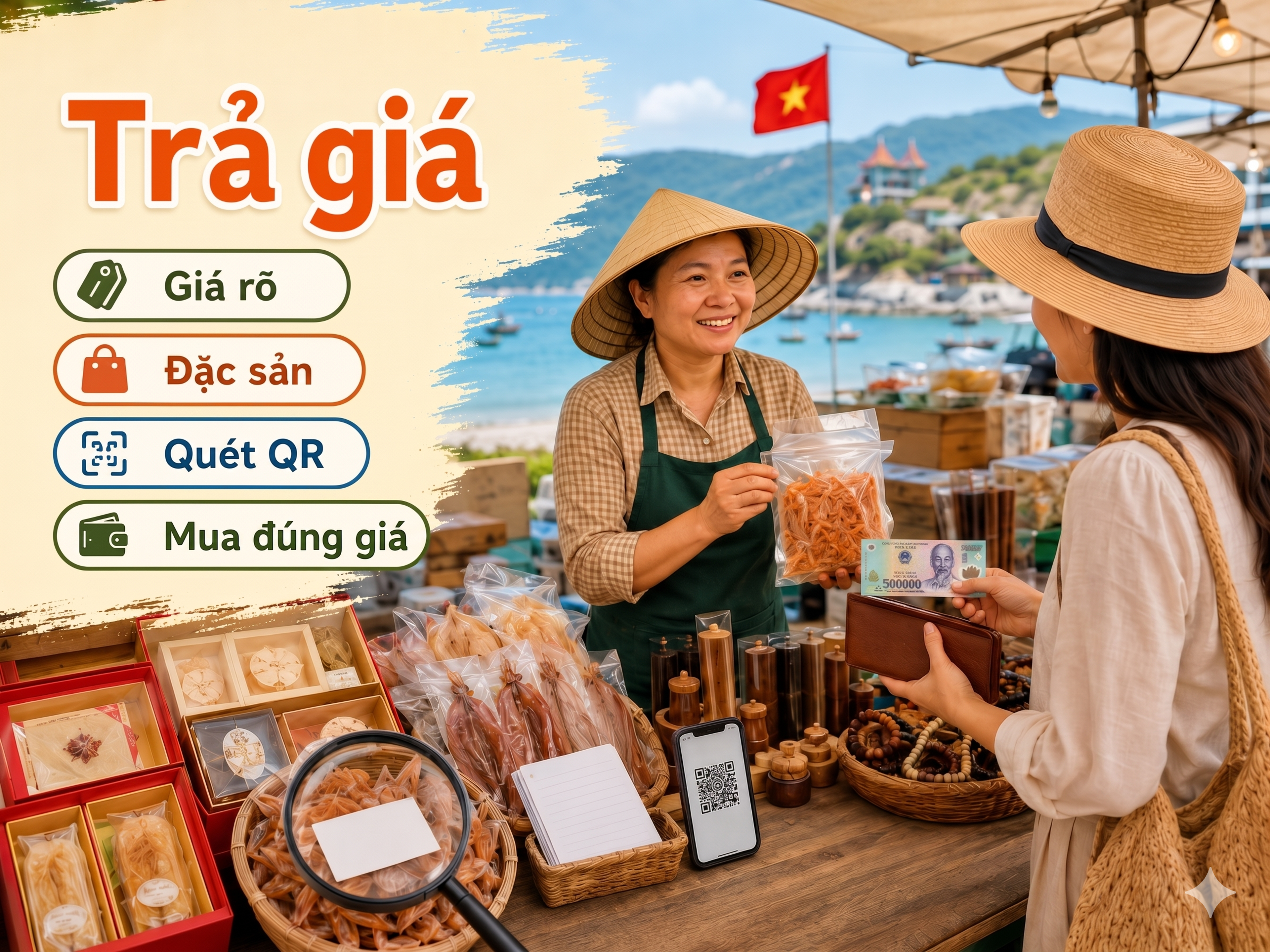
Traditional markets such as Dam Market, Xom Moi Market in Nha Trang, or Phan Rang Market always hold a special appeal thanks to their rich variety of local specialties, from sun-dried squid and bird's nests to regional delicacies and pastries. However, the fear of being overcharged often makes many travelers hesitant when approaching the stalls. Bargaining at tourist markets is actually an integral part of the local culture; if you know how to negotiate politely and moderately, it will not only protect your wallet but also turn your shopping trip into an enjoyable conversation.
The art of checking prices and practical observation
Before deciding to negotiate the price of an item, an experienced shopper will never make an immediate purchase at the very first stall near the market entrance. Spend about 15-20 minutes strolling around the central area of the market to survey the general price range. Observe which stalls local residents frequently gather to buy from, as these are typically the spots with reliable sources of goods and more reasonable prices.
When asking for prices, be mindful of your wording and approach. Instead of asking a confrontational question like: "Why is this so expensive? Can you lower the price?", start with a warm smile and a friendly greeting: "Auntie, how much is this dried squid per kilo this morning?". Using respectful forms of address and a gentle tone will immediately create goodwill, encouraging the seller to be more open to offering you a fair price.
Principles of civilized bargaining and respecting local customs
Once you have an idea of the baseline price, you can proactively propose your desired figure—usually about 10% to 15% lower than the merchant's initial quoted price for dried goods or souvenirs. However, strictly avoid bargaining too aggressively (such as asking for half or one-third off), as this may be perceived as disrespectful toward the vendor's hard work.
An essential cultural and spiritual nuance in Central Vietnam's commerce is the concept of "mở hàng" (the first transaction of the day). If you visit the market early in the morning (between 6:00 AM and 8:00 AM) when stalls are just setting up, refrain from bargaining harshly or inquiring extensively only to walk away without buying anything. Vendors strongly frown upon this practice, believing it brings bad luck for the entire day's trade. If you only wish to sightsee and survey prices, opt to visit around midday or late afternoon when business is already well underway; merchants will be much more easygoing and generous with discounts.
Quick checklist:
-
Browse at least 2-3 stalls inside the market to survey prices before deciding where to purchase.
-
Maintain a pleasant, open attitude and use polite language when negotiating prices with merchants.
-
Avoid bargaining too steeply for fresh produce or low-value items.
-
Refrain from bargaining and leaving during early morning hours when shops have just opened for their first sale.
-
Once a price has been mutually agreed upon, gladly pay without hesitating or attempting to ask for further discounts.