


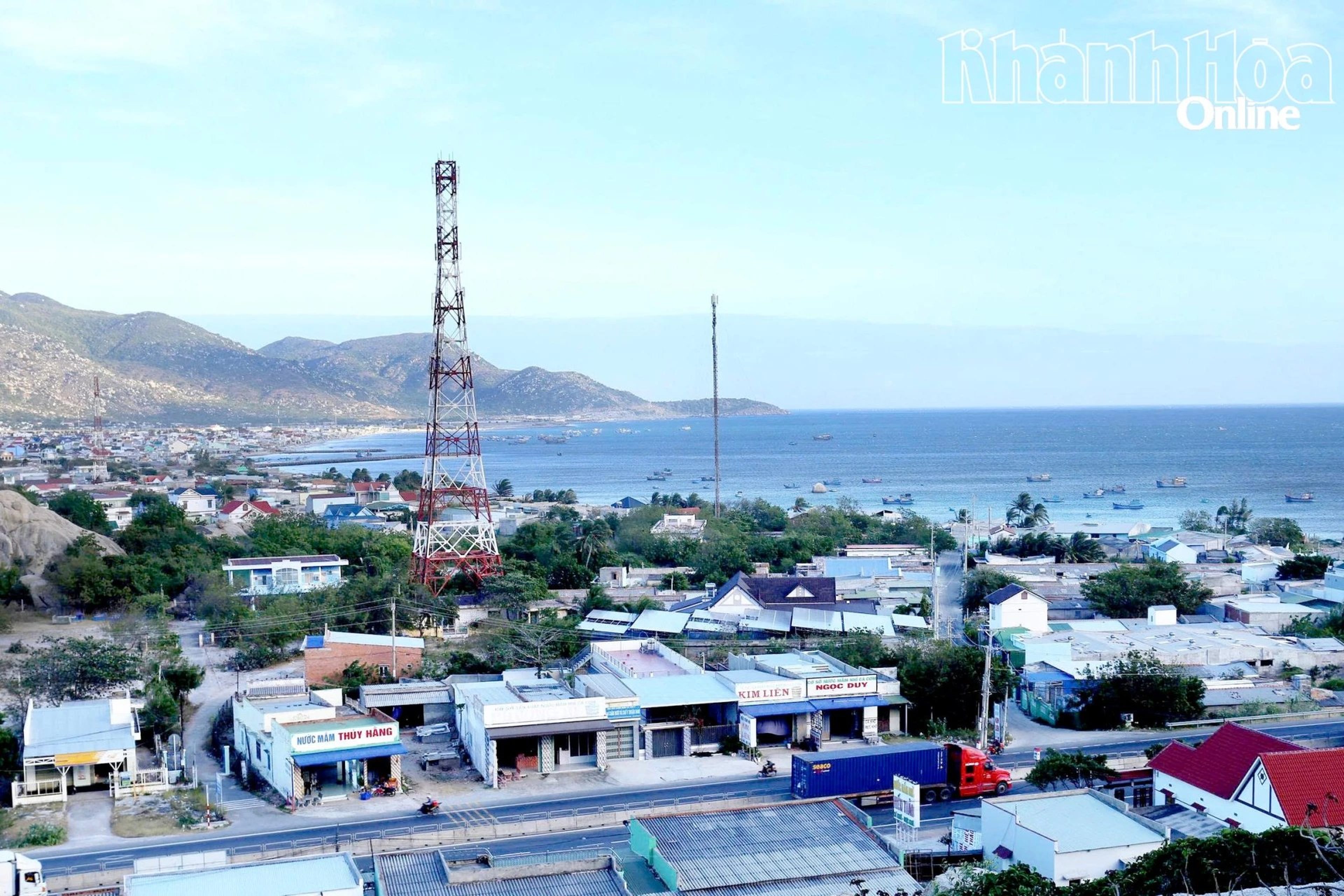

I do not know since when, but every time I pass through Ca Na, I find myself longing for the sound of a train whistle between the mountains and the sea. On some trips, I am fortunate enough to catch it; on others, I have to leave with a bit of regret. Just like that, the route at the southern gateway of Khanh Hoa has become part of my memories, tied to journeys far away, homecomings, and changes over the years.
Waiting for a train whistle
I cannot remember how many times I have passed through Ca Na. Having been attached to the former land of Ninh Thuan for nearly 20 years, that route has become deeply familiar to me. Sometimes it was a hurried reporting trip, sometimes a business trip out of the province, and at other times, long journeys followed by a return home. I always look forward to the stretch of National Highway 1 curving along the sea. Passing rocky mountain slopes, the blue of the sea suddenly opens up before my eyes. With mountains on one side and waves on the other, the road winds along the rocky slopes. Just catching sight of that curve, I know I have arrived in Ca Na.
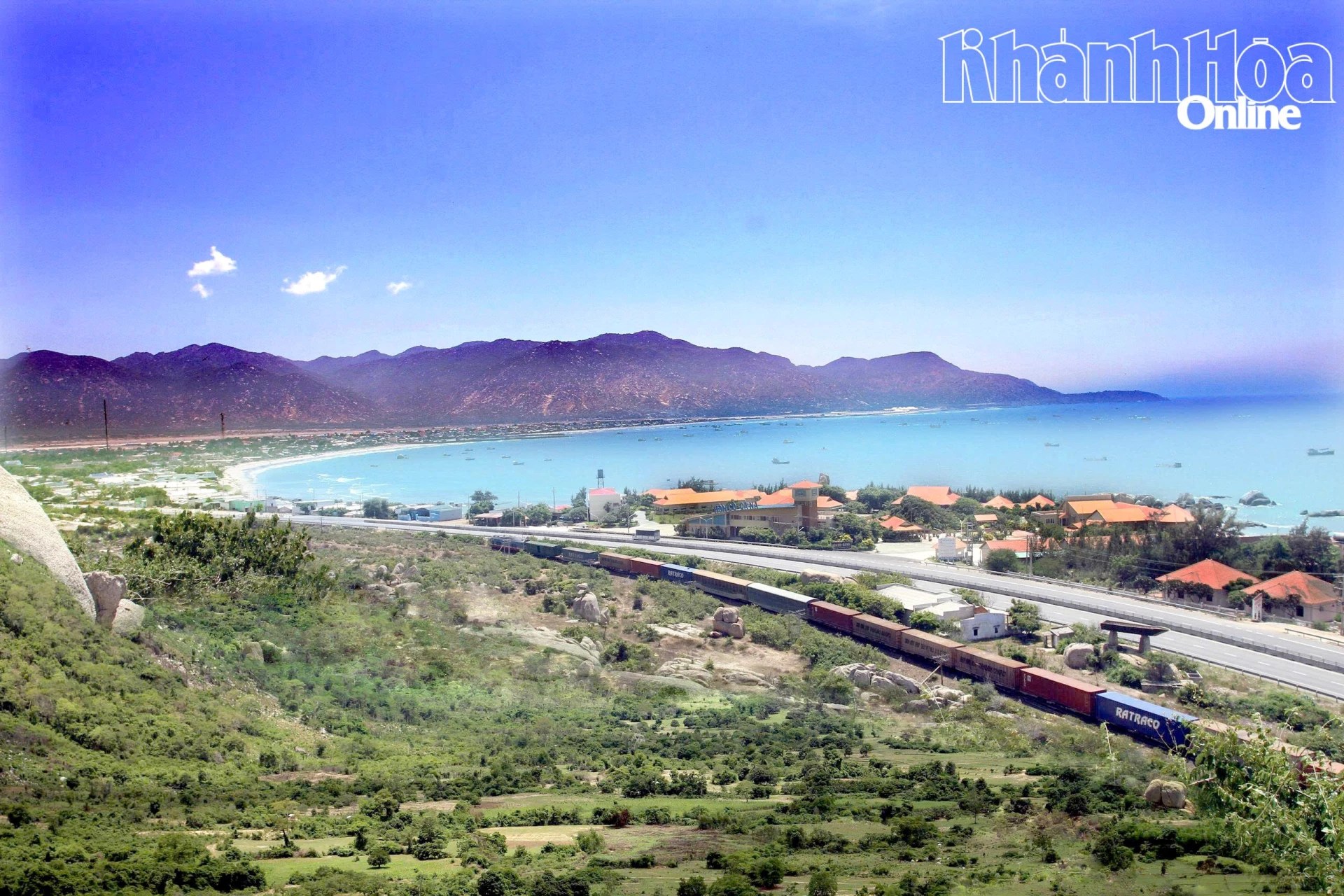 |
| The unique Ca Na route with road and railway winding along the blue sea, where trains traveling back and forth create an unforgettable impression. Photo: VAN MIEN |
Traveling it often made it familiar, yet strangely, I have never felt bored. Still the same rocky mountain ranges, continuous curves, and the blue sea stretching alongside National Highway 1. Yet every time I pass by, I still gaze through the window, as if waiting for something.
What I love most is catching sight of a train. From the mountainside, a whistle echoes. Then the locomotive appears, pulling carriages trailing one after another around the bend. At some stretches, the train runs almost parallel to the stream of traffic on National Highway 1. I often watch it until the last carriage disappears behind the mountain slope. It is just a fleeting moment, but enough to make the journey all the more delightful.
Not every trip is lucky enough to meet a train. On some journeys, I keep watch along the entire stretch, yet the tracks remain quiet. On others, just as I reach the curve, I see the train passing by, feeling as joyful as running into an acquaintance on a long road. Whether on the way to an assignment or returning after days away, that joy remains intact.
Many times, watching the train pass by, I wonder if the people in those carriages are also admiring Ca Na as I do. Is anyone else waiting for this stretch to look out at the sea, to watch the lines of vehicles trailing beneath the foot of the mountain? Train passengers look down at the road, while travelers on the road look up at the train. Fleeting encounters, where no one knows anyone, yet perhaps all carry away a fond impression of that coastal stretch.
Cà Ná also has something truly unique that frequent travelers find hard to forget: the scent of the sea. It is not just the saltiness of the wind, but also the rich, pungent aroma of fish sauce, fish, and salt mingling together. Along certain stretches, just rolling down the car window lets you catch it instantly. That scent is so familiar that every time I pass through, I feel something is missing if I do not encounter it.
Behind the coastal roofs lies the life of generations of residents tied to fishing, fish sauce making, anchovy steaming, and salt farming. Sun-drenched drying yards, fermentation vats, and sprawling white salt pans have shaped the distinctive flavor of this land. In the past, I often lost myself in gazing at the sea and watching for trains. Later on, through reporting trips, learning more about the hardships behind every offshore voyage, every catch of fish, and every grain of salt, I grew to love this land even more.
On some trips, work sweeps me away with appointments, conversations, and unfinished notes. Yet as soon as the car reaches Cà Ná, I want to set those busy thoughts aside just to gaze at the sea a little longer. It seems this route always reserves for me a quiet pause amidst bustling journeys.
Where roads meet the sea
In recent years, every time I pass through Cà Ná, I notice more changes across this familiar coastal area. Alongside nearshore fishing boats, large cargo ships now come and go at the Cà Ná General Seaport. Colossal hulls, the wharf area, and facilities serving freight transport have brought a new look to a land long tied to the sea.
Looking down from elevated stretches of the road, Cà Ná reveals a truly special topography. National Highway 1 hugs the foot of the mountain, the North–South railway winds along the rocky slopes, and farther out lies the port waters with cargo vessels. At times, a train rumbles past, vehicles stream back and forth on the road below, and cargo ships anchor offshore. Three modes of transportation coexist within a single space between mountains and the sea, creating a rare and distinctive feature of this route.
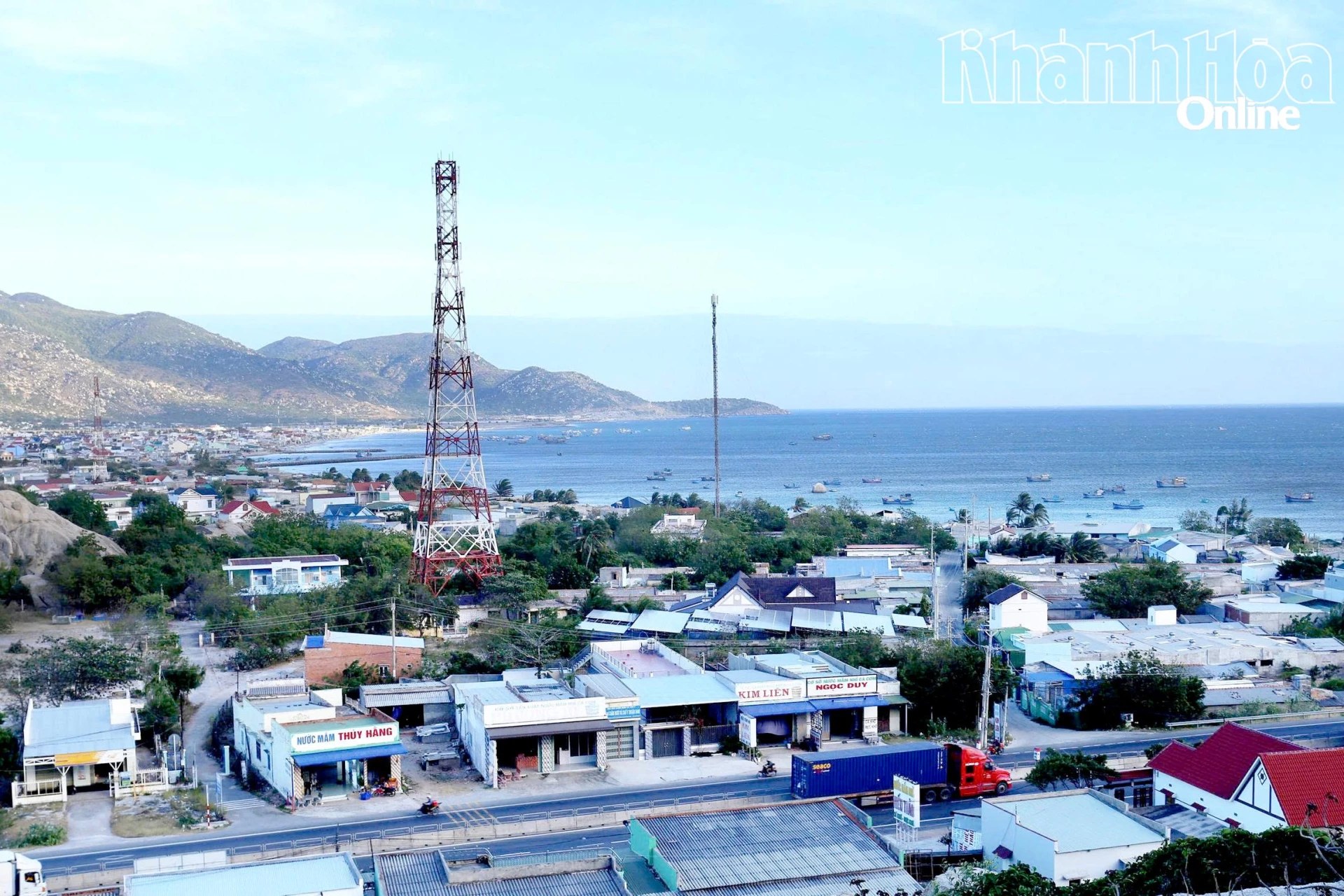 |
| Coastal roofs and traditional fish sauce making create the rustic charm of the Cà Ná coastal region. Photo: VĂN MIÊN |
While in the past my eyes were often drawn only toward the railway tracks, now they are also captivated by the large ships offshore. On one side are the trains that have been attached to this route for generations; on the other are shipping voyages opening up alongside the seaport's development. Between these two rhythms of movement, National Highway 1 carries streams of travelers back and forth day and night. Cà Ná is not just where roads meet, but also where one can clearly witness the continuity between familiar heritage and unfolding changes.
Along with seaport operations, transport routes connecting the North–South Expressway and National Highway 1 to the Cà Ná General Seaport are receiving investment, gradually facilitating freight transport, industrial growth, and services.
Looking at the transforming land at the southern gateway of the province, I find myself thinking back to the years gone by. Journeys through countryside villages, mountains, and coastal areas, along with encounters through work, have made this place a part of my life. Perhaps, when we are young, we are often eager for new things. The more one travels and experiences, the more easily one is touched by what is familiar. Today's Cà Ná has seen new construction projects, large ships, and new rhythms of life. As for me, after so many journeys, I still hold onto that simple joy whenever I catch sight of a train running across the mountainside.
The car continued to roll on. Past all the bends, the sea gradually faded behind us, and the railway tracks disappeared into the rocky slopes. Journeys will surely continue—perhaps a new reporting assignment, a trip far away, or a journey back. And I know that the next time I pass through Cà Ná, I will still gaze toward the railway, looking out for a train. I will still want to roll down the window to listen to the sea breeze, to catch that salty scent of fish sauce that has become so familiar throughout the years attached to this land. There are places where one was not born, but staying long enough makes them a cherished land of fond memories...
XUAN NGUYEN

