



Hon Ro often wakes travelers with the rawest and most powerful sounds of a busy seaport. From around three or four in the morning, while the tourist city of Nha Trang is still deep in a late sleep, this place is already vibrant with the crisp roar of boat engines, the clattering of cold ice blocks, the hurried footsteps of traders, and the distinct salty scent of seafood just brought in from the open sea. However, if you only perceive Hon Ro as a noisy wholesale fish market, you have inadvertently missed a much deeper and quieter layer of space lying right next door: the spiritual life of the fishing village residents throughout the generations.
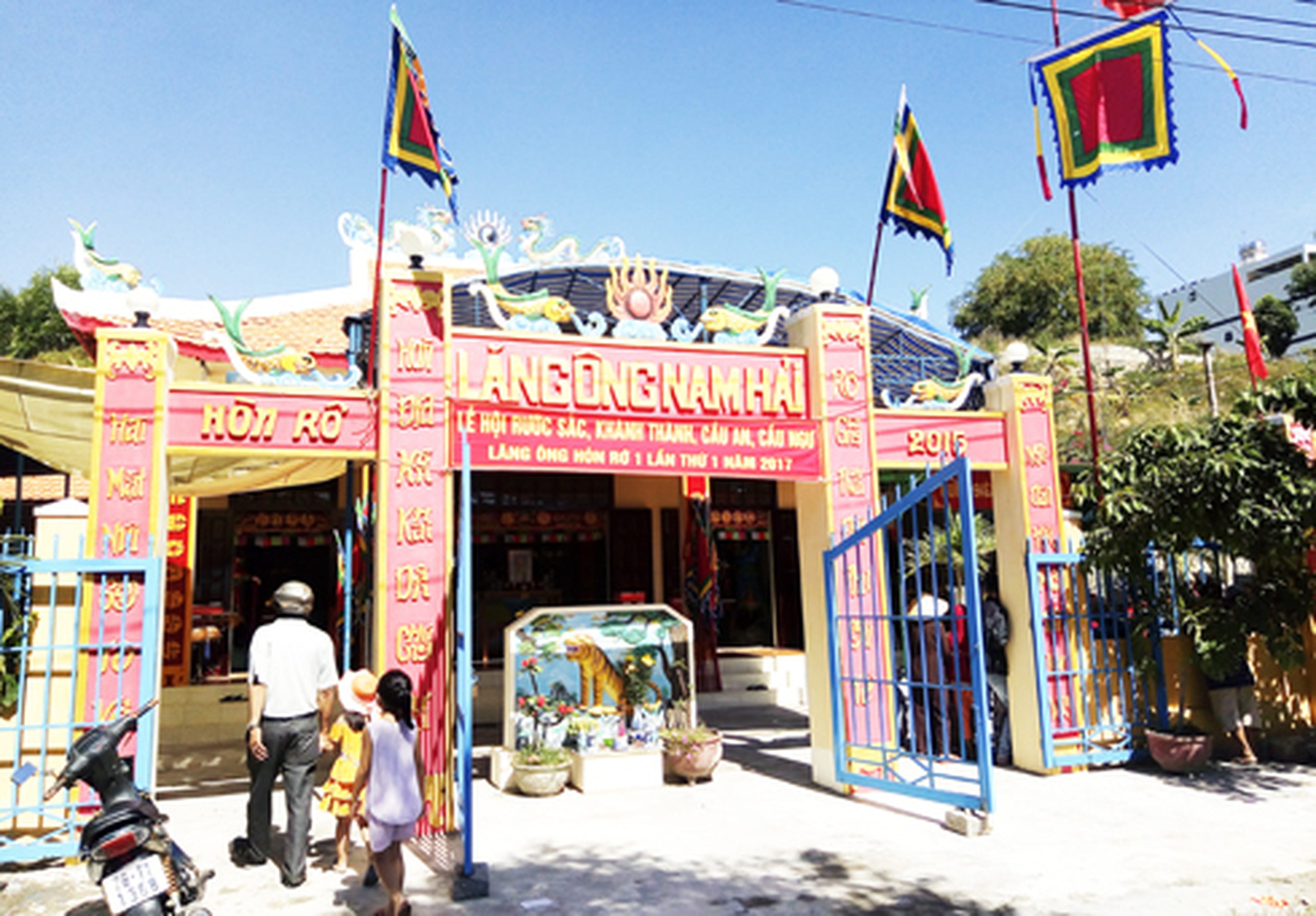
The Hon Ro Ong Temple is a stop that, while small in architectural scale, carries immense spiritual weight in the lineage of the 'Ca Ong' (whale) worshiping tradition in Khanh Hoa. For the local fishing community, building and inaugurating a separate, dignified place of worship after years of longing is a significant milestone. It is not merely about erecting a tiled-roof structure, but about anchoring a place to return to—a shared spiritual refuge for hundreds of families making their living at sea. For a traveler visiting from afar, the Ong Temple is not a place to 'sightsee to see what is strange to photograph.' This is a place you should enter with solemnity and deep empathy, especially after having had the chance to witness the grueling labor of the seafarers since daybreak.
Ca Ong — The guardian deity amidst the treacherous waves
In the folk consciousness of coastal residents from the Central region to the South, Ca Ong (the whale) is not a common marine animal. He is revered as a guardian deity of the sea, a protective god who always shields and rescues ships in distress during storms and brings luck and favor to long sea voyages. Therefore, the temple dedicated to Ca Ong in every fishing village is not just a pure religious architectural work; it is like a communal house for the whole village, a place that preserves memories of sea voyages, expresses deep gratitude to nature, and entrusts hopes for peace for the future.
At the Hon Ro port area, which has one of the highest densities of offshore fishing vessels in Khanh Hoa province, the significance of this belief becomes more apparent and vivid than ever. The sea provides a livelihood and nurtures countless generations, but it also always holds unpredictable dangers that human strength and modern technology sometimes cannot foresee. A fishing trip lasting an entire month depends on many factors: from the stability of the machinery and the experience of the crew to the erratic fluctuations of stormy weather. Standing before the tranquil shrine of the Ong Temple, you will realize that the spiritual belief here is not something distant or abstract found in books. It is born and nurtured from the very fragility of human existence before the vast nature, and it is a place where those on shore entrust their longing for their loved ones to return from the sea safely and soundly.
A guide for visitors to pay their respects at Ong Temple properly
To have the deepest and most complete experience at Hon Ro Ong Temple, you should establish a connected itinerary. Start your morning from around 4:30 AM at Hon Ro fishing port to fully observe the raw yet vibrant struggle for survival of the local people. Watch the sweat dripping down the cheeks of the workers under the early lights and listen to the bustling bargaining of the market session. Then, when the sun is high and the buying and selling activity at the port begins to wane and give way to silence, that is the most appropriate time for you to walk over to visit the Ong Temple.
Checklist for visiting Hon Ro Ong Temple:
-
Wear modest clothing (shirts with sleeves, pants or skirts covering the knees).
-
Wear flat shoes or sandals that are easy to remove when entering the shrine.
-
Bring a small bottle of water and be mindful of keeping the area clean.
-
Prepare yourself to move quietly, speak softly, and limit the use of camera flashes.
The spatial transition from a noisy fish market to a quiet temple, faint with the scent of incense, will create a very special emotional stillness. You will understand the two opposing but tightly intertwined aspects of fishing village life: the grueling manual labor on the outside and the peaceful spiritual world on the inside. If the temple is open and you are not arriving during the village's internal ritual hours, you can leisurely stroll around the small courtyard, observing the carvings of water waves and dragon-cloud motifs on the mossy tiled roof.
The art of capturing images in a sacred space
Hon Ro Ong Temple is not a typical check-in spot for photography according to standard tourism mindsets. Taking photos here requires the photographer to have subtlety and a clear sense of boundaries. You should prioritize capturing shots that provide a general perspective of the exterior space: the structure of the three-entrance gate (tam quan) facing the sea, the yellow-painted walls stained with time, or the airy temple courtyard drying the solemn ceremonial flags.
Absolutely avoid pointing your lens too closely at the altars inside the main shrine without permission from the temple keeper. When you see local people standing and praying for peace, the supreme rule of politeness is not to stand in front of them, not to make loud noises with your camera shutter, and ideally, to point your lens elsewhere. Do not turn the residents' space of faith into a backdrop for your personal photos.
The harmonious combination of the powerful pace of the fishing port and the tranquil space of the Ong Temple is what makes Hon Ro complete and memorable in the hearts of travelers. This article in the Spirituality category will help readers realize that spiritual tourism in Nha Trang is not limited to large pagodas or famous ancient tower ruins; it lies right within the modest fishing village temples, right next to the baskets of fresh fish that have just docked, where faith and the struggle for life merge into a single entity.