




Po Klong Garai Tower (Do Vinh Ward) is familiar to many tourists through the prominent red brick towers on Trau Hill. But stepping through the small doorway of the main tower, visitors will make novel discoveries, as this place preserves the worship statue of King Po Klong Garai, a national treasure closely associated with the religious life of the Cham community. Arriving right in the Kate festival season, the story behind that treasure becomes even more vivid.
A treasure inside the ancient tower
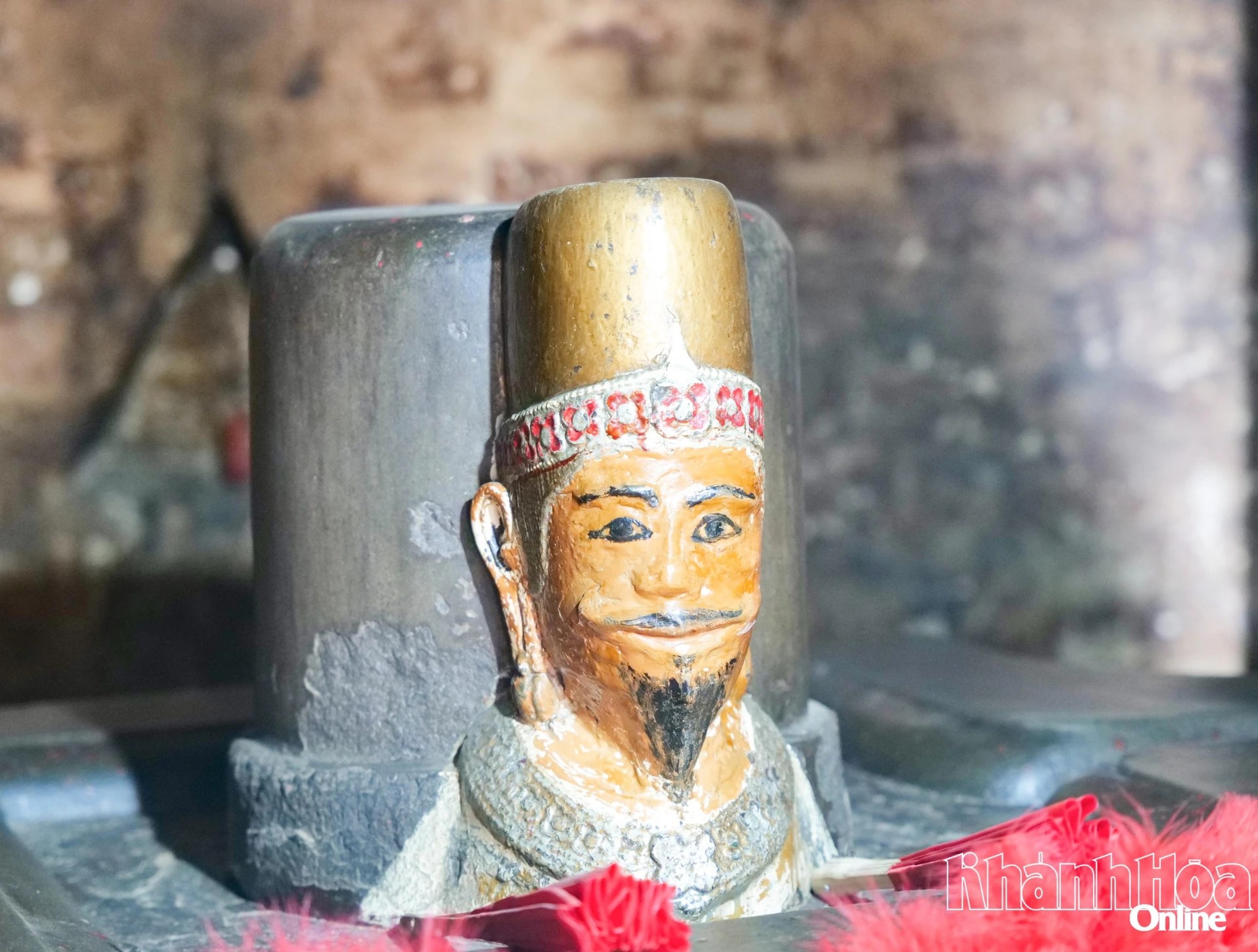
Coming to Po Klong Garai, people are often captivated by the towering silhouette of the towers, the patches of brick weathered by time, or the wide courtyard overlooking the land below. But visitors should spend a few more minutes stepping into the main tower. Stepping out of the sunlight and through the small doorway, the light softens, and the atmosphere grows tranquil. Right before your eyes is the worship statue of King Po Klong Garai, recognized as a national treasure by the Prime Minister in 2024. The statue is made of sandstone, sculpted upon a Linga - Yoni icon. The main body is a Linga 40cm high and 30cm in diameter; below is a Yoni pedestal 24cm high, 94cm wide, and 147cm long. On the Linga, the head is carved in relief, depicting the image of God-King Po Klong Garai. According to records on Cham cultural heritage, the statue dates back to around the 16th - 17th centuries.
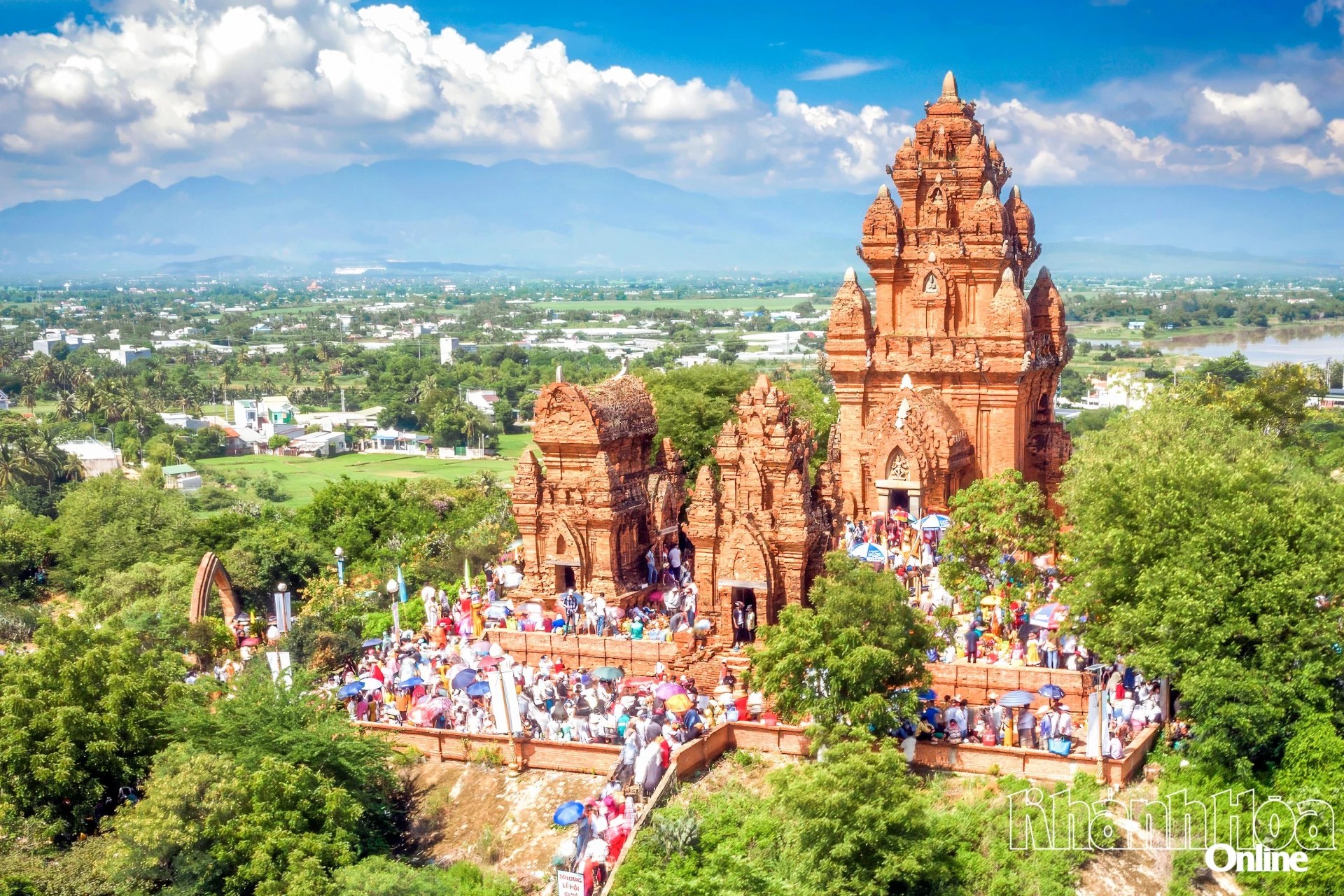 |
| Panoramic view of Po Klong Garai Tower during the Kate festival. |
 |
| Po Klong Garai Tower is the venue for many activities of the Kate Festival. |
That style of sculpting embodies multiple cultural layers. The Linga - Yoni bears the imprint of Hindu beliefs; the image of King Po Klong Garai is linked to a monarch revered, deified, and worshipped by the Cham community across generations. Most notably, this national treasure is still preserved right at the place of worship of King Po Klong Garai, within the sacred religious space to which the Cham community still returns on important festive occasions. To truly feel that bond, Kate is a special rendezvous.
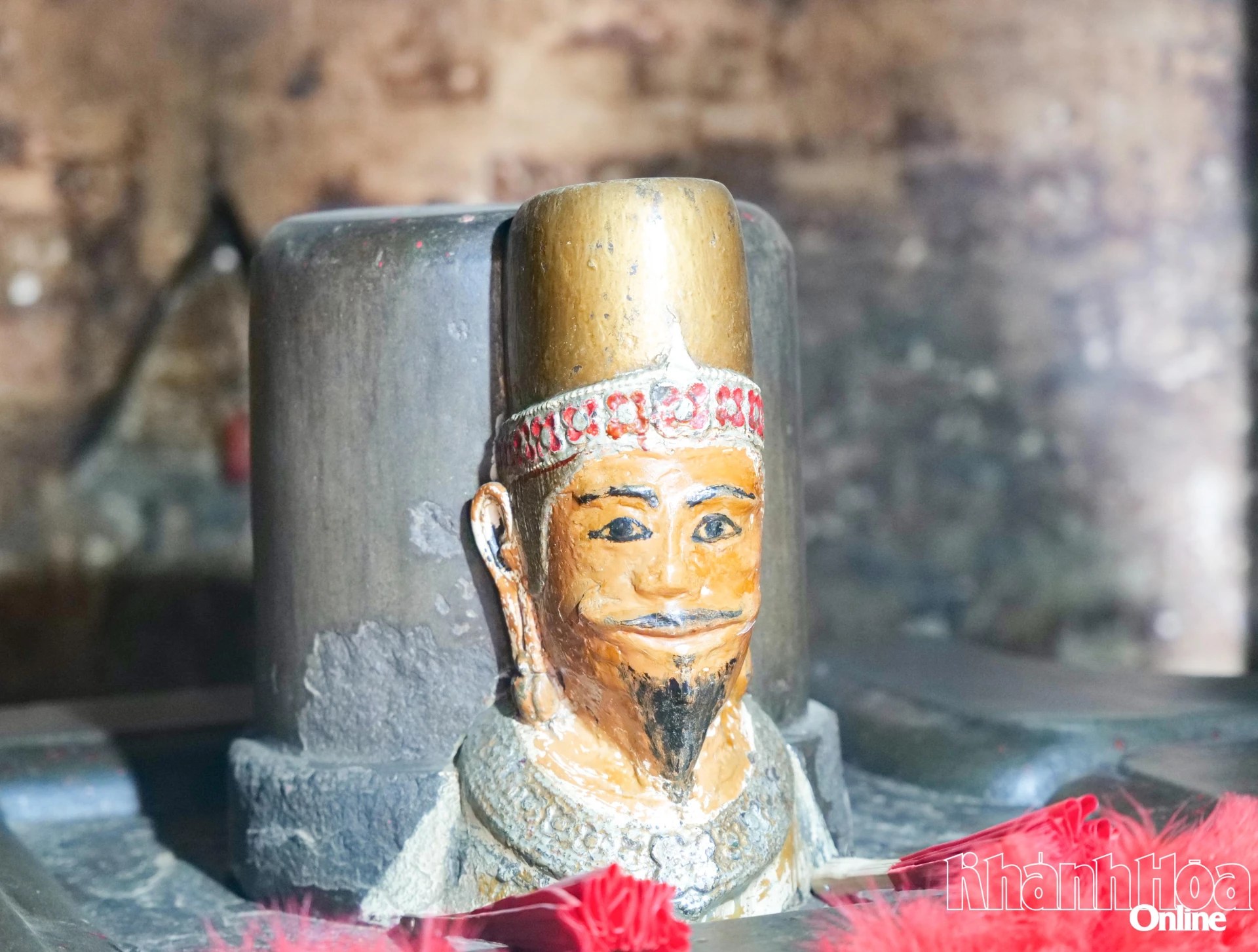 |
| Statue of God-King Po Klong Garai in the main tower. |
Following the rituals to understand more about the treasure
On the day of Kate, Po Klong Garai Tower is bustling with the sounds of Ginang drums, Saranai horns, and the vibrant colors of Cham traditional costumes. Crowds follow the procession carrying the royal garments up to the tower. Inside the main tower, important rituals associated with the worship statue of King Po Klong Garai take place one after another.
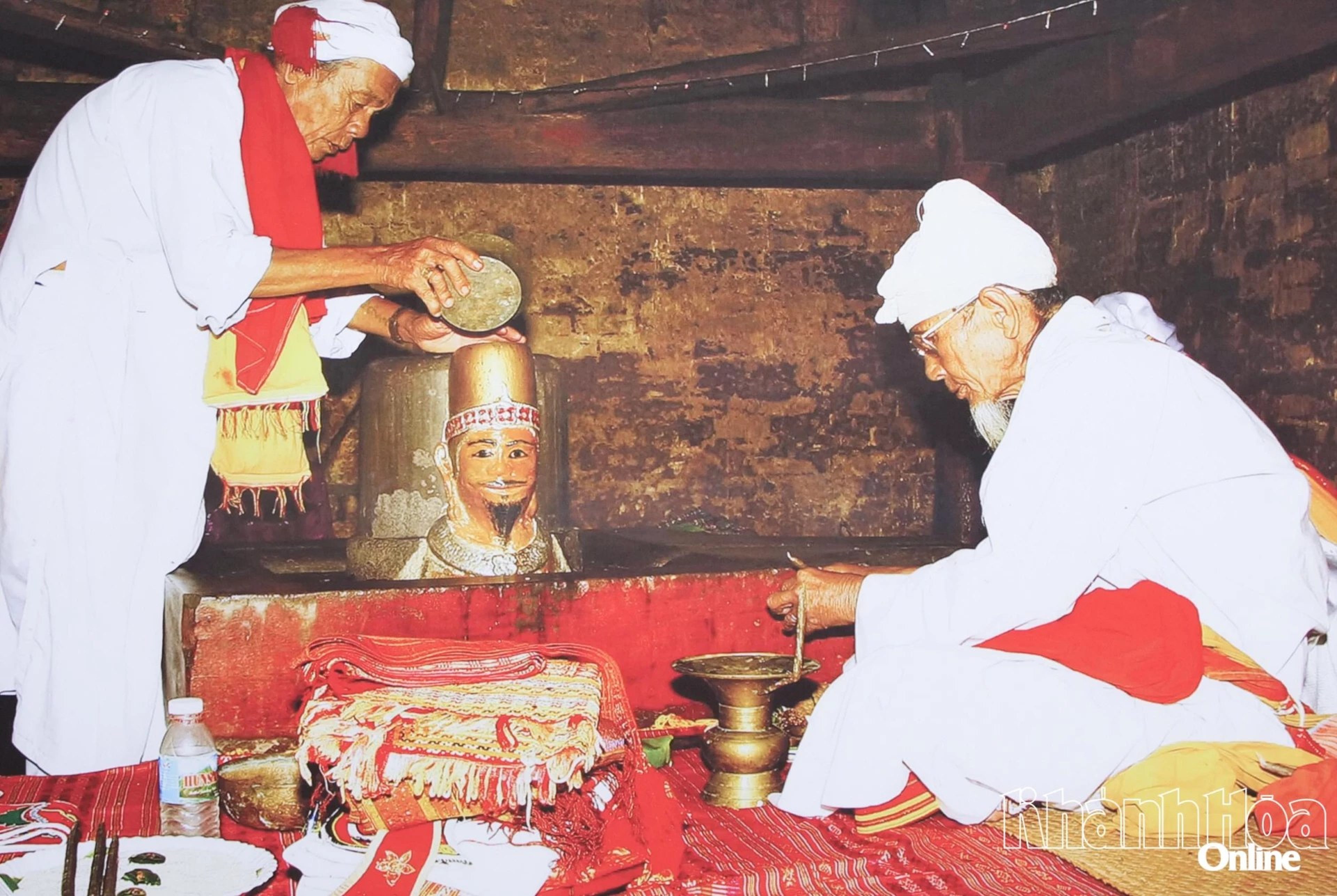
Following the tower door opening ceremony is the bathing ritual of the deity statue. Dignitaries perform the rites around the statue; the Po Adhia conducts the sacrificial ceremony, the Pajau pours wine offerings, and the Kadhar plays the rabap and sings sacred hymns. According to the ritual hymns, water is offered to bathe the statue. A detail few visitors know is that after the ritual, attending devotees collect water from the statue's body to apply to their heads and bodies, praying for health, prosperity, and good luck. Next is the dressing ceremony for the deity statue; the skirt, robe, headscarf, waistband, along with shoes and crown, are sequentially put on the statue in ritual order before proceeding to the grand celebration.
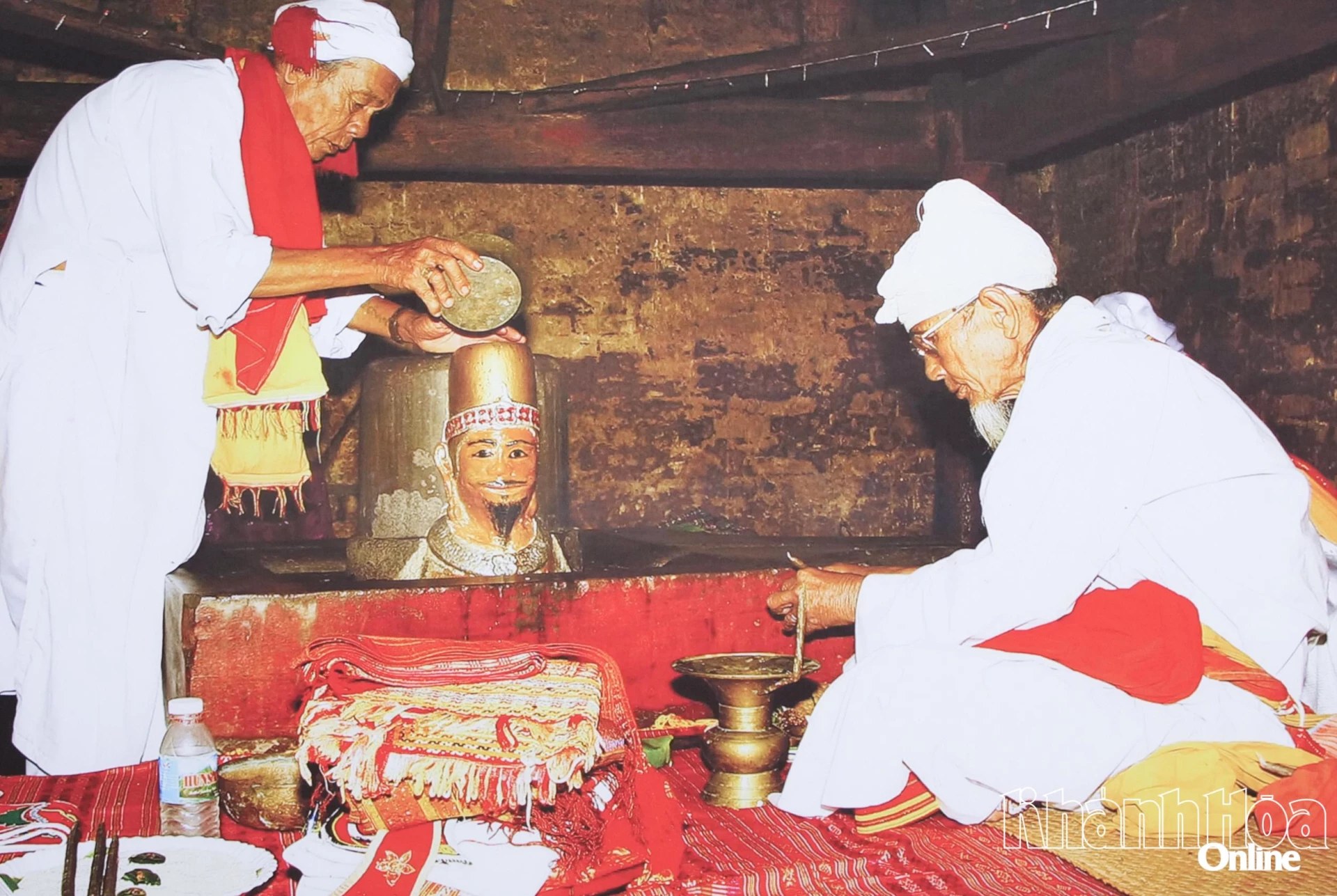 |
| The bathing ritual of the God-King Po Klong Garai statue during Kate. |
These rituals help onlookers gain a deeper understanding of what an ordinary day's visit can hardly fully convey. The statue of King Po Klong Garai holds more than just the value of an ancient sculpture. Through each Kate season, the religious values associated with the statue continue to be preserved in ceremonial hymns, rituals, and the community's reverence. Therefore, even if you have visited Po Klong Garai before, the Kate season remains a reason to return. This time, walk more slowly and step through the doors of the main tower.
THANH XUAN

