


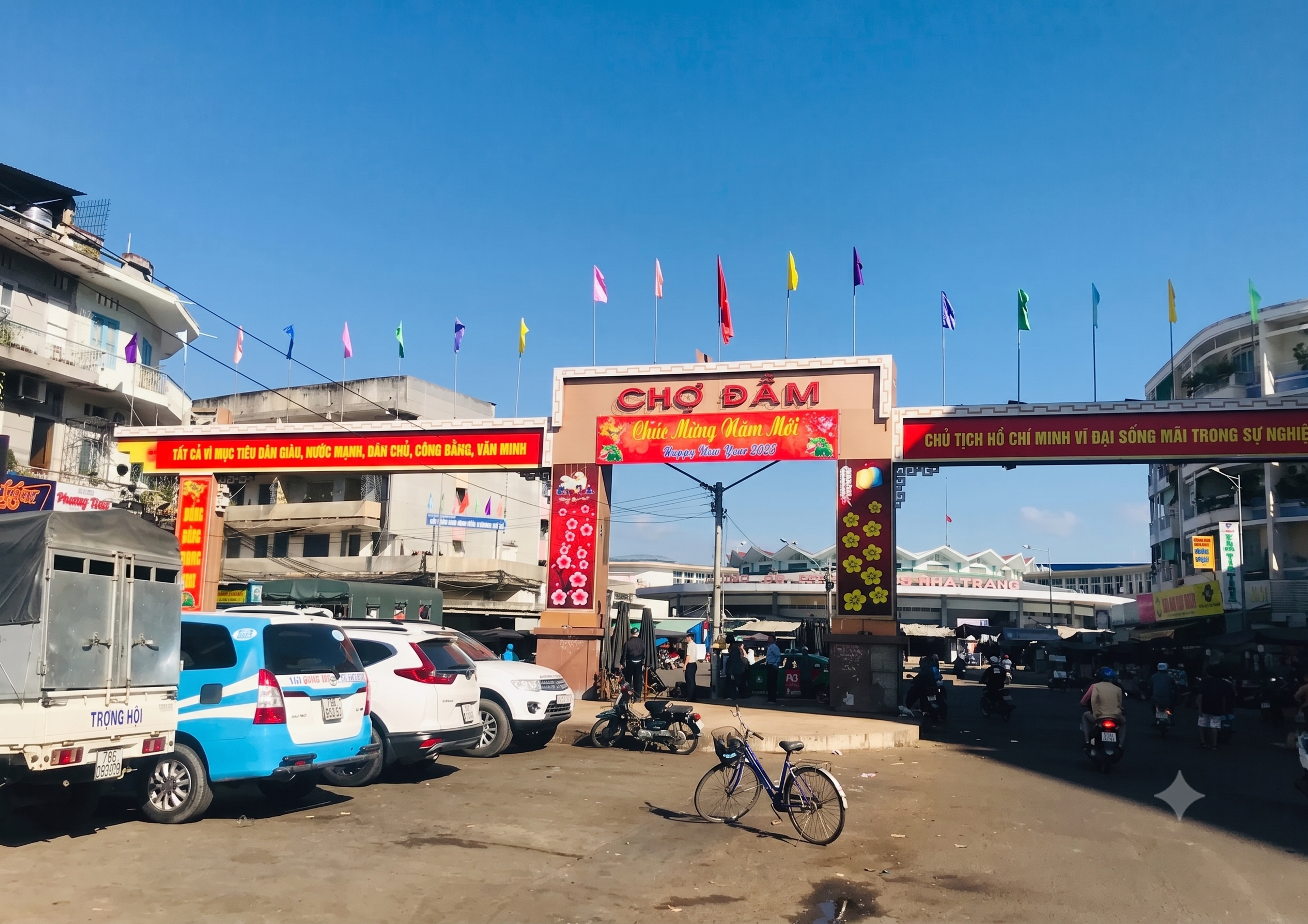
For anyone eager to learn about the socio-economic development and the most authentic daily cultural rhythm of a coastal city, a visit to the central market is always a must-have on the travel itinerary. In Nha Trang, that landmark is Dam Market. Located right in the heart of the city, this market is not merely one of the province's busiest commercial hubs; it is a structure with unique historical value, a witness to the many ups and downs of Nha Trang's urban evolution over the past half-century.
The name "Dam Market" (literally "Lagoon Market") stems from the original geography of the site in the early 20th century. Previously, this area was a vast, swampy lagoon leading to the Cai River mouth, where small fishing boats frequently anchored to trade fresh seafood after their trips at sea. In the late 1960s, aiming to modernize the urban landscape, the local government decided to carry out a breakthrough project: filling in this swampy lagoon to build a spacious, sturdy central market based on the bold architectural design of architect Ngo Viet Thu (the talented architect associated with the Independence Palace in Saigon). The new market was officially inaugurated and put into operation in 1974, opening a new chapter in the commercial life of the Land of Agarwood.
The unique beauty of a reinforced concrete lotus flower
The most striking architectural highlight that creates the unique brand identity of Dam Market is the central circular building. Viewed from above via a drone, the entire structure appears as a giant lotus flower blooming in the heart of the city, with tiered roofs protruding outward to simulate the shape of soft, stylized lotus petals. This was an extremely modern and symbolic architectural breakthrough for the 1970s, transforming a utilitarian, rigid reinforced concrete market into a highly aesthetic architectural work of art.
When you step inside the circular building, you will immediately be overwhelmed by a vibrant commercial space, filled with the colors and sounds characteristic of the Central region's lifestyle. The stalls are arranged in concentric circles connected to one another, extending from the ground floor to the upper level via classic marble-tiled staircases. Natural light is cleverly drawn in through a system of glass panels on the roof, illuminating the entire interior of the market and creating a vivid, authentic atmosphere.
Shopping and check-in guide for Dam Market:
-
Ground floor of the circular building: Home to stalls selling handicrafts, souvenirs made from seashells, bamboo and rattan items, and traditional fabrics.
-
The rear arc-shaped market area: A "paradise" for dried seafood (sun-dried squid, anchovies, sipunculid worms) and authentic, rich Nha Trang fish sauce.
-
Culinary experience: Stop by the local food court to enjoy a bowl of clear-broth jellyfish noodle soup or a plate of hot, clay-molded 'banh can' (mini savory pancakes) at extremely affordable prices.
Travel tips and bargaining etiquette for the cultured traveler
The ideal time for a leisurely stroll to explore Dam Market is between 8:00 AM and 10:00 AM. This is when the market has passed the bustling pace of the early morning rush, and stalls have been neatly and beautifully organized—perfect for walking around, observing, and taking photos of street life.
Because the traditional layout of Dam Market has narrow aisles and high foot traffic, you should choose simple, neat clothing and carry your handbag or backpack in front of your chest to keep your personal belongings safe. When you want to take a commemorative photo in front of a colorful stall, the minimum rule of courtesy is to buy a small item from the owner (such as a pack of Cam Lam mango candy or a small souvenir) before asking for permission to take pictures. This thoughtful gesture will earn you the warm smiles and genuine hospitality of the local coastal merchants. Dam Market in Nha Trang is not just a place for buying and selling; it is a living museum that fully preserves the essence, the heartbeat, and the urban development history of the coastal city through the trials of time.