


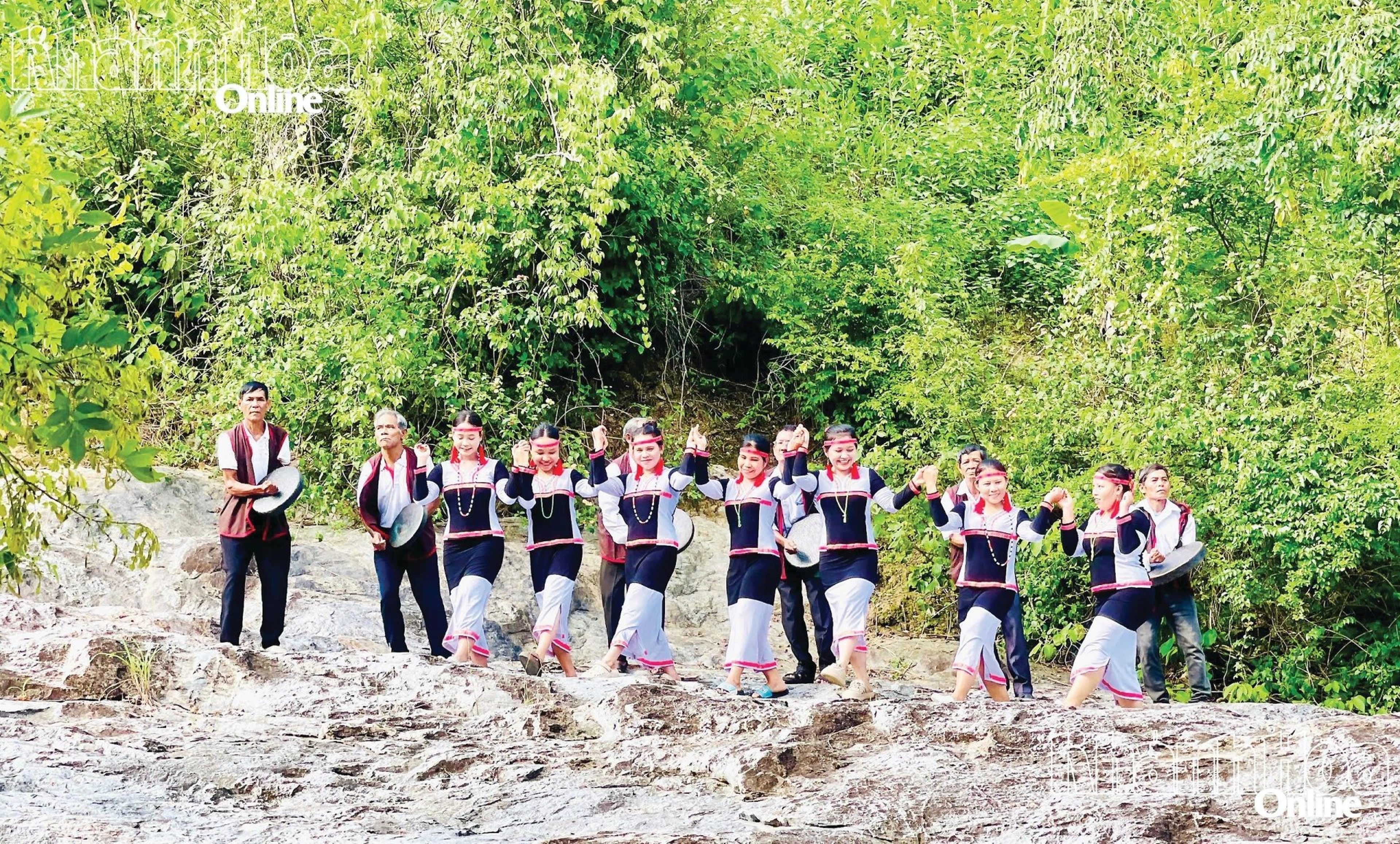
From the sound of the kèn bầu and the rhythm of the mã la of Meritorious Artisan Chamaléa Thơm to the orientation of community-based tourism development, Cong Hai Commune is gradually finding ways to preserve and promote the traditional cultural values of the Raglai people. When the heritage bearers continue to pass them down to the younger generation, the sounds of the mountains and forests are not only preserved in community life but also open up opportunities to promote cultural values associated with local tourism development.
Sounds of the kèn passed down through generations
Meritorious Artisan Chamaléa Thơm's (born in 1951, in Dong Thong Village, Cong Hai Commune) love for traditional musical instruments began in his childhood years. Growing up in the Raglai cultural space, he often heard his father and village elders play the kèn bầu and beat the mã la during community gatherings and festivals. Those rustic sounds nurtured his passion, urging him to learn about and stay attached to the traditional musical instruments of his people. “My father was a mã la player, so from a young age I had the opportunity to be exposed to traditional musical instruments. I started learning to play the kèn bầu around the age of 10, then learned how to play the mã la. The more attached I became, the more I loved the traditional musical instruments of my people,” he recalled.
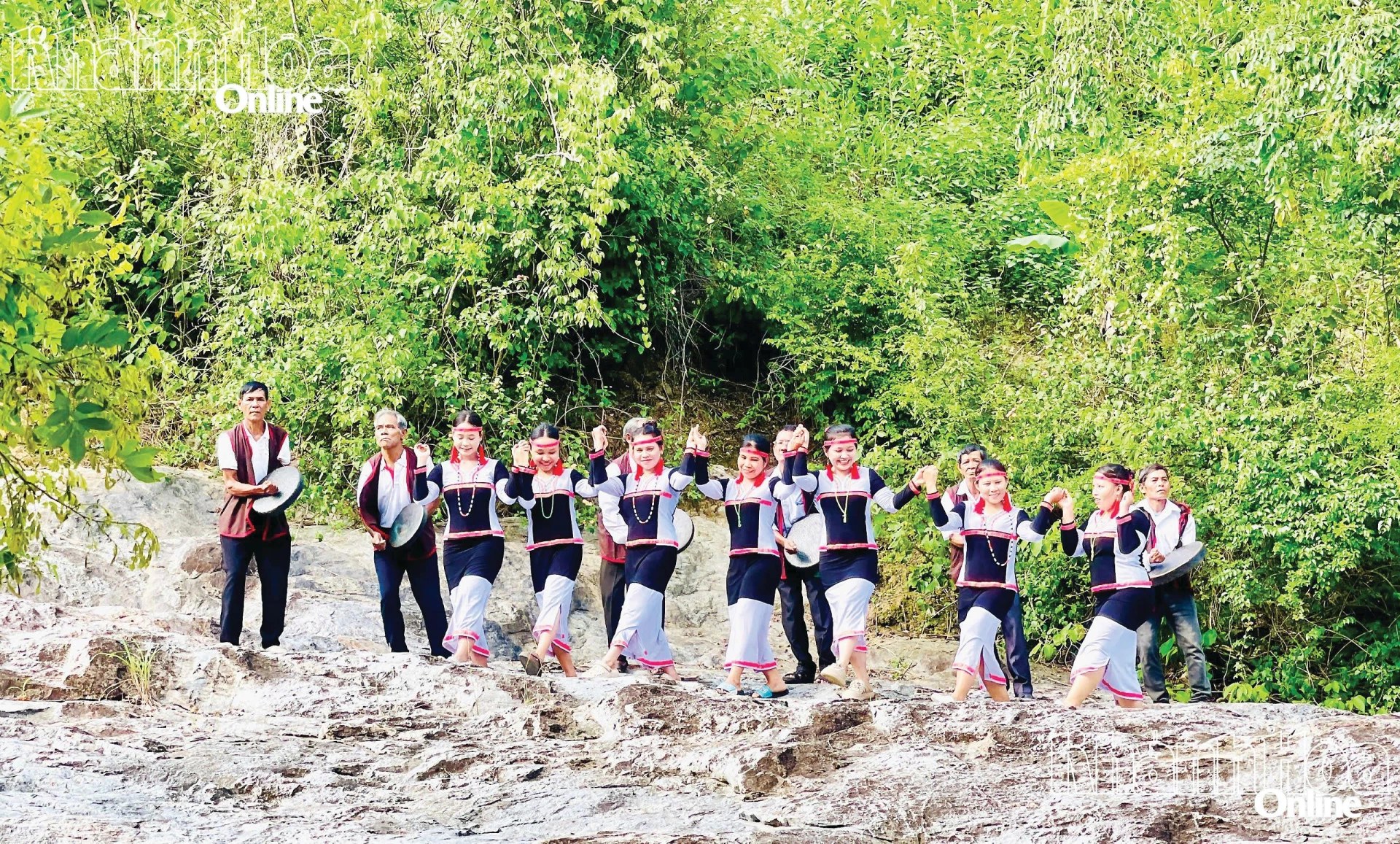 |
| Raglai people singing and dancing during community activities. |
For the Raglai people, the sound of the kèn bầu and the rhythm of the mã la are indispensable sounds in traditional festivals, especially the grave abandonment ceremony. Not only contributing to creating the atmosphere of the rituals, those sounds are also associated with the spiritual life, customs, and cultural identity of the community. Therefore, preserving the kèn bầu and mã la is not only about conserving folk musical instruments, but also about safeguarding the cultural values passed down through many generations.
Within the family, Mr. Chamaléa Cuốn (45 years old) is one of those carrying on Mr. Chamaléa Thơm's passion. Since the age of 6, Mr. Cuốn was captivated by the sound of the kèn from listening to him play and being taught how to perform. Up to now, Mr. Cuốn has been attached to the kèn for nearly 40 years. He shared: “Since I was a child, I have loved listening to the sound of the kèn bầu. Taught by him, I gradually learned to play and to this day continue to play the kèn during village festivals. I am also teaching my children so they can know and carry forward the traditional musical instruments of our ethnic group.”
From his family, the transmission of traditional musical instruments was also expanded to the community by Meritorious Artisan Chamaléa Thơm. He used to travel to Vinh Hai and Khanh Son communes to teach the gourd pipe (kèn bầu) to the younger generation, helping them access and better understand Raglai folk music. To him, traditional sounds can only continue to resonate when the youth are given the opportunity to learn, practice, and connect with their ethnic heritage.
Promoting the role of artisans in cultural preservation
According to Ms. Vu Thi Thuy Trang, Secretary of the Party Committee of Cong Hai Commune, the preservation of traditional culture must start from the community, in which artisans and those knowledgeable about customs and practices play an important role in preserving and passing down heritage. With the sound of the gourd pipe and the rhythm of the ma la (flat gongs) of the Raglai people, those who directly practice and are attached to traditional musical instruments not only preserve performance skills but also contribute to transmitting cultural and spiritual values to future generations. Therefore, preserving these instruments is not merely about maintaining performance techniques, but also about sustaining the environment for them to continue being practiced, connected with customs and cultural life.
The locality aims to link Raglai cultural preservation with community-based tourism development, promoting the central role of local people and artisans. Along with preserving the sound of the gourd pipe and the rhythm of the ma la, the commune aims to organize Raglai cultural performance and experience activities for tourists, restore traditional festivals, develop weaving and basketry crafts, and promote indigenous cuisine. Through this, distinctive cultural values have more opportunities to be widely introduced, while creating conditions for local people to participate in local tourism development.
According to the orientation toward 2030, Cong Hai Commune focuses on preserving and promoting Raglai cultural heritage values in association with community tourism development; restoring the grave-leaving ritual and the new rice celebration; consolidating the team of folk artisans and developing traditional bamboo and rattan weaving craft villages. At the same time, it strives to establish at least two community-based ecotourism models in Phuoc Chien and Suoi Gieng villages; harness tourism potential at U Go stream, Sung Trau stream, Ba Chi lake, Ma Trai lake, and Tap La rest stop as cultural spaces for visitors to experience. In addition, it will accelerate digitalization, promote culture, cuisine, musical instruments, and traditional handicraft products; and train local tour guides, contributing to creating livelihoods, increasing local people's income, and preserving the Raglai cultural identity linked to sustainable tourism development.
THANH HIEU - LE HOAN

