




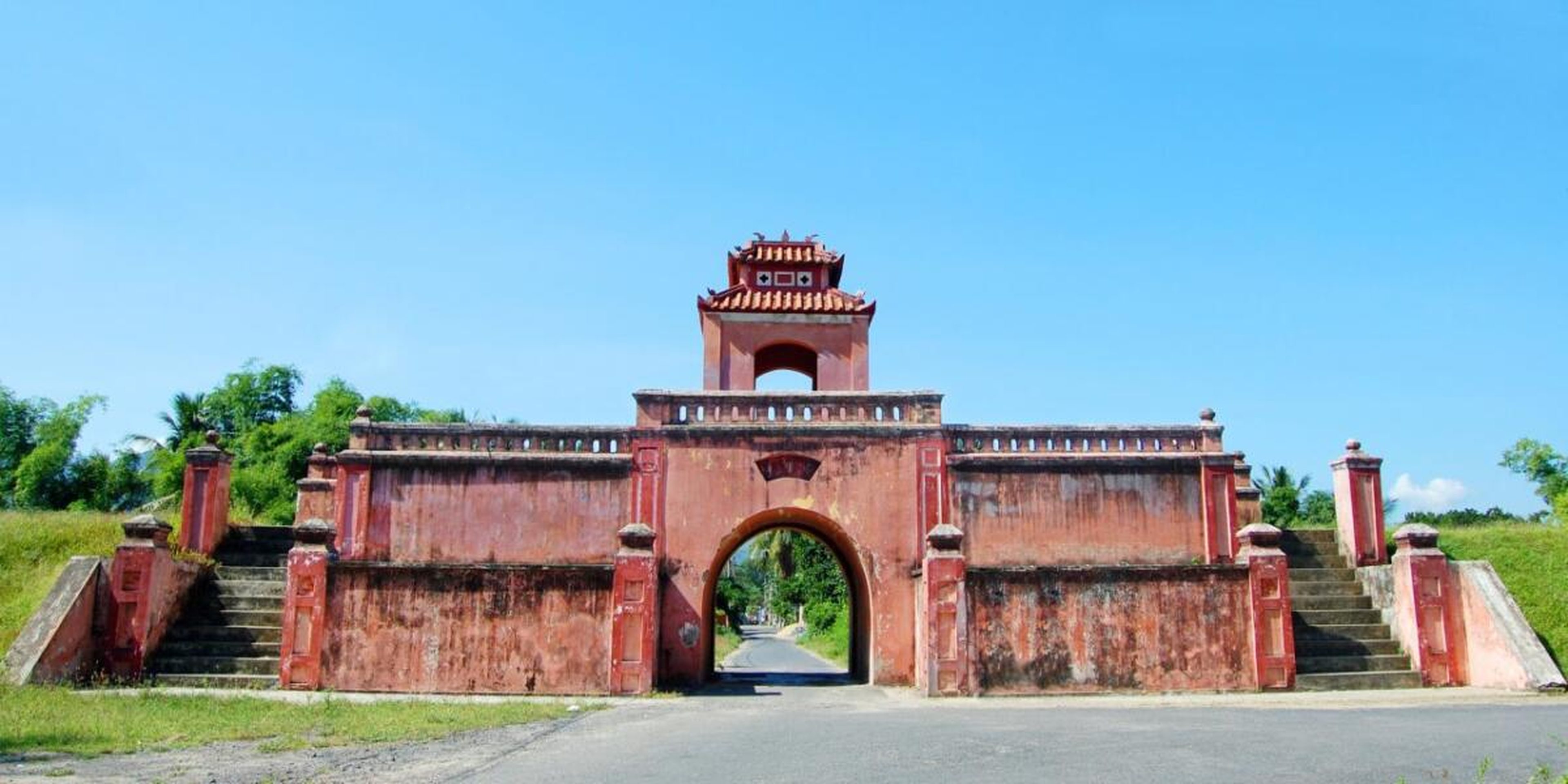
Nha Trang is famously known for its blue seas and pristine islands, but just a 10km journey to the west, you will encounter a completely different historical silence named Dien Khanh Ancient Citadel. This is not a place for those seeking vibrancy or trendy check-in spots. Dien Khanh Ancient Citadel is a destination for souls who enjoy walking, tracing moss-covered remnants to understand a turbulent era of old Khanh Hoa in the late 18th century.
Built in 1793 during the Nguyen Dynasty (Nguyen Anh), the Dien Khanh Ancient Citadel is one of the rare remaining testaments to Vauban military architecture in Central Vietnam. Vauban is a groundbreaking French military fortification style, characterized by a complex geometric structure with star-shaped protruding corners to optimize firing angles and defensive capabilities. Standing before the remaining sturdy earthen ramparts, you can partially visualize the strategic stature of this land in the past—a place that was once the political and military capital of an entire wealthy coastal region.
A peaceful rhythm of life beneath the mossy archways
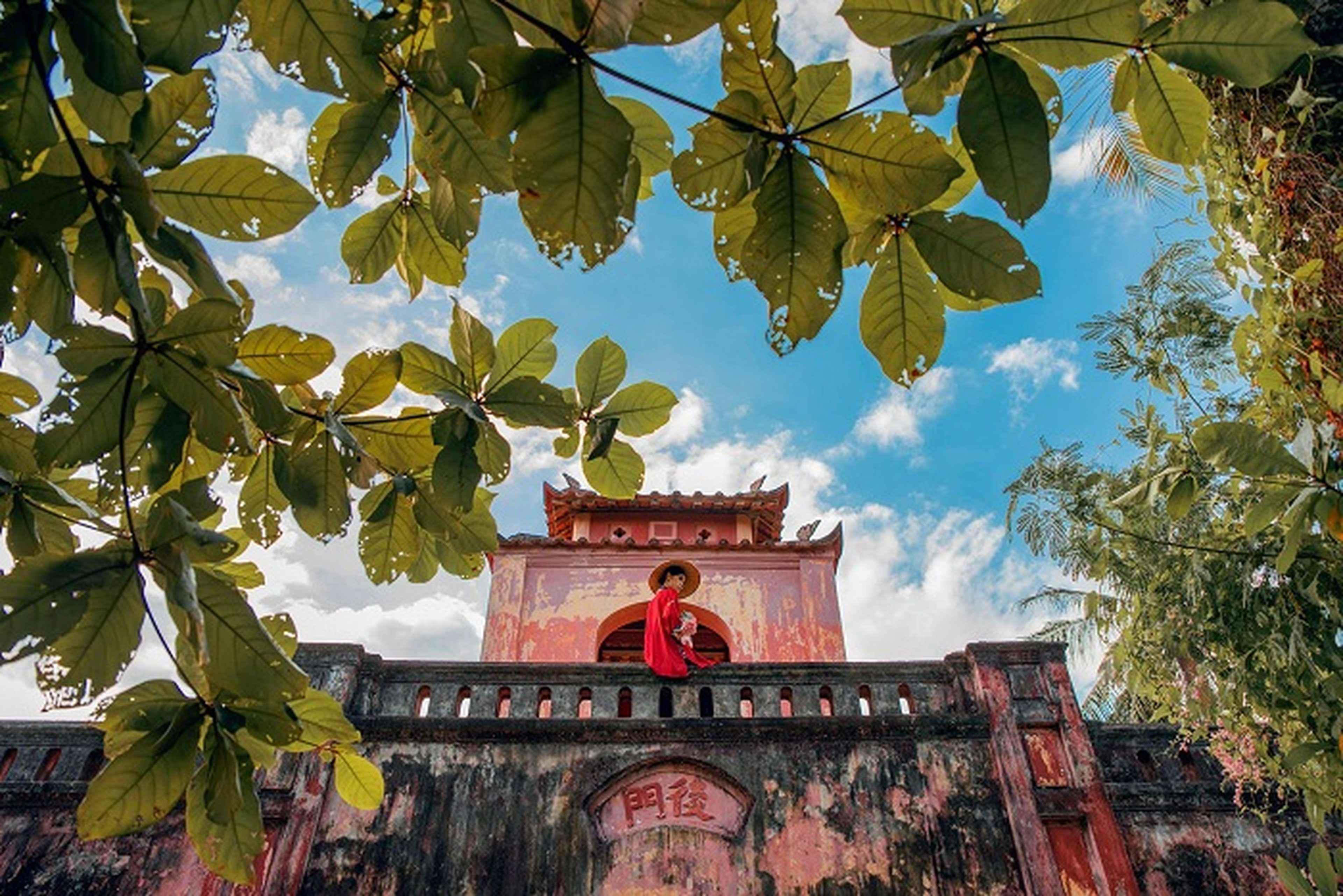
Having endured more than two centuries of historical ups and downs and the ravages of time, the original architecture of the citadel is no longer intact. However, two important gateways, the East Gate and the West Gate, still stand as resilient witnesses. The West Gate of the Dien Khanh Ancient Citadel is the most beloved photo spot due to its solemn beauty. The mossy yin-yang roof tiles, patches of raw brick exposed beneath peeling mortar, and the curved archway create a cinematic, nostalgic frame.
The most interesting thing about visiting Dien Khanh is that the citadel has not been turned into a closed-off museum. It resides right within the daily lives of the local people. Every day, under the century-old archways, residents still ride their bikes to the market, humble street vendors stop to rest, and local children gather to play under the shade of ancient trees. It is this blend of historical heritage and civilian life that creates a unique atmosphere for Dien Khanh: solemn and nostalgic, yet deeply intimate and warm.
A walking guide for a nostalgic afternoon
The ideal time to visit the Dien Khanh Ancient Citadel is after 3:00 PM. By this time, the harsh sun of Central Vietnam begins to soften, and the golden afternoon light slanting through the citadel archways creates deep contrasts of light and shadow, perfect for capturing lifestyle photography.
Suggested photo spots and experiences at the Dien Khanh Ancient Citadel:
-
The archway corner: Shoot from inside the archway facing outward to use the structure as a natural frame for the urban life in the distance.
-
Earthen rampart paths: Walk along the remaining sections of the earthen walls to view the peaceful village landscape at the foot of the citadel.
-
Culinary experience: End your afternoon by stopping at a small roadside stall to enjoy hot, freshly made Dien Khanh steamed rice rolls (banh uot).
When visiting, choose simple, comfortable clothing like shirts, wide-leg trousers, and flat shoes to make it easier to walk on the dirt paths around the ramparts. Walk slowly, speak softly, and preserve the inherent quietude of the historical site. Do not look for professional tourism services here; the charm of Dien Khanh lies in its rusticity, naturalness, and the hospitality of the people living inside the ancient citadel.
Dien Khanh Ancient Citadel is like a necessary quiet note in your extended travel map. It reminds us that behind a youthful, dynamic Khanh Hoa with blue seas and white sands, there remains a profound historical space, where the memories of our ancestors are still preserved intact through every brick and every mossy archway by the Cai River.